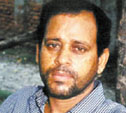
Ershad Sikder
Murderer Dr. Wouter Basson
Murderer · 1992
Wouter Basson (born July 6, 1950) was a South African cardiologist and the form…
230 victims
Dr. Wouter Basson
Murderer · 1992
Wouter Basson (born July 6, 1950) was a South African cardiologist and the form…
230 victims
 Brian Kevin Rosenfeld
Murderer · USA · 1985
Brian Kevin Rosenfeld Brian Kevin Rosenfeld was sentenced to three concurrent l…
23 victims
Brian Kevin Rosenfeld
Murderer · USA · 1985
Brian Kevin Rosenfeld Brian Kevin Rosenfeld was sentenced to three concurrent l…
23 victims
 Yahweh ben Yahweh
Murderer · USA · 1980
Yahweh ben Yahweh was born and legally named Hulon Mitchell Jr. (October 27, 19…
23 victims
Yahweh ben Yahweh
Murderer · USA · 1980
Yahweh ben Yahweh was born and legally named Hulon Mitchell Jr. (October 27, 19…
23 victims
 Russell Ellwood
Murderer · USA · 1991
Russell Ellwood was a former taxi driver. Authorities suspected him of killing…
20 victims
Russell Ellwood
Murderer · USA · 1991
Russell Ellwood was a former taxi driver. Authorities suspected him of killing…
20 victims
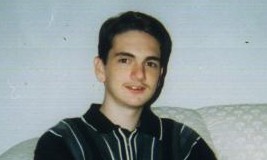 Samuel Manzie
Homicide · USA · 1997
Samuel Manzie was a 15-year-old charged as an adult in New Jersey for the killi…
1 victim
Samuel Manzie
Homicide · USA · 1997
Samuel Manzie was a 15-year-old charged as an adult in New Jersey for the killi…
1 victim
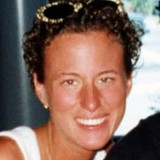 Erika Sifrit
Murderer · USA · 2002
Erika Sifrit and Benjamin Sifrit gained notoriety in 2002 for the murders of Jo…
2 victims
Erika Sifrit
Murderer · USA · 2002
Erika Sifrit and Benjamin Sifrit gained notoriety in 2002 for the murders of Jo…
2 victims
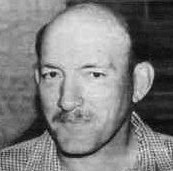 Patrick Henry Sherrill
Mass murderer · USA · 1986
Patrick Henry Sherrill Patrick Henry Sherrill committed suicide by shooting him…
14 victims
Patrick Henry Sherrill
Mass murderer · USA · 1986
Patrick Henry Sherrill Patrick Henry Sherrill committed suicide by shooting him…
14 victims
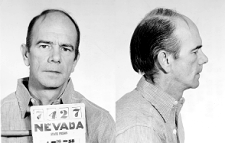 Earl Lewis Steward
Murderer · USA · 1957
Earl Lewis Steward was executed by asphyxiation-gas in Nevada on February 24, 1…
1 victim
Earl Lewis Steward
Murderer · USA · 1957
Earl Lewis Steward was executed by asphyxiation-gas in Nevada on February 24, 1…
1 victim
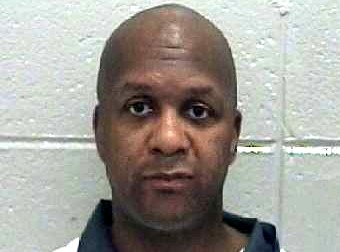 Kenneth Dan Bright
Murderer · USA · 1989
Kenneth Dan Bright, 36, was sentenced to death in Muscogee County for the Octob…
2 victims
Kenneth Dan Bright
Murderer · USA · 1989
Kenneth Dan Bright, 36, was sentenced to death in Muscogee County for the Octob…
2 victims
 Clara Schwartz
Murderer · USA · 2001
Clara Schwartz was convicted of first-degree murder and sentenced to serve 48 y…
1 victim
Clara Schwartz
Murderer · USA · 2001
Clara Schwartz was convicted of first-degree murder and sentenced to serve 48 y…
1 victim
- Gender
- male
- Country
- Bangladesh
- Location
- Khulna, Bangladesh
- Date of birth
- ???
- Characteristics
- serial rapist, police officer, torture, fugitive
- Victim profile
- Men ( political and business rivals )
- Method of murder
- Beating - Shooting - St abbing with knife
- Date(s) of murder
- 1990's
- Years active
- 1990
- Date of arrest
- August 11, 1999
- Status
-
Executed
Executed by hanging on May 9, 2004
Overview
Ershad Sikder was an influential political figure in the south-western city of Khulna. He was a notorious convicted criminal and serial killer and was hanged after his death penalty in the Khalid Hossain murder case was confirmed.
Timeline
- May 16, 1999 — Ershad Sikder and accomplices killed Khalid Hossain at the ice factory in Khulna.
- August 11, 1999 — Ershad Sikder was arrested immediately after the killing of Juba League leader Khalid Hossain.
- December 14, 2003 — The Appellate Division of the Supreme Court upheld the death sentence of Ershad Sikder in the murder of Khalid Hossain.
- January 28 (year not stated) — The High Court confirmed the lower court’s verdict.
- May 9, 2004 — Ershad Sikder was executed by hanging.
- May 10, 2004 — His body was handed over to his family.
- 10 o'clock (night; date not explicitly stated) — Jail authorities informed Ershad Sikder about his hanging.
The offence
Khalid Hossain was killed at the ice factory in Khulna. A witness to the murder told the BBC that Ershad Sikder beat Khalid Hossain mercilessly, and at one point jumped on his chest, breaking all his bones. Ershad Sikder’s bodyguard also testified that Sikder was responsible for more than 20 other murders.
Ershad Sikder was scheduled to be hanged for murdering Khalid Hossain, a local Juba League leader at Skidghat under Khulna Police Station on May 16, 1999. The trial court convicted him in six other murder cases, and his appeals against those verdicts were pending before the higher court.
Investigation
Ershad Sikder emerged during the rule of former president Husayn Muhammad Ershad in the 1980s and later became a feared killer and violent criminal.
Arrest
Ershad Sikder was arrested on August 11, 1999 immediately after the killing of Juba League leader Khalid Hossain. The narrative also states that he had succeeded to get relief from 18 cases, but was given death sentences in seven cases.
Trial
Ershad Sikder was convicted by the trial court in six other murder cases, and his appeals against those verdicts were pending before the higher court.
In the Khalid murder case, the Appellate Division upheld the lower court’s judgement. The High Court confirmed the lower court’s verdict on January 28 this year (year not stated in the combined text). The Supreme Court confirmed his death penalty in the Khalid murder case. Ershad also had six death penalties in as many cases.
Ershad’s accomplices Jamai Faruk and Liakat Laskar were given seven years in prison for the Khalid murder case, and the Appellate Division upheld the penalty against them.
Sentencing
The death sentence in the Khalid murder case was confirmed. The Bangladeshi president refused to entertain his mercy petition in the Khalid murder case, clearing the way for his hanging. Ershad can still file a review of the Appellate Division’s verdict through his lawyers, and if the review petition was rejected he could file a mercy petition with the president.
Appeals
Ershad Sikder’s appeals against the verdicts in six other murder cases were pending before the higher court. His death penalty in the Khalid murder case was confirmed by the country’s Supreme Court. The Appellate Division upheld the lower court’s judgement in the murder of Khalid Hossain. The Appellate Division also upheld the penalty against Jamai Faruk and Liakat Laskar. The narrative also states that Ershad could file a review of the Appellate Division’s verdict.
Outcome
Ershad Sikder was executed by hanging.
He was scheduled to be hanged till death at one minute past midnight last night in Khulna District Jail amidst tight security. Three hangmen, earlier brought from Dhaka Central Jail, were to perform the hanging: Hafizuddin, Shahjahan Bhuiyan and Hares Mia. Jailer Farman Ali of Khulna District Jail informed Ershad Sikder about his hanging at 10 o’clock last night, and Khulna Jail Superintendent Farhad Mia was named in connection with that information.
Khulna District Jail deployed six platoons of special armed forces of Khulna Metropolitan Police inside and outside the Khulna District Jail, and declared red alert around the entire jail area from the morning before until the handover of Sikder’s body to his family members. All the roads, lanes and by-lanes adjacent to the jail area were sealed off for 24 hours, from 6am yesterday to 6am today (Tuesday).
Ershad was scheduled to be brought out of the condemned cell five minutes before his hanging. Immediately afterwards, six armed men started guarding Ershad to ensure he did not create anything untoward. He then took his bathe and offered confession, and the Imam of the Khulna Jail was present at that time. He was to be taken to the hanging platform by three hangmen, and then he wore the new dresses of jail detainees.
Aftermath
His body was handed over to his elder brother and younger sister this morning according to his last wishes. The body was scheduled to be buried at Tootpara graveyard in the afternoon.
Ershad’s close relatives met him inside the jail yesterday in two groups. The first group was led by Ershad’s first wife Khodeja Begum, who met him inside the jail in the morning. Ershad became furious at one stage seeing his wife Khodeja and complained that he was going to be hanged because Khodeja did not pursue his mercy petition properly. He also asked his first wife to hand over his body to his elder brother Ashraf Ali Sikder alias Bara Mia and younger sister Selina Khatun for burial.
The second group of relatives was led by the second wife Sanjida Nahar Shova and met Ershad inside the jail immediately after the first group left. Ershad declined to meet with them. According to the last wishes of Ershad, his body was handed over to his brother and sister at the jail gate.
Other details
Ershad Sikder was accused in more than 30 other criminal cases mostly for killing political or business rivals. He was described as having been used by politicians whenever they needed him. Residents of Khulna said his lavishly decorated home in the city and his business establishments were frequented by the leaders of all major political parties.
The narrative states that he amassed thousands of dollars by criminal muscle power and used that money to buy political influence. It also states that he had a sizable private force equipped with illegal weapons, and that many police officials of Khulna were paid huge amounts of money regularly in order to run his criminal syndicate.
He first joined the Jatiya Party of former military ruler Hussein Muhammad Ershad and became a council member of the Khulna City Corporation in late 1980s. After democracy was restored in early 1990s, he joined the then governing party Bangladesh Nationalist Party, and later swapped sides and joined the Awami League when it came to power.
Ershad Sikder set up a torturing cell at his ice factory. The narrative also stated that he did not know how many people were brutally killed by him.
He was elected ward commissioner of Khulna City Corporation twice.
The narrative described property and cash left by the serial killer as an issue of conflict among family members after his death, listing:
- a luxury house named “Swarnakamal” on a 10-katha of land at Sonadanga Residential Area in Khulna,
- three high-rise buildings in Dhaka city,
- fixed deposits worth Tk 7 crore,
- gold jewlleries weighing more than 100 tolas,
- other property in the name of his wives, sons and daughter.
A witness to the murder told the BBC: “he beat Khalid Hossain mercilessly, and at one point jumped on his chest, breaking all his bones.”

Spotted an error, or have more information about this case?