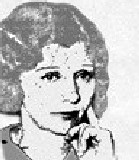
Eleanor Jarman
Murderer Martha Wise
Murderer · USA · 1924
Martha Wise (born 1885; died June 28, 1971), also known as “the Borgia of Ameri…
3 victims
Martha Wise
Murderer · USA · 1924
Martha Wise (born 1885; died June 28, 1971), also known as “the Borgia of Ameri…
3 victims
 Mary Frances Creighton
Murderer · USA · 1923
Mary Frances Creighton (c. 1898 - July 16, 1936) was a housewife and was execut…
3 victims
Mary Frances Creighton
Murderer · USA · 1923
Mary Frances Creighton (c. 1898 - July 16, 1936) was a housewife and was execut…
3 victims
 Inez Palmer
Murderer · USA · 1926
Inez Palmer — defendant; lived at the Stout farmhouse and pleaded guilty to a f…
2 victims
Inez Palmer
Murderer · USA · 1926
Inez Palmer — defendant; lived at the Stout farmhouse and pleaded guilty to a f…
2 victims
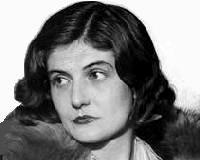 Winnie Ruth Judd
Murderer · USA · 1931
Winnie Ruth Judd (January 29, 1905 – October 23, 1998) was a Phoenix, Arizona m…
2 victims
Winnie Ruth Judd
Murderer · USA · 1931
Winnie Ruth Judd (January 29, 1905 – October 23, 1998) was a Phoenix, Arizona m…
2 victims
 Mark Christeson
Murderer · USA · 1998
Mark A. Christeson was convicted and sentenced to death for the 1998 murders of…
3 victims
Mark Christeson
Murderer · USA · 1998
Mark A. Christeson was convicted and sentenced to death for the 1998 murders of…
3 victims
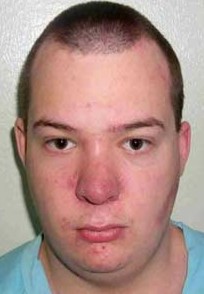 Brandon Hedrick
Murderer · USA · 1997
Brandon Wayne Hedrick (February 23, 1979 – July 20, 2006) was a convicted murde…
1 victim
Brandon Hedrick
Murderer · USA · 1997
Brandon Wayne Hedrick (February 23, 1979 – July 20, 2006) was a convicted murde…
1 victim
 Bennie Lawson
Murderer · USA · 1994
Bennie Lawson was a “street thug” who was described as having been concerned ab…
3 victims
Bennie Lawson
Murderer · USA · 1994
Bennie Lawson was a “street thug” who was described as having been concerned ab…
3 victims
 Angela Norman
Homicide · USA · 2011
Angela Norman was a Dayton resident and the mother of Makayla Norman, a 14-year…
1 victim
Angela Norman
Homicide · USA · 2011
Angela Norman was a Dayton resident and the mother of Makayla Norman, a 14-year…
1 victim
 Damon Matthews
Murderer · USA · 2003
Damon Matthews (TDCJ Number 999476) was convicted of capital murder in Harris C…
1 victim
Damon Matthews
Murderer · USA · 2003
Damon Matthews (TDCJ Number 999476) was convicted of capital murder in Harris C…
1 victim
 Milo Stanley
Murderer · USA · 1986
Milo Stanley was convicted in Yavapai County of fatally shooting his wife, Susa…
2 victims
Milo Stanley
Murderer · USA · 1986
Milo Stanley was convicted in Yavapai County of fatally shooting his wife, Susa…
2 victims
- Gender
- female
- Country
- USA
- Location
- Chicago, Cook County, Illinois, USA
- Date of birth
- 1904
- Age at first offence
- 29
- Characteristics
- robbery, fugitive
- Victim profile
- Gustav Hoeh (clothing store owner)
- Method of murder
- Shooting
- Date(s) of murder
- August 4, 1933
- Years active
- 1933
- Date of arrest
- —
- Status
-
At large
Sentenced to a 199-year prison term in 1933; escaped from prison on August 8, 1940; remains missing
Case record: Eleanor Jarman
Background
Eleanor Jarman was born in 1904. She was the youngest of eight children born to Julius and Amelia Berendt in Sioux City, Iowa. She married and had two children with Leroy Jarman. When Jarman left the family, she moved to Chicago, Illinois and worked in odd jobs until she met George Dale. Dale supported her, and Jarman later claimed that she did not know Dale did it by robbery.
Before arriving in Chicago, she had washed laundry and worked as a waitress. The waitress job was in a rough-and-tumble cafe near the Sioux City stockyards. Jarman left her husband of six years; she said he was a “drunken lout.”
Eleanor Jarman was known as “the Blond Tigress.” The press compared her to Bonnie Parker (of Bonnie and Clyde). Police described her as “cold as a block of ice.” She picked up her moniker because she was described as a vicious armed robber who traveled with a blackjack and revolver in her purse and was unafraid to use either. According to popular press accounts, Jarman was fond of pounding her victims on the head with either her blackjack or the butt of a pistol. Jarman was not tried for robberies but for complicity in Hoeh’s murder.
At the time of her prison escape, Jarman was 39 years old. She had served 7 years of a 199-year sentence imposed on her as an accomplice to the 1933 fatal shooting of North Side clothier Gustav Hoeh.
The offence
On August 4, 1933, Dale, Jarman, and Leo Minneci tried to rob a clothing store in Chicago’s far West Side. The shop owner was Gustav Hoeh. In a struggle with Hoeh, Jarman clawed at him, and Dale shot him. After the robbers drove away, several witnesses noted the license plate, which led police to Minneci, who blamed the other two, who were soon arrested. Dale blamed Minneci for the robbery.
Jarman asserted she did not know which of the men did it and claimed she was in the back room looking for clothes. Other testimony at trial described how Jarman and Dale entered the store and claimed she had threatened the clerk. Additional testimony described Jarman as beating and “clawing” Hoeh when he was struck by the bullet and kicked him while he was down. During the incident, Dale and Jarman were described as entering the store and claiming she had threatened the clerk, and witnesses described how she threatened and interacted with Hoeh during the robbery.
Witnesses described how a large number of hold-up victims later identified Jarman as involved in robberies. Jarman testified there were so many robberies that no particular hold-up stood out in her memory.
In a reported version of trial testimony, while Hoeh lay dying, Jarman kicked him in the face. Jarman denied planning to kill Hoeh, and she asserted in her brief trial that she was completely unaware that Dale and Minneci were going to rob Hoeh’s store. Dale said Jarman carried the murder weapon in her oversized purse.
Jarman described her motive during her trial:
“It was fun and it was an easy way to get swell clothes and anything you wanted,” she told the jury at her trial.
A petition later stated that Jarman was “completely unaware” that any law was about to be broken. It stated that she and her two companions were driving to Wrigley Field to see a Cubs game, that the men had stopped to buy shirts, and that Jarman had walked to the back of the clothing shop to look at neckties for her sons. The sound of a scuffle and a shot were described as her first indications anything was wrong.
All three suspects were implicated in a total of 37 holdups in the city during the summer of 1933, but the source states that none of the trio was actually convicted of any crime other than Hoeh’s murder.
Investigation and arrest
The robbery led to police identifying Minneci, who blamed the other two. Jarman was later described as arrested shortly after the murder.
Press compared Jarman to Bonnie Parker and described her as a major player in all of Dale’s crimes. She was dubbed “the Blond Tigress” by the press and was described as being “cold as a block of ice” by police.
Trial
Her defense attorney was A. Jefferson Schultze. The prosecuting attorney, Wilbur Crowley, called for the death penalty.
George Dale was sentenced to die in the electric chair. One of Dale’s last acts was to write a love letter to Jarman.
Minneci and Jarman were sentenced to jail. Jarman received a 199-year sentence, described as one of the longest criminal sentences ever imposed at the time and as the first woman in Illinois to receive such a long sentence. The source states that the 199-year term was given to ensure Jarman never got parole, and that under state law at the time prisoners were eligible for parole after serving one-third of their sentence. With a nearly 2 centuries long sentence, she would not have been even eligible for release until she was 95 years old.
The source also states that Minneci received a 199-year term and served a term of around 20 years before being released in the 1950s.
The month of August 1933 was described as a period in Chicago in which judges worked through a crowded docket and many defendants received long jail terms; the climactic trial ended with a death sentence for one man and 199-year sentences for two accomplices for the murder of a Chicago haberdasher.
Sentencing
Eleanor Jarman was sentenced to a 199-year prison term in 1933 for complicity in Hoeh’s murder.
The source states:
Escape and fugitive status
Jarman escaped from prison on August 8, 1940. The source states that she was a model prisoner for the next seven years and that in 1940, according to her family, she heard that her son was about to run away and escaped on August 8, 1940 due to concern about her children.
The source describes that she apparently went to Sioux City, Iowa, confirmed that her children were all right, and then went underground. After her escape, she was placed on the FBI’s Ten Most Wanted fugitives list, but was never found.
The source also describes the circumstances of disappearance from a cottage on prison grounds. Jarman was serving her term in Joliet and was known as “an industrious, obedient, and model woman in almost every respect,” according to warden Helen Hazard, when she and another stick up artist, Mary Foster, disappeared from a cottage on prison grounds. Foster, a bank robber, was serving a 1-to-10 year stretch and was located in Massachusetts a few months later. The pair were described as scrubbing floors when they jimmied the cottage lock, stole dresses from the closet, and scaled a 10-foot fence around the reformatory. They had a one-hour head start on jailers, and Jarman has not been seen since.
The source later states that some people learned Jarman’s real identity—mostly family members—and protected her from authorities. It states that generally, they believed her claims that she was innocent of Hoeh’s murder.
Attempts by relatives to have her officially pardoned failed. Although she remained officially a fugitive, the source states it was likely that she was dead and that her death was recorded under whatever alias she was using.
Aftermath
Jarman maintained contact with her family for more than 35 years through classified ads. In 1975, she arranged a secret meeting with her brother and sister-in-law, Otto and Dorothy Berendt, and her son, Leroy Jarman, who was in his fifties at the time. During the meeting, Leroy tried to persuade Jarman to give herself up, and she refused. The source states that she said she was not worried about capture because she believed authorities had long since stopped looking for her.
The source includes direct statements from people involved. Jarman’s grandchildren wrote in a 1993 clemency petition to Gov. Jim Edgar:
“Jarman has served 7 years in jail for being with the wrong people at the wrong time,”
“She is and will in whatever time remains for her be an remain a good and completely rehabilitated citizen.”
In the same 1993 context, Hoeh’s grandson Kenneth Hoeh commented:
“I just as soon they leave alone what was left forgotten.”
Another grandson, Dan Hoeh, told The Chicago Tribune:
“It was a vicious crime. As I understand the details, she played an active part,”
“Even if it had been a minor role, she would get no mercy from me.”
After LeRoy died in 1993, Doug Jarman began a campaign to clear his grandmother’s name. Doug Jarman said that a letter she sent during her incarceration, as well as conversations with people who knew her before her arrest, convinced him that she was innocent. Doug Jarman quoted her as writing:
“‘I’m goig to be here the rest of my life. I’m never going to be with you,’”
“‘I always want you to know that I was innocent.’”
A family story described that shortly after her escape, she appeared in Sioux City where her sons, LaVerne and LeRoy, were living. She had received a letter days before that her sons were threatening to run away from their custodians. The source states that after telling her boys to behave, she disappeared for 35 years, communicating through classified ads.
During a 1975 meeting disclosed later, Dorothy Berendt described accompanying her husband to meet Jarman and looking for her:
“I was looking around the bus station for her because that is where she said on the phone she would be,”
“A voice in the shadows said,Are you looking for somebody?' I said I was, and the voice replied,Could be me you are looking for.'”
Dorothy Berendt described Jarman’s appearance and what she wanted to know:
“She was relaxed and looked pretty good,”
“Still the same woman I had known. We got in the car and Otto drove out to Isaac Walton (lake) to talk. All she wanted to know was if her boys were OK. We told her they were grown men, and doing good for themselves.”
Dorothy Berendt described a police car appearing and Jarman’s response:
“She said, `Relax. The police stopped looking for me years ago.' ”
Dorothy Berendt described the night as ending with Jarman eating dinner at a drugstore and meeting with her son LeRoy Jarman, followed by Doug Jarman quoting his father about the conversation:
“Dad told me he said, `Mother, let's get in my car right now, go to Illinois and straighten this out.' ”
Doug Jarman described that when Jarman refused, his father wept openly, and he quoted his father about what Jarman told her son:
“I have a lot of friends where I am at. They know the true story.”
Dorothy Berendt described Jarman leaving town quickly and walking toward the Greyhound bus station:
“I don't think she wanted us to know what bus she was taking or where it was going,” Dorothy Berendt said.
Timeline
- 1933-08-04 — Dale, Jarman, and Leo Minneci tried to rob a clothing store in Chicago’s far West Side; Dale shot shop owner Gustav Hoeh.
- 1940-08-08 — Eleanor Jarman escaped from prison.
- 1940-04-20 — George Dale died in the electric chair.
- 1957 — Leo Minneci was paroled.
- 1975 — Jarman arranged a secret meeting with Otto and Dorothy Berendt and her son Leroy Jarman.
- Mid-1990s — Communications with Jarman through newspapers tapered off.
- 1993 — LeRoy Jarman died; Doug Jarman began a campaign to clear Jarman’s name.
- 2012 — The source states that if she were still alive, she would be 108 years old.
Other details
Jarman was described as traveling with a blackjack and revolver in her purse. The source also states that witnesses described “more than 50” identifying her as the Blonde Tigress as robberies in cellblocks and that Jarman testified about many robberies without specific memory.
The source states that after Jarman’s escape, communications with family occurred through classified ads, including in the Kansas City Star and other newspapers. It states that phrases like “Let’s Have Coffee” meant something to them and that Doug Jarman believed he knew the secret pseudonym used by his grandmother in the ads.
A governor clemency effort was described as unusual. The request was to have her prison term commuted to time served. The source states that Gov. Jim Edgar and the Illinois Prisoner Review Board would decide whether to commute her sentence after review board findings, which might not be until fall. Diane Ford, counsel to the governor, commented:
“The request now goes to the Illinois Prisoner Review Board, which will make its recommendation to Edgar.”
“If Jarman is alive but chooses not to surrender or make known her whereabouts, she and the board might be able to exchange information by sworn affidavit, Ford said.”
The source also describes that the police never found Jarman, that the FBI stopped looking for her in the 1950s, and that post offices pulled her wanted poster from public display when stamps sold for pennies.
Other family members named in the source included Otto Berendt, Dorothy Berendt, Hattie and Joe Stocker (older sister and husband in Sioux City), and Jarman’s sons LaVerne and LeRoy Jarman. The source states that Otto Berendt was in a nursing home and that LaVerne Jarman was a recluse in Florida. It states that LeRoy Jarman was a retired Sioux City real estate broker and firefighter and died March 1 (year given in the source as 1993 context). It also states that Leroy Jarman died in 1993.
The source includes discussion of parole eligibility under state law and describes that Jarman’s sentence was set to prevent parole.
Defense and prosecution names included A. Jefferson Schultze and Wilbur Crowley. The chief judge John Prystalski and the publication The Edwardsville (Ill.) Intelligencer were mentioned in the context of Chicago’s court sessions.
The source states that warden Helen Hazard disclosed a possible motive for Jarman’s escape: concern for her sons after receiving a letter indicating they had run away or were threatening to do so, and that that was the reason she escaped.
The source includes statements about Jarman being “an industrious, obedient, and model woman in almost every respect,” and about her and Mary Foster disappearing from a cottage after scaling a 10-foot fence. It also states Foster was found in Massachusetts a few months later.
Additionally, the source reports that Chicago authorities described Jarman as a one-woman crime wave and “the moll” for a boyfriend put to death in Cook County’s electric chair for the same murder she was imprisoned for, and that Jarman’s family long questioned that portrayal. The source states that it attributed the family doubts to an overzealous and sensation-seeking media portrayal.
The source states that Jarman’s behavior over the years would be a point of close scrutiny in the clemency process.


Spotted an error, or have more information about this case?