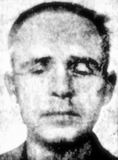
James Rodgers
Murderer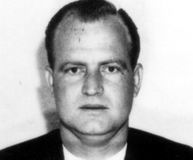 Gary Gene Tison
Murderer · USA · 1967
Gary Gene Tison was serving life sentences at the Arizona state prison. He had…
7 victims
Gary Gene Tison
Murderer · USA · 1967
Gary Gene Tison was serving life sentences at the Arizona state prison. He had…
7 victims
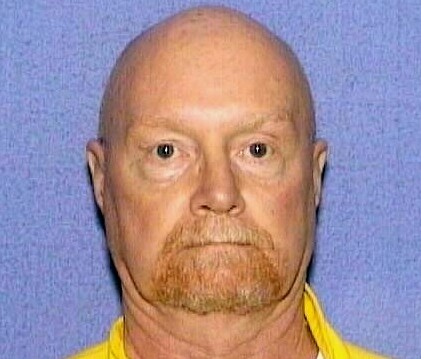 Gary Duane Rardon
Murderer · USA · 1962
Gary Duane Rardon killed a man in 1962 and later served 4 years for manslaughte…
4 victims
Gary Duane Rardon
Murderer · USA · 1962
Gary Duane Rardon killed a man in 1962 and later served 4 years for manslaughte…
4 victims
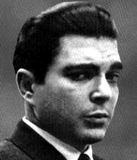 Charles Howard Schmid
Murderer · USA · 1964
Charles Howard Schmid was born on 8 July 1942 and was adopted by Charles and Ka…
3 victims
Charles Howard Schmid
Murderer · USA · 1964
Charles Howard Schmid was born on 8 July 1942 and was adopted by Charles and Ka…
3 victims
 Sataro Fukiage
Serial killer · Japan · 1906
Sataro Fukiage (吹上 佐太郎, Fukiage Satarō) was born in February 1889. He was born…
7 victims
Sataro Fukiage
Serial killer · Japan · 1906
Sataro Fukiage (吹上 佐太郎, Fukiage Satarō) was born in February 1889. He was born…
7 victims
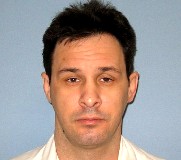 Christopher Thomas Johnson
Murderer · USA · 2005
Christopher Thomas Johnson was convicted of capital murder and sentenced to dea…
1 victim
Christopher Thomas Johnson
Murderer · USA · 2005
Christopher Thomas Johnson was convicted of capital murder and sentenced to dea…
1 victim
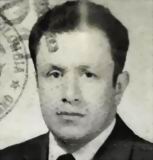 Campo Elías Delgado Morales
Spree killer · Colombia · 1986
Campo Elías Delgado Morales was a Colombian Vietnam War veteran. He lived with…
30 victims
Campo Elías Delgado Morales
Spree killer · Colombia · 1986
Campo Elías Delgado Morales was a Colombian Vietnam War veteran. He lived with…
30 victims
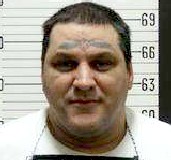 Stephen Hugueley
Murderer · USA · 1986
Name: Stephen Lynn Hugueley Stephen Lynn Hugueley was sentenced to death on Sep…
3 victims
Stephen Hugueley
Murderer · USA · 1986
Name: Stephen Lynn Hugueley Stephen Lynn Hugueley was sentenced to death on Sep…
3 victims
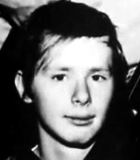 Anthony Barbaro
Homicide · USA · 1974
December 30, 1974 — Anthony F. Barbaro left his house with his mother's car, we…
3 victims
Anthony Barbaro
Homicide · USA · 1974
December 30, 1974 — Anthony F. Barbaro left his house with his mother's car, we…
3 victims
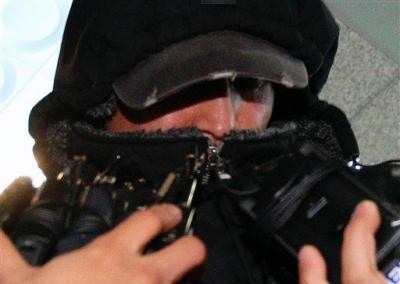 Kang Ho-sun
Serial killer · South Korea · 2006
Kang Ho-sun was a Korean serial killer who was sentenced to death on April 22,…
10 victims
Kang Ho-sun
Serial killer · South Korea · 2006
Kang Ho-sun was a Korean serial killer who was sentenced to death on April 22,…
10 victims
- Gender
- male
- Country
- USA
- Location
- San Juan County, Utah, USA
- Date of birth
- August 3, 1910
- Age at first offence
- 47
- Characteristics
- argument
- Victim profile
- Charles Merrifield (miner)
- Method of murder
- Shooting
- Date(s) of murder
- June 19, 1957
- Years active
- 1957
- Date of arrest
- —
- Status
-
Executed
Executed by firing squad in Utah on March 30, 1960
Case overview
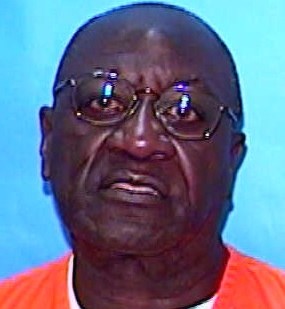
James W. Rodgers (August 3, 1910 – March 30, 1960) was an American who was sentenced to death by the state of Utah for the murder of miner Charles Merrifield in 1957. He was executed by firing squad in Utah on March 30, 1960.
Timeline
- June 19, 1957 — Rodgers shot miner Charles Merrifield after an altercation involving how to properly grease a scoop shovel.
- June 26, 1957 — Rodgers was arraigned at the San Juan County Courthouse in Monticello, Utah and was formally charged with murder.
- October 30, 1959 — The United States District Court, Central Division, issued a decision in James W. Rodgers, Petitioner, v. John W. Turner, Warden, Utah State Prison, Respondent (No. C-88-59), dismissing the second amended petition for a writ of habeas corpus and denying the writ, other relief, and terminating the stay effective after ten 30 days.
- September 23, 1958 — The Supreme Court of Utah decided The State of Utah, Plaintiff and Respondent, v. James W. Rodgers, Defendant and Appellant (No. 8868), affirming a jury verdict finding defendant guilty of first degree murder.
- March 30, 1960 — Rodgers was executed at 6:16 a.m. by firing squad.
Background
Rodgers was born on August 3, 1910 in Lubbock, Texas. He was the eldest of five brothers and six sisters. His education was interrupted during the eighth grade. At the age of twelve, he left his family's household, where his father forced the children to work. By the age of sixteen, he became involved in a bootlegging operation and was injured in the legs by machine gun fire. He later became involved in armed robbery and spent over twenty years in incarceration at various prisons.
The offence
In 1957, Rodgers came from New Mexico to work as a part-time security guard with the Continental Uranium Company at its Rattlesnake uranium mine near La Sal, Utah. Following an altercation on June 19 of that year, Rodgers shot miner Charles Merrifield. Merrifield died of multiple gunshot wounds to the head, arm, and torso. The two had been arguing over how to properly grease a scoop shovel.
After the shooting, Rodgers drove off in his truck, but was quickly apprehended in Colorado and turned over to the Grand County Jail in San Juan County, Utah.
Investigation and arrest
Rodgers claimed that he had been repeatedly threatened and thought Merrifield was going to "beat him up." Rodgers said that he "challenged Merrifield with a gun" and shot him when Merrifield attacked him with a large wrench.
Trial
Rodgers was arraigned at the San Juan County Courthouse in Monticello, Utah on June 26, 1957. He was formally charged with murder.
A complaint had been filed in the Monticello City Court charging defendant with murder without designating the degree. After a hearing at which defendant was represented by counsel, he was bound over to the District Court where he was charged in an information with murder in the first degree.
Counsel moved to quash the information on the ground defendant had been denied his constitutional right to a preliminary hearing on the charge of first degree murder. He contended that the legislature, in dividing murder into degrees, had created separate and distinct offenses. Defendant also contended that the jury verdict was unsupported, in that the evidence consisted only of uncontradicted testimony to the effect that defendant was insane at the time of the killing.
Rodgers pleaded "guilty by reason of insanity" and asserted that he was suffering from syphilis.
During the trial, Rodgers asserted that he had killed Merrifield in self-defense. Merrifield was determined to have been shot by Rodgers' .38-caliber handgun while at the controls of the large shovel at the mine.
Sentencing
Upon being convicted and sentenced to death, Rodgers was given the choice of execution by firing squad or hanging; he chose to be shot. Rodgers said that he was not worried because he would succumb to syphilis before his execution. However, he did not test positive for the disease under medical examination.
Rodgers was sent to death row at Utah State Prison, where he was considered a model prisoner.
Appeals
Rodgers filed three appeals, including one to the Supreme Court of Utah, all of which were denied.
Supreme Court of Utah (September 23, 1958)
Case: *The State of Utah, Plaintiff and Respondent, v. James W. 8868). Supreme Court of Utah. September 23, 1958.
Robert H. Ruggeri, A. Reed Reynolds, Moab, for appellant. E.R. Callister, Jr., Atty. Gen., Jack L. Crellin, Asst. Atty. Gen., for respondent.
Henriod, Justice. The Supreme Court decided: Appeal from a jury verdict finding defendant guilty of first degree murder. “Affirmed.”
No contention was made that defendant did not shoot and kill one Charles Merrifield, a fellow employee, while they were working at the Rattlesnake mine in San Juan County, Utah.
The court addressed contentions including:
- A motion to quash the information on denial of a constitutional right to a preliminary hearing.
- Arguments about whether dividing murder into degrees created separate and distinct offenses.
- Arguments about whether the evidence supported an insanity plea, including that the evidence consisted of uncontradicted testimony that defendant was insane at the time of the killing.
- The sufficiency of charging murder without designating the degree.
The court held, among other things, that charging one with murder, as defined under Utah statutes, includes any of the degrees into which it has been divided by the legislature and that doing so is not vulnerable to constitutional objections where details are obtainable by demand for a bill of particulars.
The court quoted with approval language from State v. Phillips:
"There is, under our law, but one crime called murder. The so-called degrees of this offense do not constitute distinct crimes, but gradations of the same crime, devised for the purpose of permitting punishment to be varied according to the circumstances of greater or less enormity characterizing the criminal act."
The court also referred to State v. Hutchinson and State v. Roy and stated that it espoused the reasoning and conclusions in State v. Roy.
McDonough, C.J., and Crockett, Wade and Worthen, JJ., concur.
The court included footnotes citing:
- Art. I, Sec. 13, Utah Constitution.
- Title 76-30-1, Utah Code Annotated, 1953.
- Title 77-21-38, U.C.A. 1953.
- Title 77-21-47, U.C.A. 1953.
- Art. I, Sec. 12, Utah Constitution; XIV Amendment, U.S. Constitution.
- Title 77-21-9, U.C.A. 1953.
- State v. Martin and State v. Phillips citations.
- State v. Hutchinson citation.
- State v. Roy citation.
Other court proceedings
Federal habeas corpus proceeding (October 30, 1959)
Case: *178 F.Supp. 225 (1959) James W. Rodgers, Petitioner, v. John W. C-88-59. United States District Court D. Utah, Central Division. October 30, 1959.
William T. Thurman and Charles Welch, Jr., Salt Lake City, for petitioner. Walter L. Budge, Atty. Gen., Vernon B. Romney and Raymond W. Gee, Asst. Attys. Gen., of State of Utah, for respondent.
Christenson, District Judge.
The decision described that the petitioner had been afforded fair and full opportunity to present second amended petition reasons for issuance of a writ of habeas corpus to prevent execution by state authority. The court addressed legal sufficiency for invocation of federal court jurisdiction and whether to stay state proceeding.
The court stated that counsel had reported their investigation was completed and that whatever legal cause might exist had been set forth. It addressed four grounds relied upon in the second amended petition:
- Allegation that the Seventh Judicial District Court, in rendering and issuing the verdict, judgment, order and execution and commitment, was without jurisdiction; the court characterized it as a mere conclusion of law unsupported by any averment of fact.
- Allegation about voir dire examination lacking an affirmative showing of juror qualifications under Utah Code Annotated 1953, 78-46-8, with the court noting no assertion that jurors actually did not possess qualifications or that they were not examined at some other time.
- Allegation that Rodgers was denied a fair trial due to disclosure on voir dire that one juror spoke to the presiding judge prior to trial; the court stated that further inquiry showed the juror was the judge’s friend and business partner, discussion was limited, and no facts or details were mentioned; the juror was accepted without challenge.
- Allegation that court-appointed defense counsel failed to assert self-defense and failed to have the defendant take the stand, although the defense was known to counsel; the court discussed that the doctrine of self-defense was included in jury instructions and that testimony from other parties about Rodgers claiming self-defense was received into evidence; it described counsel’s tactical decision and stated there was no claim of overreaching.
The court found that the second amended petition was insufficient and that the stay should not continue.
The second amended petition accordingly was dismissed, the writ of habeas corpus and other relief applied for were denied, and the stay of execution was terminated effective upon the expiration of ten 30 days from date hereof, within which period the stay would continue in effect in order to allow reasonable opportunity to seek review from an appellate court if advised.
Outcome
Rodgers remained subject to execution after denial of appeals and denial of federal habeas corpus relief.
Execution
On the morning of March 30, 1960, Rodgers was driven to the execution site on a clay flat about a mile (1.6 km) from the prison. He was accompanied by San Juan County Sheriff Seth Wright and a prison chaplain.
When asked for a final statement, Rodgers continued to insist that he was innocent and said: “I done told you my last request ... a bulletproof vest.”
He was dressed in denim and offered a coat, to which he replied: “Don't worry, I'll be where it's warm soon.”
Rodgers was strapped to a wooden chair inside a 20-foot (6.1 m) canvas enclosure. The firing squad, concealed in a smaller burlap enclosure about 23 feet (7.0 m) away, consisted of five volunteers who were paid $75 each. One of the marksmen was provided a .30-30 rifle that was loaded with a blank, so that none of the marksmen would be certain who fired the lethal shots.
Rodgers was executed at 6:16 a.m., the time of sunrise.
Aftermath
Rodgers' body was claimed for burial in California by his mother, who had last visited him ten days before the execution.
The mother wrote a letter to the prison chaplain in 1960 that included: “I gave him a nice burial even tho [ sic ] I am a widow with $90.00 per month to pay for it. I could not see him buried in Potter's field ... I know his soul is in heaven with God and I will meet him someday ...”
Spotted an error, or have more information about this case?