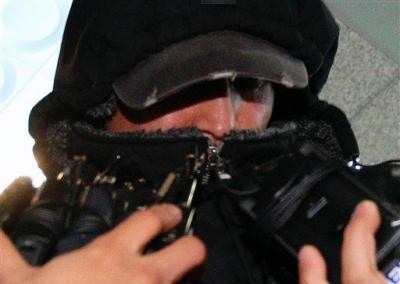
Kang Ho-sun
Serial killer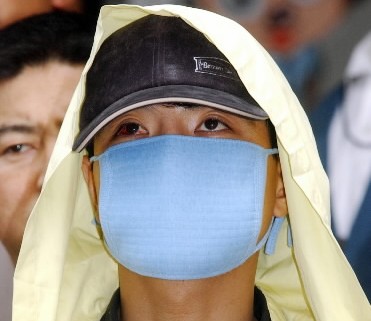 Yoo Young-Chul
Serial killer · South Korea · 2003
Yoo Young-Chul (Korean: 유영철; born 1970) was a South Korean serial killer and se…
20 victims
Yoo Young-Chul
Serial killer · South Korea · 2003
Yoo Young-Chul (Korean: 유영철; born 1970) was a South Korean serial killer and se…
20 victims
 Jeong Nan-Kyu
Serial killer · South Korea · 2004
January 2004 — Jeong Nam-gyu began a period of killings and assaults that would…
13 victims
Jeong Nan-Kyu
Serial killer · South Korea · 2004
January 2004 — Jeong Nam-gyu began a period of killings and assaults that would…
13 victims
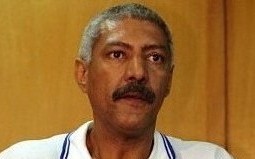 Edson Isidoro Guimaraes
Serial killer · Brazil · 1999
Edson Isidoro Guimarães was a Brazilian nursing assistant and nurse’s aide at S…
131 victims
Edson Isidoro Guimaraes
Serial killer · Brazil · 1999
Edson Isidoro Guimarães was a Brazilian nursing assistant and nurse’s aide at S…
131 victims
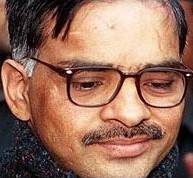 Javed Iqbal
Serial killer · Pakistan · 1998
Javed Iqbal (born 1956 in Lahore, Punjab, Pakistan; died October 8, 2001, in La…
100 victims
Javed Iqbal
Serial killer · Pakistan · 1998
Javed Iqbal (born 1956 in Lahore, Punjab, Pakistan; died October 8, 2001, in La…
100 victims
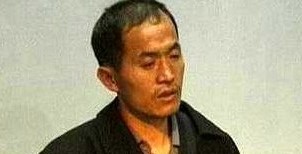 Yang Xinhai
Serial killer · China · 2000
Yang Xinhai (simplified Chinese: 杨新海; pinyin: Yáng Xīnhǎi; 17 July 1968–14 Febr…
67 victims
Yang Xinhai
Serial killer · China · 2000
Yang Xinhai (simplified Chinese: 杨新海; pinyin: Yáng Xīnhǎi; 17 July 1968–14 Febr…
67 victims
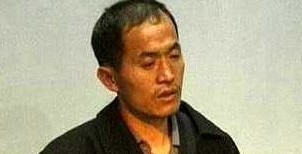 Yang Xinhai
Serial killer · China · 2000
Yang Xinhai (simplified Chinese: 杨新海; pinyin: Yáng Xīnhǎi; 17 July 1968–14 Febr…
67 victims
Yang Xinhai
Serial killer · China · 2000
Yang Xinhai (simplified Chinese: 杨新海; pinyin: Yáng Xīnhǎi; 17 July 1968–14 Febr…
67 victims
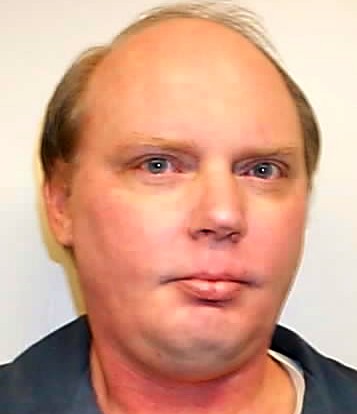 Dale Shackelford
Murderer · USA · 1999
Dale Carter Shackelford was convicted for the 1999 slayings of Donna Fontaine a…
2 victims
Dale Shackelford
Murderer · USA · 1999
Dale Carter Shackelford was convicted for the 1999 slayings of Donna Fontaine a…
2 victims
 Eric Rudolph
Murderer · USA · 1996
Eric Robert Rudolph (born September 19, 1966), also known as the “Olympic Park…
2 victims
Eric Rudolph
Murderer · USA · 1996
Eric Robert Rudolph (born September 19, 1966), also known as the “Olympic Park…
2 victims
 John Albert Burks
Murderer · USA · 1982
Defendant: John Albert Burks John Albert Burks was executed by lethal injection…
2 victims
John Albert Burks
Murderer · USA · 1982
Defendant: John Albert Burks John Albert Burks was executed by lethal injection…
2 victims
- Gender
- male
- Country
- South Korea
- Location
- South Korea
- Date of birth
- 1970
- Age at first offence
- 36
- Characteristics
- rape, arson, attempt to collect insurance money
- Victim profile
- Women aged between 20 and 52 (including his wife and mother-in-law)
- Method of murder
- Strangulation - Fire
- Date(s) of murder
- 2006 - 2008
- Years active
- 2006–2008
- Date of arrest
- January 24, 2009
- Status
-
Sentenced to death
Sentenced to death on April 22, 2009
Case record: Kang Ho-sun
Kang Ho-sun was a Korean serial killer who was sentenced to death on April 22, 2009.
Background
Kang Ho-sun was 38 years old at the time of his conviction and sentencing. Police investigators described him as a typical psychopath who felt no remorse. Police said he met most victims in karaoke bars or picked them up from isolated bus stops.
Kang Ho-sun had lived since 2006 on a farm in Suwon, a city of about 1 million people about 20 miles (30 kilometers) south of Seoul. He worked as a sport massage therapist.
Kang Ho-sun had a criminal record that included theft and other offenses. In January 2008, he was accused of rape.
The offence
Kang Ho-sun murdered women over a period that included December 2006 through November 2008, and he confessed to kidnapping and killing a university student and six other women between December 2006 and November 2008. Police said he also was suspected in the 2005 arson deaths of his fourth wife and her mother.
At the time of his sentencing, the court convicted him of murder, rape and arson, and he was sentenced to death. Police reports said he murdered 10 women, including his wife and mother-in-law.
Police said Kang approached his victims for sex—or with the intent to rape them—and then strangled them with a pair of stockings. Police said Kang told them he buried their bodies.
Investigation
Police said they were expanding their investigation into crimes during the blank period between admitted murders in order to verify his involvement in similar unsolved cases.
The Gyeonggi Provincial Police Agency, with the cooperation of the National Police Agency, planned to trace Kang Ho-soon’s life in connection with the murder of a female university student in Gunpo. Officials said they would go through similar unsolved cases committed during the period when Kang claimed he lived an ordinary life.
Police said a major roundup campaign occurred when five women went missing from December 2006 to January 2007, and police assumed Kang took precautions in the region during the period. Police said the further reinforced police research, aroused by the disappearance of the two missing children in the nearby Anyang region, made it harder for him to risk committing additional crimes.
Kang Ho-sun said: "Though the suspect said that he led an ordinary life in between the admitted murders, we plan to go through the similar unsolved cases that were committed during the period to verify his involvement," said a police official in a recent briefing.
Kang Ho-sun said: "After my fifth murder on Jan. 7, 2007, I was afraid of getting caught, with all the attention from the police and the media," and "This is why I lived quietly for some time, working ordinarily in a farm."
Investigators were working to locate the bodies referenced in police statements.
Arrest
Kang Ho-sun was arrested in January. Police said he was arrested Saturday at his workplace in Ansan in connection with the killing of a student who disappeared last month.
Trial
A court in Ansan, south-west of Seoul sentenced Kang Ho-sun on Wednesday, April 22, 2009. Court officials could not immediately be reached. The court convicted him of murder, rape and arson.
The court also found him guilty of killing his wife and mother-in-law in an arson attack so he could cash in their life insurance policies. Kang denied the charge.
Sentencing
Kang Ho-sun was sentenced to death. Hanging remained on South Korea’s statute books despite an informal moratorium on its use since 1997.
Appeals
No appeal information was provided.
Outcome
Police said Kang Ho-sun admitted kidnapping and murdering eight women since 2006.
Police said Kang confessed Thursday to kidnapping and killing the student—and strangling six other women over the past two years.
Police said Kang’s confession included the killing of a university student found dead, and also included strangling six other women. The Associated Press described him as a masseur accused of killing a university student, and said he confessed to her death and to strangling six other women over the past two years.
Aftermath
A separate civil court at Ansan ordered Kang Ho-sun to pay damages totalling 1.3 billion won ($1.37 million) to the families of his victims after they filed a lawsuit.
Police suspected additional hidden killings during the blank period between his murders.
Other details
Kang Ho-sun was suspected in the 2005 arson deaths of his fourth wife and her mother. The blaze broke out a week after Kang bought several insurance policies for his wife. Police said Kang escaped the deadly fire at his home and received 480 million won ($505,000) from insurers. Kang claimed the fire was accidental.
A separate account said Kang registered his marriage and signed up for life insurance policies just days prior to the accident, and he took 180 million won for a car fire that was suspected of being intentional.
Police said Kang received 480 million won ($ 347,826) from the insurance of his fourth wife, who died in a fire in October 2005 and bought himself an expensive car in a secondhand store. Police also suspected Kang may have been responsible for the fire that killed his then-wife and his mother-in-law.
Police said Kang had pointed investigators to spots within a 4-mile (7-kilometer) radius of the farm where he said he buried the bodies.
Police identified the six other women as including a 48-year-old Suwon housewife who disappeared on her way home, three karaoke bar employees, a 52-year-old office worker and another college student.
Investigation head Lee Myung-gyun said: "We, too, want to disclose the suspect`s face to the public," and "However, the official message from the National Human Rights Commission prevents us from doing so."
Lee Jeong-seon said: "I was shocked to see such a calm and smiling face on a notorious murder," and "I would not have suspected him either, had I been the murdered girl."
The Principles of protecting the suspect’s personal information were reinforced in 2004, with a scandalous rape case by middle school students. The police, while investigating the case, put caps and masks on these underage suspects. In the following year, the National Human Rights Commission recommended the police to improve criminal convoy processes and to forbid disclosure of the suspect’s face.

Spotted an error, or have more information about this case?