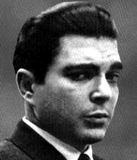
Charles Howard Schmid
Murderer Ervil LeBaron
Murderer · USA · 1972
Ervil Morrell LeBaron (1925 to August 16, 1981) was the leader of a polygamous…
35 victims
Ervil LeBaron
Murderer · USA · 1972
Ervil Morrell LeBaron (1925 to August 16, 1981) was the leader of a polygamous…
35 victims
 Charles Manson
Murderer · USA · 1969
Charles Milles Manson (born November 12, 1934) was an American criminal and mus…
9 victims
Charles Manson
Murderer · USA · 1969
Charles Milles Manson (born November 12, 1934) was an American criminal and mus…
9 victims
 Robert Reldan
Murderer · USA · 1974
Name: Robert Reldan Robert Reldan was sentenced to life in prison on two counts…
8 victims
Robert Reldan
Murderer · USA · 1974
Name: Robert Reldan Robert Reldan was sentenced to life in prison on two counts…
8 victims
 Dennis Duane Webb
Murderer · USA · 1973
Defendant: Dennis Duane Webb · Victims: John Rainwater and Lori Rainwater · Cou…
7 victims
Dennis Duane Webb
Murderer · USA · 1973
Defendant: Dennis Duane Webb · Victims: John Rainwater and Lori Rainwater · Cou…
7 victims
 Gary Gene Tison
Murderer · USA · 1967
Gary Gene Tison was serving life sentences at the Arizona state prison. He had…
7 victims
Gary Gene Tison
Murderer · USA · 1967
Gary Gene Tison was serving life sentences at the Arizona state prison. He had…
7 victims
 Joseph Massino
Murderer · USA · 1974
Joseph Charles “Big Joey” Massino (born January 10, 1943), also known as “The L…
7 victims
Joseph Massino
Murderer · USA · 1974
Joseph Charles “Big Joey” Massino (born January 10, 1943), also known as “The L…
7 victims
 Dena Schlosser
Homicide · USA · 2004
Dena Schlosser (born 1969) lived in Plano, Texas. She was the mother of Margare…
1 victim
Dena Schlosser
Homicide · USA · 2004
Dena Schlosser (born 1969) lived in Plano, Texas. She was the mother of Margare…
1 victim
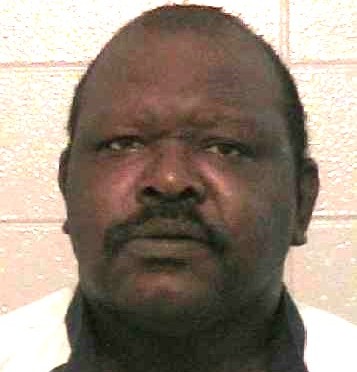 Michael D. Terry
Serial killer · USA · 1985
Michael D. Terry was convicted of murdering Richard Williams and Curtis Brown.…
6 victims
Michael D. Terry
Serial killer · USA · 1985
Michael D. Terry was convicted of murdering Richard Williams and Curtis Brown.…
6 victims
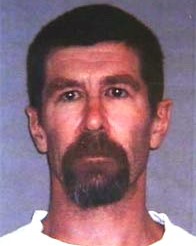 Richard Lee McNair
Murderer · USA · 1987
Richard Lee McNair was born December 9, 1958, in Duncan, Oklahoma. He was servi…
1 victim
Richard Lee McNair
Murderer · USA · 1987
Richard Lee McNair was born December 9, 1958, in Duncan, Oklahoma. He was servi…
1 victim
- Gender
- male
- Country
- USA
- Location
- Tucson, Arizona, USA
- Date of birth
- J uly 8, 1942
- Age at first offence
- 22
- Characteristics
- rape
- Victim profile
- Alleen Rowe, 15 / Gretchen Fritz, 17, and her sister Wendy Fritz, 13
- Method of murder
- Strangulation
- Date(s) of murder
- 1964 - 1965
- Years active
- 1964–1965
- Date of arrest
- November 10, 1965
- Status
-
Imprisoned
Sentenced to death in 1966; when the state of Arizona temporarily abolished the death penalty in 1971, his sentence was commuted to 50 years in prison; stabbed 47 times by two fellow prisoners on 10 March 1975, losing an eye and a kidney, and dying 20 days later
Background
Charles Howard Schmid was born on 8 July 1942 and was adopted by Charles and Katharine Schmid, owners and operators of Hillcrest Nursing Home in Tucson, Arizona. He was known as Charles Howard “Smitty” Schmid, Jr, and he was also known as “The Pied Piper of Tucson” and “The Pied Piper of Phoenix.” He was called “Charlie.” He grew up around Hillcrest and developed into something of a trickster.
Schmid had a difficult relationship with his foster father, and they got into frequent arguments. He also received an allowance of $300 a month and began living in his own quarters on his parents’ property with a new car and a motorcycle after his foster parents left him to run on his own.
Schmid dyed his hair black, used cosmetics including pancake make-up, created a phony mole on his face, and wore cowboy boots that were stuffed to make him appear taller. He also stretched his lower lip with a clothespin to make it resemble Elvis Presley’s.
He was described as intelligent and courteous despite often doing poorly in school. He excelled at gymnastics, led his high school to a State Championship, and quit the team his senior year. Just before graduating, he stole tools from the machine shop and was subsequently suspended; he never returned to school.
Schmid spent much of his time on Speedway, picking up girls and drinking with buddies, although he tended to be a loner. His best friends included Paul Graff, John Saunders, and Richie Bruns.
Schmid sometimes boasted through calculated stories, including claims about murders he may or may not have committed. He often attempted to inspire awe or sympathy. He once told a girl he had murdered a young man who had killed his girlfriend in a car accident, cut off his hands, and buried him in the desert. He once claimed four murders, which suggested that one of them might have been an earlier one.
Schmid met friends and girlfriends through the teenage community in Tucson, and he was seen as charismatic. He was described as having a way that made kids feel life could be exciting, and women liked him. At one point, teenage coterie members kept the secrets of his murders.
The offence
Schmid decided to murder Alleen Rowe on 31 May 1964. Alleen Rowe was a 15-year-old high school student living with her divorced mother. He lured her to the desert near the local golf course. He raped Alleen Rowe, beat her to death with a stone, and planted her corpse in a shallow grave.
Over the next year, Schmid became romantically involved with Gretchen Fritz, and he also strangled Gretchen and her sister Wendy Fritz at his home. Gretchen Fritz was 17 and Wendy Fritz was 13. Schmid dumped their bodies in the desert.
After the killings, Schmid boasted about them. A boastful man, Schmid took his friend Richard Bruns to see the corpses. The murders became an open secret with Tucson teens, but no one told authorities until Bruns, fearing that his girlfriend was next on Schmid’s hit list, spilled the beans.
Schmid was prosecuted and convicted of three murders: those of Alleen Rowe, Gretchen Fritz, and Wendy Fritz.
Investigation
The next day after Alleen Rowe disappeared, her father told her mother he felt she had been murdered and left in the desert. Norma Rowe, Alleen’s mother, contacted the police and was told she needed more evidence before the police would go looking in the desert.
Norma Rowe worked as a night nurse. She told authorities about a sex club at the high school that her daughter had described, involving drugs, perversions, and organized prostitution. The investigating officer said it was one of the most far-fetched tales he had ever heard and did not take it seriously. An investigation failed to disclose any sign of such activities.
Norma Rowe pursued the case by contacting Arizona’s Attorney General and the FBI in the month when nothing had turned up. She also called in reporters and consulted a psychic, but nothing came of it. She kept pressing despite official sentiment that Alleen was a teenage runaway.
Schmid was questioned by hoodlum types who were allegedly employed to find the missing sisters, but he claimed the girls had run away to California. He drove to San Diego where he was arrested for impersonating an FBI agent and “questioning” girls at the beach.
Police eventually received information about two girls fitting the description of the missing sisters hitch-hiking on the road to Nogales. They were picked up by a car heading toward Mexico, and in Mexico several people swore the girls had boarded a bus bound for Hermosillo. A search in parts of Mexico through several tourist towns where two girls were reportedly spotted failed to turn up anything solid. The police then gave up and listed them as runaways. This was disputed by Richie Bruns, who believed it was the most likely scenario until Schmid later told the truth about the Fritz sisters.
Arrest
Schmid was working in the front yard of his house on 10 November 1965 when police came to arrest him. He initially believed that the men in the car were part of the “Tucson Mafia.” When police took him out his front door, he called to his young wife to get his mother.
Katharine Schmid demanded a warrant and then called a lawyer. At the police station, Schmid heard tapes of Richie Bruns “spilling the beans,” and police brought Richie into the room in hopes of producing a confession.
Police booked Schmid for two murders. At booking, police asked him to remove his boots. The contents of the boots filled two shoe boxes with folded up rags, flattened beer cans covered with more rags, and pieces of cardboard. Schmid was held without bail until a hearing set for 13 December.
A search warrant for Schmid’s house was used, looking for a guitar without a string, which police did not find. Police flew to Connecticut to pick up John Saunders and also went to Texas to get Mary French.
When John Saunders and Mary French were found and interviewed, Saunders confessed but maintained that Schmid had done the actual killing. Mary French gave a detailed statement after she was told that Schmid had married.
During searches connected with the case, Saunders was unable to locate the grave, and Mary French could not help, although the search turned up two rusty hair curlers. Norma Rowe identified them as belonging to her daughter. An intensive search followed, including a crew of high school students, but it did not locate the remains at that time.
Trial
Trial for Gretchen Fritz and Wendy Fritz
Schmid arrived at the Pima County Courthouse on Tuesday, 15 February 1966, wearing a herringbone jacket and tan trousers. William Tinney represented him. William Schafer III was chosen to prosecute, with the Honorable Lee Garrett presiding.
Tinney had made a motion to exclude the press, which was denied. The elderly judge misstated that the defendant had entered a plea of guilty, then corrected himself after seeing the looks in the courtroom.
Tinney requested a psychologist to prove that the jury had been subconsciously influenced by pretrial publicity; F. Lee Bailey had a case pending before the Supreme Court on that issue. The judge allowed it but then dismissed psychiatry as a science and refused to postpone the trial for a year, despite Tinney’s request.
Thirty witnesses testified for the state. They sought to prove premeditation in two murders and to cover up a prior murder. The narrative included the use of a case in which Schmid had yet to be tried as a foundation to try him in the case at hand.
Nancy Fritz identified articles of clothing found in the desert and described Gretchen’s relationship with Schmid. She added that Gretchen had disliked Richie.
Detectives testified that they had found a guitar cord in the desert near the jawbone of one skull, but there was no police photograph to support it. The corpse was too mummified to determine cause of death. Investigators found Schmid’s guitar at a pawnshop but could not determine if the cord they found was from that instrument.
Irma Jean Holt testified that she had once asked Schmid why he jumped whenever Gretchen wanted something. Holt testified that Schmid told her Gretchen had taken his diary containing information about a boy he had killed in the desert. Holt also testified that he told her he hated Gretchen.
When John Saunders came to the stand, Saunders pleaded the Fifth Amendment to every question, which Tinney argued was prejudicial in front of the jury; Saunders was removed.
Mary French testified and gave an account of the murder of Alleen Rowe. Tinney objected to her presence on the basis that she could only testify about a crime for which there was no body, but the judge overruled the objection.
Paul Graff, brought from New Orleans as a hostile witness, testified that he had lived with Schmid for a while and that Schmid told him about killing a girl in the desert in the company of Mary French and John Saunders. Graff testified he had been invited to go see the grave but had declined. Tinney elicited testimony describing bad blood between Richie and Gretchen.
Bill Morgen and his wife, Mrs. Bill Morgen, testified. Morgen said Schmid had told him about the boy he had killed, including cutting off his hands, and that he referenced a diary that Gretchen had stolen containing a description of this murder. Mrs. Morgen testified that she had heard the story as well and that she had not taken the stories seriously. Morgen also spoke about Schmid’s desire to kill Gretchen.
Richie Bruns testified describing the events he remembered, speaking evenly and looking without hesitation at Schmid. Tinney was unable to shake his story but managed to get Richie to admit ill feelings toward Gretchen.
Gloria Andrews testified that she had been at Schmid’s house on the night Gretchen turned up missing. She testified that Schmid took a phone call from Gretchen and said, “I’m gonna get that bitch if it’s the last thing I do.” She testified Schmid left with Paul Graff carrying an old black briefcase and returned around 1 o’clock in the morning. Andrews testified she overheard Schmid telling Paul to keep quiet and Paul responding, “wasn’t in it and wasn’t going to get in it.” Andrews testified that Schmid returned dusty and unkempt and that Paul left taking two large butcher knives with him. Andrews testified that the next day Schmid called her, saying Gretchen was missing and “now he could go out with anyone he wanted.” Andrews’ testimony contradicted an account Richie had heard from Schmid that Schmid had killed the Fritz sisters there in his living room.
The prosecution rested, and Tinney moved for a mistrial based on the basis that no evidence had been produced. The judge ruled the evidence was “not weak from a legal standpoint.”
Tinney called witnesses on hostility between Richie and Gretchen. Some witnesses testified Paul Graff had not been present at the party on August 16, cancelling Gloria Andrews’ testimony.
Further testimony included that some admitted they had made plans to kill Richie for turning Schmid in.
Schmid’s father took the stand and testified that he was definitely at his own house and hosting a party. Schmid’s wife, Katharine Schmid, testified that Schmid had come over and watched television with them for a while, and that Schmid’s guitar cords were gray while the cord found in the desert was black. After other witnesses, both sides rested.
Just over two hours after the jury filed out, the jury delivered a verdict: Guilty. The penalty was death.
Trial rescheduling and Alleen Rowe trial
Bailey’s Supreme Court appeal in the case of Dr. Sam Sheppard for pretrial publicity had not yet been decided, and Schmid’s lawyer sought to postpone the Alleen Rowe trial. Judge Mary Ann Richey granted a postponement, and the trial was rescheduled for October 4, 1966.
Schmid was sentenced to be executed on June 17 by lethal injection. Schmid demanded to be able to testify under sodium pentothal, but the court had no power to grant it, and his execution date was postponed pending appeal.
Schmid contacted another lawyer, Percy Foreman, who could not take the case but criticized Tinney for not using psychiatric testimony. After an interview by Schmid on a radio station, F. Lee Bailey met with Schmid and discussed raising funds. Bailey accepted a retainer from Schmid’s parents in June.
In the U.S. Supreme Court’s decision in the Sam Sheppard case, the court ruled that Sheppard had not received a fair trial due to prejudicial publicity. Bailey entered Schmid’s case with confidence.
Bailey brought in a polygraph expert. After ten hours of testing, Bailey announced he would take the case.
Bailey and Tinney tried to move the case out of the state but they only managed to postpone the Rowe trial until April 3, 1967, then continued it to May 10.
During the rescheduled proceedings, Bailey flew in on May 9. He prepared to defend Schmid on the basis of the absence of a body, implying there was no murder. The defense attempted to get charges reduced to second-degree murder, but Schafer refused. They asked again and the deal was accepted. Bailey tried to convince Schmid to plead guilty to lesser charges because the jury was prejudiced. Schmid decided to fire both Bailey and Tinney, but his father persuaded him against it.
The trial went forward again, with Mary French’s testimony. John Saunders refused to participate, and the judge said he would admit Saunders’ preliminary hearing statements as substitute.
Bailey did not show up the next day, claiming he was ill. Tinney informed Schmid’s parents that they would accept the deal Schafer offered. They went and found Bailey and he said the jury was set to hang him. The deal saved Schmid’s life. Schmid resisted and then reconsidered, and he pleaded guilty to second degree murder.
The judge sentenced him to fifty years to life in prison. Schmid said he’d prefer death. After the plea, Schmid told the judge in a request for another trial that his lawyers coerced his guilty plea. He said he could produce the body to prove that the victim was not killed by a blow to the head. Judge Roylston agreed to hear the request on June 12, and appointed a lawyer and two psychiatrists to examine him. Schmid refused to submit to testing, then abruptly withdrew his motion for a new trial. Afterward, the judge sentenced him to fifty years to life.
After June 23, Schmid told the sheriff whom he had taken into his confidence that he wanted to lead them to the grave of Alleen Rowe. After a couple of failed attempts, he located the grave. An autopsy indicated there were fractures and dried blood at the base of the skull, and the fractures were induced while she was still alive. A rock examined by Schmid had specks of blood on it. The case of Alleen Rowe came to a close.
Sentencing
In 1966, Schmid was found guilty and sentenced to death. When the state of Arizona temporarily abolished the death penalty in 1971, his sentence was commuted to 50 years in prison.
After the guilty plea in the Alleen Rowe case, Judge Roylston sentenced him to fifty years to life in prison.
Appeals
The narrative included that capital punishment became unavailable when the U.S. Supreme Court declared capital punishment unconstitutional in 1971, which stalled Schmid’s execution long enough to save his life. Bailey’s work also referenced the U.S. Supreme Court’s ruling in the Sam Sheppard case about prejudicial publicity, which was used to argue that Schmid had not received a fair trial.
Outcome
Schmid died as a result of injuries from a stabbing in prison. On March 10, 1975, Schmid was stabbed 47 times by two fellow prisoners. He lost an eye and a kidney, and he died 20 days later. He was pronounced dead on March 30, 1975.
Aftermath
Schmid attempted to escape several times. He eventually succeeded on November 11, 1965 in escaping with another triple murderer, Raymond Hudgens. They held four hostages at a ranch near Tempe for a time, then separated, and were recaptured within days and returned to prison.
The story of Schmid also led to later cultural works. Joyce Carol Oates wrote the short story “Where Are You Going, Where Have You Been?” published in 1966 based on the tale of Charles Schmid. Oates dedicated her story to Bob Dylan and used some of the words from Dylan’s song “It’s All Over Now, Baby Blue.” The narrative also described that the 1971 movie “The Todd Killings” was based on the Schmid case.
When Schmid died, his mother chose the prison cemetery to bury him, believing that if he were buried in a public cemetery his tombstone might be defaced. He was buried in a low-key Catholic funeral at the prison.
Other details
Schmid had planned a prison escape attempt by hiding inside a hollowed-out exercise horse, but he was found before he succeeded. He also used a fake suicide attempt to escape, which did not work.
Schmid changed his name to Paul David Ashley and turned to writing music and essays while in prison. He sent his work from prison to a professor at the University of Arizona, Richard Shelton, and Shelton said, “For all the wrong reasons, I critiqued his work and discovered that he was quite talented.”
During the period after the stabbing, medical information included that he was found stabbed and lying in a pool of blood, had a sucking wound in the right chest that did not respond to surgery, and had some twenty stab wounds to his face and chest.
Spotted an error, or have more information about this case?