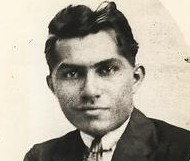
Buck Ruxton
Murderer Lock Ah Tam
Murderer · United Kingdom · 1925
Lock Ah Tam was 54 when he killed his wife and two daughters. He had been a suc…
3 victims
Lock Ah Tam
Murderer · United Kingdom · 1925
Lock Ah Tam was 54 when he killed his wife and two daughters. He had been a suc…
3 victims
 Walter Graham Rowland
Murderer · United Kingdom · 1934
Defendant: Walter Graham Rowland Age: 39 (labourer) Residence/Origin: from Mell…
2 victims
Walter Graham Rowland
Murderer · United Kingdom · 1934
Defendant: Walter Graham Rowland Age: 39 (labourer) Residence/Origin: from Mell…
2 victims
 Alfred Arthur Rouse
Murderer · United Kingdom · 1930
Alfred Arthur Rouse (6 April 1894–10 March 1931) was a British murderer. It was…
1 victim
Alfred Arthur Rouse
Murderer · United Kingdom · 1930
Alfred Arthur Rouse (6 April 1894–10 March 1931) was a British murderer. It was…
1 victim
 William Sallie
Murderer · USA · 1990
William C. Sallie was sentenced to death and convicted by a jury of malice murd…
1 victim
William Sallie
Murderer · USA · 1990
William C. Sallie was sentenced to death and convicted by a jury of malice murd…
1 victim
 Melissa Friedrich
Murderer · Canada · 1991
Melissa Friedrich was also known as Melissa Stewart and Melissa Ann Weeks (also…
1 victim
Melissa Friedrich
Murderer · Canada · 1991
Melissa Friedrich was also known as Melissa Stewart and Melissa Ann Weeks (also…
1 victim
 Daniel Lee Bedford
Murderer · USA · 1984
Daniel Lee Bedford met Gwen Toepfert in 1978. Toepfert’s father owned the bar w…
2 victims
Daniel Lee Bedford
Murderer · USA · 1984
Daniel Lee Bedford met Gwen Toepfert in 1978. Toepfert’s father owned the bar w…
2 victims
 Walter Seifert
Mass murderer · Germany · 1964
Committed suicide by poisoning himself with cyanide the same day; died next day…
10 victims
Walter Seifert
Mass murderer · Germany · 1964
Committed suicide by poisoning himself with cyanide the same day; died next day…
10 victims
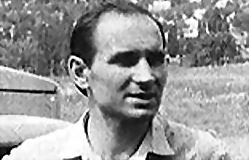 Vladimir Mukhankin
Serial killer · Russia · 1995
Vladimir Mukhankin was 36 when he pleaded guilty in January 1997. He was descri…
8 victims
Vladimir Mukhankin
Serial killer · Russia · 1995
Vladimir Mukhankin was 36 when he pleaded guilty in January 1997. He was descri…
8 victims
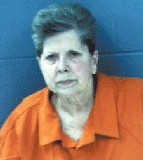 Patricia Allanson
Murderer? · USA · 1974
Patricia Taylor Allanson Patricia Allanson was born in 1937. She grew up as “Pa…
3 victims
Patricia Allanson
Murderer? · USA · 1974
Patricia Taylor Allanson Patricia Allanson was born in 1937. She grew up as “Pa…
3 victims
- Gender
- male
- Country
- United Kingdom
- Location
- Lancaster, Lancashire, England, United Kingdom
- Date of birth
- March 21, 1899
- Age at first offence
- 36
- Characteristics
- jealousy, dismemberment
- Victim profile
- His wife Isabella Kerr, 34, and their housemaid, Mary Jane Rogerson, 20
- Method of murder
- Strangulation
- Date(s) of murder
- September 15, 1935
- Years active
- 1935
- Date of arrest
- October 13, 1935
- Status
-
Executed
Executed by hanging at Strangeways prison, Manchester, on May 12, 1936
Case record: Buck Ruxton
Background
Buck Ruxton (21 March 1899, Bombay – 12 May 1936, Manchester) was also known as Buktyar Rustomji Ratanji Hakim. He was a Parsi doctor.
He was born Bukhtyar Rustomji Ratanji Hakim and later changed his name by deed poll. He practised as a doctor in Lancaster, England, and lived in a large house at 2, Dalton Square. He lived there with his common-law wife Isabella Kerr and their three children.
Isabella Kerr socialised with Lancaster’s elite and was described as popular with guests at functions. Buck Ruxton began to suspect that she was having an affair behind his back, though there was stated to be “no evidence of infidelity.” Neighbour accounts described violent quarrels and stated that Isabella left Ruxton and took the children with her on more than one occasion. She took refuge with her sister Mrs Jeannie Nelson. One row took place in 1934, when Isabella walked out again threatening never to return and later came back, persuaded only by her sister.
Buck Ruxton had been educated in Bombay where he qualified as a doctor. He became Medical Officer to the Malaria Commission. On 7 May 1925 he married Motan, and the marriage was described as short-lived. The marriage was described as having been concealed when Buck Ruxton came to England.
The narrative further described Buck Ruxton moving to Edinburgh to take a post graduate course in medicine and surgery, then moving to London and changing his name to Buck Ruxton.
It described Buck Ruxton meeting Isabella Kerr while he was in Edinburgh. Isabella Kerr was born in Falkirk and had worked in Edinburgh in several jobs. It described the relationship as “love at first sight” and stated that romance blossomed quickly. It stated that they were married by 1930 and came to live in Lancaster. The narrative also described the children: it stated that they initially had one child, Kathleen Elizabeth, and that the family eventually grew to three children, with the other two children being called Diana and Billy.
Other details
The narrative included additional biographical and contextual details:
- A house at Dalton Square remained empty for decades after the murders and was later gutted and altered internally in the 1980s, after which it became architects’ offices. It was described as a non-residential building.
- The bath in which Buck Ruxton dismembered his victims was removed and used as evidence during his trial. Afterwards it was used as a horse trough by the mounted police division at its headquarters in Preston; later it was also described as used as a horse trough at Hutton Police HQ.
- The dismembered remains of Mary Rogerson were buried in the churchyard at Overton, a small village near the neighbouring town of Morecambe.
- The newspaper used to wrap the remains featured headline stories involving Morecambe Carnival.
- A pub called “Ruxton’s” was described as being less than 50 metres from where Dr. Ruxton lived, and the name was later changed to “The Square”.
- The narrative described a song and additional ditty about the case:
- “Bloodstains on the carpet, Bloodstains on the knives Oh Dr Buck Ruxton You murdered your wife. Then Mary she saw you You thought she would tell So Dr Buck Ruxton You killed her as well.”
- “Red stains on the carpet, red stains on the knife For Dr Buck Ruxton had murdered his wife. The maid servant saw it and threatened to tell So Dr Buck Ruxton he’s killed her as well”.
- It stated that funds were set up to help the Rogersons and the Ruxton children.
- It stated that the Rogersons suffered another tragedy in February 1937 with the death of their son Peter.
- It stated that Buck Ruxton denied he had ever been to Scotland when initially questioned; while in Scotland disposing of evidence, his car was stopped by a Police Officer who had made a record of the registration number in his pocketbook, described as vital evidence at the later murder trial.
- It described a confession published by the News of the World and also described a payment for the confession.
The offence
Buck Ruxton became increasingly jealous of Isabella Kerr’s popularity and was described as exploding into fits of rage behind closed doors.
On 15 September 1935, Ruxton strangled Isabella with his bare hands. In order to prevent their housemaid, Mary Jane Rogerson, from discovering his crime before he could dispose of the body, he suffocated her too. Ruxton then dismembered and mutilated both bodies to hide their identities.
The narrative described the remains as including missing torso, removed eyes, ears and noses, lacerated hands, and cuts indicating the need for skill. It also described that there was very little blood because the bodies had been drained, and that this would have required anatomical knowledge. It also described that the murderer wrapped some of the remains in newspaper.
Investigation
Various body parts were found over 100 miles north of Lancaster. The remains were dumped in a stream crossed by the Edinburgh-Carlisle road near the town of Moffat in Dumfriesshire, Scotland. The remains were found wrapped in newspaper on 29 September 1935 by Miss Susan Haines Johnson, who was visiting from Edinburgh.
The newspaper used was described as a special edition of the Sunday Graphic that was only sold in the Lancaster area, leading police to investigate that lead quickly.
The police made public appeals for help, including an appeal for anyone who had seen a stone coloured car in the Milnthorpe area.
It also described that the police investigation linked the discovery of the remains and the disappearance of two women from Lancaster within a few days.
Identification of the bodies relied on forensic methods described as:
- fingerprint identification,
- forensic anthropology to superimpose a photograph over the X-ray of a victim’s skull,
- forensic entomology to identify the age of maggots and the approximate date of death.
The narrative described experts involved in identification:
- Professor John Glaister, Regius Professor of Forensic Medicine at the University of Glasgow
- Dr Gilbert Millar, Lecturer in Pathology at the University of Edinburgh
- Professor Sydney Smith, Regius Professor of Forensic Medicine at the University of Edinburgh
- Dr Arthur Hutchinson, Dean of the Edinburgh Dental Hospital and School
- Professor J C Brash, Professor of Anatomy at the University of Edinburgh
A preliminary examination was made at Moffat by Professor Glaister and Dr Millar, and then the remains were taken to the anatomy department at Edinburgh University for a more detailed investigation.
The narrative described that remains were put together and labelled:
- number one and number two,
- with number one being Mary and number two being Isabella.
It described the discoveries as: two heads, two upper bodies and shoulder blades, seventeen limb portions, and forty-three pieces of soft tissue. It described that because two bodies had been drained of blood, some pieces of flesh could be identified under the microscope.
It described that drains and debris were collected from No 2 Dalton Square and examined, and that forensic examination found a photo of Isabella wearing a tiara. It described measuring the tiara and calculating how far away from the camera Mrs Ruxton must have been standing. It described then taking a photo of the skull at the same distance and producing a perfect match.
It also described that the police examined dental records.
The narrative described that the chief constable of Lancaster at that time was Mr H Vann, and that his office was at the Town Hall opposite the Ruxton house. It described that Ruxton was finally arrested by Constable Vann after a two day continuous investigation.
Arrest
Ruxton was arrested at 7.20 a.m. on 13 October 1935.
The narrative stated that he was charged early in the morning of 13 October, a month and a day after Mary Rogerson’s father had last seen her alive. It stated that Ruxton made an emphatic if not very original reply: “what are you talking about”. At that time he was charged only with the murder of Mary Rogerson.
The narrative then stated that it was not until 5 November that he was charged with the murder of his wife.
Timeline
- 15 September 1935 — Ruxton strangled Isabella Kerr with his bare hands and suffocated Mary Jane Rogerson; he then dismembered and mutilated both bodies.
- 29 September 1935 — Dismembered remains were found wrapped in newspaper by Miss Susan Haines Johnson.
- 13 October 1935 — Ruxton was arrested at 7.20 a.m.; he was charged early the same morning with the murder of Mary Rogerson.
- 5 November 1935 — Ruxton was charged with the murder of his wife.
- 13 December 1935 — The jury returned a “Guilty” verdict and Mr Justice Singleton sentenced him to death.
- 12 May 1936 — Ruxton was executed by hanging at Strangeways prison, Manchester.
- 27 April 1936 — The Court of Criminal Appeal dismissed Ruxton’s appeal.
Trial
The trial opened on 2 March 1936 and was held at Manchester Assizes.
It stated that the prosecution took four hours to make the opening statement. It stated that the trial lasted eleven days.
The judge was Mr Justice John Singleton.
The defence counsel was Norman Birkett. The prosecution counsel was Jackson, Maxwell Fyfe and Hartley Shawcross.
It stated there were 115 witnesses for the prosecution and 209 crown exhibits.
One of the star witnesses against the doctor was Jeannie Nelson, described as his wife’s sister.
The trial ended on 13 December 1935 when the jury had returned a “Guilty” verdict. The narrative also said the verdict was that Ruxton was sentenced to death by hanging. The narrative stated the jury had needed only one hour to reach the verdict and described reasons including the volume of medical evidence and that carpets, wallpaper, skirting boards and the entire contents of the bathroom of No 2 Dalton Square had been taken to Glasgow University for examination and the findings pointed to murders.
It also described that on 13 March 1936 the trial ended, and that the verdict and death sentence were reached then; this timing was presented as part of the narrative of the trial ending.
Sentencing
Mr Justice Singleton sentenced Ruxton to death.
Appeals
A petition urging clemency for Ruxton collected over 10,000 signatures.
The narrative stated that the Court of Criminal Appeal dismissed Ruxton’s appeal on 27 April 1936.
It also stated that a petition went before the court of appeal but was rejected.
Outcome
Ruxton was hanged at Strangeways prison, Manchester, on the morning of 12 May 1936. The narrative stated that he walked from his Strangeways cell to the gallows on 12 May 1936 and was buried in an unmarked grave in the grounds of the prison.
The narrative also stated that after conviction, the News of the World published a confession by Ruxton dated October 1935. It described that this was intriguing because on every occasion bar this one Ruxton had stoutly denied the killings, and that the News of the World paid £3000 for the confession. The narrative reproduced the confession text as:
“I killed Mrs Ruxton in a fit of temper because I thought she had been with a man. I was mad at the time. Mary Rogerson was present at the time. I had to kill her”.
It described that his wife’s remains were taken back to Edinburgh and that Mary Rogerson’s remains were taken to Overton churchyard.
Aftermath
The narrative described the house at Dalton Square remaining empty for decades and later being altered for use as architects’ offices. It also described the bath being used as a horse trough and referenced other reuses of items as evidence.
It described that the Ruxton trial caught public interest and included song/ditty references. It also described the Rogersons’ later tragedy in February 1937 with the death of their son Peter.
Spotted an error, or have more information about this case?