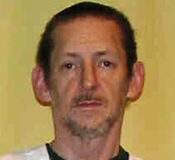
Daniel Lee Bedford
Murderer Brian Kevin Rosenfeld
Murderer · USA · 1985
Brian Kevin Rosenfeld Brian Kevin Rosenfeld was sentenced to three concurrent l…
23 victims
Brian Kevin Rosenfeld
Murderer · USA · 1985
Brian Kevin Rosenfeld Brian Kevin Rosenfeld was sentenced to three concurrent l…
23 victims
 Marvin Gray
Murderer · USA · 1975
Marvin Gray was convicted killer who claimed responsibility for 23 slayings and…
23 victims
Marvin Gray
Murderer · USA · 1975
Marvin Gray was convicted killer who claimed responsibility for 23 slayings and…
23 victims
 Yahweh ben Yahweh
Murderer · USA · 1980
Yahweh ben Yahweh was born and legally named Hulon Mitchell Jr. (October 27, 19…
23 victims
Yahweh ben Yahweh
Murderer · USA · 1980
Yahweh ben Yahweh was born and legally named Hulon Mitchell Jr. (October 27, 19…
23 victims
 Russell Ellwood
Murderer · USA · 1991
Russell Ellwood was a former taxi driver. Authorities suspected him of killing…
20 victims
Russell Ellwood
Murderer · USA · 1991
Russell Ellwood was a former taxi driver. Authorities suspected him of killing…
20 victims
 Daniel Lee Zirkle
Murderer · USA · 1999
Daniel Lee Zirkle had an ongoing relationship with Barbara Schifflett, who was…
2 victims
Daniel Lee Zirkle
Murderer · USA · 1999
Daniel Lee Zirkle had an ongoing relationship with Barbara Schifflett, who was…
2 victims
 Beatrice Cenci
Murderer · Italy · 1598
Beatrice Cenci (6 February 1577 – 11 September 1599) was an Italian noblewoman.…
1 victim
Beatrice Cenci
Murderer · Italy · 1598
Beatrice Cenci (6 February 1577 – 11 September 1599) was an Italian noblewoman.…
1 victim
 Bruce Kilgore
Murderer · USA · 1986
Bruce Kilgore was executed on June 16, 1999. Bruce Kilgore was convicted of fir…
1 victim
Bruce Kilgore
Murderer · USA · 1986
Bruce Kilgore was executed on June 16, 1999. Bruce Kilgore was convicted of fir…
1 victim
 David Leisure
Murderer · USA · 1980
David Leisure was executed on September 1, 1999. In early 1977, Ray Massud prom…
1 victim
David Leisure
Murderer · USA · 1980
David Leisure was executed on September 1, 1999. In early 1977, Ray Massud prom…
1 victim
- Gender
- male
- Country
- USA
- Location
- Hamilton County, Ohio, USA
- Date of birth
- September 16, 1947
- Age at first offence
- 37
- Characteristics
- alcohol, domestic violence
- Victim profile
- His ex-girlfriend, Gwen Toepfert, 25, and her new boyfriend, John Smith, 27
- Method of murder
- Shooting
- Date(s) of murder
- April 24, 1984
- Years active
- 1984
- Date of arrest
- Same day
- Status
-
Executed
Executed by lethal injection in Ohio on May 17, 2011
Case record: Daniel Lee Bedford
Background
Daniel Lee Bedford met Gwen Toepfert in 1978. Toepfert’s father owned the bar where Bedford worked, and over the next several years Bedford and Toepfert were involved in an “on-again, off-again” relationship. By 1984, Bedford and Toepfert were estranged. Bedford’s feelings for Toepfert remained, prompting him to try to “rekindle our prior romance.”
Bedford visited Toepfert’s apartment bearing a gift on April 21, 1984, hoping to make amends. He learned that Toepfert’s new boyfriend, John Smith, was already there. Three days later, Bedford tried again. At around 2:30 a.m. on Tuesday, April 24, Bedford telephoned Toepfert’s apartment and learned from Toepfert’s roommate, Jo Ann Funk, that Toepfert was asleep and that Smith was with her.
At trial, Bedford attempted to establish that he was extremely upset and depressed due to the break-up with his girlfriend and that he was intoxicated when he went to her apartment. Funk testified that Bedford did not seem intoxicated either on the telephone or when she was at the apartment. Pennington testified that, while Bedford appeared very tired, Bedford did not seem to be intoxicated. Police also testified that Bedford did not appear intoxicated.
The offence
Bedford was indicted on two counts of aggravated murder pursuant to R.C. 2903.01(A). Both counts alleged that Bedford purposely and with prior calculation and design caused the death of another. Each count was accompanied by a specification that the murder was committed as part of a course of conduct involving the purposeful killing of two or more persons under R.C. 2929.04(A)(5).
At approximately 2:30 a.m. on Tuesday, April 24, Bedford telephoned the apartment shared by his ex-girlfriend, Gwen Toepfert, and Jo Ann Funk. Bedford asked to speak with Toepfert. Funk refused to awaken Toepfert but told Bedford that both Toepfert and John Smith were at the apartment.
Funk was later awakened by gunshots and screams. Toepfert ran into Funk’s bedroom, crying that she had been shot. After Funk attempted to phone for help, Bedford entered the room and shot Toepfert as she lay on the floor. Bedford did not shoot Funk, although she heard the .38 caliber revolver click after Bedford shot her roommate.
During the melee, Funk saw Bedford with a shotgun. Funk heard Bedford yelling, “Come out, mother-fucker.” Outside the building, Smith’s body lay on the landing of the front steps. Funk ran to the bathroom and slammed the door. During that time, Funk heard a loud shot fired. Bedford then left the apartment. When Funk later came out of the bathroom, she noticed that Toepfert had sustained a shotgun blast to the lower abdomen, in the pelvic region.
The state described Bedford’s conduct as waiting at the apartment where, armed with a revolver and a shotgun, he killed Smith and shot Toepfert multiple times, then returning to Toepfert’s body and firing a shotgun blast into her groin to be sure she was dead.
Bedford’s statement indicated that he shot Smith after Smith wrestled away the shotgun and that he would not have killed either victim if Smith had not wrestled the shotgun from him. There was no evidence corroborating Bedford’s intoxication claim.
Bedford fled to Tennessee after the killings.
Investigation
The record indicated that it was not entirely clear how Bedford gained access to the apartment. Bedford told an examining psychologist that he had hidden in the laundry room of the apartment building to avoid being seen prior to gaining entrance to the apartment.
Bedford visited an acquaintance in Tennessee. The acquaintance reported Bedford to the police. Bedford had guessed that the acquaintance had turned him in.
Arrest
Bedford was arrested in Tennessee. Upon arrival, a deputy sheriff asked Bedford if the police could help him. Bedford told the officers that he had killed two people in Cincinnati earlier in the day. Bedford was frisked, given Miranda rights, and taken to jail.
Bedford again received his Miranda rights, signed a waiver, and gave police an inculpatory statement. He later gave Cincinnati authorities a similar inculpatory statement.
Trial
Charges and verdict
A jury convicted Bedford on one count of aggravated murder (Toepfert) with a specification and one count of murder (Smith). The specification was that Bedford committed aggravated murder as part of a course of conduct involving the purposeful killing of Gwen Toepfert and John Smith.
Mitigation hearing and sentencing recommendation
After hearing evidence of mitigating factors, the jury recommended that defendant be sentenced to death. The trial court, after separate findings of fact and opinion, concurred and sentenced Bedford to death. After an independent review, the Court of Appeals for Hamilton County affirmed the conviction and death sentence.
Voir dire issues and jury selection
Bedford argued that two prospective jurors were improperly removed for cause. The court held that prospective jurors may be excluded for cause if their views would prevent or substantially impair the performance of duties in accordance with the oath and instructions.
Juror Tucker clearly indicated that, although she could “follow the law,” she could not consider the death penalty. The record included the following question-and-answer exchange:
“Q. [By the court] Let me ask you this: Is this an opposition based upon religious belief, philosophy or what?
“A. [Juror Tucker] * * * I don't think I could be a part of convicting someone to the death sentence.
“Q. * * * Can you follow * * * [the] law?
“A. No.
“A. * * * I would follow all instructions.
“Q. [By Mr. Longano] Including recommending death if that's warranted?
“A. Excluding recommending death.
“A. I feel that they should not have that ability to take the life of another person.
“A. I will follow all the laws until such time that I would be asked to say something about the death penalty.
“JUROR TUCKER: No, I cannot. The way the two of you is [ sic ] saying it is different. He's saying could I follow the law. I could follow the law all the way up, and I think-I know if I make the recommendation for death, then that means he may get it, and no, I can't.
“THE COURT: * * * Can you or can you not make that recommendation?
“JUROR TUCKER: Not for the death penalty, no.”
The court also considered Juror Herweh. Juror Herweh indicated that he could not sign a statement putting anyone to death:
“Q. [The Court] Assuming that you have found that the aggravating factors outweigh the mitigating factors, will you sign the recommendation of the death penalty?
“A. [Juror Herweh] I have my doubts that I would because I don't feel that I would really have the knowledge being a novice, that I could condemn somebody-
“Q. * * * Will you or won't you sign that recommendation if you reach that point, or are you unable definitely to tell us whether you would or wouldn't?
“A. I definitely don't think that I would be able to sign such a waiver.
“Q. [Mr. Breyer] Now, sir, you indicated, I believe in response to the Judge's question, that you would have difficulty recommending a verdict of-signing your name to a verdict form which recommended that the Judge impose the death penalty.
“A. This is true.
“THE COURT: Well, now can you tell us that you will sign a recommendation of the death penalty if the law-if the aggravating circumstances outweighed the mitigating factors? Can you tell us you will or won't, or you don't know?
“JUROR HERWEH: I don't think I would. I don't believe I would sign the statement putting anyone to death.”
Bedford also challenged the voir dire process, including limitations on certain questions. The court held that the trial court did not abuse its discretion by limiting certain areas of inquiry and that Bedford was not denied a fair and impartial jury.
Jury instructions at penalty phase
Bedford argued that the jury was coerced into recommending the death penalty. The jury sent the following inquiry to the trial judge:
“ * * * ‘If we cannot reach a unanimous decision for this part of the trial, what would happen? Is there an approximate time frame of deliberation before which we can declare that we are unable to reach a verdict?’ ”
The judge responded:
“ * * * Ladies and gentlemen of the jury, the Court is advised that you have indicated difficulty in making a recommendation of sentence. Now the Court suggests to you that since the trial of this case means a great deal to the parties and to the public and has been expensive in time, effort and money, the Court urges you to make every reasonable effort to agree on a recommendation. “In an ordinary case where the jury is deadlocked, the Judge can declare a mistrial and another jury can be selected to rehear the case. In this matter, such a solution is, obviously, undesirable since this jury has already decided guilt and no new jury could balance as easily the aggravating circumstance and mitigating factors. You then must consider that you are the jury that is in the best position to make an intelligent and fair recommendation in this matter, and the Court urges you to make every reasonable conscience [ sic ] effort to do so. “There's no time limit set by law to the time a jury may take to make a recommendation. The Court, in an effort to help you in your deliberations, suggests the following: Return to the jury room and consider whether you are, in fact, unable with reasonable anticipation to come to an agreement. If you believe an agreement may be reached, continue to deliberate. If then you reach a unanimous decision to recommend the death penalty or life sentence, do so under the instructions previously given. “If, after exhausting all reasonable discussion, you remain hopelessly deadlocked on the issue of the death penalty, then you will consider that the prosecution has failed to prove to you as a unanimous group that the aggravating circumstance outweighs beyond a reasonable doubt the mitigating factors. If you in fact reach the last conclusion, proceed to recommend the appropriate life sentence.”
Bedford also noted that one juror required medical attention for stress during the jury’s deliberations. The court concluded that the instruction was a reasonable response to the jury’s question and did not unduly coerce a verdict.
Closing arguments and evidentiary rulings
Bedford challenged prosecutorial closing argument and jury instructions on multiple grounds. He also challenged evidentiary rulings, including testimony regarding possible fingerprints taken from a shotgun found at the scene, use of a statement taken at the sheriff’s office in Tennessee to refresh recollection, and the admission of photographs he claimed were repetitive and prejudicial.
In the fingerprint-related issue, the appellant had been informed via a Crim.R. 16 discovery motion that no fingerprint evidence was discovered, but the state introduced evidence regarding partial, though unidentifiable, fingerprints.
Regarding the Tennessee statement, the trial court permitted the testifying officer to use the statement in order to refresh recollection, under Evid.R. 612. Bedford also challenged the admission of photographs, and the court applied a twofold test for gruesome photographic evidence: probative value compared to prejudicial impact, and whether the photographs were repetitive or cumulative.
Bedford challenged the trial court’s instruction on voluntary manslaughter regarding extreme emotional distress. The court held that extreme emotional distress was no longer a component of the definition of voluntary manslaughter and overruled Bedford’s argument.
Bedford also challenged the instruction that he had to prove intoxication by a preponderance of the evidence. The court held that such instruction did not remove the state’s burden to prove its case beyond a reasonable doubt.
Sentencing
The jury convicted Bedford and found the specification for Count One that the aggravated murder involved a course of conduct resulting in the purposeful killing of two or more persons. The court treated this as the single aggravating circumstance.
The court weighed mitigating factors and concluded that the aggravating circumstance outweighed the mitigating factors beyond a reasonable doubt. The court also concluded that the death sentence was not disproportionate or excessive and affirmed the judgment of the Court of Appeals.
Appeals
Ohio Supreme Court (direct appeal)
Bedford appealed his aggravated murder conviction and death sentence. The court affirmed the conviction and the sentence of death. The opinion addressed multiple propositions of law, including challenges to prosecutor closing argument, jury instructions, juror removal for cause, voir dire limitations, admissibility of statements after arrest, handling of extrajudicial information by a juror, multiple evidentiary rulings, voluntary manslaughter instructions, intoxication burden of proof instructions, and the proportionality review method.
The court held that Bedford’s propositions of law were overruled and affirmed the conviction and sentence of death.
Dissenting opinion in Ohio Supreme Court
A dissenting justice wrote separately, discussing alleged prosecutorial misconduct during the penalty phase, including readmission of photographs, misstatements about statutory minimum sentences and parole, and quoting passages from Gregg v. Georgia. The dissent included quotations of the Gregg passage and other quotations from opinions cited in the dissent.
Federal habeas corpus proceedings
After direct review, Bedford filed a federal petition for writ of habeas corpus. The district court denied the petition. Bedford appealed, and the Court of Appeals affirmed denial of habeas relief.
The Court of Appeals held that striking prospective jurors was warranted based on their substantial impairment in their ability to impose the death penalty under the state-law framework, and that limitations during voir dire did not render the process fundamentally unfair. It also held that prosecutor closing remarks during the guilt phase did not violate due process, and that penalty-phase closing arguments did not deprive Bedford of due process. It found that the prosecutor’s argument about the possibility of early parole did not render the trial unfair, and it concluded that the prosecutor’s argument was not a flagrant violation of Fifth Amendment rights. It also held that the supplemental jury instruction to possibly deadlocked jury was not coercive and that Bedford was not deprived of effective assistance of counsel during the penalty phase.
Outcome
Bedford was executed by lethal injection on May 17, 2011. He was pronounced dead at 11:18 a.m. The execution used pentobarbital as a stand-alone execution drug.
In his final minutes, Bedford yelled “I love you” to his adult daughter, Michelle Connor, and she shouted back, “I love you, Daddy.” He also called out to witness Kristi Schulenberg, a friend and pen pal. His last words were reported as, “Love you all. God bless you.” Bedford’s chest heaved and his mouth moved before he became still until he was declared dead.
Relatives of Gwen Toepfert and John Smith expressed support for the execution. Gov. John Kasich denied clemency, and the Ohio Supreme Court refused to block the execution by rejecting the defense’s arguments about Bedford’s competency.
Last meal
Bedford’s last meal included an orange, graham crackers, turnip greens, oven-brown potatoes, and wheat bread, and he received a two-liter bottle of cola as a special request.
Execution day legal proceedings
Bedford’s attorneys pushed to block the lethal injection in a last-minute legal battle. They argued Bedford had dementia and a mild mental disability and was not competent enough to understand why he was being executed, and that he was denied legal proceedings to which he was entitled. Prosecutors challenged the competence argument and successfully appealed a stay of execution that had been issued Monday by a federal judge. The U.S. Supreme Court refused Bedford’s request to block the execution.
The execution was delayed by about an hour awaiting a decision by the U.S. Supreme Court.
Aftermath
The execution was described as becoming the third inmate in Ohio and the nation to be put to death using pentobarbital as a stand-alone execution drug. It was also described as the fourth Ohio inmate put to death that year.
A statement jointly issued by the Toepfert and Smith families included the following language:
“never any doubt that Bedford committed this brutal, double murder. Unfortunately, it has taken 27 long years to get to where we are today.”
Bedford had been sentenced to death after confessing to authorities that he shot Gwen Toepfert and John Smith at Toepfert’s Cincinnati apartment in 1984. Bedford told the state parole board in March that he did not remember the slayings but that his attorneys had told him details, and that he was “sorry it happened.”
In Ohio appellate and habeas proceedings, courts also addressed issues including prosecutor remarks, juror selection, limitations during voir dire, evidentiary rulings, jury instructions, and proportionality review, and upheld Bedford’s conviction and death sentence.
Spotted an error, or have more information about this case?