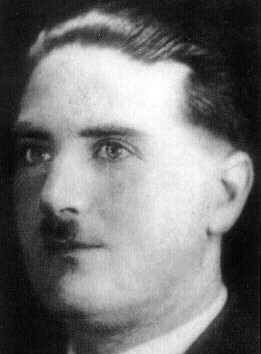
Alfred Arthur Rouse
Murderer Albert Burrows
Murderer · United Kingdom · 1920
Albert Burrows (also named Albert Edward Burrows): married farm labourer who to…
4 victims
Albert Burrows
Murderer · United Kingdom · 1920
Albert Burrows (also named Albert Edward Burrows): married farm labourer who to…
4 victims
 Lock Ah Tam
Murderer · United Kingdom · 1925
Lock Ah Tam was 54 when he killed his wife and two daughters. He had been a suc…
3 victims
Lock Ah Tam
Murderer · United Kingdom · 1925
Lock Ah Tam was 54 when he killed his wife and two daughters. He had been a suc…
3 victims
 Buck Ruxton
Murderer · United Kingdom · 1935
Buck Ruxton (21 March 1899, Bombay – 12 May 1936, Manchester) was also known as…
2 victims
Buck Ruxton
Murderer · United Kingdom · 1935
Buck Ruxton (21 March 1899, Bombay – 12 May 1936, Manchester) was also known as…
2 victims
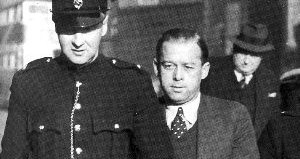 Walter Graham Rowland
Murderer · United Kingdom · 1934
Defendant: Walter Graham Rowland Age: 39 (labourer) Residence/Origin: from Mell…
2 victims
Walter Graham Rowland
Murderer · United Kingdom · 1934
Defendant: Walter Graham Rowland Age: 39 (labourer) Residence/Origin: from Mell…
2 victims
 Misty Witherspoon
Murderer · USA · 2005
Misty Witherspoon — defendant; her husband was Quinn Witherspoon (a Concord Pol…
1 victim
Misty Witherspoon
Murderer · USA · 2005
Misty Witherspoon — defendant; her husband was Quinn Witherspoon (a Concord Pol…
1 victim
 Els Clottemans
Murderer · Belgium · 2006
Els “Babs” Clottemans was a Belgian elementary school teacher and amateur skydi…
1 victim
Els Clottemans
Murderer · Belgium · 2006
Els “Babs” Clottemans was a Belgian elementary school teacher and amateur skydi…
1 victim
 Ravindra Verma
Mass murderer · India · 2009
Ravindra Verma was accused of killing his five children and injuring his wife i…
5 victims
Ravindra Verma
Mass murderer · India · 2009
Ravindra Verma was accused of killing his five children and injuring his wife i…
5 victims
 David Wayne Woodruff
Murderer · USA · 1985
David Wayne Woodruff. · July 19, 1986 — Woodruff and John Joseph Romano were ac…
2 victims
David Wayne Woodruff
Murderer · USA · 1985
David Wayne Woodruff. · July 19, 1986 — Woodruff and John Joseph Romano were ac…
2 victims
 Kevin Dunlap
Murderer · USA · 2008
Kevin Wayne Dunlap (DOB 5-15-72) was sentenced to death on March 19, 2010 in Li…
3 victims
Kevin Dunlap
Murderer · USA · 2008
Kevin Wayne Dunlap (DOB 5-15-72) was sentenced to death on March 19, 2010 in Li…
3 victims
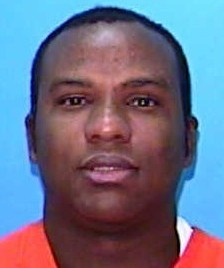 Ernest Whitfield
Murderer · USA · 1995
Ernest Whitfield was convicted and sentenced to death for the June 19, 1995 mur…
1 victim
Ernest Whitfield
Murderer · USA · 1995
Ernest Whitfield was convicted and sentenced to death for the June 19, 1995 mur…
1 victim
- Gender
- male
- Country
- United Kingdom
- Location
- Northamptonshire, England, United Kingdom
- Date of birth
- April 6, 1894
- Age at first offence
- 36
- Characteristics
- escape, hitchhiking, alcohol
- Victim profile
- An unknown man
- Method of murder
- Fire
- Date(s) of murder
- November 6, 1930
- Years active
- 1930
- Date of arrest
- Next day
- Status
-
Executed
Executed by hanging in Bedford on March 10, 1931
Case details
Alfred Arthur Rouse (6 April 1894–10 March 1931) was a British murderer.
It was theorised, though never proved, that Rouse, seeking to fabricate his own death, picked up a hitch-hiker, knocked him out, and then burnt his car with the man inside.
Rouse was charged with murder of an unknown man. He was convicted of the murder of an unknown man, and his case proceeded on the basis that the identity of the victim remained unknown.
Timeline
- 8 August 1914 — Rouse enlisted, being assigned to the 24th Queen's Territorial Regiment as a Private and assigned the number 2011.
- 29 November — Rouse married Lily May Watkins at St Saviour's Church, St Albans.
- 15 March 1915 — Rouse arrived in France and was stationed in Paris for some weeks.
- 15 May — Rouse’s unit committed to the Battle of Festubert on the Ypres salient, which began on 15 May.
- 9 December 1915 — An Invaliding Medical Board hearing found that his capacity had been “reduced 3/4”.
- 11 February 1916 — Rouse was formally discharged from the Army and awarded a pension of 20 s per week.
- 30 July 1919 — Rouse was examined again by a doctor who observed that he was now in no disability from his head wound.
- 17 September 1919 — Rouse’s pension was cut to 12/- per week.
- 14 September 1920 — Rouse’s pension stopped with payment of a lump sum of £41 5s. in final settlement of all claims.
- 6 November 1930 — Two men in Northamptonshire saw a fire in the distance; the fire was later found to be a vehicle blaze containing a body charred beyond recognition.
- 7 November — Rouse returned to London by bus, and police met him after informing Scotland Yard.
- 26 January 1931 — Rouse was brought to trial at Northampton Assizes; he was found guilty of murder and sentenced to death.
- 23 February 1931 — Rouse’s appeal was heard; the appeal failed.
- 10 March 1931 — Rouse was hanged in Bedford prison.
Background
Rouse was the son of W.E. Rouse, a hosier from Milkwood Road in Herne Hill. Rouse was born in London. His mother was Irish and reported to be an actress.
In 1900, Rouse’s parents’ marriage broke up, apparently because his mother deserted. Rouse and two other children of the marriage were taken to be brought up by his aunt on his father’s side.
Rouse went to a council school where he was bright and athletic. After leaving school, he learned carpentry and also attended evening classes where he learned to sing and to play musical instruments (the piano, mandolin, and violin). He had considerable musical ability and his voice developed into a good baritone.
He worked first as an office boy for an estate agent, and then in 1909 used his carpentry experience to join a West End furniture manufacturer.
Rouse was a member of the Church of England and was a sacristan at St Saviour's Church in Stoke Newington.
The offence
In the early morning of 6 November 1930, Alfred Arthur Rouse’s car was found ablaze near Hardingstone, near Northampton, and a body was charred beyond recognition inside the car.
Two men, Alfred Brown and William Bailey, who were returning from a Guy Fawkes' Night Dance in Northampton, saw a man appear in front of them. The man was described as stocky and carrying a small suitcase. He hurried past them towards the main London-Northampton road.
Brown and Bailey continued down Hardingstone Lane and saw a glow from a fire up ahead. They ran to the village and fetched two local constables. After the fire was put out, they found that someone had been in a Morris Minor. Senior officers arrived and began to build a picture of what had happened.
A licence plate was identified as MU 1468. The car was traced to a commercial traveller, aged 37, named A. A. Rouse of Buxted Road, Finchley, north London. Mrs Rouse was unable to identify the remains from the car as her husband.
Rouse later confessed, saying that he had picked up the victim during a ride to Leicester. Rouse stated that while he went to urinate, the man lit a cigarette in the car. According to Rouse, there was a flash of light and the car burst in flame. Rouse said he tried to reach the man trapped in the car but had failed and panicked.
Police found an empty jerry-can.
On closer examination of the wreck, it was discovered that the petrol cap was on, but loose, the top of the carburettor was missing, and that a junction in the petrol line was loose. The junction was in a position that petrol in the fuel line would drip into the foot-well of the car.
The principal forensic dispute concerned the way in which the fire started. Finnemore tried to establish the possibility that the fire started accidentally. He sought to suggest that the junction nut might have been loosened by the passenger’s foot, but the experts rejected the possibility.
In legal proceedings, the Crown could not suggest a motive for the alleged murder. The Crown also could not identify the body, and nothing about the deceased could be suggested about an otherwise senseless killing.
Investigation
After the fire was discovered, the rear licence plate had survived and was determined to be MU 1468. Police circulated Rouse’s description to the press. Miss Phyllis Jenkins, of Gellygaer, Glamorgan, bought a copy of the 'Daily Sketch' with the description of the incident. She showed it to a man who had arrived the previous evening who had told her that his car had been stolen near Northampton and that he denied it was his car. This man was Rouse, and Phyllis’ sister was Ivy, Rouse’s pregnant girlfriend.
The 'Daily Sketch' carried more details the next day, including Rouse’s name. Rouse returned to London by bus on 7 November, but gossip about his visit and departure reached Cardiff police, who informed Scotland Yard. When he got off the bus at Victoria Bus Station, he was met by DS Skelly.
Rouse’s story to detectives was that he had been travelling overnight to Leicester and had picked up a hitchhiker. He said he had taken a wrong turn and found himself in Hardingstone Lane, where he decided to stop for a nap. He said he got out of the car to relieve himself and asked his passenger to fill the petrol tank with the contents of a can in the car. Rouse said that the man then asked him if he had something he could smoke. Rouse, a non-smoker, had a cigar and gave it to the man. Rouse said he left the car and walked over 200 yards to relieve himself, taking his suitcase with him. He said that on his way back he saw the car burst into flames. He said he tried to reach the man trapped in the car but had failed and panicked.
Police later built a picture of Rouse’s background. They found he had been born on 6 April 1894, the son of shopkeepers in Herne Hill, London. He had married Lily May Watkins in November 1914 and had served in France in the Great War after leaving the army. During his service, he had been injured when he received a head wound in May 1915 and had never been the same since.
Police also found that after leaving the army, he got a job as a commercial traveller with his job taking him over a large area, which gave him chance to charm his way into the lives and beds of dozens of women. Police found he had over 80 women on his visiting list by 1930, had fathered several illegitimate children and had even married bigamously. One girlfriend was in hospital expecting her second child by Rouse four days before the incident.
Police further found that Rouse had a pile of maintenance orders building up against him and knew that there was no way that he could keep up the payments on his wages. Police realised this gave motive; Rouse’s only way out was to vanish, and they reasoned that dying in a fire could achieve this.
Arrest
Rouse was arrested and confessed.
After Rouse returned to London by bus on 7 November, he was met by DS Skelly at Victoria Bus Station.
Trial
Rouse was charged with murder of an unknown man and brought to trial in Northampton in January 1931.
The trial before Justice Talbot began on 26 January 1931.
Mr Norman Birkett, prosecuting, appeared for the prosecution. Norman Birkett KC and Richard Elwes appeared for the prosecution. Rouse was defended by D.L. Finnemore.
The Crown could not suggest a motive for the alleged murder. Neither could the Crown identify the body, so nothing about the deceased could be suggested to explain an otherwise senseless killing.
Technical evidence was given to show that the carburettor had been tampered with before the fire had started.
The trial took six days. The jury retired to consider their verdict, taking just 75 minutes to return a guilty verdict.
Rouse was found guilty of murder and sentenced to death.
During the trial, an engineer and fire assessor, Arthur Isaacs, was called by the defence on the fifth day of the trial. He described himself as “an engineer and fire assessor with very vast experience as regards fires in motor cars”.
Finnemore conducted cross-examination on the question:
What is the coefficient of the expansion of brass? --- I beg your pardon
Did you not catch the question? --- I did not quite hear you
What is the coefficient of the expansion of brass? --- I am afraid I cannot answer that question off-hand
What is it? If you do not know, say so.
What is the coefficient of the expansion of brass?
What do I mean by the term? --- You want to know what is the expansion of the metal under heat? I asked you: What is the coefficient of the expansion of brass? Do you know what it means?--- Put that way, probably I do not. You are an engineer? --- I dare say I am. Let me understand what you are. You are not a doctor? --- No Not a crime investigator? --- No Nor an amateur detective? --- No But an engineer? --- Yes What is the coefficient of the expansion of brass? You do not know? --- No; not put that way.
Rouse was hanged after sentencing.
Statements during investigation and court proceedings
Brown’s description during re-examination included:
“When you go home at that time in the morning you do not usually see well-dressed men getting out of the ditch.”
Rouse told DS Skelly:
“Very well, I am glad it is all over. I was going to Scotland Yard about it. I am responsible”.
Sentencing
Rouse was sentenced to death after being found guilty of murder.
Appeals
Rouse’s appeal was heard on 23 February 1931.
Sir Patrick Hastings led Finnemore on the appeal. The appeal failed.
Outcome
Rouse was hanged at Bedford prison on 10 March 1931 by Tom Pierrepoint.
Aftermath
Rouse confessed to the crime shortly before the execution.
Other details
Wartime service
Rouse enlisted on 8 August 1914 and was assigned to the 24th Queen's Territorial Regiment as a Private and assigned the number 2011. The Regiment kept him for training in England before his departure for France.
On arrival in France, Rouse arrived on 15 March 1915 and was stationed in Paris for some weeks before his unit was sent into battle.
During that time, Rouse was known to have fathered a child.
In the Battle of Festubert, which began on 15 May, Rouse came face to face with a German soldier and lunged but missed; he later had the memory of waiting just for an instant for the enemy reply. On the last day of the battle, a high explosive shell exploded close to his head, severely injuring him, and he also had injuries to his thigh.
An operation was performed on Rouse’s left temporal region to remove shrapnel. His leg injuries left him unable to bend his knee; his leg suffered from an œdema. He could walk only with difficulty. He was repatriated and sent to recuperate at a series of Army hospitals.
An Invaliding Medical Board hearing on 9 December 1915 found his capacity had been “reduced 3/4”.
Rouse was formally discharged from the Army on 11 February 1916 and awarded a pension of 20 s per week. His medical records showed he was still severely disabled.
In July 1916, a doctor noted that Rouse’s memory was defective and he was unable to wear a hat of any kind because his scar was irritable, although his speech and writing were unaffected and he “sleeps well unless excited in any way”.
His pension was raised to 25/- per week the next month. At the end of January 1917, the doctor found progress and believed that the injury to his leg could “by degrees be overcome by the man's own endeavour”.
A year later, Rouse reported dizziness, but the doctor noted he was talkative and “laughs immoderately at times”. September 1918 saw Rouse complain of defective memory and bad sleeping.
On 30 July 1919, Rouse was examined by a doctor who observed he was now in no disability from his head wound. While Rouse would not allow his knee to be flexed by more than 30%, the doctor found no physical reason for the limitation and ascribed it to neurosis.
His pension, which since September 1918 had been 27/6 per week, was cut to 12/- per week on 17 September 1919.
In August 1920, a final examination found his head injury healed, and his knee injury only slightly affecting movement. His pension stopped on 14 September 1920 with payment of a lump sum of £41 5s.
Return to work and other claims
Rouse had already found work before his pension stopped.
Literary reference
In Alan Moore’s novel Voice of the Fire, set in Northampton at various times throughout history, one chapter told Rouse’s story in first-person narrative, described as an evasive and self-serving musing as he sat in the dock during his murder trial. The chapter ended with Rouse seemingly convinced of his ability to charm his jury into acquitting him, with his judgment proving poor.
Additional references in the material
A Summer 2002 issue of the Bar News included an item in the Verbatim column quoting a question asked during the Esso class action, “What is the coefficient of the expansion of brass”. The material stated that some in court were mystified by the question, some readers were mystified, and that the question was relevant tangentially to the mechanism by which a hot water service might fail if allowed to cool completely and then undergo reheating. It also stated that the question was a quote from a famous cross-examination in a famous case.
The material described Rouse as a commercial traveller who maintained wives and mistresses around the countryside and visited them in the course of his journeys around the countryside as representative of Messrs Martins, garters and braces. It described that each was apparently unaware of the existence of anyone else in Rouse’s life and suggested his complex social life may explain his curious conduct when events began to unravel.

Spotted an error, or have more information about this case?