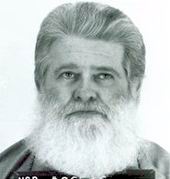
Michael Wayne Ryan
Murderer Brian Kevin Rosenfeld
Murderer · USA · 1985
Brian Kevin Rosenfeld Brian Kevin Rosenfeld was sentenced to three concurrent l…
23 victims
Brian Kevin Rosenfeld
Murderer · USA · 1985
Brian Kevin Rosenfeld Brian Kevin Rosenfeld was sentenced to three concurrent l…
23 victims
 Marvin Gray
Murderer · USA · 1975
Marvin Gray was convicted killer who claimed responsibility for 23 slayings and…
23 victims
Marvin Gray
Murderer · USA · 1975
Marvin Gray was convicted killer who claimed responsibility for 23 slayings and…
23 victims
 Yahweh ben Yahweh
Murderer · USA · 1980
Yahweh ben Yahweh was born and legally named Hulon Mitchell Jr. (October 27, 19…
23 victims
Yahweh ben Yahweh
Murderer · USA · 1980
Yahweh ben Yahweh was born and legally named Hulon Mitchell Jr. (October 27, 19…
23 victims
 Russell Ellwood
Murderer · USA · 1991
Russell Ellwood was a former taxi driver. Authorities suspected him of killing…
20 victims
Russell Ellwood
Murderer · USA · 1991
Russell Ellwood was a former taxi driver. Authorities suspected him of killing…
20 victims
 Shad Daniel Armstrong
Murderer · USA · 1998
Shad Daniel Armstrong burglarized a home in Texas in late August 1996 with his…
2 victims
Shad Daniel Armstrong
Murderer · USA · 1998
Shad Daniel Armstrong burglarized a home in Texas in late August 1996 with his…
2 victims
 Derek Percy
Murderer · Australia · 1965
Derek Ernest Percy was declared not guilty by reason of insanity in April 1970…
1 victim
Derek Percy
Murderer · Australia · 1965
Derek Ernest Percy was declared not guilty by reason of insanity in April 1970…
1 victim
- Gender
- male
- Country
- USA
- Location
- Richardson County, Nebraska, USA
- Date of birth
- August 3, 1948
- Age at first offence
- 36
- Characteristics
- white supremacist, torture, sexual abuse, armed robbery
- Victim profile
- Luke Stice, 5 / James Thimm
- Method of murder
- Beating - Torture
- Date(s) of murder
- March/ April 29, 1984
- Years active
- 1984
- Date of arrest
- August 18, 1984
- Status
-
Sentenced to death
Sentenced to death on September 12, 1985
Background
Michael Wayne Ryan (born 3 August 1948) was an American white supremacist and murderer. Ryan was the leader of a small anti-government group that occupied a compound near Rulo, Nebraska, in the early 1980s. Ryan had loose ties to Posse Comitatus and links to the Christian Identity movement. Ryan’s teachings included the supremacy of the white race, the inherent evil of Jews (antisemitism), and a distrust of all established earthly authority, including governments.
Ryan and his followers carried out months of burglary. They resold items obtained by theft, supported the activities of the group, and built up weapons and supplies they believed would be needed for an imminent battle of Armageddon, which they assumed would occur in the form of a race war. After being arrested and implicated in the killings, Ryan was represented at trial by Richard Goos and Louis Ligouri.
Ryan claimed to have been in direct contact with God and vowed to spend his days in prison rewriting the Bible, but he later recanted on both.
Ryan was noted to employ a method called “the arm test” to determine whether victims in the case were to be tortured and what to do with individuals inside the cult.
In the summer and fall of 1984, Ryan and several other men and women, along with 10 of their children, moved to a farm owned by Ora Richard (Rick) Stice located near Rulo, Nebraska. The group was united by their common interest in the teachings of a Rev. James Wickstrom. Group members studied the Bible and referred to God as “Yahweh.” The group believed that Ryan and other members possessed the spirits of archangels and that the infant of a female group member who became pregnant while at the farm was divinely conceived. Members considered Ryan to be the leader and obeyed his orders without question. Ryan sometimes referred to himself as “king.” Ryan claimed to hear “Yahweh” speak directly to him and allegedly saw visions in the sky. He further claimed to know what other group members were thinking and to be able to predict things which later came true.
Ryan was legally married to Ruth Ryan, and he also “married” four female group members, three of whom were themselves married to other men, claiming that this was done at the direction of “Yahweh.”
The group also had strong survivalist and paramilitary characteristics, stockpiling large amounts of food, ammunition, and weapons, including fully automatic weapons. Each of the men in the group was assigned a military rank and was able to work up to the rank of general. Ryan’s son, Dennis Ryan, was 15 years old at the time of the incidents and was treated as a man.
The other men on the farm included Rick Stice, James Thimm, Timothy Haverkamp, David Andreas, and James Haverkamp.
After Ryan was sentenced to death and his later postconviction efforts were denied, he was in the Nebraska Department of Correctional Services on death row, awaiting execution.
The offence
The group’s teachings and internal practices included determining every detail of every activity at the farm by consulting “Yahweh” through the method called the “arm test.” Members were permitted to use the arm test only with Ryan’s permission. To perform the arm test, one group member would hold his or her right arm out, and a second group member would place one hand on the shoulder and one hand on the wrist of the first group member, exerting downward pressure on the arm. The second group member would then question “Yahweh.” If “Yahweh’s” answer was yes, the arm stayed up; if the answer was no, the arm would yield to the pressure and fall.
Early in 1985, Thimm, Stice, and Stice’s 5-year-old son, Luke, fell out of favor with “Yahweh” for various reasons and were demoted by Michael Ryan to slave status. After their demotion, the three were moved to a separate house on the farm and subjected to physical, psychological, and sexual abuse.
After an escape by Rick Stice from the farm and his return 7 or 8 days later, the treatment of Stice and Thimm worsened. At night, the two men were sometimes chained and were forced to sleep on a porch. If Stice and Thimm went outside during daytime, they were guarded by the other men to prevent them from running away.
Late in March after Rick Stice returned, Ryan shoved 5-year-old Luke Stice, causing him to strike his head and lose consciousness. No medical help was sought for the child, and Luke Stice died later that evening. Luke Stice was buried on the farm property.
Early in April, Rick Stice again escaped from the farm and did not return.
Ryan’s abuse of Thimm culminated in a final torturous episode near the end of April. On April 28, Ryan accused Thimm of blaspheming “Yahweh” and of trying to poison the group by putting household cleaner on a wild turkey stored in the refrigerator. Ryan launched into a brutal “discipline” of Thimm dictated by “Yahweh” through the arm test. Michael and Dennis Ryan, Andreas, and Timothy and James Haverkamp all participated.
Thimm was taken to a hog confinement building, where, over a period of 2 days, the men took turns sexually assaulting Thimm by penetrating his anus with a shovel handle until his bowel ruptured, whipping Thimm on his back and abdomen, and shooting off the fingertips of Thimm’s left hand. The trial court stated that Thimm was “sodomized” in reference to the men penetrating Thimm’s anus with the shovel handle, aligning with Nebraska’s definition of sexual penetration as including “any intrusion . . . of . . . any object manipulated by the actor into the . . . anal opening[] of the victim’s body.” The court also cited People v. Merriweather, 447 Mich. 799, 527 N.W.2d 460 (1994), discussing insertion of an object into a victim’s anus as sodomy.
Thimm was forced to disrobe for this abuse and was chained or tied with baling wire during much of this time. Michael Ryan broke Thimm’s arm, permitted Dennis Ryan to break Thimm’s left leg, and directed Timothy Haverkamp in breaking Thimm’s right leg.
Michael Ryan demonstrated to Timothy Haverkamp and Dennis Ryan how to skin a human being using a razor blade and a pair of pliers to skin part of Thimm’s leg. Ultimately, Michael Ryan stomped on Thimm’s chest, breaking several ribs, and Thimm died on April 29, 1985. Thimm’s body was placed inside a sleeping bag and buried in an unmarked grave on the farm.
In the sentencing discussion, the sentencing court found aggravating circumstance (1)(a) and cited facts including Ryan’s numerous abuses of Luke Stice and other assaultive behavior.
Investigation
In June 1985, Andreas and James Haverkamp were arrested for stealing a sprayer rig. While in jail, Andreas and James Haverkamp decided to notify the authorities of events that had taken place on the Rulo farm.
On August 17 and 18, the farm was searched by a team of law enforcement officers. The bodies of 5-year-old Luke Stice and Thimm were exhumed. Michael Ryan was subsequently charged with two counts of first degree murder for the killings of Luke Stice and Thimm.
Arrest
Michael Ryan was arrested in 1982 after reports and implicated following investigation involving abuse and killing of 5-year-old Luke Stice and later killing fellow member James Thimm after torturing him for several days.
Trial
Ryan was charged with two counts of first degree murder for the killings of Luke Stice and Thimm. Dennis Ryan was charged with first degree murder for the killing of Thimm. Timothy Haverkamp pled guilty to second degree murder before Michael Ryan’s trial and testified for the State in that trial. Andreas and James Haverkamp pled guilty to lesser charges before Ryan’s trial and testified for the State.
Ryan was convicted of Thimm’s first degree murder at a jury trial and was subsequently sentenced to death. His conviction and sentence were affirmed by the Nebraska Supreme Court on direct appeal. After Ryan was found guilty, but before he was sentenced, he pled no contest to a reduced charge of second degree murder for the killing of Luke Stice and was sentenced to life imprisonment on that charge.
Ryan was represented at trial by Richard Goos and Louis Ligouri, both appointed by the trial court.
In the sentencing proceedings related to the Luke Stice plea and the Thimm sentencing hearing, Ryan’s sentencing court later made findings beyond a reasonable doubt supporting aggravating circumstance (1)(a) and supported death for the killing of Thimm.
The record included witness testimony and postconviction findings regarding the “arm test” and participating members’ accounts of abuse and killing. The evidence in the postconviction opinion included descriptions of sexually assaulting Thimm by inserting a shovel handle into his anus until his bowel ruptured, whipping him, shooting off his fingertips, and later skinning and breaking his arm and legs, culminating in stomping on his chest.
Sentencing
Ryan was sentenced to death for the torture slaying of James Thimm on 12 September 1985.
Before sentencing on Thimm, he pled no contest to second degree murder for the killing of Luke Stice and was sentenced to life imprisonment on that charge.
The sentencing court’s order regarding aggravating circumstance (1)(a) found beyond a reasonable doubt that the offender was previously convicted of another murder or a crime involving the use or threat of violence to the person, or had a substantial history of serious assaultive or terrorizing criminal activity, supported the death penalty. The sentencing court cited Ryan’s numerous abuses of Luke Stice and other incidents as facts supporting aggravating circumstance (1)(a) beyond a reasonable doubt. The sentencing court specifically stated that Ryan “did not have, prior to the death of James Thimm, a prior conviction of another murder or a crime involving the use or threat of violence to the person.”
The sentencing order also set out the facts supporting aggravating circumstance (1)(d). The sentencing court listed:
Some of the facts supported by the evidence which would allow this Court to find beyond a reasonable doubt that the murder of James Thimm was especially heinous, atrocious, cruel, or manifested exceptional depravity by ordinary standards of morality and intelligence are as follows: a) The death of James Thimm occurred over several days while James Thimm was tied and chained in a hog confinement shed; b) Michael W. Ryan on numerous occasions sodomized James Thimm with a shovel handle and directed others to do the same; c) Michael W. Ryan upon several occasions whipped and beat James Thimm and directed others to do the same; d) Michael W. Ryan shot the fingertips of James Thimm with a .22 caliber pistol and directed others to do the same; e) Michael W. Ryan skinned James Thimm while he was alive; f) Michael W. Ryan broke James Thimm's arm and directed others to assist in that effort; g) Michael W. Ryan broke James Thimm's legs and directed others to assist with this; h) Michael W. Ryan, by force, crushed James Thimm's ribcage[,] which was the final act that caused his death; i) There is also some evidence that Michael W. Ryan either removed or amputated James Thimm's penis and testicles or directed that this be done by others; j) Michael W. Ryan wired or chained James Thimm to a farrowing crate while all of these cruel acts were taking place or directed that others do this to James Thimm; k) Michael W. Ryan caused James Thimm to suffer further humiliation by directing him to perform homosexual acts with another member of the group. THE COURT CONCLUDES AND FINDS BEYOND A REASONABLE DOUBT THIS AGGRAVATING CIRCUMSTANCE EXISTS IN THIS CASE. (Emphasis supplied.)
The Nebraska Supreme Court’s postconviction analysis included a holding that torture could be found where a victim was subjected to serious physical, sexual, or psychological abuse before death, and addressed constitutionality and application of aggravating circumstance (1)(d), as well as the use of the first prong narrowed to unnecessarily torturous murders.
The death penalty by electrocution was also addressed in the court’s discussion of Ryan’s postconviction claims, with the court stating that it was not cruel and unusual punishment within the meaning of the state and federal constitutions.
Appeals
After sentencing, Ryan appealed his conviction and sentence, and the Nebraska Supreme Court affirmed. See Ryan I. Following his conviction and sentence, Ryan filed postconviction motions.
On December 17, 1991, Ryan filed a second amended motion for postconviction relief requesting that his conviction and sentence be set aside as being obtained in violation of federal and state constitutional rights. During the postconviction proceedings, Ryan was represented by court-appointed counsel, Robert Creager.
The district court granted an evidentiary hearing on 25 of 36 issues listed; retained 7 issues for argument and struck 4 issues. After the evidentiary hearing, the district court entered an order denying Ryan postconviction relief. Ryan timely appealed to the Nebraska Supreme Court.
The Nebraska Supreme Court affirmed the denial of postconviction relief.
The opinion included detailed discussion of Ryan’s ineffective assistance of counsel claims, issues regarding use of expert testimony, stricken claims, constitutionality of aggravating circumstances (1)(a) and (1)(d), proportionality review, deposition misconduct, firing of attorney Ligouri, judicial misconduct claims, cumulative error, and other issues conceded or abandoned by Ryan.
The Nebraska Supreme Court specifically addressed whether the insanity defense could be asserted over Ryan’s objection and held that acquiescence and reasonableness supported the strategy. The court also addressed burden of proof for mitigating circumstances and rejected claims of prejudice.
In addition, the court held that the death sentence could be supported under the constitutional analysis and addressed harmless error analysis relating to aggravating circumstance (1)(d).
Outcome
The Nebraska Supreme Court affirmed the district court’s order denying Ryan postconviction relief.
Ryan’s death sentence remained in effect, and he remained on death row awaiting execution in the Nebraska Department of Correctional Services.
Other details
Ryan employed the “arm test” and required group members to consult “Yahweh” through it, and group members were permitted to use the arm test only with Ryan’s permission.
The postconviction opinion included a quotation from Luke Stice’s father, Rick Stice, and the discussion of how Luke Stice participated in abusing his son. The record included a testimony quote from Stice: “I thought that was what was to be done.”
At trial and in postconviction proceedings, Ryan testified to his views and his objections regarding the insanity defense and testifying. The postconviction opinion included trial testimony excerpts, including the following exchange between Ryan and Goos:
Q: Do you think that you are crazy?
A: Me?
Q: Yes.
A: No, I don't.
Q: Do you think you were crazy back when James Thimm was killed?
A: No. I was doing what I felt we was told to do whether it was what I wanted or not.
Q: You know that Mr. Ligouri and I filed a notice of insanity defense in this case?
A: Yeah, and you know I argued with you about it.
Q: Well, were we successful finally in getting you to agree that we put the question to the jury even though you objected to our doing so?
A: I finally told you, "If that's what you wanted to do, do it, " but it was at my objection, and that's what you done. (Emphasis supplied.)
The postconviction opinion also included quoted portions of the sentencing court’s reasoning regarding aggravating circumstance (1)(d) as reproduced above.
The postconviction case materials also described the procedural history of issues, including that Ryan’s motions for postconviction relief could not be used to relitigate issues that were or could have been litigated on direct appeal.
Ryan’s postconviction appeal contained 14 assignments of error and an additional set of 37 issues described by Ryan as raised for federal review, including claims about proportionality review, jury instruction issues, deposition misconduct, judicial misconduct, and juror misconduct, along with cumulative effect. Several issues were conceded by Ryan in the postconviction appeal as not supported by evidence or disposed of on direct appeal, and the court stated it found no plain error.
The Nebraska Supreme Court’s opinion included legal syllabus points describing standards for postconviction review, standards for ineffective assistance of counsel, and constitutional analysis of death penalty statutes and aggravating circumstances.
The opinion also addressed that Nebraska abolished the common-law distinction between principal and aider and abettor, and that an aider and abettor may be prosecuted and punished as if the principal offender, including potentially convictions of a greater offense.
In assignment of error 5 related to the Luke Stice plea bargain, the court addressed Ryan’s no contest plea timing and concluded the record supported that the plea was entered voluntarily, knowingly, and intelligently with full understanding of possible consequences. The court also referenced counsel notes, including a note dated June 24, 1986 by Goos:
CF w/Mike at Pen. Says he wants to P.N.C. - thinks he can challenge it later - I said NO!! - denies again any guilt. I said I didn't want to be a party to it; that we had a chance to win, or at least get manslaughter.
Goos also wrote in July 28, 1986 notes entered into evidence:
'facts underlying this plea' may be used in aggravation.
Spotted an error, or have more information about this case?