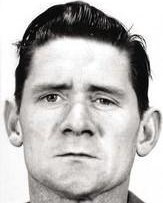
Ronald Joseph Ryan
Murderer Raymond Bailey
Murderer · Australia · 1957
Raymond Bailey was convicted of the murder of Sally (Thyra) Bowman (43), her da…
3 victims
Raymond Bailey
Murderer · Australia · 1957
Raymond Bailey was convicted of the murder of Sally (Thyra) Bowman (43), her da…
3 victims
 Allan Baker
Murderer · Australia · 1973
Allan Baker was convicted with Kevin Crump for the murder of Ian James Lamb and…
2 victims
Allan Baker
Murderer · Australia · 1973
Allan Baker was convicted with Kevin Crump for the murder of Ian James Lamb and…
2 victims
 Kevin Crump
Murderer · Australia · 1973
Kevin Crump and Allan Baker were convicted of raping and murdering Ian James La…
2 victims
Kevin Crump
Murderer · Australia · 1973
Kevin Crump and Allan Baker were convicted of raping and murdering Ian James La…
2 victims
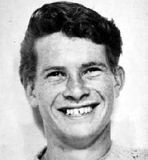 Leigh Robinson
Murderer · Australia · 1968
Leigh Robinson murdered Valerie Dunn, his teenage girlfriend, in 1968. He was o…
2 victims
Leigh Robinson
Murderer · Australia · 1968
Leigh Robinson murdered Valerie Dunn, his teenage girlfriend, in 1968. He was o…
2 victims
 Leonard Keith Lawson
Murderer · Australia · 1961
Leonard Keith Lawson (b. 16 August 1927) was a commercial artist and photograph…
2 victims
Leonard Keith Lawson
Murderer · Australia · 1961
Leonard Keith Lawson (b. 16 August 1927) was a commercial artist and photograph…
2 victims
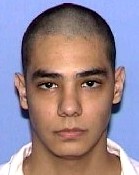 Noah Espada
Murderer · USA · 2004
Noah Espada — defendant · Luke Scott (Luther Scott, “Luke”) — victim; general m…
2 victims
Noah Espada
Murderer · USA · 2004
Noah Espada — defendant · Luke Scott (Luther Scott, “Luke”) — victim; general m…
2 victims
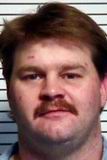 Donald Wackerly
Murderer · USA · 1996
Donald Wackerly was executed by lethal injection in Oklahoma on October 14, 201…
1 victim
Donald Wackerly
Murderer · USA · 1996
Donald Wackerly was executed by lethal injection in Oklahoma on October 14, 201…
1 victim
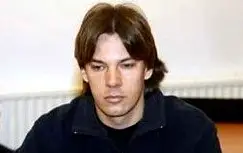 Antti Olavi Taskinen
Serial killer · Finland · 1997
Antti Olavi Taskinen (born 1976) was a Finnish serial killer responsible for th…
3 victims
Antti Olavi Taskinen
Serial killer · Finland · 1997
Antti Olavi Taskinen (born 1976) was a Finnish serial killer responsible for th…
3 victims
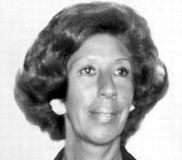 Yiya Murano
Murderer · Argentina · 1979
Yiya Murano (born May 20, 1930) was an Argentine murderer and swindler, known a…
3 victims
Yiya Murano
Murderer · Argentina · 1979
Yiya Murano (born May 20, 1930) was an Argentine murderer and swindler, known a…
3 victims
 Dallen Bounds
Serial killer · USA · 1999
Dallen Forrest Bounds (August 9, 1971 - December 23, 1999) was an American seri…
4 victims
Dallen Bounds
Serial killer · USA · 1999
Dallen Forrest Bounds (August 9, 1971 - December 23, 1999) was an American seri…
4 victims
- Gender
- male
- Country
- Australia
- Location
- Coburg, Victoria, Australia
- Date of birth
- February 21, 1925
- Age at first offence
- 40
- Characteristics
- escape, rape, abuse, alcohol, mentally ill
- Victim profile
- George Hodson (prison officer)
- Method of murder
- Shooting (M1 carbine rifle)
- Date(s) of murder
- November 19, 1965
- Years active
- 1965
- Date of arrest
- 19 days after
- Status
-
Executed
Executed by hanging at Pentridge Prison on February 3, 1967
Case details
Ronald Joseph Ryan (c. 21 February 1925 - 3 February 1967) was executed by hanging at Pentridge Prison on February 3, 1967. He was described as the last man to be legally executed in Australia.
Background
Ronald Joseph Ryan was born on 21 February 1925 at the Royal Women's Hospital in Melbourne's inner suburb of Carlton, to John (aka Big Jack) and Cecilia Thompson. Cecilia already had a son with her first husband George Harry Thompson and was living with John Ryan. Cecilia and George had separated in 1915 when George left to fight in the Great War. The relationship never resumed. Cecilia met John Ryan while working as a nurse in Woods Point where he was suffering lung disease. They formed a relationship in 1924 and later married after Thompson's death in 1927 from a car accident. In 1936 Ryan was confirmed in the Catholic Church. He took as his confirmation name Joseph, and then became known as Ronald Joseph Ryan.
The family lived in dire poverty. When Jack was completely unable to work due to lung disease and with most of his invalid pension spent on alcohol, the family move to a tiny cottage in Brunswick and things became even more desperate. Severe, neglected ulceration left Ronald almost blind in his left eye, which caused a slight droop to his damaged eye. Mrs Ryan could no longer keep the state child welfare authorities at bay, and the Ryan children were made a ward of the state after authorities declared them as "neglected". At the age of ten Ronald Ryan was sent to the Salesian Brothers' Orphanage at Sunbury, on the outskirts of Melbourne. His sisters (Irma, Violet and Gloria) were sent to the Good Shepard Convent in Collingwood. Ryan did quite well, captaining the football and cricket teams, joining the choir, and impressing other boys as 'a natural leader'.
Ryan absconded from Rupertswood in September 1939 and joined his half-brother George Thompson, working in and around Balranald, New South Wales. Spare money earned from sleeper cutting and kangaroo shooting was sent money to his mother looking after their sick alcoholic father John Ryan. At the age of eighteen, Ryan returned to Melbourne from Balranald and picked up his three sisters from the convent and bought them new clothes. He told his sisters about the wide-open space in the "outback" and his plans to move them and their mother away from the violence and bad memories of the big city. Later that year, after months of hard work to prove his ability to support his sisters, the state child welfare authorities agreed to young Ronald's plans. That Christmas the family were reunited at Balranald, and Ryan became the sole breadwinner for the family. While his sisters go to school and his mother looked after the house, Ryan took on some farm work as well as his other jobs. Ryan's father Jack, stayed in Melbourne and died after a long battle with miners' phthisis turberculosis a year later.
At about 23, Ryan returned to Melbourne where he was employed as a storeman. On 4 February 1950, Ryan married Dorothy Janet George at St Stephen's Anglican Church in Richmond. She was the daughter of the Mayor of the Melbourne suburb of Hawthorn - a prominent figure in local government, from an old Melbourne family. Ronald and Dorothy had three daughters, Janice, Wendy, Rhonda and Robert (died a few hours after birth). Although Ryan had no trade, he was a versatile worker, managing to support a wife and three daughters. Each summer he worked as a timber-cutter for a man named Keith Johanson, a logging and pulpwood contractor in the mountains near Matlock, eighty miles from Melbourne. Gradually, Ryan worked up to a position as sub-foreman, responsible for paying and organising a number of other men.
Every second weekend, Ryan hitch-hiked home to Melbourne with a cheque for his family, but the hours with his wife and daughters were never long enough, and early Monday morning he went back to work in the forest. Ryan worked harder than ever, earning the respect of his employers and the men under him. When his daughters began attending school and the timber-cutting season ended, there was not enough money. Ryan was too proud to ask Dorothy's parents for financial help and instead began to gamble heavily and passing forged cheques. He was soon caught and he pleaded guilty. Ryan was released on a five-year good behaviour bond.
In one report a detective described Ryan as "highly intelligent". Ryan worked in a series of straight jobs closer to home. For three years he avoided crime, instead turning to gambling as a way to give his family what he believed they deserved. However this inevitably led Ryan to store-breaking, then stealing, then factory-breaking. Again he was caught. Ryan's police record did not begin until he was 31 years of age.
Ryan was first sent to prison for robbery and served prison time at Bendigo Prison. While in prison he completed his Leaving Certificate (year 11) and was studying for his Matriculation Certificate (year 12) when he was released on parole in August 1963. He was regarded by the authorities as a model prisoner and appeared to want to rehabilitate himself.
Other details
Ryan was described as a forestry worker and a champion cyclist. He was described as a stylish-if spivvy'-dresser, usually wearing expensive, well-cut suits, silk tie and a fedora. He was of above-average intelligence and was described by not only the people who knew him, but also prison authorities, as a likable character with dignity and self-respect.
The narrative included a claim that Ryan had no recorded history of violence and was a small-time criminal.
Timeline
- 19 December 1965 — Ronald Ryan and fellow prisoner Peter Walker escaped from Pentridge Prison.
- 15 March 1966 — The case of The Queen v. Ryan and Walker began in the Supreme Court of Victoria.
- June 8, 1966 — The first appeal was dismissed by the Victorian Court of Criminal Appeal.
- February 3, 1967 — Ronald Ryan was executed by hanging at Pentridge Prison.
Investigation
The crown's case relied heavily on eyewitnesses near the Pentridge Prison when Hodson was killed. The rifle in Ryan's possession was never scientifically examined by forensics to prove it had fired a shot. Instead, the rifle stolen by Ryan from Lange had been inadequately stored in the boot of a police officer's car where it was subject to contamination by dirt and dust.
Police testified that the M1 carbine rifle stolen by Ryan "looked as if" it had been fired, but there was no conclusive evidence that the rifle commandeered by Ryan had been fired at all. Neither the bullet that killed Hodson nor the spent cartridge case were ever found despite intensive search by police.
There were fourteen eyewitnesses and each had a different account of what they saw. All fourteen eyewitnesses testified they saw Ryan waving and aiming his rifle. Only four eyewitnesses testified they saw Ryan fire a shot, and two eyewitnesses testified they saw smoke coming from Ryan's rifle. Two eyewitnesses testified they saw Ryan recoil his rifle.
There were contradictions regarding whether Ryan was standing, walking or squatting at the time of the single shot and whether Ryan was to the left or right of Hodson. All fourteen eyewitnesses testified they heard only one shot, with no person hearing two shots. Prison officer Paterson testified he fired a shot and was the only person to claim to have heard two shots fired.
At trial, the spent cartridge from Paterson's rifle was also never found by police. Paterson contradicted statements he made to police about what he saw, heard, and did on that day. His first statement given to Detective Sergeant Carton on 19 December 1965 said: "I did not hear a shot fired other than the one I fired." In a second statement given to Senior Detective Morrison on 12 January 1966 Paterson said: "Just as I turned into the entrance to the garden I heard a shot." In a third statement on 3 February 1966 Paterson said: "I ran back inside and asked for a gun, I went to the main gate and I received a gun and ran back outside, as I was running on to the lawn I heard the crack of a shot."
Paterson also changed his story about who was in the line of fire when he aimed his rifle. In his first statement Paterson said: "I sighted my rifle at Ryan and was about to fire when a woman walked into the line of fire and I lifted my rifle." In his second statement Paterson said: "I took aim at Ryan but two prison officers were in the line of fire so I dropped my rifle again." In his third statement Paterson said: "I took aim at Ryan and I found out I had to fire between two prison officers to get Ryan, so I lowered my gun again."
Arrest and captivity status
Ryan and Walker were captured in Sydney after 19 days on the run and were extradited back to Melbourne. Ryan and Walker were jointly tried for the murder of George Hodson. It was alleged that Ryan made three verbal confessions to police while being extradited to Melbourne; police testified that Ryan admitted to them he had shot prison officer Hodson. The narrative recorded that these verbal allegations were not signed by Ryan and that Ryan denied making such verbal or written confessions. The only signed document by Ryan was that he would give no verbal testimony.
Walker was also tried for the shooting murder of Arthur James Henderson during the period when he and Ryan were at large.
The offence
Ronald Ryan and fellow prisoner Peter Walker escaped from Pentridge Prison on 19 December 1965. Prison guard George Hodson was killed during the escape. The narrative stated that Ryan overpowered a guard and took his rifle. Forensic evidence later indicated that the fatal bullet entered Hodson's body at such an angle that Ryan would have had to be 12 feet above where he was when Hodson was shot. The account placed Ryan standing on the footpath outside the main gate of Pentridge trying to stop a car in which to escape while a guard was high above on the perimeter wall.
The narrative described Hodson chasing Walker with a pipe in hand, then confronting Walker, and moving toward armed Ryan. During scenes of noise and confusion, a loud whip-like crack of a single shot was heard, and prison officer George Hodson fell to the ground. He was struck by a single bullet travelling from front to back, in a downward trajectory angle. The bullet exited through Hodson's back, about an inch lower than the point of entry in his right shoulder. Hodson died in the middle of Sydney Road.
After Hodson was shot, Ryan and Walker ran past the fallen warder and commandeered a blue vanguard, with Walker driving the car away on O'Hea Street.
Trial
Court and jury directions
On 15 March 1966, the case of The Queen v. Justice John Starke instructed the jury of 12 men to look at the realities of things and ignore all that they had read and heard about the case in the media.
Prosecution case
The crown's case relied heavily on eyewitnesses who were near Pentridge Prison when Hodson was killed. The narrative repeated that the rifle had not been scientifically examined to prove it had fired a shot, and that neither the bullet nor spent cartridge case were found.
It also noted that all fourteen eyewitnesses testified they saw Ryan waving and aiming his rifle, and that only four testified they saw Ryan fire a shot. It stated that two witnesses saw smoke coming from the rifle and two saw recoil. It further recorded that only Paterson claimed to have heard two shots and that all others heard only one shot. A ballistic expert testified that the type of rifle was coiless and it contained smokless cartridges.
Defence case
The defence pointed to substantial discrepancies in the crown's case, including differing eyewitness accounts of whether Ryan was to the east or west of Hodson.
Philip Opas contended that the fourteen eyewitnesses were contradictory and that little store could be placed on them. Opas produced a human skeleton as a visual aid to explain the trajectory of the fatal bullet. Opas argued that ballistics indicated the fatal bullet entered Hodson's body in a downward trajectory. Opas also engaged Monash University mathematics professor Terry Speed, who explained that Ryan (5 feet 8 inches (1.73 m) tall) would have had to have been 8 feet 3 inches (2.55 m) tall to have fired the shot. These calculations were based on Ryan being twenty feet from Hodson and Hodson standing perfectly upright, with the bullet entering 62 inches from the ground and exiting 61 inches from the ground. The defence argument was that if the shot was downward, the bullet would have hit the road forty feet from where Hodson was hit, suggesting Hodson could have been shot from another elevated point and possibly by another prison officer.
The narrative stated that the prosecution argued Hodson (6 feet 1 inch (1.85 m) tall) could have been running in a stooped position, accounting for the downward trajectory entry.
It also recorded that Ryan's rifle was never scientifically tested and that the defence argued Ryan had intentionally kept his rifle to prove his innocence, expecting forensic microscopic markings on the spent bullet would show it was not fired from his rifle. The defence argument was that the fatal bullet was a vital piece of evidence that was never found, and that scientific forensic tests would have provided proof of which rifle fired the fatal shot, because every rifle leaves a microscopic "unique marker". The defence further argued that the spent cartridge would be ejected 5-10 feet, making it highly unlikely that Ryan's rifle had fired a shot, and reiterated that despite extensive search neither the fatal bullet nor spent cartridge were ever found.
The narrative also recounted the defence claim that the rifle could have been mishandled due to cocking with the safety-catch on, potentially causing an undischarged bullet to spill onto the floor of the guard tower. It recorded claims that this faulty operation had been conceded by prison officer Lange, assistant prison governor Robert Duffy, and confirmed by ballistic experts at trial.
Evidence and witness testimony (as recorded)
The narrative stated that prison officers testified they did not see Hodson carrying anything and did not see Hodson hit Walker. However, it stated that witnesses Keith Dobson and his passenger Louis Bailey testified they saw Hodson carrying something like an iron-bar/baton as he chased Walker. Governor Grindlay testified he did not see a bar near Hodson's body but found one after Hodson's body was loaded into an ambulance.
Ryan's testimony
On the eighth day of the trial, Ryan was sworn in and took the witness stand. The narrative recorded that Ryan denied firing a shot, denied alleged verbal unsigned confessions said to have been made by him, and denied ever saying to anyone that he had shot a man.
According to the narrative, Ryan said: "At no time did I fire a shot. My freedom was the only objective. The rifle was taken in the first instance so that it could not be used against me" .
Philip Opas stated in his final address to the jury members:
"Long before this case came to trial there was most unusual publicity given to the exploits of the accused, in the media, on the radio and over television. It would be impossible for anyone living in a capital city in Australia to approach this trial without some pre-conceived notions based on what they had read or heard about the case. It is easy to take the view of the accused that they are convicted criminals, a perfect scapegoat a convicted person would become if he became the target for a trumped-up charge."
Verdict
After a trial in the Victorian Supreme Court lasting twelve sitting days, the jury found Ryan guilty of murder. Ryan was convicted of the murder of Hodson.
Sentencing
Justice John Starke sentenced Ryan to death. After the verdict, Starke asked Ryan if he had anything to say, and the narrative recorded that Ryan stated: "I still maintain my innocence. I will consult with my counsel with a view to appeal. That is all I have to say!"
Without a right of plea by the defence and without the usual adjournment prior to sentencing, Starke sentenced Ryan to death. The narrative recorded the sentencing remarks as:
"Ronald Joseph Ryan, you have been found guilty of murder of George Henry Hodson, it is the sentence of this court that you be taken from here to the place from where you came (Pentridge Prison) and on a day and hour to be fixed, you shall be hanged by the neck until you are dead, and may God have mercy on your soul."
Appeals
The narrative stated that Ryan's first appeal was to the Victorian Court of Criminal Appeal, a bench of three judges, on the ground that the verdict was against the weight of the evidence. This appeal was dismissed on June 8, 1966.
In October 1966, a second appeal was rejected. The narrative stated that two months later after a state government cabinet meeting, Premier Bolte announced that Ryan's death sentence would not be commuted.
It also described that Opas decided to apply to the Privy Council in London and that legal aid was cut by the Bolte Government. The narrative stated that Premier Bolte directed the Public Solicitor to withdraw Opas' brief because the government was not going to fund a petition to the Privy Council. The narrative then stated that Opas agreed to work without pay and sought approval from the Ethics Committee of the Bar Council to make a public appeal for a solicitor prepared to brief him. The narrative said the committee ruled that this would be unethical as it would be touting for business, but Opas defied the ruling and sought an instructor on national radio.
The narrative recorded that Opas was inundated with offers and accepted an application being from Ralph Freadman. It stated that Alleyne Kiddle was in London completing a Master’s degree and agreed to take a junior brief at a fee of two-thirds of nothing, and that Opas flew to London to present Ryan's case to the highest judges in the Commonwealth.
The narrative stated that the Privy Council decision refusing leave to appeal was announced on February 10, 1967, seven days after Ryan was executed.
Outcome
Ryan was hanged at Pentridge Prison at 8 a.m. on Friday 3 February 1967. The narrative stated that he was almost 41 years old at the time of execution. The narrative also stated that Ryan was not given the right to make a final verbal statement to the people who gathered to witness his execution.
The narrative recorded Ryan refused sedatives but had a nip of whisky and walked calmly onto the gallows trapdoor. Ryan's last words to the hangman were: "God bless you, please make it quick." The narrative recorded that a nationwide three-minute silence was observed at the exact time that Ryan was hanged and that thousands of people protesting outside the prison knew the moment because pigeons on the D Division roof took flight.
Later that day, Ryan's body was buried in an unmarked grave within the "D" Division prison facility, with three bags of quicklime spread over the coffin. The narrative stated that the exact location of Ryan's grave had never been released by the authorities.
The narrative included a reported exchange where a media reporter asked Bolte what he was doing at 8:00 am. It recorded Bolte replied: "One of the three S’s I suppose"” and when asked what he meant it recorded: "A shit, a shave or a shower!".
Aftermath
The narrative stated that there was much protest in Australia, that at the time of Ryan's execution the Australian Broadcasting Corporation suspended broadcasts of Radio for two minutes in protest, and that there was also a large street protest and petition against the hanging.
It stated that doubt existed about Ryan's guilt in Hodson's death and shock that the death penalty would still be carried out. It also included claims that governments regarded enforcement of the death penalty as too difficult politically to ever enforce it again, and that within twenty years capital punishment would be abolished federally and in all state and territory jurisdictions, with Australia officially abolishing capital punishment in 1985.
Protest and last hours
The narrative stated that the night prior to execution Ryan was transferred to a cell a few steps away from the gallows trapdoor and that Father Brosnan was with Ryan most of that time. The narrative stated that Ryan wrote his last letters in the eleventh-hour to members of his family, his defence attorney, The Anti-Hanging Committee and Father Brosnan. The letters were handwritten on toilet paper inside his cell and neatly folded. In the documentary film The Last Man Hanged, Ryan's letter to The Anti-Hanging Committee was read out loud. The narrative included Ryan writing: " ... I state most emphatically that I am not guilty of murder."
The narrative recorded that more than 3,000 people gathered outside Pentridge Prison in protest, that shortly before midnight more than 200 police were at the prison to control demonstrators, and that demonstrators were mostly non-violent and chanted "Don't hang Ryan" sporadically between impromptu anti-hanging speeches. It recorded that placards read: "Don't Hang a Man Who Could be Innocent."
Later claims and statements
The narrative stated that nineteen years after Ryan's execution, prison officer Doug Pascoe confessed on-air to Channel 9 and the media that he fired a shot during Ryan's escape bid. It stated Pascoe wept on Channel 7 'Day By Day' and claimed his shot may have accidentally killed fellow prison guard George Hodson. It also recorded Pascoe tried to tell his story to the media in 1986 and that he stated he had not told anyone earlier and that he said he was a 23-year-old coward.
The narrative stated that Pascoe's claims were rejected by authorities, including former prison warder Bill Newman who said Pascoe could not have fired a shot. It stated the trial judge who sentenced Ryan to death declined to make a comment, and that Dr Opas said only a "proper enquiry" would determine the truth. It also included statements from public solicitor Allan Douglas that Ryan should not have been convicted, let alone hanged, on the evidence presented to the court, and that Ryan did not get a fair hearing at trial because of adverse media reports and that the actions of the Bolte Government had been "pretty drastic". It included a quote attributed to Senior law lecturer at Melbourne University Ian Elliott that the claims by Pascoe might form the basis of corroborative evidence for material at Ryan's trial, and said that journalist Patrick Tennison said it was incumbent on the Government to explore fully the circumstances of Ryan's hanging and determine the veracity of Pascoe's claims.
Exhumation and dispute described in the narrative
The narrative stated that forty years after Ronald Ryan was hanged, family members requested his body be exhumed and placed with his late wife Dorothy, at Portland Cemetery. It stated that Victorian Premier John Brumby gave permission for archaeological work and exhumation. The narrative stated undertakers said Ryan was buried in a highly polished darkwood coffin with best trimmings and a crucifix attached. It recorded that a protest involved Carole Hodson-Barnes-Hodson-Price, stated to be the daughter of murdered prison guard George Hodson, and that she objected to Ryan being buried in consecrated ground and made a plea to Premier John Brumby to ensure Ryan's remains were not removed from prison grounds and not returned to Ryan's family members.
It recorded that Brumby supported the views of Ryan's relatives to have his body exhumed so it could be cremated and placed with his late wife Dorothy, buried at Portland Cemetery.
Further claims regarding innocence in the narrative
The narrative stated that Australian criminologist Professor Gordon Hawkins at Sydney University Law School doubted the validity of unsigned confessions of Ryan in a television film documentary, Beyond Reasonable Doubt. It stated that Evidence pointing to the innocence of Ronald Ryan may have been lost when prison guard Helmut Lange committed suicide by shooting himself in the head whilst on duty at Pentridge Prison, two years after Ryan was hanged. The narrative alleged a close friend of Lange claimed Lange had confessed to finding the missing bullet casing in the prison guard tower and attaching it to an official report at the time, and that Lange had been ordered to make a new statement excluding any reference to the missing bullet casing. At trial, Lange testified he did not see a bullet casing.
The narrative stated that a former Pentridge prisoner Harold Sheehan claimed in 1993 he had witnessed the shooting, and saw Ryan on his knees when the shot rang out, and therefore Ryan could not have inflicted the downward trajectory wound that killed Hodson. The narrative included a claim that prison authorized M1 carbine rifles were issued with eight rounds including Ryan's rifle and that seven of eight rounds were accounted for, and it argued that if the eighth fell when Ryan cocked the rifle with the safety catch on, ejecting a live round, then the bullet that killed Hodson must have been fired by someone else.
The narrative included a description of an interview on 1 March 2004 where Dr Opas said:
"I want to put the record straight. I want the truth told about Ronald Ryan - that an innocent man went to the gallows. I want the truth to be made available to everyone, for anyone young and old, who may want to do research into Ryan's case or research on the issue of capital punishment. I will go to my grave firmly of the opinion that Ronald Ryan did not commit murder. I refuse to believe that at any time he told anyone that he did."
It recorded that on 23 August 2008, Dr Philip Opas QC, OBE died after a long illness at the age of 91. It stated Opas maintained Ryan's innocence to the end and that he was posthumously awarded an AM in February 2009.
The narrative also stated that Justice Starke remained troubled about Ryan's hanging and would ask colleagues until his death in 1992 if they thought he did the right thing.
Quoted statements by Father Brosnan included in the narrative
The narrative stated that on 26 March 2003, Father Brosnan was interviewed by the Australian Broadcasting Commission National Radio, and that just months before Brosnan died he said on ABC National Radio:
"No I won't make a hero out of him. He caused a situation, I don't know whose bullet killed who, but a friend of mine died. But I'll tell you what, he had heroic qualities."
It also stated that in February 2007, The Catholic Archdiocese published a story that Father Brosnan was convinced and always believed Ryan was innocent.
References and media (as stated in the narrative)
The narrative included lists of documentary films and books, including: The Last Man Hanged (Bill Bennett, released 1993); Who Hung Ronald Ryan? (Australian Broadcasting Corporation, released 1987); The Last Of The Ryans (Richard Brennan, released 1997); Hanging of Ronald Ryan (Bernard and Deirdre Slattery, released 1994); Remember Ronald Ryan (Barry Dickins, released 1994); Guts and Pity (Barry Dickins, released 1996); Odd Man Out (David Lowe, released 1993); The Hanged Man (Mike Richards, ISBN 0908011946). It also listed: Beyond Reasonable Doubt - The Case of Ronald Ryan (documentary series, 1977, Australian Film Commission); Odd Man Out - The Story of Ronald Ryan (three-part television mini-series); The Last Man Hanged (historical documentary, ABC, Australia, 1993); The Last of The Ryans; Who Hung Ronald Ryan? and other referenced documentaries.
Spotted an error, or have more information about this case?