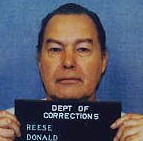
Donald Reese
Murderer Brian Kevin Rosenfeld
Murderer · USA · 1985
Brian Kevin Rosenfeld Brian Kevin Rosenfeld was sentenced to three concurrent l…
23 victims
Brian Kevin Rosenfeld
Murderer · USA · 1985
Brian Kevin Rosenfeld Brian Kevin Rosenfeld was sentenced to three concurrent l…
23 victims
 Yahweh ben Yahweh
Murderer · USA · 1980
Yahweh ben Yahweh was born and legally named Hulon Mitchell Jr. (October 27, 19…
23 victims
Yahweh ben Yahweh
Murderer · USA · 1980
Yahweh ben Yahweh was born and legally named Hulon Mitchell Jr. (October 27, 19…
23 victims
 Russell Ellwood
Murderer · USA · 1991
Russell Ellwood was a former taxi driver. Authorities suspected him of killing…
20 victims
Russell Ellwood
Murderer · USA · 1991
Russell Ellwood was a former taxi driver. Authorities suspected him of killing…
20 victims
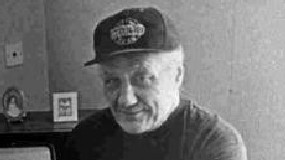 Albert Goozee
Murderer · United Kingdom · 1956
Albert William Goozee was a British murderer and paedophile. His crimes inspire…
2 victims
Albert Goozee
Murderer · United Kingdom · 1956
Albert William Goozee was a British murderer and paedophile. His crimes inspire…
2 victims
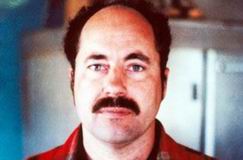 Leonard Lake
Serial killer · USA · 1983
Leonard Lake (October 29, 1945 – June 6, 1985) was an American serial killer. H…
25 victims
Leonard Lake
Serial killer · USA · 1983
Leonard Lake (October 29, 1945 – June 6, 1985) was an American serial killer. H…
25 victims
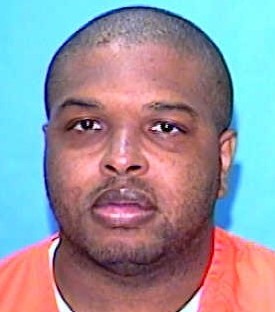 Darius Kimbrough
Murderer · USA · 1991
Defendant: Darius Mark Kimbrough DC#: 374123 Date of birth: 12/04/72 Age at the…
1 victim
Darius Kimbrough
Murderer · USA · 1991
Defendant: Darius Mark Kimbrough DC#: 374123 Date of birth: 12/04/72 Age at the…
1 victim
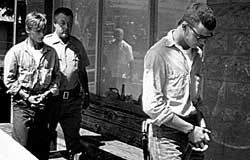 Thomas Eugene Braun
Spree killer · USA · 1967
Thomas Eugene Braun was sentenced to death in California. · Thomas Eugene Braun…
4 victims
Thomas Eugene Braun
Spree killer · USA · 1967
Thomas Eugene Braun was sentenced to death in California. · Thomas Eugene Braun…
4 victims
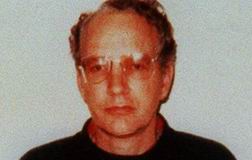 Robert Lowe
Murderer · Australia · 1991
Robert Arthur Selby Lowe was born in England in 1937. He attended boarding scho…
1 victim
Robert Lowe
Murderer · Australia · 1991
Robert Arthur Selby Lowe was born in England in 1937. He attended boarding scho…
1 victim
- Gender
- male
- Country
- USA
- Location
- Salina County, Missouri, USA
- Date of birth
- May 7, 1943
- Age at first offence
- 43
- Characteristics
- robbery
- Victim profile
- James Watson, John Burford, John Vanderlinden, Christopher Griffith
- Method of murder
- Shooting ( .30 caliber rifle)
- Date(s) of murder
- September 9, 1986
- Years active
- 1986
- Date of arrest
- 6 days after
- Status
-
Executed
Executed by lethal injection in Missouri on August 13, 1997
Case details
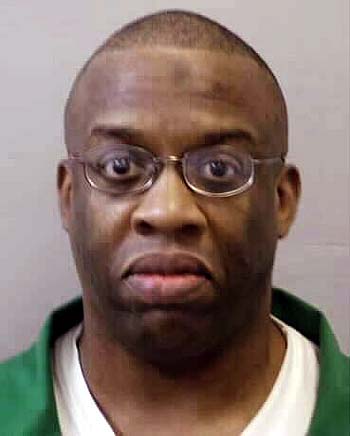
Donald E. Reese was executed on August 13, 1997.
Timeline
- September 9, 1986 — Reese murdered four men at the Marshall Junction Wildlife Reserve shooting range in Saline County, Missouri.
- September 10, 1986 — Police discovered during their investigation that Donald Reese had purchased .30 Caliber ammunition from a store in Marshall, Missouri.
- September 14, 1986 — Officers interrogated Reese at his home in Marshall concerning what weapons Reese owned; Reese admitted that he had recently sold 1 .30 caliber rifles and had been to the shooting range about two weeks before.
- September 15, 1986 — Police placed Reese under arrest; he later confessed to the murders and took police to where he had hidden the victim’s wallets and disposed of the murder weapon.
- October 2, 1986 — Reese was charged with two counts of Murder First Degree.
- December 22, 1986 — Venue was transferred to the Circuit Court of Jefferson County.
- March 26, 1988 — After a three-day trial, Reese was convicted of two counts of Murder First Degree; the jury recommended a sentence of death on each count.
- May 5, 1988 — Reese was sentenced to death on one count of Murder First Degree and sentenced to life imprisonment without parole on the second count of Murder First Degree.
- November 14, 1988 — Reese filed a Missouri Supreme Court motion for post-conviction relief.
- July 20, 1989 — An evidentiary hearing on Reese’s motion was held in Circuit Court of Jefferson County.
- October 2, 1989 — Motion for post-conviction relief denied by Jefferson County Circuit Court.
- July 31, 1990 — The Missouri Supreme Court affirmed Reese’s convictions and sentences and the denial of post-conviction relief.
- February 19, 1991 — The U.S. Supreme Court declined to review Reese’s case.
- February 27, 1991 — Reese filed a federal petition for writ of habeas corpus in the U.S. District court for the Eastern District of Missouri.
- October 27, 1995 — The U.S. District denied Reese’s federal habeas corpus petition.
- September 4, 1996 — The U.S. Court of Appeals for the Eighth Circuit affirmed the District court’s decision denying federal habeas corpus relief.
- June 2, 1997 — The U.S. Supreme Court declined to review Reese’s federal habeas case.
- June 9, 1997 — The Missouri Supreme Court issued a Warrant of Execution setting Reese’s execution for August 13, 1997.
Background
On March 25, 1988, Reese was convicted of two counts of first-degree murder. The details of the crime were set forth in State v. Reese, 795 S.W.2d 69 (Mo. 1990) (en banc).
The offence
On September 9, 1986, four bodies were discovered at the Marshall Junction Wildlife Reserve shooting range.
A Pettis County Deputy Sheriff arrived at the range around 4:15 p.m. and observed two parked cars, but he did not hear anyone shooting. He decided to investigate and found the body of James Watson, a safety officer for the Missouri Department of Conservation, laying on the ground behind the parked cars with two bullet wounds to his chest.
The deputy called the Saline County Sheriff’s office and continued his search of the area. On the back seat of one car, he found the body of John Burford and his brother-in-law John Vanderlinden. John Burford had been shot in the back and the left side, and John Vanderlinden had been shot in the back and the back of the right hip.
Additional law enforcement officers arrived. Further investigation led them about 75 yards from the parked cars to a low water bridge where they found a trail of blood. There, officers found the body of the fourth victim, Christopher Griffith, who had been shot five times.
During the investigation, officers found a number of .30 caliber brass shell casings. A spent bullet was found near one of the parked cars and another on the road to the bridge.
During their investigation, police discovered that Reese had purchased .30 caliber ammunition. The ammunition in the loaded weapon had similar markings when compared to the ammunition police confiscated during their search of Reese’s home.
Investigation
On September 10, 1986, police discovered during their investigation that Donald Reese had purchased .30 caliber ammunition from a store in Marshall, Missouri.
On September 14, 1986, officers interrogated Reese at his home in Marshall concerning what weapons Reese owned. Reese admitted that he had recently sold 1 .30 caliber rifles and had been to the shooting range about two weeks before. Later that enforcement officer searched Reese’s home.
After Reese’s arrest on September 15, Reese asked the officers whether he should retain an attorney. The officers replied that they could not advise him on the matter but that an attorney could be furnished if he wanted one. Reese replied, "Forget it," whereupon he was read his Miranda rights. Reese waived his rights, talked with the officers for approximately three hours, and denied participation in the crime.
The next morning, Reese again waived his Miranda rights and refused an officer's offer to telephone an attorney for him by replying, "I didn't do it and I don't need an attorney and I don't want one."
During the course of the interview, Reese was visited by his wife and his son.
At approximately 6:00 p.m. that evening, Reese admitted that he killed the four men. His statement was reduced to writing and included an express waiver of his Miranda rights. Reese later led the officers to the place where he had hidden the murder weapon and the victims' wallets and money.
After the arrest, Reese was later arraigned on a complaint charging him with multiple counts of first degree murder, armed criminal action, and robbery.
Arrest
On September 15, 1986, police placed Reese under arrest.
Confession and admission
Reese admitted that he killed the four men at approximately 6:00 p.m. on the day of his arrest, and his statement was reduced to writing and included an express waiver of his Miranda rights. Reese later led the officers to where he had hidden the murder weapon and the victims' wallets and money.
Trial
After a three-day trial, Reese was convicted of two counts of Murder First Degree. The jury recommended a sentence of death on each count.
At the penalty phase, the state presented evidence that Reese had attended the funeral of two of the victims and had posed as a family friend despite the fact that he did not know the victims.
John Lewis, Reese's cellmate, testified that Reese had told him that he went to the shooting range intending to get money and that Reese related the details of the crime to Lewis.
Despite Reese’s presentation of mitigating evidence through family members and other witnesses, the jury recommended a sentence of death for both offenses, citing as aggravating circumstances that Reese had murdered the victims for the purpose of receiving money and during the course of a robbery.
The trial court sentenced Reese to death for the murder of James Watson and sentenced Reese to life imprisonment without parole for the murder of Christopher Griffith, after taking into consideration the fact that Griffith's family had expressed their opposition to the death penalty.
Sentencing
On May 5, 1988, Reese was sentenced to death on one count of Murder First Degree and sentenced to life imprisonment without parole on the second count of Murder First Degree.
Post-conviction proceedings (Missouri)
On July 20, 1989, the post-conviction court denied Reese's request for relief after conducting an evidentiary hearing.
Reese’s post-conviction proceedings included a motion for post-conviction relief pursued under Missouri Supreme Court Rule 29.15 and a motion for post-conviction relief that was denied by the Jefferson County Circuit Court on October 2, 1989.
On July 31, 1990, the Missouri Supreme Court affirmed Reese’s convictions and sentences and the denial of post-conviction relief.
Reese filed a Missouri Supreme Court motion for post-conviction relief on November 14, 1988.
Federal habeas and appeals
U.S. Supreme Court
On February 19, 1991, the U.S.
On June 2, 1997, the U.S.
U.S. District Court
Reese filed a federal petition for writ of habeas corpus in the U.S. District court for the Eastern District of Missouri on February 27, 1991.
On October 27, 1995, the U.S. The district court also granted a certificate of probable cause to appeal on October 24, 1995.
U.S. Court of Appeals for the Eighth Circuit
The U.S. Court of Appeals for the Eighth Circuit affirmed the district court’s decision denying federal habeas corpus relief on September 4, 1996.
The appellate case included these details:
- Case name — Donald E. Reese, Appellant, v. Paul Delo, Superintendent, Potosi Correctional Center, Appellee.
- Submitted — June 10, 1996.
- Filed — September 4, 1996.
- Before — WOLLMAN, Circuit Judge, HENLEY, Senior Circuit Judge, and DOTY, District Judge.
The court affirmed the denial of Reese’s petition for writ of habeas corpus filed under 28 U.S.C. § 2254 and stated: "We affirm."
Ineffective assistance of counsel
Reese claimed that his trial attorney was ineffective in failing to:
- investigate his background, psychological impairments, and family history;
- withdraw as counsel or preserve the attorney-client relationship when it began to break down before trial; and
- investigate and prepare the penalty phase evidence.
The district court held that Reese’s ineffective assistance claims were procedurally barred because he failed to advance his claims on appeal from the denial of his Rule 29.15 motion for post-conviction relief. The U.S. Court of Appeals agreed.
The opinion noted that in Missouri, a claim presented in a Rule 29.15 motion but not advanced on appeal is considered abandoned.
The opinion addressed arguments about Missouri Rule 91 and about a motion to recall the mandate, concluding that a motion to recall the mandate could not be used to allege ineffective assistance of trial counsel.
The opinion also addressed that because Reese’s claims were procedurally defaulted, he had to show cause and actual prejudice, and it concluded that ineffective assistance of post-conviction appellate counsel did not constitute cause.
Prosecutorial misconduct
Reese raised three claims of prosecutorial misconduct, contending that the prosecutor failed to disclose three items of exculpatory evidence:
- a $500 payment to Reese's wife for her assistance in obtaining Reese's confession;
- a deal between the state and Lewis, Reese's cellmate, for Lewis's testimony at the penalty phase; and
- that Griffith's family was opposed to the death penalty.
The district court held that the first two claims were procedurally defaulted and that the third claim was without merit.
The opinion included the Missouri Supreme Court’s statement regarding the third claim:
The opposition of the parents of one of the victims to capital punishment is not a material circumstance, and there was no violation of discovery principles in not disclosing this opposition.
The opinion also included this statement from the U.S. Court of Appeals:
A criminal prosecution is a public matter and not a contest between the defendant and his victims, or their relatives.
The appellate court concluded that the Missouri Supreme Court’s determination on the materiality of the evidence was a mixed question of law and fact subject to de novo review and agreed with the district court that the outcome would not have been affected by the evidence.
Admission of confession
Reese argued that his constitutional rights were violated by improper admission of his confession, contending that his Fifth Amendment rights were violated because both his confession and Miranda waivers were involuntary, and that his Sixth Amendment right to counsel was violated when police continued to question him after he filled out an application requesting the public defender's services.
The opinion stated that the Missouri trial court found Reese fully aware of and understanding his Miranda rights, and found his waivers and confession voluntary.
On Fifth Amendment voluntariness, the court reviewed voluntariness de novo and relied on the trial court’s factual findings, described as supported by repeated Miranda warnings and the lack of coercive police conduct.
The opinion stated that:
[Reese] was never deprived of food, drink or toilet facilities. He was never threatened or abused by the officers. He was allowed to visit with his family.
On the Sixth Amendment issue, the opinion cited the Missouri Supreme Court’s conclusion that counsel had not been appointed, eligibility for the public defender had not been determined, there was no request for counsel during interrogation, and that there had been an explicit waiver. It also stated:
Counsel had not been appointed. The defendant's eligibility for the public defender's services had not been determined. There was no request for counsel during interrogation. There was, by contrast, an explicit waiver. The authorities made it clear to the defendant, numerous times, that counsel would be available to him if he would only say the word. The mere mention of counsel by the defendant is not sufficient to preclude further police questioning. There must be a request.
The opinion also stated:
Reese's application, at the most, amounted to a request for counsel at the preliminary hearing.
Fourth Amendment claim
Reese alleged that the district court erred in finding that his Fourth Amendment illegal arrest claim was procedurally barred. The U.S. Court of Appeals discussed waiver, procedural default, and the need to establish cause and prejudice, and it evaluated ineffective assistance of counsel claims as possible cause.
The opinion set out information known to the police officers at the time of arrest:
- Reese was arrested when he refused to voluntarily accompany two law enforcement officers to the Squad headquarters to be fingerprinted and photographed.
- At that time it was known that Reese had had a gun and ammunition similar to the kind used to kill four men, had recently used such ammunition, and smoked the same brand of cigarettes as found at the murder scene.
- Several of his statements were inconsistent with the facts, including that he had recently purchased a car and his explanation for the source of those funds, that he had been paid early, was refuted by the foreman of his employer.
- He also told the interviewing officers that he had sold his .30 caliber carbine to a stranger who approached him on the street outside a thrift shop as he was unloading his guns from the trunk of his car.
The appellate court concluded that Reese did not prevail on his illegal arrest claim, stating that there was ample evidence to establish probable cause for Reese's arrest.
Instructional error
Reese challenged:
- Missouri’s reasonable doubt instruction; the opinion concluded that such a challenge was barred by Teague v. Lane.
- Missouri’s mitigating circumstances instruction under Mills v. Maryland and McCoy v. North Carolina; the opinion concluded the contention was meritless and that the Missouri Supreme Court had upheld the language as constitutional.
The opinion addressed the jury instruction’s use of the permissive "may" and discussed Hitchcock v. Dugger. It concluded there was no infirmity and that:
"May consider' signifies that the jury is given discretion as to what weight the mitigating evidence should receive."
Outcome
The order denying the petition for writ of habeas corpus was affirmed.
Aftermath
A true copy attested by the Clerk, U.S. Court of Appeals, Eighth Circuit, was included in the appellate materials.
The case citation included the Missouri Supreme Court decision: State of Missouri v. Donald E. Reese, 795 S.W.2d 69 (Mo. Banc 1990), and the execution information stating he was executed on August 13, 1997.
Spotted an error, or have more information about this case?