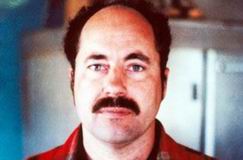
Leonard Lake
Serial killer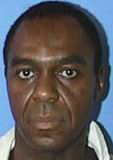 Carl Eugene Watts
Serial killer · USA · 1974
Carl Eugene Watts (born November 7, 1953; died September 21, 2007), also known…
100 victims
Carl Eugene Watts
Serial killer · USA · 1974
Carl Eugene Watts (born November 7, 1953; died September 21, 2007), also known…
100 victims
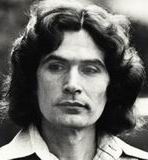 Rodney Alcala
Serial killer · USA · 1977
Rodney James Alcala (born August 23, 1943) was also known as Rodrigo Jacques Al…
100 victims
Rodney Alcala
Serial killer · USA · 1977
Rodney James Alcala (born August 23, 1943) was also known as Rodrigo Jacques Al…
100 victims
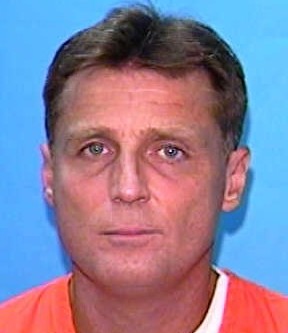 Glen Edward Rogers
Serial killer · USA · 1993
Glen Edward Rogers was a spree killer whose cross-country rampage in 1994-95 le…
70 victims
Glen Edward Rogers
Serial killer · USA · 1993
Glen Edward Rogers was a spree killer whose cross-country rampage in 1994-95 le…
70 victims
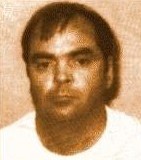 Donald Leroy Evans
Serial killer · USA · 1975
Donald Leroy Evans (born July 5, 1957) was an American serial killer who murder…
60 victims
Donald Leroy Evans
Serial killer · USA · 1975
Donald Leroy Evans (born July 5, 1957) was an American serial killer who murder…
60 victims
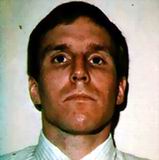 Michael Swango
Serial killer · USA · 1981
Michael Swango (Joseph Michael Swango) was a physician and American serial kill…
60 victims
Michael Swango
Serial killer · USA · 1981
Michael Swango (Joseph Michael Swango) was a physician and American serial kill…
60 victims
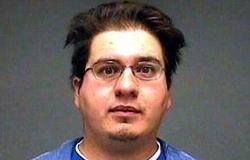 Efren Saldivar
Serial killer · USA · 1989
Efren Saldivar (born 30 September 1969) was an American serial killer who murde…
50 victims
Efren Saldivar
Serial killer · USA · 1989
Efren Saldivar (born 30 September 1969) was an American serial killer who murde…
50 victims
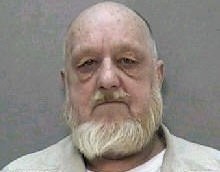 Richard Biegenwald
Serial killer · USA · 1958
Richard Fran Biegenwald (August 24, 1940 – March 10, 2008) was an American seri…
6 victims
Richard Biegenwald
Serial killer · USA · 1958
Richard Fran Biegenwald (August 24, 1940 – March 10, 2008) was an American seri…
6 victims
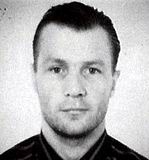 Alexander Solonik
Murderer · Russia · 1990
In February 1997, Greek newspapers published articles that claimed a Russian mo…
10 victims
Alexander Solonik
Murderer · Russia · 1990
In February 1997, Greek newspapers published articles that claimed a Russian mo…
10 victims
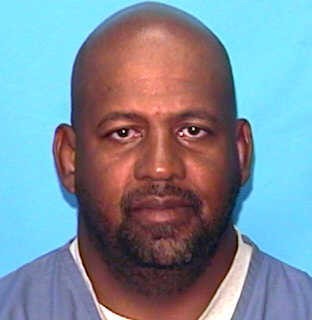 Michael Tyrone Crump
Murderer · USA · 1985
Defendant (Appellant): Michael Tyrone Crump · Plaintiff/Respondent (Appellee):…
2 victims
Michael Tyrone Crump
Murderer · USA · 1985
Defendant (Appellant): Michael Tyrone Crump · Plaintiff/Respondent (Appellee):…
2 victims
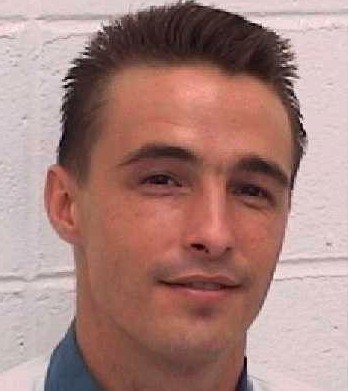 J. W. Ledford
Murderer · USA · 1992
J. W. Ledford Jr. was convicted of the malice murder of Dr. Harry Buchanan John…
1 victim
J. W. Ledford
Murderer · USA · 1992
J. W. Ledford Jr. was convicted of the malice murder of Dr. Harry Buchanan John…
1 victim
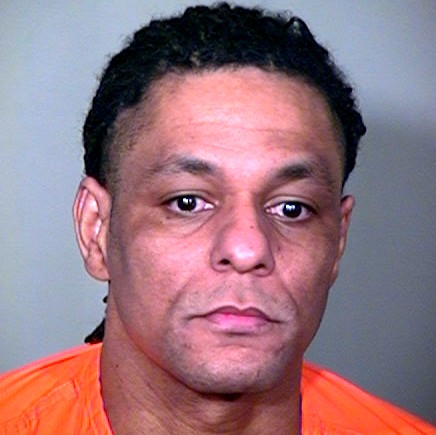 Alvie Kiles
Murderer · USA · 1989
Alvie Kiles lived in Yuma with his girlfriend, Valerie Gunnell, and her two dau…
3 victims
Alvie Kiles
Murderer · USA · 1989
Alvie Kiles lived in Yuma with his girlfriend, Valerie Gunnell, and her two dau…
3 victims
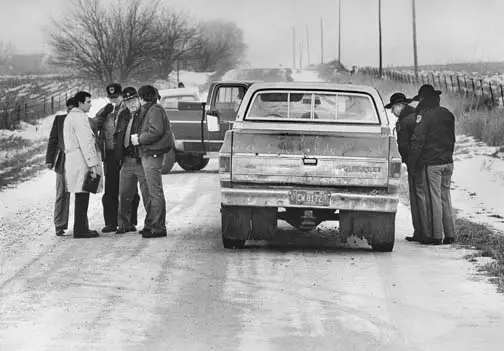 Dale Burr
Murderer · USA · 1985
Dale Burr shot his wife, Emily, at their home; bank president John Hughes at hi…
3 victims
Dale Burr
Murderer · USA · 1985
Dale Burr shot his wife, Emily, at their home; bank president John Hughes at hi…
3 victims
- Gender
- male
- Country
- USA
- Location
- Calaveras County, California, USA
- Date of birth
- October 29, 1945
- Age at first offence
- 38
- Characteristics
- rape, torture, robbery, abduction, kidnapping, cannibalism, serial rapist
- Victim profile
- Harvey Dubs, his wife Deborah and infant son, Sean / Lonnie Bond Sr., his wife, Brenda O'Connor, and his infant son, Lonnie Bond Jr. / Clifford Peranteau / Jeffrey Gerald / Michael Carroll / Kathleen Allen / Scott Stapley
- Method of murder
- Shooting
- Date(s) of murder
- 1983 - 1985
- Years active
- 1983–1985
- Date of arrest
- June 2, 1985
- Status
-
Died in custody
Committed suicide by taking a cyanide pill shortly after being arrested for a firearms offense on June 6, 1985
Case record: Leonard Lake
Overview
Leonard Lake (October 29, 1945 – June 6, 1985) was an American serial killer. He often used the alias Leonard Hill.
Lake’s crimes with Charles Ng became known when Lake committed suicide by taking a cyanide pill shortly after being arrested for a firearms offense.
Personal background
Leonard Lake was born in San Francisco, California. When he was six years old, he and his siblings were sent to live with their grandparents after their parents had separated. He was reportedly a bright child, but he developed an obsession with pornography that stemmed from taking nude photos of his sisters, apparently with the encouragement of his grandmother. It was also alleged that Lake extorted sexual favors from his sisters.
In 1965, at age 19, Lake joined the Marine Corps and served two tours of duty in the Vietnam War as a radar operator.
Lake was diagnosed with schizoid personality disorder and was eventually given a medical discharge in 1971. He underwent psychotherapy.
Back in civilian life, Lake was living in San Jose, California, and briefly attended San Jose State University, but he dropped out after one semester. It was believed that he joined a group of hippies in the early 1970s and settled with them in a hippie commune.
In 1975, Lake married, but the marriage dissolved quickly because his wife found out that he was making and starring in amateur pornographic movies, usually involving bondage or sadomasochism.
In 1980, Lake was released from prison and given a year’s probation for car theft.
Lake married again in 1981 to Claralyn Balasz, whom he had met while working at a renaissance fair in 1977. Balasz soon left him after she got tired of his increasingly erratic behavior and his insistence that she star in pornographic films.
Lake was arrested in 1982 for a firearms violation, but he skipped bail and settled into a remote ranch in Wilseyville, Calaveras County, owned by Balasz, his ex-wife.
Lake had a diary in which he wrote about his survivalist plans, including a belief that there was going to be a global nuclear war. He planned to survive in his bunker and rebuild the human race with a collection of female slaves, naming his plan “Operation Miranda” after a character in the book The Collector by John Fowles.
In his diary, Lake wrote: “God meant woman for cooking, cleaning house and sex. And when they are not in use, they should be locked up.” He also scribbled: “If you love something, let it go. If it doesn't come back, hunt it down and kill it.”
Lake described his life in a diary entry: “Mostly dull day-to-day routine still with death in my pocket and fantasy my major goal.”
He also wrote: “If you love something, let it go.
Formation of partnership with Charles Ng
In 1982, Lake met Charles Ng, a man from Hong Kong. The two struck up a friendship.
Lake and Ng took residence at Lake’s remote ranch in Wilseyville, where they began abducting, torturing, raping, and killing people. Most of Lake and Ng’s victims were people who knew them.
The offence
Crimes at the Wilseyville ranch
Police searched Lake’s ranch in Wilseyville. It was clear that Lake was a survivalist, and the ranch had a bunker and a stash of weapons.
Police found videos showing Lake and Ng torturing and raping women.
The grounds of the ranch were dug up and 12 corpses were uncovered in shallow graves.
Among the uncovered victims were:
- Harvey Dubs and his wife, Deborah, and baby son, Sean
- Lonnie Bond and Brenda O’Connor and their baby son, Lonnie Bond Jr.
The women were sexually abused and killed after their husbands and infants were disposed of.
Five of the bodies were of men lured to the ranch to be robbed and killed, including Robin Stapley and Paul Cosner, and the 12th was identified as 18-year-old Kathleen Allen, who knew Ng because her boyfriend had once been his cellmate in prison.
Police also found charred fragments of human bones (in excess of 45 pounds in total), but they were unable to determine the identity of the victims or their number. It was postulated that the number of unknown murdered persons could be as high as 25.
Lake’s younger brother, Donald, had vanished in 1983 and was presumed dead. Charles Gunnar, a friend of Lake from his military days, also was presumed dead, and his remains were discovered at the ranch in September 1992.
Police believed that Lake’s first victim may have been his brother, Donald. Donald’s mother reported Donald missing after he failed to return from a visit with Leonard in San Bruno in July 1983. Donald, she said, went to Humboldt County to find work as a carpenter and she never heard from him again. She remembered that Leonard told her: “The world would be better off without Don.”
Lake’s diary and recorded materials included plans to keep captives as sex slaves after a nuclear holocaust.
“Operation Miranda”
Lake’s plan was named “Operation Miranda” after a character in The Collector by John Fowles.
Lake’s diary contained a plan describing how women would be kept after a nuclear holocaust.
Investigation
Initial discovery: June 2, 1985 shoplifting incident
On June 2, 1985, an Asian man—later identified as Charles Ng—was seen shoplifting in South San Francisco. He fled by the time police arrived, but Leonard Lake, who was with him, was arrested when his car was searched and found to contain a .22 revolver illegally equipped with a silencer.
The arresting man identified himself as Robin Stapley and had a driver’s license in that name. Police were suspicious because, according to the driver’s license, Robin Stapley was 26 while the man in custody was clearly in his late 30s.
While being interviewed at the police station, Lake asked for a glass of water and used it to swallow a cyanide pill hidden in the lapel of his shirt. He collapsed and was rushed to a hospital, went into a coma, and survived on life support machines for four days before being pronounced dead. By then, police confirmed the true identity of their suspect as Leonard Lake.
Police also confirmed that the person whose identity Lake had taken, Robin Stapley, had been missing for several weeks.
Vehicle links and missing persons
Lake’s car was found to belong to Paul Cosner, 39, who had gone missing eight months previously in November 1984.
Police found that Lake had other videos, torture devices, weapons, and voluminous diaries.
Evidence discovered at the ranch
Police found charred fragments of human bones (in excess of 45 pounds in total).
Police also found jewelry, rotted clothing, and several driver’s licenses, including that of Stapley and Mike Carroll.
In the diary, Lake had written how he was convinced that there was going to be a global nuclear war and that he planned on surviving in his bunker and rebuilding the human race with female slaves.
Arrest, suicide, and death
Arrest and suicide
Lake was arrested following police contact related to a shoplifting incident and a car search that found a .22 revolver illegally equipped with a silencer.
Lake used a cyanide pill concealed in the lapel of his shirt to kill himself shortly after being arrested.
He was pronounced dead after being on life support machines for four days.
Identity confirmation
Police confirmed the true identity of the suspect as Leonard Lake after his death.
Lake’s car was searched, and information about missing persons was used to connect the vehicle to Lake’s ranch and the victims.
Other named people and victim links
Missing people and victims referenced in connection with the investigation
Police linked the case to multiple missing people and victims. Named individuals included:
- Paul Cosner, 39
- Harvey Dubs
- Deborah Dubs
- Sean Dubs
- Lonnie Bond
- Brenda O’Connor
- Lonnie Bond Jr.
- Kathleen Allen, 18-year-old
- Robin Stapley (the identity Lake used)
- Donald (Lake’s younger brother)
- Charles Gunnar (Lake’s friend from his military days)
- Mike Carroll (a former cellmate of Charles Ng mentioned as connected through Kathleen Allen)
- Jeffrey Askern (connected to a vehicle found near the cabin)
- Randy Jacobson
- Cheryl Okoro
- Maurice Wok
- Donald Giuletti (a disc jockey)
- Clifford Parenteau
- Jeff Gerald
- Others were mentioned as victims whose remains were uncovered, with investigators speculating that the full number could be as high as 25.
Charles Ng’s separate arrest and investigation continuity
Charles Ng was arrested on July 6, 1985 in Calgary, Alberta after a shoplifting incident.
Ng’s defense and prosecution involved aggravated assault, robbery, and illegal use of a firearm for the department store incident, resulting in a sentence of four and a half years in prison.
Trial and appeals (Charles Ng)
Indictment, movement of venue, and trial start
Ng faced charges filed in California. The trial was moved to Orange County due to pretrial publicity in Calaveras County. Trial proceedings were described as involving delays and multiple defense team changes.
The trial began on Monday, October 26, 1998 at the 11th floor of the Orange County Courthouse.
The presiding judge was Robert Fitzgerald.
Deputy Attorney General Sharlene Honnaka and Calaveras County District Attorney Peter Smith prosecuted the case. Bill Kelley, an assistant Orange County public defender, represented Ng.
During opening statements: Sharlene Honnaka said: “Leonard Lake and Charles Ng planned and committed the murders charged in this case.”
In his opening statement, Bill Kelley told jurors that Lake alone killed the 12 victims Ng was being charged with murdering, and Ng may have witnessed the crimes but did not help Lake dispose of them. Kelley said: “I'm not saying Charles Ng is an angel,” “He's certainly not that. That's apparent.” “But he's charged with murder here, remember -- ending people's lives, not cutting off their clothes.”
Trial events and procedural history
Ng had fired multiple defense teams and had sued the state over his temporary detainment at Folsom State Penitentiary.
The trial included judge removals: Ng filed challenges against four judges, resulting in the removal of three of them.
At one point, Judge Robert Fitzgerald allowed Ng to represent himself after Lake’s defense counsel involvement, delaying the trial another year while he learned the law.
Kelley was reinstated as Ng’s lawyer after Judge John Ryan replaced Fitzgerald.
Ng asked for multiple changes in legal representation:
- On March 20, 1998, Ng asked Judge Ryan to replace Kelley with Michael Burt, who already represented him on a charge of killing a cab driver in 1985. The deal fell through when Burt refused to state if he would be available by September 1.
- On April 20, Ng decided he wanted to represent himself again. Judge Ryan refused.
Ng filed a malpractice suit against two former lawyers and made motions that delayed proceedings.
In August 1998, Judge Ryan ended Ng’s legal delays, accused Ng of “playing games within games within games,” and Ng made an outburst.
A defense attorney described the outburst as evidence of Ng’s mental illness; the prosecutor characterized it as further attempts to manipulate the legal system.
Verdict and penalty phase
After an exhausting trial, the jury deliberated 15 hours over a three-day period before finding Ng guilty of murdering all but one of 12 victims.
In the penalty phase, Kelley struggled to convince jurors that Ng’s life was worth saving, depicting the defendant as a classic “dependent personality” who was easily led by Lake.
Ng’s parents traveled from Hong Kong to testify in his behalf. His father said he mistakenly enforced severe punishment on his son believing it would make him a better citizen. Both parents pleaded for his life.
Ng addressed the jurors against his lawyers’ advice.
Kelley said: “When our client decided against our wishes to take the witness stand we felt tactically that wasn't a particularly wise choice on his part,” “I believe that sealed his fate.”
Sentence decision date
On Monday, May 3, 1999, a jury decided that Charles Ng should be executed for his role in the murders of 11 people.
Outcome
Leonard Lake
Lake’s case ended with his suicide by taking a cyanide pill shortly after being arrested for a firearms offense. He was pronounced dead after four days on life support machines.
Charles Ng
Ng was found guilty for the murders in the California trial and the jury recommended death. The outcome described that the execution would follow after appeals.
Aftermath and media references
The case was discussed in television programming, including:
- An episode of “Deranged” and an episode of “Wicked Attraction”, both aired on the Investigation Discovery channel, dedicated to the murder spree of Lake and Charles Ng.
- Investigation Discovery’s Most Evil rated Lake a 22 on Dr. Stone’s scale of evil.
A thrash metal band, Exodus, had a song titled “The Ballad Of Leonard And Charles” written about Lake and Ng on their 2010 album Exhibit B: The Human Condition.
In 2001, NBC’s Law & Order: Special Victims Unit aired an episode entitled “Manhunt”, which fictionalized the hunt for the two killers.
Spotted an error, or have more information about this case?