
Tony Roach
Murderer Russell Ellwood
Murderer · USA · 1991
Russell Ellwood was a former taxi driver. Authorities suspected him of killing…
20 victims
Russell Ellwood
Murderer · USA · 1991
Russell Ellwood was a former taxi driver. Authorities suspected him of killing…
20 victims
 Robert Martines Perez
Murderer · USA · 1994
Name: Robert Martines Perez · Other name used in proceedings: Robert Martinez P…
15 victims
Robert Martines Perez
Murderer · USA · 1994
Name: Robert Martines Perez · Other name used in proceedings: Robert Martinez P…
15 victims
 Billy Frank Vickers
Murderer · USA · 1993
Billy Frank Vickers Vickers was executed by lethal injection in Texas on Januar…
14 victims
Billy Frank Vickers
Murderer · USA · 1993
Billy Frank Vickers Vickers was executed by lethal injection in Texas on Januar…
14 victims
 John Anthony Silva
Homicide · USA · 2000
John Anthony Silva was convicted of first-degree murder for strangling a 12-yea…
1 victim
John Anthony Silva
Homicide · USA · 2000
John Anthony Silva was convicted of first-degree murder for strangling a 12-yea…
1 victim
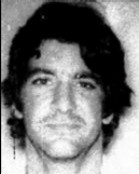 George Jo Hennard
Mass murderer · USA · 1991
George Jo Hennard carried out a mass killing at a Luby’s Cafeteria in Killeen,…
23 victims
George Jo Hennard
Mass murderer · USA · 1991
George Jo Hennard carried out a mass killing at a Luby’s Cafeteria in Killeen,…
23 victims
 Randy Arroyo Baez
Homicide · USA · 1997
Randy Arroyo Baez received a sentence of death on April 14, 1998. His sentence…
1 victim
Randy Arroyo Baez
Homicide · USA · 1997
Randy Arroyo Baez received a sentence of death on April 14, 1998. His sentence…
1 victim
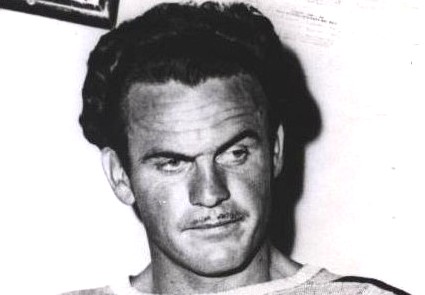 Gerald Albert Gallego
Murderer · USA · 1954
Gerald Albert Gallego was a cop-hating father of Gerald Armand Gallego. He murd…
2 victims
Gerald Albert Gallego
Murderer · USA · 1954
Gerald Albert Gallego was a cop-hating father of Gerald Armand Gallego. He murd…
2 victims
- Gender
- male
- Country
- USA
- Location
- Potter County, Texas, USA
- Date of birth
- November 9, 1976
- Age at first offence
- 22
- Characteristics
- robbery, sexual mutilation
- Victim profile
- Ronnie Dawn Hewitt (female, 37)
- Method of murder
- Strangulation with a belt
- Date(s) of murder
- June 8, 1998
- Years active
- 1998
- Date of arrest
- —
- Status
-
Executed
Executed by lethal injection in Texas on September 5, 2007
Case overview
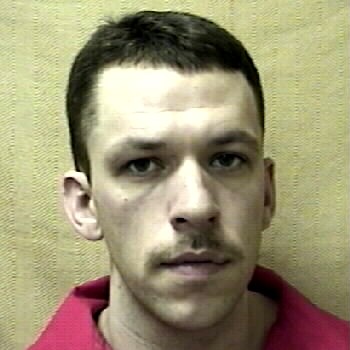
Tony Roach was convicted of capital murder and was sentenced to death. He was executed by lethal injection in Texas on September 5, 2007.
Timeline
- June 8, 1998 — Amarillo firefighters responded to an apartment fire and found the body of Ronnie Dawn Hewitt on the living room floor of her apartment.
- About ten days later — Amarillo police received a phone call from police in Guymon, Oklahoma, saying they were holding Roach in connection with some stolen property.
- May 14, 1999 — A jury found Roach guilty of capital murder.
- May 20, 1999 — After a separate punishment hearing, the court sentenced Roach to death (judgment entered June 9, 1999).
- Dec. 14, 2000 — Roach filed a state application for writ of habeas corpus in the trial court.
- Nov. 7, 2001 — The Texas Court of Criminal Appeals affirmed Roach’s conviction and sentence on appeal.
- Jan. 9, 2002 — The Texas Court of Criminal Appeals denied Roach’s application for habeas corpus relief.
- July 19, 2002 — Roach filed a petition for writ of habeas corpus in an Amarillo federal district court.
- Sept. 27, 2005 — The federal district court denied relief.
- Oct. 27, 2005 — Roach filed notice of appeal in the federal district court.
- Feb. 26, 2007 — The 5th U.S. Circuit Court of Appeals denied Roach’s request for a certificate of appealability.
- Wednesday, September 5, 2007 — Tony Roach was executed by lethal injection in Texas.
- 6:22 p.m. — He was pronounced dead, nine minutes after the lethal flow of drugs began.
Background
Tony Roach was a white male. He was 30 at the time of his execution.
His education was described as “10 years,” and his occupation was described as “laborer.” His hair color was brown and his eye color was brown. His height was 05' 08" and his weight was 169 lb. His co-defendants were listed as none.
Prior to the Texas case, Roach had a prior prison record with the South Carolina Department of Corrections on a 6-year sentence for Armed Robbery and Assault and Battery. The described conduct for that South Carolina sentence was that the subject robbed an adult white male of his vehicle, using a .45 caliber pistol to strike the victim causing minor injuries. Roach was released on parole in 1998.
Roach’s history included juvenile commitments and additional juvenile accusations. As a juvenile in Greenville, South Carolina, he was accused in a string of burglaries and thefts running from December 1989 to February 1990 and was committed to juvenile facilities five times. In November and December 1993, he committed a car theft and two armed robberies in Greenville. After one of the robberies, when Roach’s then-girlfriend refused to accompany him to Florida, he pulled a gun on her and threatened to blow her brains out. After he was arrested, Roach pleaded guilty to the theft and robberies and was sentenced to five years in prison.
In the days leading up to the murder of Ronnie Dawn Hewitt, on May 7, 1998, Roach left Greenville after stealing from his boss some cash, a video camera, and a minivan. He went to Jacksonville, Florida, where he worked for a while and then stole money from a motel. He took the bus to Amarillo where, in addition to killing Hewitt and beating Doshier, he stole food from a K-Mart, snatched a purse, stole a radio from a car, and burglarized a home, from which he took blank checks that he cashed.
After leaving Amarillo, he went to Guymon, where he stole a bike from a yard, broke into a Girl Scout office and stole money, postage, and some knives, and broke into a convenience store, where he stole about twenty to twenty-five cartons of cigarettes, which he later sold.
The offence
On June 8, 1998, Amarillo firefighters responded to an apartment fire. After putting out the fire, firefighters found the body of Ronnie Dawn Hewitt on the living room floor of her apartment.
Hewitt had been burned and had a belt wrapped around her neck. An investigation determined that the fire was intentionally set and that Hewitt had been strangled. She was also described as having been raped after she was dead. Roach was sentenced for the burglary-related murder of Ronnie Dawn Hewitt in Amarillo.
Roach made statements to police describing the killing and the events in her apartment. He said he broke into Hewitt’s apartment through a window and hid in the bathroom. When Hewitt walked past the bathroom door, he came out, put his hand over her mouth, and told her he would not harm her. She said, “Don’t hurt me, don’t hurt me,” and told him that she had a husband and a daughter.
Roach said he pushed her into the living room, where she started kicking and scratching. He strangled her using his arm and a belt. After she was dead, Roach said, he raped her. From the residence, he took some rings, a knife, beer, and money, then started a fire with hair spray and a cigarette lighter and left.
He described entering Hewitt’s apartment through a window, confronting her, and choking her with his arm and then with a belt until she died. He then raped her vaginally and anally and took money, a knife, a beer, and some rings. He described using hair spray to set the apartment on fire.
Investigation
Firefighters responding to a blaze at Hewitt’s apartment found her body. The fire burned her body, and it was determined that she died from asphyxiation from being choked by a belt found tightened around her neck. It was also determined that she likely had been sexually assaulted and that someone set fire to her house using aerosol hair spray.
About ten days after the fire, Amarillo police received a phone call from police in Guymon, Oklahoma, who said they were holding Roach in connection with some stolen property. Roach told the Guymon police that he had killed a woman in Amarillo. After Amarillo officers traveled to Guymon, Roach told officers he broke into Hewitt’s apartment through a window and hid in the bathroom, then later described strangling her and raping her after she was dead.
Evidence described as related to the punishment included items retrieved from pawn shops. A knife identified as Hewitt’s and two of her rings were retrieved from pawn shops in Amarillo and in Guymon, Oklahoma, along with pawn slips signed by Roach. Testimony also showed Roach pawned the rings and other items at pawn shops in Amarillo and Guymon.
Semen was present in vaginal and anal swabs. Roach was excluded as the contributor of the vaginal swab, but the DNA profile of the contributor of the semen found in the anal swab matched his DNA in ten different areas; such a profile would occur in only one in six billion Caucasians, Blacks, or Hispanics.
Arrest
Roach was picked up by police about 120 miles to the north in Guymon, Oklahoma, for stealing some cigarettes and reselling them. During questioning, he volunteered to officers they should ask him about the murder of a woman in Amarillo.
Trial
Indictment and conviction
On Aug. 26, 1998, a Pottery County grand jury indicted Tony Roach for capital murder. On May 14, 1999, a jury found Roach guilty of capital murder.
Punishment phase and sentencing
After a separate punishment hearing, on May 20, 1999, the court sentenced Roach to death (judgment entered June 9, 1999).
The State introduced evidence during the punishment phase. The evidence described that about three days before killing Hewitt, Roach robbed and beat a 71-year-old one-legged man, Carroll Doshier, who died of a heart attack after the beating.
The State also introduced evidence that as a juvenile in Greenville, South Carolina, Roach was accused in a string of burglaries and thefts running from December 1989 to February 1990 and was committed to juvenile facilities five times. The State also introduced evidence that in November and December 1993 Roach committed a car theft and two armed robberies in Greenville, including the incident where Roach pulled a gun on his then-girlfriend and threatened to blow her brains out if she did not accompany him to Florida.
After one of the robberies, Roach pleaded guilty to the theft and robberies and was sentenced to five years in prison.
In addition, evidence described his conduct in the days leading up to the murder of Hewitt, including stealing from his boss some cash, a video camera, and a minivan; working in Jacksonville and stealing money from a motel; taking a bus to Amarillo and stealing food from a K-Mart, snatching a purse, stealing a radio from a car, and burglarizing a home to take blank checks; then traveling to Guymon where he stole a bike, broke into a Girl Scout office and stole money, postage, and knives, and broke into a convenience store where he stole about twenty to twenty-five cartons of cigarettes that he later sold.
Defence and named attorneys
Amarillo attorney C.J. McElroy served as a court-appointed attorney on Roach’s defense team during the trial. Walt Weaver was described as another court-appointed attorney for Roach.
C.J. McElroy said:
- “It was almost like he wanted to be caught,”
- “There wasn’t anything at that point in time to connect him to the crime. It was his confession that allowed police to backtrack.”
McElroy also said the trial was difficult from a defense perspective because prosecutors had DNA evidence from a sexual assault, pawned items from the scene, and the confession.
McElroy said: “Plus, his name didn’t help,” and: “A statement to police that he wanted to be executed made it hard to avoid any other outcome for the defense, she said.”
McElroy said Roach reacted differently than most people she defends and stated: “Tony was really remorseful about what had happened,” and: “I’m saddened by the fact that we’ll be executing somebody,” and: “The Legislature finally in the last session gave us the option of life without parole, but we didn’t have that option when Tony’s trial was going on.”
Walt Weaver called the execution “a tragedy” and said: “Would we rather spend a million bucks feeding children, or would we rather spend a million bucks executing Tony?”
Roach was described as having a statement to police that he wanted to be executed.
Sentencing
Roach was sentenced to death after a separate punishment hearing. The judgment was entered June 9, 1999.
Appeals
State appeals and habeas
Roach filed a state application for writ of habeas corpus in the trial court on Dec. 14, 2000. On Nov. 7, 2001, the Texas Court of Criminal Appeals affirmed Roach’s conviction and sentence on appeal. On Jan. 9, 2002, the Texas Court of Criminal Appeals denied Roach’s application for habeas corpus relief.
Roach filed a petition for writ of habeas corpus in an Amarillo federal district court on July 19, 2002, and the federal district court denied relief on Sept. 27, 2005. Roach filed notice of appeal in the federal district court on Oct. 27, 2005.
Federal certificate of appealability
On Feb. 26, 2007, the 5th U.S. Nothing in the record showed that Roach appealed to the U.S. Supreme Court the Fifth Circuit Court’s denial of his application for certificate of appealability.
The federal case cited was Roach v. Quarterman, 220 Fed. Appx. 270 (5th Cir. 2007) (Habeas). The court denied a COA.
Outcome
Roach was executed by lethal injection in Texas on September 5, 2007. He was pronounced dead at 6:22 p.m., nine minutes after the lethal flow of drugs began.
In his last statement, Roach addressed the family members of his victim who watched from a viewing room. He repeatedly sought forgiveness from the fiance and the daughter of his victim. He said:
“So much hurt I've caused you all,” he said, his voice cracking, and his eyes full of tears. “I can only imagine how you feel. I pray the Lord Jesus Christ touches your heart the way He's touched mine.”
He also said:
“I can't agree with this justice the state is carrying out, but I accept it and I'm sorry,” Roach continued. “I have no ill will toward anyone carrying out this so-called justice. I leave y'all in God's care.”
In another last-statement account, he said:
“I cannot agree with this injustice. The Bible says that you shall not kill, but it also says to obey the government. I am sorry, forgive me.”
Other details
Victim information and relationships
The victim was Ronnie Dawn Hewitt. She was described as “Kitten,” known as “Kitten” to her friends. Friends called her “Kitten.” She left a daughter, Nakita, who was 9 at the time of her mother’s death. Hewitt left a fiance. The fiance and the daughter watched during Roach’s execution from a viewing room.
Named people connected to the case
- Rebecca King, the 47th District attorney at the time, read Roach’s confession in court.
- Dan Packard was named as the author of an account published in the Amarillo Globe News dated September 5, 2007.
- Michael Graczyk, Joe Marr Wilson, and Walt Weaver were named in accounts about the case.
- Greg Abbott was named in a media advisory introducing information about Roach’s scheduled execution.
- Jerry E. Smith was the Circuit Judge in Roach v. Quarterman.
Statements by others
Dureama Mincher said:
- “We were very close,”
- “That was horrible. Kitten was a very little person, and she went through a lot. She didn't deserve that,”
- “Roach, however, will get what he deserves,”
- “Normally I'm against the death penalty, but that was just too much,”
- “It's just a good thing that it's coming to an end,”
- “She deserves some justice.”
Mincher said:
“If certain circumstances work out, Mincher said, she plans to attend the execution by lethal injection in Huntsville to personally observe the end of a long ordeal.”
Laila Book said:
- “She was one of the best people I've ever met,”
- “When this happened she was happier than she'd ever been and was getting ready to get married.”
Laila Book said:
“I finally broke down and wrote to him because I just had to know what went through someone's mind to do what he did,”
and:
“She said she never got a satisfactory answer. “I think he just snapped,” Book said. “It was horrible what he did, but I've forgiven him for what he's done because you have to forgive.””
Authorities captured Roach in Guymon, Oklahoma, where he confessed to police while being questioned about a bicycle theft.
Walt Weaver described Roach’s confession and said:
“This really wasn't a guilt-innocence case,” “He did it. He confessed.”
Rebecca King said:
- “I just remember him being very quiet, never repentant, never anything, just very cold,”
- “We only go for the death penalty when there's no other choice,”
- “That was not a hard one to know we had to go for the death penalty.”
Evidence and conduct details included in multiple narratives
The narrative accounts included that Roach climbed through a bedroom window of Hewitt’s apartment, hid there while she took a shower and spoke on the telephone, and then attacked her. Evidence showed after he killed her he raped her, ate food from her refrigerator, then set her place on fire.
Roach declined to speak with reporters in the weeks preceding his scheduled punishment.
Spotted an error, or have more information about this case?