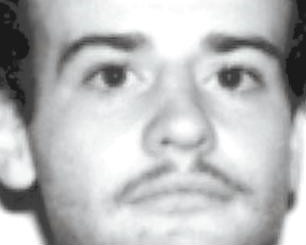
Steve Edward Roach
Homicide Jack Kevorkian
Homicide · USA · 1990
Jack Kevorkian (born May 26, 1928) was a controversial American pathologist. He…
130 victims
Jack Kevorkian
Homicide · USA · 1990
Jack Kevorkian (born May 26, 1928) was a controversial American pathologist. He…
130 victims
 David Koresh
Homicide · USA · 1993
David Koresh (born Vernon Wayne Howell; August 17, 1959 – April 19, 1993) led t…
79 victims
David Koresh
Homicide · USA · 1993
David Koresh (born Vernon Wayne Howell; August 17, 1959 – April 19, 1993) led t…
79 victims
 Todd Hall
Homicide · USA · 1996
Todd Hall was described by neighbors as "mentally slow" and was said to have su…
9 victims
Todd Hall
Homicide · USA · 1996
Todd Hall was described by neighbors as "mentally slow" and was said to have su…
9 victims
 Clinton Bankston
Homicide · USA · 1987
15 August 1987 — Ann Morris (63), her sister Sally Nicholson (59), and Sally’s…
5 victims
Clinton Bankston
Homicide · USA · 1987
15 August 1987 — Ann Morris (63), her sister Sally Nicholson (59), and Sally’s…
5 victims
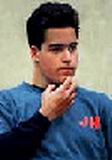 Joshua Jenkins
Homicide · USA · 1996
Joshua Jenkins was a 15-year-old American killer who killed five members of his…
5 victims
Joshua Jenkins
Homicide · USA · 1996
Joshua Jenkins was a 15-year-old American killer who killed five members of his…
5 victims
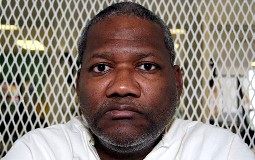 Preston Hughes
Murderer · USA · 1988
Preston Hughes III was convicted of capital murder for the killing of fifteen-y…
2 victims
Preston Hughes
Murderer · USA · 1988
Preston Hughes III was convicted of capital murder for the killing of fifteen-y…
2 victims
 John Hicks
Murderer · USA · 1985
John Hicks was executed by the state of Ohio on November 29, 2005, by lethal in…
2 victims
John Hicks
Murderer · USA · 1985
John Hicks was executed by the state of Ohio on November 29, 2005, by lethal in…
2 victims
 Lendell Hunter
Murderer ? · USA · 1975
Lendell Hunter carried out a string of violent rapes that shocked Augusta, Geor…
1 victim
Lendell Hunter
Murderer ? · USA · 1975
Lendell Hunter carried out a string of violent rapes that shocked Augusta, Geor…
1 victim
 Jacob Lee Davis
Murderer · USA · 1998
Jacob Lee Davis · May 19, 1998 — Robert "Nick" Creson was shot in a parking lot…
1 victim
Jacob Lee Davis
Murderer · USA · 1998
Jacob Lee Davis · May 19, 1998 — Robert "Nick" Creson was shot in a parking lot…
1 victim
- Gender
- male
- Country
- USA
- Location
- Greene County, Virginia, USA
- Date of birth
- April 10, 1976
- Age at first offence
- 17
- Characteristics
- juvenile (17), robbery
- Victim profile
- Mary Ann Hughes (female, 70)
- Method of murder
- Shooting ( sawed-off shotgun)
- Date(s) of murder
- December 3, 1993
- Years active
- 1993
- Date of arrest
- 3 days after ( surrenders )
- Status
-
Executed
Executed by lethal injection in Virginia on January 13, 2000
Case overview
Steve Edward Roach was sentenced to death and was executed by lethal injection in Virginia on January 13, 2000.
Roach killed Mary Ann Hughes, a 70-year-old neighbor, in the doorway of her home outside Stanardsville. Roach was 17 at the time of the offense. Hughes was standing in the front door of her home when she was killed by a single shotgun blast to the cheek. Her body was discovered the next day.
Timeline
- December 3, 1993 — Mary Ann Hughes was shot and killed in her home about five miles west of Stanardsville; her purse (containing a Discover credit card and approximately sixty dollars in cash) and her 1981 Buick Regal were taken.
- December 4, 1993 — Roach was identified as the operator of the Buick Regal; in the early morning hours a deputy sheriff for Nottoway County, Gregory Lee Giuriceo, Jr., noticed the Buick parked in Blackstone; later that day Roach attempted to use Hughes’s Discover bank card at an automated teller machine in Louisburg, North Carolina (video recorded the attempt).
- December 5, 1993 — A South Carolina Highway Patrol trooper, David F. Chavis, observed the Buick speeding and attempted to stop it; the driver escaped into the woods; after the impoundment, Hughes’s purse, a blue jacket, a number eight load shotgun shell, and a plastic bag from a Winn-Dixie grocery store were retrieved.
- December 6, 1993 — Roach contacted Sheriff William L. Morris and arranged to come that day with his father to the Sheriff’s Department; Morris advised Roach of his Miranda rights in the presence of Roach’s father; Roach waived his rights, and both he and his father signed the waiver form; Morris questioned Roach out of his father’s presence.
- January 13, 2000 — Roach was executed by lethal injection in Virginia; he was pronounced dead at 9:04 p.m.
The offence
Mary Ann Hughes was shot and killed in her home about five miles west of Stanardsville on the evening of December 3, 1993. Hughes stood at her open front door when she was shot.
The cause of death was a single shotgun wound to the chest that caused injury to an artery, the chest wall, and the right lung. Dr. Deborah Kay, the medical examiner who performed the autopsy on Hughes, recovered shotgun pellets and wadding from Hughes’s chest. The pellets and wadding were identified as number eight shot from a 12 gauge Remington shot shell case.
Roach helped Hughes with household chores and visited her frequently. The evidence showed that Roach was familiar with Hughes’s habits, including that Hughes customarily deposited her social security check in the bank within the first few days of each month. After Hughes was killed, her purse containing a Discover credit card and approximately sixty dollars in cash was taken from her home, and Hughes’s 1981 Buick Regal was taken as well.
Investigation
The day before the killing, Roach brought a 12 gauge shotgun to a neighbor’s house, and Roach and two friends engaged in shooting the gun in the back yard using number eight shot. Police later recovered from the neighbor’s back yard number eight shot consistent with a 12 gauge Remington shell case.
After the shooting, Roach took Hughes’s car and fled the state, traveling to North and South Carolina. Police said that on December 4, 1993, Roach attempted to use the dead woman’s bank card at an automated teller machine in North Carolina. Video tape from the ATM was introduced as evidence.
On December 5, 1993, South Carolina Highway Patrolmen spotted the Buick speeding and attempted to stop the car, but the driver escaped into the woods. A search of the car later turned up Hughes’s purse and a shotgun shell.
Mahlon Jones, a fingerprint expert employed by the Commonwealth’s Division of Forensic Science, identified a latent palm print from a plastic bag as matching Roach’s left palm print. Latent fingerprints recovered from the automobile also matched Roach’s fingerprints.
Roach made several telephone calls to his aunt, Annie Betty Dean, while he was in North Carolina and South Carolina. During those telephone conversations, she asked him to “come home and give [himself] up.”
Arrest and confession
On December 6, 1993, Roach contacted Sheriff William L. Morris and arranged to come that day with his father to the Sheriff’s Department for questioning. Morris advised Roach of his Miranda rights in the presence of Roach’s father. Roach waived his rights, and both he and his father signed the waiver form. Morris then questioned Roach out of his father’s presence. Clarence Roberts, an acquaintance of the Roach family and an employee of the Department of Alcoholic Beverage Control, was present with Morris during the interview.
At first, Roach told Morris that he and a friend, Scott Shifflett, went to Hughes’s house on the evening of December 3, 1993. Roach said that Shifflett left the 12 gauge shotgun at the door, and that they entered the house and played Yahtzee with Hughes. Roach recounted that Shifflett then took the keys to the Buick Regal and the two began to leave the house. Roach said that after he left, Shifflett ran back to the front door, fired one shot, and ran back to the Buick with Hughes’s purse.
According to Roach, Shifflett said that he had “fired through the roof to scare her.”
Roach stated that Shifflett then jumped into the driver’s seat of the Buick and they drove to North Carolina. Roach said Shifflett must have tried to use Hughes’s Discover credit card while Roach was in a Winn-Dixie store making purchases. Roach also said that he and Shifflett abandoned Hughes’s vehicle in North Carolina.
During questioning, Morris told Roach that he was finding it difficult to believe some of what Roach said, stating:
“[W]ith all these discrepancies in the story, ... I'm finding it really a little difficult to believe some of the things you're telling me.”
Clarence Roberts told Roach that he knew Roach was lying, saying:
“this is a heavy burden to carry on your shoulders for the rest of your life, if you committed this act you need to tell Sheriff Morris and you need to unburden yourself.”
Roach then told Morris:
“I went over there and saw her counting the money and as I was leaving, I had the shotgun laying at the door and I shot her, took the money, the car and left, went to North Carolina. And I cashed--I tried to use--use the credit card but--about four times[,] but it wouldn't work.”
When asked where he shot Hughes, Roach answered:
“In the chest.”
Trial
Charges and proceedings
Roach was charged as a juvenile for capital murder, use of a firearm in the commission of murder, and robbery. The Commonwealth gave notice of intent to try Roach as an adult, and a transfer hearing was conducted in the Greene County Juvenile and Domestic Relations District Court (the juvenile court). The juvenile court found probable cause and advised the Commonwealth’s Attorney that he could seek indictments against Roach before a grand jury. The circuit court reviewed the transfer order and found probable cause to believe Roach committed all three offenses.
Roach was tried as an adult on indictments charging:
- Capital murder of Mary Ann Hughes in the commission of robbery while armed with a deadly weapon, in violation of Code § 18.2-31(4).
- Use of a firearm in the commission of murder, in violation of Code § 18.2-53.1.
- Robbery by violence to the person of Mary Ann Hughes, in violation of Code § 18.2-58.
At the first stage of a bifurcated jury trial under Code §§ 19.2-264.3 and -264.4(A), Roach was found guilty as charged in all three indictments. Because Roach was a juvenile at the time of the offenses, the jury did not fix punishment on the noncapital charges. See Code § 16.1-272.
Guilt phase evidence
On December 3, 1993, Mary Ann Hughes was shot and killed in her home. Hughes was standing at her open front door when she was shot.
Dr. Deborah Kay recovered pellets and wadding from Hughes’s chest and identified them as number eight shot from a 12 gauge Remington shot shell case.
Evidence showed that Roach and Hughes were neighbors, that Roach helped with household chores, and that Roach spent a great deal of time visiting her. The evidence showed Roach was familiar with Hughes’s habits regarding her social security check.
Hughes’s purse was taken, containing a Discover credit card and approximately sixty dollars in cash. Hughes’s 1981 Buick Regal was also taken.
In the early morning hours of December 4, 1993, Gregory Lee Giuriceo, Jr., noticed a Buick Regal parked in a parking lot of a shopping center in Blackstone. Roach was identified by Giuriceo as the operator of the car. Giuriceo later determined the automobile was registered to Hughes.
On the morning of December 4, 1993, Roach attempted to use Hughes’s Discover bank card at an automated teller machine in Louisburg, North Carolina, and a video tape showed Roach attempting to withdraw cash.
On December 5, 1993, Trooper David F. Chavis observed the Buick speeding at 69 miles per hour in a 55 mile per hour zone. Chavis activated his patrol car lights and proceeded behind the Buick. The driver drove to the left shoulder, got out, ran into the woods, and escaped. The driver was wearing clothes matching the description of the clothes Roach had been seen wearing for the previous two days. Chavis impounded the vehicle and traced its ownership to Hughes.
Items retrieved from the automobile included Hughes’s purse, a blue jacket, a number eight load shotgun shell, and a plastic bag from a Winn-Dixie grocery store. A fingerprint expert identified a latent palm print from the plastic bag as matching Roach’s left palm print, and latent fingerprints recovered from the automobile matched Roach’s fingerprints.
Mahlon Jones’s testimony included the identification of Roach’s palm print from the plastic bag. Roach made several telephone calls to his aunt, Annie Betty Dean, while in North Carolina and South Carolina, and she asked him to “come home and give [himself] up.”
Morris and arranged to come for questioning. Morris advised Roach of his Miranda rights in the presence of Roach’s father, and the waiver was signed. Clarence Roberts was present during the interview.
Roach’s confession included initial claims involving Scott Shifflett, and later he admitted he shot Hughes, took the money, took the car, and left for North Carolina, and he described attempts to use the credit card.
At trial, Roach offered evidence that there was no gunshot residue on his hands or clothes when arrested. Roach also presented evidence that no footprints at the scene matched the shoes he was wearing on December 3, 1993.
Barbara Llewellyn, an expert employed by the Division of Forensic Science in the analysis of blood and body fluid, testified that when Roach was arrested, he had no blood on his clothing except a “very light stain” on his shirt. Llewellyn testified despite the fatal wound perforating one of Hughes’s arteries and the pattern of blood splatters indicating the person who had fired the gun was standing within five feet of Hughes.
Penalty phase and sentencing
During the penalty phase, the Commonwealth put on evidence of Roach’s prior juvenile convictions.
Roach had been convicted twice of grand larceny of an automobile, first in May 1993 and second in August 1993. In connection with the first automobile larceny, Roach was convicted of reckless driving and failure to stop for a police officer. In June 1993, he was convicted of breaking and entering a residential dwelling and of grand larceny arising out of the burglary. He gained entry by breaking a window, ransacked the house, and stole a .357 magnum pistol.
In August 1993, Roach was sentenced to supervised probation and house arrest under supervision of his parents at all times. He violated probation when he left the family home and carried a weapon. When placed on probation in August 1993, a psychological evaluation was ordered. The psychologist recommended that Roach and his family attend family counseling and that Roach increase his level of academic attainment.
Roach had stopped attending school in 1991 when he was 14 years old. According to John T. Frey, Roach’s probation officer, Roach and his family attended counseling sessions at a regional counseling center prior to December 1993, and Roach enrolled in G.E.D. classes in the adult education program offered by Greene County.
The trial court struck the evidence as to the “vileness” predicate of a capital sentence but submitted the case to the jury upon the “future dangerousness” predicate. The jury found that the “future dangerousness” predicate was satisfied and unanimously fixed Roach’s punishment at death.
After review of victim impact statements and a probation officer’s report, and after conducting a sentencing hearing, the trial court sentenced Roach according to the jury verdict on the capital murder conviction. The court sentenced Roach to three years imprisonment for use of a firearm in the commission of a murder and to life imprisonment for robbery.
Roach’s mother, Shirley Ann Roach, testified that she and Roach’s father separated and reconciled their marriage four times during Roach’s childhood. She testified that they requested Roach be released from compulsory education at age 14 because he was needed around the house to do chores and to care for his brothers. She also testified she did not realize possessing a weapon violated the terms of Roach’s probation because the probation papers did not explicitly state that fact.
Roach’s father, John Roach, testified that he was frequently absent from home and suffered significant health problems. He testified that when Steve Roach was six years old, John Roach sustained a shotgun injury requiring him to remain hospitalized for six months. While being treated for the gunshot wound, John Roach contracted Hepatitis C from a blood transfusion, and medication caused mood changes. John Roach testified that when his wife left him, life “got worse” for his children. He testified he began drinking heavily and brought young girls into the home to make his wife jealous, and that the children were present when these events occurred and did not receive parental supervision. He also testified that Steve Roach had free access to all the guns in the house.
Several family friends and relatives testified on Roach’s behalf, including Clarence Roberts, who testified Roach performed numerous “odd jobs” for him and was “an excellent employee.” Tammy Estes testified that Roach often helped neighbors including Hughes cut firewood, cook, and clean their laundry. Wendell Lamb testified that Roach volunteered time to help paint and remodel the church and to work at a camp for children in the George Washington National Forest, and Lamb conceded that while Roach was doing volunteer work for the church, he was accused of stealing a watch; the dispute was resolved privately with the watch owner.
Roach testified that shortly after 9:00 p.m. on December 3, 1993, he walked to Hughes’s house with his shotgun. When Hughes opened the door, he fired once, walked past her body, and took her purse and the keys to her car. He testified he drove to North Carolina and attempted to use her Discover credit card to get cash. He testified that he did not know Hughes had died until he spoke by telephone with his aunt. Roach testified he knew Hughes had just received her social security check, knew the location of her purse, and intended to steal both items, but he did not intend to hurt her. He could not explain “what went ... through [his] mind.” He testified he was sorry he had killed Hughes, stating: “I wish I could bring her back.”
Dr. Gary Lee Hawk, a forensic psychologist appointed by the court, testified he met with Roach on six occasions and spoke with Roach’s parents and other family members. Hawk determined Roach was of average intelligence with mild depressive symptoms. Hawk found no indication Roach had suffered any brain injury and no evidence of any serious mental illness. Hawk testified Roach lied to him about a number of things and gave four different versions of what happened on December 3, 1993. Hawk stated Roach was “particularly immature” for his age.
Hawk concluded Roach had poor “impulse control” and “did not show very good ability in many situations to control his emotions or behavior like seventeen-year-old or eighteen-year-old individuals should do.” Hawk related Roach’s immaturity to lack of guidance and structure children need to mature. Hawk testified Roach’s probation violation for carrying a weapon resulted from this lack of structure and supervision, and he testified there was no pattern of violent behavior in Roach’s life.
Hawk testified that in psychological terms, Roach’s act of killing a friend arose from adolescents in conflict expressing “extremely strong and angry emotions with very little provocation ... If it's an immature adolescent, that sort of reaction is more extreme.” Hawk stated “displacement of emotion” occurs when one person or situation makes a person angry but the feelings and anger are expressed toward someone else.
Hawk testified:
“Knowing that this was a woman that [Roach] was close to, and knowing that there was not an existing pattern of this sort of violent offending, and considering what he told me, it's dynamics like that [which] would explain [the murder] in psychological terms.”
Hawk also testified:
“[i]n terms of normal development,” impulsiveness diminishes and “doesn't cause problems for the person.”
Appeals
Roach’s case went through appellate proceedings, including “Roach v. Com., 468 S.E.2d 98 (Va. 1996) (Direct Appeal).”
The appeals are referenced as failing, and a Supreme Court of Virginia petition was dismissed on constitutional grounds in April.
Roach had been in the Federal Habeas stage and had filed in the United States District Court. Roach had been on death row since May 10, 1995.
Execution and last statements
Roach was executed by lethal injection in Virginia on January 13, 2000. The execution took place at the Greensville Correctional Center in Jarrett.
Roach moved through the side door to the death chamber and was escorted by guards into the death chamber. He wore a light blue shirt and dark blue pants and appeared calm. Before the execution he visited with his wife, brother, and father, and he talked with his lawyer and his spiritual adviser before walking down the hallway from holding cells to the death chamber.
Roach’s spiritual adviser was Wendell Lamb, who stood at his side. Lamb leaned down to Roach’s face, gave him a pat on the cheek and kissed him. Lamb stated later:
“I said I love you and he said, 'I love you,'”
Lamb also stated:
“I said see you on the other side, and he said, 'I'll see you there.'”
Lamb stated that as Roach was being strapped down, Roach recited verses of Psalm 23:
“The Lord is my shepherd, I shall not want ...”
After the curtains closed for medical procedures, witnesses waited. Roach recited the 23rd Psalm as he was asked for final words.
Roach was pronounced dead at 9:04 p.m.
Outside the prison after the execution, Steven M. Schneebaum, who had handled Roach’s appeals, read a statement. The statement included:
“Steve Edward Roach was put to death tonight by the Commonwealth of Virginia. He died at 9.04pm, Eastern Standard Time, on January 13, 2000. He was 17 years old when he committed the crime that led to his execution, and 23 when he died: the youngest person to be executed by the Commonwealth in modern times. As his lawyer, I witnessed his death. Steve asked me to make this public statement, which we discussed earlier this week at length, on his behalf. As Steve faced death, his thoughts were first of his wife, now his widow. They were then of Mary Hughes, his neighbor and friend, and of her family and community. They were of other young people, very like Steve himself, who might have been saved from the consequences of broken youths by his participation and his example. He sincerely wished that James Gilmore, Governor of Virginia, had found it in his heart to spare his life, so that he might have been able to make some small effort to help to save the lives of others. But the Governor chose not to intervene. So be it. Steve wanted to be certain that the reports of his death at the hands of the Commonwealth also reflected four of the beliefs that he carried with him to the very end: his love for and gratitude toward those who selflessly tried to prevent this from happening; his genuine remorse for the terrible act he committed; the confidence that in life he had secured the forgiveness of his God, even if he never quite persuaded himself that he was worthy of that forgiveness; and the certainty that the deliberate, methodical killing of children is inconsistent with the values of any civilized society. He knew that his apology, however heartfelt, would not fill the void left by Mary Hughes, but neither will his death. Steve died without bitterness, but with a great deal of regret. He never understood what really happened in the instant in which he took the life of someone who loved him. And he was unable to grasp, even to his last breath, why we kill people to teach other people that killing people is wrong. The principal lesson he wanted his own death to communicate is that this makes no sense. Killing kids makes no sense, and it must be stopped. It is too late to save Steve Roach; it is not too late to save the life of the next young man or woman who, in a moment of bewildered rage or utter confusion, commits an act totally out of character in its violence and awful in its result, yet which does not place its perpetrator forever beyond the power of redemption in this life. After the execution, his attorney released a statement on behalf of the 23-year-old: “It was important to Steve Roach to be remembered not just as the teenager who committed a horrible crime, but also the adult who accepted responsibility for it and begged the forgiveness of those he caused to suffer. And not just as someone who ended a life for no reason, but also as someone whose own life was ended to no-one’s benefit. Steve Roach wanted us who live after his death to know that he was not a monster: He was a human being, a young man, with flaws and with promise who deserved to live. The principle lesson he wanted his own death to communicate is that this makes no sense. Killing kids makes no sense, and it must be stopped”.”
Other details
Roach’s wife was Elasa Roach.
Roach was scheduled for execution and was described as a convicted murderer who had confessed to the shotgun slaying of Mary Ann Hughes.
Roach met with his wife and two other relatives earlier Thursday.
The execution was described as taking place at Greenville Corrections Center’s L Unit, and it involved a viewing room with blue curtain and four large windows. Witnesses and reporters sat behind the windows in a separate booth. The family of the murder victim was described as never being seen.
Execution-related observers included state lawyers, corrections officials, and execution team members.
Roach’s attorney, Steven M. Schneebaum, stated that Roach did not want to be remembered as a murderer or “monster.”
Roach married while on death row for nearly five years.
Spotted an error, or have more information about this case?