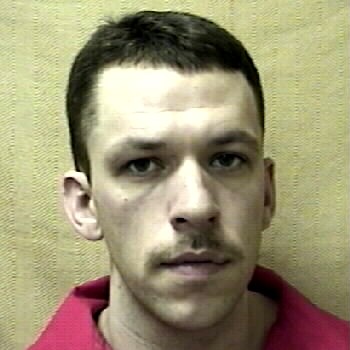
Charles Wesley Roache
Mass murderer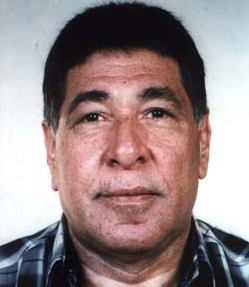 Gameel Al-Batouti
Mass murderer · USA · 1999
Gameel Al-Batouti (also rendered “Gamil ElBatouty” or “El Batouty” in U.S. offi…
216 victims
Gameel Al-Batouti
Mass murderer · USA · 1999
Gameel Al-Batouti (also rendered “Gamil ElBatouty” or “El Batouty” in U.S. offi…
216 victims
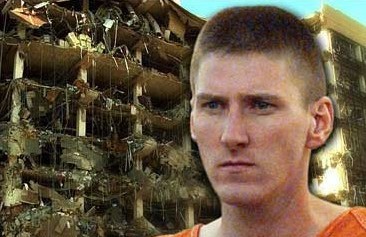 Timothy McVeigh
Mass murderer · USA · 1995
Timothy James McVeigh (April 23, 1968 – June 11, 2001) was a United States Army…
168 victims
Timothy McVeigh
Mass murderer · USA · 1995
Timothy James McVeigh (April 23, 1968 – June 11, 2001) was a United States Army…
168 victims
 Julio Gonzalez
Mass murderer · USA · 1990
Julio Gonzalez was sentenced to 174 twenty-five-year sentences (a total of 4,35…
87 victims
Julio Gonzalez
Mass murderer · USA · 1990
Julio Gonzalez was sentenced to 174 twenty-five-year sentences (a total of 4,35…
87 victims
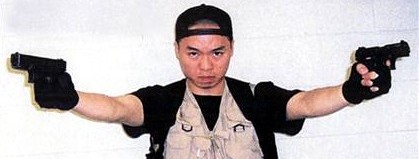 Seung-Hui Cho
Mass murderer · USA · 2007
Seung-Hui Cho was a mass murderer who shot and killed 32 people and wounded man…
32 victims
Seung-Hui Cho
Mass murderer · USA · 2007
Seung-Hui Cho was a mass murderer who shot and killed 32 people and wounded man…
32 victims
 George Jo Hennard
Mass murderer · USA · 1991
George Jo Hennard carried out a mass killing at a Luby’s Cafeteria in Killeen,…
23 victims
George Jo Hennard
Mass murderer · USA · 1991
George Jo Hennard carried out a mass killing at a Luby’s Cafeteria in Killeen,…
23 victims
 Eric Harris
Mass murderer · USA · 1999
Eric Harris committed suicide by gunshot to the roof of the mouth on April 20,…
13 victims
Eric Harris
Mass murderer · USA · 1999
Eric Harris committed suicide by gunshot to the roof of the mouth on April 20,…
13 victims
 John Freeland
Murderer · USA · 2009
John T. Freeland Jr. was sentenced to death for the 2009 murder of Carolyn Ward…
1 victim
John Freeland
Murderer · USA · 2009
John T. Freeland Jr. was sentenced to death for the 2009 murder of Carolyn Ward…
1 victim
 Sergei Babarin
Homicide · USA · 1999
1995 — Sergei Babarin was arrested in Salt Lake City after an incident in a dep…
2 victims
Sergei Babarin
Homicide · USA · 1999
1995 — Sergei Babarin was arrested in Salt Lake City after an incident in a dep…
2 victims
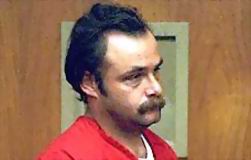 Wesley Shermantine
Serial killer · USA · 1984
Wesley Shermantine Wesley Shermantine was sentenced to death in California on M…
24 victims
Wesley Shermantine
Serial killer · USA · 1984
Wesley Shermantine Wesley Shermantine was sentenced to death in California on M…
24 victims
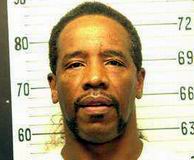 Michael Eugene Sample
Murderer · USA · 1981
Michael Eugene Sample was sentenced to death on February 7, 1983. He and his co…
2 victims
Michael Eugene Sample
Murderer · USA · 1981
Michael Eugene Sample was sentenced to death on February 7, 1983. He and his co…
2 victims
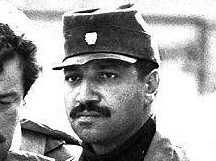 George Emil Banks
Mass murderer · USA · 1982
George Emil Banks was an American mass murderer and a former Camp Hill prison g…
13 victims
George Emil Banks
Mass murderer · USA · 1982
George Emil Banks was an American mass murderer and a former Camp Hill prison g…
13 victims
- Gender
- male
- Country
- USA
- Location
- Alexander County/Haywood County, North Carolina, USA
- Date of birth
- November 17, 1973
- Age at first offence
- 26
- Characteristics
- murder for hire, alcohol, drug addict, torture, robbery
- Victim profile
- Chad McKinley Watt, 22 / Earl Phillips, 72; his wife, Cora, 71; their son, Eddie, 40; daughter-in-law Mitzi, 44; and granddaughter Katie, 14
- Method of murder
- Shooting
- Date(s) of murder
- September 29/30, 1999
- Years active
- 1999
- Date of arrest
- October 1, 1999
- Status
-
Executed
Executed by lethal injection in North Carolina on October 22, 2004
Background
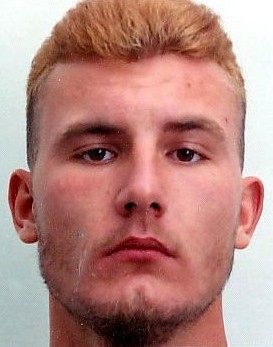
Charles Wesley Roache was a white male. His date of birth was 11/17/73 and his age at execution was 30. He was indicted on 18 October 1999.
Roache was convicted in the Superior Court, Haywood County, of capital murder of five victims and was sentenced to death.
The murders occurred during a crime spree of approximately forty-eight hours. During the spree, Roache killed a man named Chad Watt early in the morning of 29 September 1999 and assaulted a man named Bart Long at a rest area on Interstate 40 west of Hickory in the afternoon of 30 September 1999. The spree culminated in the murders of five members of the Phillips family.
Roache also had a criminal history that included Possession of Controlled Substance (1996), Breaking and Entering (1995), Larceny (1992), Breaking and Entering (1991), Larceny (1991), Breaking and Entering (1990), and misdemeanor assault and communicating threats.
The offence
On the evening of 30 September 1999, Charles Wesley Roache and Chris Lippard were in the vicinity of the victims' houses on Rabbit Skin Road. They had been on a crime spree for approximately forty-eight hours.
They exited Interstate 40 at exit 20, Jonathan Creek Road, which intersected Rabbit Skin Road approximately thirty to fifty yards away. After their truck was disabled in a ditch, Lippard accidentally backed the truck off the road and into the ditch. Lippard offered to drive one vehicle that stopped fifty dollars to take them to the interstate. Roache also attempted to stop at least one additional vehicle to get a ride; two of the people in these cars later testified that one of the two men carried a case of beer. The efforts to obtain a ride failed.
Roache and Lippard walked towards the nearest house on Rabbit Skin Road in order to steal a car. The house was 126 Earl Lane, the home of Earl Phillips, 72, and Cora Owens Phillips, 71. Lippard went into the house. Roache entered after he heard a woman screaming from within.
Inside the house, Roache saw Cora Phillips on the floor with Lippard holding a shotgun to her head. Earl Phillips pleaded with Roache to prevent Lippard from killing the woman. Roache assured Earl that no one was going to die. At Roache’s request, Earl Phillips showed Roache the cabinet where Earl kept his guns. Roache took a 20 gauge shotgun, several shotgun shells, and a .22 caliber rifle. Roache disabled the telephone by cutting the cord leading into the wall. Roache bound Earl and Cora Phillips’ hands together with duct tape.
Roache and Lippard left in Earl Phillips’ 1986 Ford pickup truck. As they drove away, they passed a small red car heading towards the house before reaching the intersection of Earl Lane and Rabbit Skin Road. Lippard overturned the truck. Roache broke the passenger window to escape. Lippard returned to the house. Roache stayed behind to gather their items from the truck and then waited in the woods near the wrecked truck.
Shortly thereafter, Roache heard Lippard yelling for assistance. The man from the red car was fighting with Lippard for control of a gun. Roache shot the man, Eddie Phillips, once in the chest with the shotgun he was carrying. Roache then reloaded the gun and went to the house with Lippard.
Mitzi Phillips, Eddie’s wife, was standing in the doorway refusing entry. Roache broke open the door and shot Mitzi Phillips once in the face. Roache saw a girl, Katie Phillips, fourteen years old, run into the bathroom. He pushed open the door and found Katie Phillips sitting on the toilet. Roache shot Katie Phillips once in the side of the head.
Lippard had gone to the living room where he and Roache had left Earl and Cora Phillips bound. Roache returned to that room to find Earl Phillips slumped over. Cora Phillips was lying on the floor with blood coming from her head. Roache shot both Cora and Earl Phillips once in the head.
After the murders, Lippard drove Roache and Lippard away from the house in the red car, a 1993 Saturn belonging to Mitzi Phillips. While driving down Earl Lane they passed one car later found to belong to Danny Messer and another later found to belong to Todd Berrong. They drove the Saturn onto Interstate 40. After hitting a concrete divider, the crash disabled the car. The accident occurred approximately one to one and a half miles west of the Jonathan Creek Road exit on Interstate 40.
Defendant exited the vehicle and left the highway on the side with the guardrail. Lippard crossed the barrier at the opposite side of the road and disappeared.
Investigation
On 30 September 1999, Roache and Lippard were on a crime spree that also involved the murder of Chad Watt and an assault on Bart Long.
Autopsies were performed on all five Phillips family victims on 2 October 1999 in Chapel Hill, North Carolina. Dr. John Butts, the Chief Medical Examiner of North Carolina, either performed or supervised each of these autopsies and testified at Roache’s trial about the cause of death for and injuries to each victim.
Earl Phillips’ autopsy showed severe injury to his head as a result of a contact gunshot wound to the right side of his head, in the area of his right temple, meaning that the barrel of the shotgun was against the body of the victim at the time the gun was fired. Pathologists removed lead shot from his body. Dr. Butts testified that Earl Phillips’ death was caused by a shotgun wound to the head. The pathologists also noted that Earl Phillips’ hands were bound with duct tape.
Cora Phillips’ autopsy revealed several injuries to her body. Her death was due to a single contact shotgun wound in the corner of her mouth on the left side of her face, which caused massive injury to her head. Pathologists found lead pellets and a plastic shot cup in her head. The autopsy also showed blunt force injuries—lacerations and bruising—on her right forearm consistent with defensive injuries incurred before she died. Cora Phillips’ hands were also fastened together with duct tape.
Eddie Phillips’ autopsy revealed a single gunshot to the left side of the body striking multiple organs in the chest and abdomen. Pathologists determined the gunshot wound was a contact wound. Shotgun pellets and shotgun wadding were recovered at the time of the autopsy. Dr. Butts testified that the shotgun wound would have resulted in unconsciousness within a matter of seconds. Pathologists also found blunt force injuries on Eddie Phillips’ head behind and a little above the left ear likely inflicted while the victim was still alive. Dr. Butts testified that Eddie Phillips’ death was caused by the shotgun wound to his chest.
Mitzi Phillips died from a shotgun wound to the head. The entrance wound was a large injury effectively covering the forehead. There was an exit wound on the right side of the head where some shot pellets had created a hole. Nonetheless, some of the shot pellets remained inside the body. The shot was likely fired from a close range based on powder stippling marks on the forehead around the wound.
Katie Phillips’ autopsy showed evidence of a single shotgun wound to the head that entered in the left eye. Some shot had exited from the right side of the head, but some shot was still present in the head at the time of the autopsy. The track was through the left eye into the skull. The force of the blow was enough to remove the brain from the cranial wall. Dr. Butts opined that the shot was fired from close range and was immediately incapacitating. The autopsy also revealed a defensive injury from the shotgun blast to Katie Phillips’ left hand indicating that she had raised her hand to shield herself from the gunshot. Dr. Butts testified that the shotgun wound to the head caused Katie Phillips’ death.
Dr. Claudia Coleman, an expert in forensic psychology, testified at trial that Roache suffered from a chronic anxiety disorder, had a low average intelligence, and had experienced a violent upbringing. She testified that Roache exhibited features typical of a dependent personality disorder with a high need for affection and security from other individuals. Coleman also testified to Roache’s long history of polysubstance dependence attributed to his anxiety. In her opinion, Roache’s alcohol and drug use on the afternoon and night of 30 September 1999 combined with his personality and anxiety disorders would have affected his judgment, reasoning, and problem-solving capacities at the time he murdered the Phillips family.
Arrest
Roache was arrested near the Phillips home and immediately confessed to the murders.
Around 8:30 a.m. on 1 October 1999, Jim Fowler discovered Roache hiding under a camper top lying on Fowler’s property about three-quarters of a mile to one mile from the interstate where the red car crashed. Fowler’s son called the police while Fowler watched Roache, holding him at gunpoint until a deputy arrived from the Haywood County Sheriff’s Department. Officer Beecher Phillips transported Roache to the sheriff’s department, where Roache was turned over to the custody of Detective Larry Bryson and State Bureau of Investigation Agent Toby Hayes.
Agent Hayes advised Roache of his rights, and Roache indicated his understanding. Roache waived his rights by signing a form offered by Agent Hayes.
Roache initially told officers that he had shot the man in the yard, the woman in the kitchen, and the girl in the bathroom, and that Lippard had shot the older couple in the living room. During questioning and the recording of his statement, Roache admitted that he had shot all five victims and persisted in stating he was responsible for all five deaths even after officers pointed out the discrepancy between his earlier story.
Roache also talked to police about the murder of Chad Watt in Alexander County. Dr. Butts was not involved in the Watt autopsy discussion within the provided facts, but Roache’s account of Watt’s killing was described. Roache told police the murder resulted from a fight between the two, during which Roache “beat [Watt] so bad [defendant] knew [he]'d have to kill him so he wouldn't tell on [defendant].” Roache gave police information on the location of the body, which led Alexander County Sheriff’s deputies to recover Watt’s body on 2 October 1999.
Roache confessed to information concerning an attack on Bart Long at a rest area on Interstate 40 west of Hickory. Roache pretended to use a urinal while waiting for a victim to enter the restroom. When the victim, Bart Long, entered a stall and sat on the toilet, Roache sprayed him with pepper spray and put him in a sleeper hold. Roache attempted to obtain the man’s wallet, but Long’s yells attracted a crowd, causing Roache to flee.
Roache also gave police information concerning his accomplice, Chris Lippard. At the time of his initial conversations with police, Roache did not know Lippard’s last name. Over the next several days, however, Roache made telephone calls which eventually led him to discover Lippard’s last name and shared it with police. That information led to Lippard’s arrest in New Orleans about a week later.
Trial
Roache was indicted on 18 October 1999 for the first-degree murders of Earl Phillips, Cora Owens Phillips, Eddie Lewis Phillips, Mitzi Carolyn Blazer Phillips, and Katie Phillips.
Roache was tried capitally and found guilty of first-degree murder based on felony murder alone in the deaths of Earl Phillips and Cora Phillips. He was found guilty of first-degree murder based on premeditation and deliberation and felony murder for the deaths of Eddie Phillips, Mitzi Phillips, and Katie Phillips.
Following a capital sentencing proceeding, the jury recommended that Roache be sentenced to death for the murders of Mitzi Phillips and Katie Phillips and to life imprisonment without parole for each of the other three murders. The trial court entered judgment accordingly.
The legal discussion also described additional evidence and appellate holdings.
Sentencing
In the capital sentencing proceeding, the jury recommended death for the murders of Mitzi Phillips and Katie Phillips.
Roache was sentenced to death in Haywood County Superior Court for the murders of Mitzi and Katie Phillips. He also received life sentences without parole for the murders of Earl Phillips, Cora Phillips and Eddie Phillips.
An additional sentence of life imprisonment was imposed in Alexander County Superior Court for the murder of Chad Watt.
Lippard received a life sentence and was convicted in separate trials.
Appeals
The North Carolina Supreme Court affirmed Roache’s murder convictions and death sentences on 5/7/2004.
Roache waived all appeals and later waived all appeals. He also waived his rights by signing a form after being advised by Agent Hayes.
The appellate court’s holdings included:
- The short-form murder indictment did not deprive the trial court of jurisdiction over the case.
- Roache was not deprived of a fair and impartial jury.
- Roache did not receive ineffective assistance of counsel.
- Admission of photographs of the victim of an uncharged murder and videotape graphically depicting the crime scene was not an abuse of discretion.
- Roache was not prejudiced by admission of evidence regarding other crimes committed within the crime spree that culminated in murders.
- Evidentiary rulings excluding Roache’s evidence were not an abuse of discretion.
- The prosecutor’s closing argument during the guilt phase and sentencing phase were not so improper as to obligate the trial court to intervene ex mero motu.
- There were no instructional errors that warranted reversal.
- Roache was not prejudiced by evidentiary rulings during sentencing.
- Roache was not entitled to peremptory instructions on certain statutory and nonstatutory mitigating factors.
- The death sentence was not disproportionate to the crime or to other similar cases where death sentence was imposed. The Supreme Court found “NO ERROR.”
The case citation was: State v. Roache, 595 S.E.2d 381 (N.C. 2004) (Direct Appeal).
Outcome
Roache was executed by lethal injection in North Carolina on October 22, 2004.
Roache’s final meal was a sirloin steak, popcorn shrimp, salad with bleu cheese dressing, a honeybun and vanilla Coke.
Roache’s final statement included the following verbatim words:
"I can only hope and pray the pain and hurt I caused you will be healed as I give my life as a key to forgiveness,'' Roache wrote in his final statement. "May God's love shine on you.''
Roache’s death was pronounced at 2:18 a.m.
Timeline
- 10/20/2004 — Witnesses were named for Charles Roache execution.
- 8/24/2004 — Execution date was set for Oct. 22, 2004.
- 5/7/2004 — NC Supreme Court affirmed Roache's murder convictions and death sentences.
- 4/24/2001 — Roache was sentenced to death in Haywood County Superior Court for the murders of Mitzi and Katie Phillips; he received life sentences without parole for the murders of Earl, Cora and Eddie Phillips.
- 10/22/2004 — Roache was executed by lethal injection in North Carolina.
- 10/1/1999 — Roache was arrested near the Phillips home.
- 10/8/1999 — Lippard was apprehended in New Orleans.
- 9/29/1999 — Roache and Lippard killed Chad Watt in Alexander County.
- 30 September 1999 — Roache and Lippard assaulted and attacked Bart Long at a rest area on Interstate 40 west of Hickory; later that evening they killed members of the Phillips family at 126 Earl Lane.
- 1 October 1999 — Roache was discovered by Jim Fowler hiding under a camper top.
- 2 October 1999 — Alexander County deputies recovered Watt’s body; autopsies on all five Phillips victims were performed in Chapel Hill.
Other details
Roache wrote “I can only hope and pray the pain and hurt I caused you will be healed as I give my life as a key to forgiveness,'' and “May God's love shine on you.''
Roache’s execution scheduling included witnessing arrangements. Official witnesses named included Tina Robodee, Laura Cragg, Sharon Grant, Adam Watt, R.T. Alexander, and Toby Hayes. News media witnesses included Becky Johnson, Darren Miller, Gary Herman, Russ Bowen, Bill Holmes, and additional alternate witnesses were described for the Asheville Citizen-Times and the Charlotte Observer if needed.
Roache’s accomplice was Christopher Wayne Lippard. Lippard was described as receiving a life sentence and being convicted in separate trials.
Witnesses at the Phillips home response included police and 911 being called by Todd Berrong after he waited at the end of Earl Lane for police.
Eddie Phillips’ body was found on the side of the road close to his parents’ house. When he was discovered by a neighbor, Eddie Phillips was still alive and tried to speak before he died shortly thereafter.
Police discovered Earl Phillips’ Ford wrecked and lying upside down a short distance from the home and collected shotgun shells and DNA evidence. Shells were fired from guns found in the maroon Saturn and near the Phillips home. Shells were found in all three vehicles. Lippard’s DNA was found on the sawed-off shotgun retrieved from the Saturn.
The state imposed multiple sentences: death for Mitzi and Katie Phillips murders, life imprisonment without parole for Earl, Cora, and Eddie Phillips murders, and life imprisonment for the murder of Chad Watt.
Other described individuals in connection with the crime spree included Mark Stout, Bart Long, Danny Messer, Todd Berrong, Jim Fowler, and Officer Beecher Phillips.
Spotted an error, or have more information about this case?