
Rodney Sattler
Murderer Brian Kevin Rosenfeld
Murderer · USA · 1985
Brian Kevin Rosenfeld Brian Kevin Rosenfeld was sentenced to three concurrent l…
23 victims
Brian Kevin Rosenfeld
Murderer · USA · 1985
Brian Kevin Rosenfeld Brian Kevin Rosenfeld was sentenced to three concurrent l…
23 victims
 Yahweh ben Yahweh
Murderer · USA · 1980
Yahweh ben Yahweh was born and legally named Hulon Mitchell Jr. (October 27, 19…
23 victims
Yahweh ben Yahweh
Murderer · USA · 1980
Yahweh ben Yahweh was born and legally named Hulon Mitchell Jr. (October 27, 19…
23 victims
 Russell Ellwood
Murderer · USA · 1991
Russell Ellwood was a former taxi driver. Authorities suspected him of killing…
20 victims
Russell Ellwood
Murderer · USA · 1991
Russell Ellwood was a former taxi driver. Authorities suspected him of killing…
20 victims
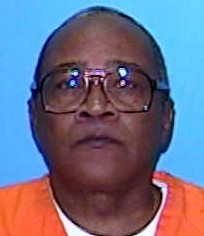 Norman Parker
Murderer · USA · 1966
Name: Norman Parker · Also known as: Nathen Parker; Shawn Vincent · Date of bir…
3 victims
Norman Parker
Murderer · USA · 1966
Name: Norman Parker · Also known as: Nathen Parker; Shawn Vincent · Date of bir…
3 victims
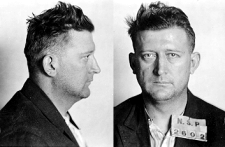 Stanko Jukich
Murderer · USA · 1925
Stanko Jukich was executed at the Nevada State Prison on May 21, 1926 for the c…
1 victim
Stanko Jukich
Murderer · USA · 1925
Stanko Jukich was executed at the Nevada State Prison on May 21, 1926 for the c…
1 victim
 Kim Brown
Murderer · USA · 1987
Jun 12, 1987 — Angela Fay Hackl disappeared from her hometown of Lone Rock, Wis…
3 victims
Kim Brown
Murderer · USA · 1987
Jun 12, 1987 — Angela Fay Hackl disappeared from her hometown of Lone Rock, Wis…
3 victims
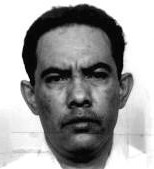 Robert Moreno Ramos
Murderer · USA · 1992
Robert Moreno Ramos Robert Moreno Ramos was convicted of capital murder of his…
3 victims
Robert Moreno Ramos
Murderer · USA · 1992
Robert Moreno Ramos Robert Moreno Ramos was convicted of capital murder of his…
3 victims
 Lavinia Fisher
Murderer? · USA · 1818
Lavinia Fisher Lavinia Fisher was executed by hanging on February 18, 1820. The…
0 victims
Lavinia Fisher
Murderer? · USA · 1818
Lavinia Fisher Lavinia Fisher was executed by hanging on February 18, 1820. The…
0 victims
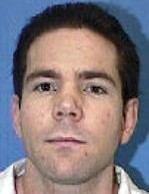 Granville Riddle
Murderer · USA · 1988
April 1985 — Granville Riddle committed the burglary and vandalism of the Oakda…
1 victim
Granville Riddle
Murderer · USA · 1988
April 1985 — Granville Riddle committed the burglary and vandalism of the Oakda…
1 victim
- Gender
- male
- Country
- USA
- Location
- Montana, USA
- Date of birth
- 1967
- Age at first offence
- 19
- Characteristics
- rape, altercation, convicted rapist
- Victim profile
- Diane Stout, 25 / Raymond Carl Martinson, 22 (inmate)
- Method of murder
- Strangulation - Beating with a bicycle seat
- Date(s) of murder
- 1986 / April 20, 1995
- Years active
- 1986–1995
- Date of arrest
- —
- Status
-
Died in custody
Committed suicide by hanging himself in his cell on February 2, 2004 after being sentenced to death in 1996 and serving a 30-year sentence in connection with the 1986 rape and murder of Diane Stout
Defendant
Rodney Sattler was convicted of deliberate homicide in the Twentieth Judicial District Court, Lake County, and sentenced to death.
Timeline
- 1986 — Rodney Sattler strangled Diane Stout, a Thompson Falls resident, and left her body along railroad tracks on the edge of town.
- 1987 — Rodney Sattler was convicted of deliberate homicide and incarcerated in the Montana State Prison; he was subsequently moved to the Swan River Correctional Training Center.
- May 2, 1995 — The State of Montana charged Sattler by information with committing deliberate homicide in violation of § 45-5-102(1)(a), MCA.
- April 20, 1995 (shortly before midnight) — The altercation between Sattler and Raymond Carl Martinson occurred in Cell 1 of the Lake County Jail’s Cell Block A; Sattler inflicted a minimum of six blows to Martinson's head and neck with a metal bar affixed to the seat of an exercise bicycle located in that cell.
- March 1996 — A jury convicted Sattler of deliberate homicide.
- July 10, 1996 — The District Court set an execution date.
- September 9, 1997 — The Montana Supreme Court heard arguments in State v. Sattler, Nos. 96-285 and 96-305.
- March 11, 1998 — The Montana Supreme Court issued its decision affirming.
- February 2, 2004 — Sattler committed suicide by hanging himself in his cell early Monday (found hanged at about 4 a.m.).
Background
Rodney Sattler was held at the Swan River Correctional Training Center near Condon while serving a 30-year sentence for the 1986 rape and murder of Diane Stout, 25, of Thompson Falls. In 1995, he was serving time for that murder at the former Swan River Correctional Training Center near Condon.
Sattler was a trusty at the Swan River facility.
The offence
1986 rape and murder of Diane Stout
Rodney Sattler strangled Diane Stout, a Thompson Falls resident, in 1986 and left her body along railroad tracks on the edge of town.
1995 attempted deliberate homicide and near-fatal attack on Donna Weeks
While Sattler was at the Swan River facility, on Jan. 29, 1995, he beat and choked Donna Weeks, an employee at the Swan River facility. The attack resulted in Weeks spending 25 days in a coma. Another trusty interrupted the attack.
Sattler was sentenced to life for attempted murder.
1995 deliberate homicide of Raymond Carl Martinson
On or about April 20, 1995, Sattler purposely or knowingly caused the death of Raymond Carl Martinson by beating him to death with a blunt instrument.
Both Sattler and Martinson were incarcerated in the Lake County Jail at the time of the charged offense. Sattler had been convicted of deliberate homicide in 1987, incarcerated in the Montana State Prison, and subsequently moved to the Swan River Correctional Training Center.
Sattler pleaded not guilty to the deliberate homicide charge and gave notice of an affirmative defense of justifiable use of force, commonly called self defense.
Investigation
Jailer Luc Mathias checked on the inmates in Cell Block A at around 11:20 p.m. on April 20, 1995, and saw that a few of them were watching television in the main room; everything was quiet and seemed normal.
Approximately 20 minutes later, Darlene Healy, a dispatcher whose responsibilities included monitoring a surveillance and intercom system at the Jail, noticed Sattler pacing back and forth in the main room of Cell Block A. Healy did not see any other inmates in the main room at that time.
About 15 minutes later, someone pressed the intercom button in Cell Block A. When Healy pressed the button which allowed her to communicate with the caller and asked what the caller needed, the response was “Man down.” “Man down” was repeated. Healy advised Mathias of the message and called Lake County Deputy Sheriff David Alexander. Healy continued to monitor the surveillance and intercom system and thought she could hear someone trying to breathe.
Mathias went to the catwalk in front of the cell block, observed feet protruding from Cell 1, locked down all of the inmates, and entered Cell Block A. Martinson was lying on his back in Cell 1; Martinson's head was under the bunk opposite the door to the cell, and he was lying in a lot of blood but was still alive. Mathias also noticed a bloody metal bar lying across the sink and the exercise bicycle. Mathias left the cell block and directed Healy to call an ambulance.
Alexander arrived together with emergency personnel who also noticed that Martinson's head was approximately three to four inches under the bunk. Martinson was transported to the local hospital and died there less than an hour later.
Arrest
At the time of the incident on which the deliberate homicide charge was based, Sattler was being held in the Lake County Jail as the result of an attempted deliberate homicide committed by him at Swan River.
Sattler was being held in the Lake County jail awaiting trial for the Swan River attack when he killed Martinson.
Trial
Venue and jury findings
The case was tried to a jury in Powell County in March of 1996.
The undisputed evidence established that the altercation between Sattler and Martinson resulted in Martinson’s death shortly before midnight on April 20, 1995, in Cell 1 of Cell Block A, and that Sattler inflicted a minimum of six blows to Martinson's head and neck with a metal bar affixed to the seat of an exercise bicycle.
The jury found Sattler guilty of deliberate homicide.
After the sentencing hearing required by § 46-18-301, MCA, the District Court entered its findings of fact, conclusions of law, judgment and sentence.
Jail cell arrangement and timing
Cell Block A had four cells containing bunks and a combination sink and toilet. Cell 1 did not house any inmates and was used as a common bathroom and exercise room by the inmates. Cell 2 housed five inmates, including Sattler, Martinson, and two inmates who testified for the State at trial. Cells 3 and 4 housed two and five inmates, respectively. The remainder of Cell Block A contained a common area with a main room and a shower. Except from approximately midnight to 6:00 a.m. each day, when inmates were locked in their cells, inmates frequently sat at two picnic tables in the main room and watched television and played cards.
Witness testimony about the altercation
Inmate Dale Tammen testified that shortly before midnight on April 20, 1995, inmates including himself and Sattler were watching television at the picnic tables; Martinson was there on and off. Tammen heard a “loud thump” from Cell 1, turned, and saw Martinson slumped against the exercise bicycle on the floor of Cell 1 with his legs facing back toward the bunks; Martinson appeared unconscious and Sattler was standing over him looking down. Tammen noticed a large wound in the back of Martinson's head and possibly another next to it. Tammen said he saw Sattler spin Martinson around and lay him flat on the floor.
Tammen went briefly to his own cell, Cell 2, and then followed the other inmates to Cell 4, the cell farthest away from Cell 1. He heard a series of approximately five or six more “thumps” over a three- to five-second period. Soon thereafter, Sattler came to Cell 4 and directed the inmates to go to their cells. Tammen testified that Sattler returned to the main room and began pacing, then went to Cell 2, laid down on his bunk, and started reading a book. After borrowing a shirt from another inmate, Sattler took off his own shirt and wiped his feet with it. Tammen said Sattler tore up his shirt and flushed it down the toilet; Tammen did not observe any injuries on Sattler when he changed shirts. After Sattler said it was okay to do so, Tammen pressed the intercom button and reported that there was a “man down.” Tammen testified that Sattler asked if any of the inmates had seen anything and if anyone was going to betray him.
Inmate Jonathan Nunn corroborated Tammen’s version largely. Nunn heard loud banging noises coming from Cell 1 that sounded like metal on metal.
Inmate Leslie Butler heard “thumping” noises while showering that sounded like “metal hitting metal.”
Butler testified he suspected something was wrong because Sattler was alone in the main room of Cell Block A when Butler returned to his cell.
Inmate Jody Law testified that the seat had been on the exercise bicycle in Cell 1 approximately an hour before the incident and was still there shortly before the incident when he went into Cell 1 to use the toilet. Law testified that Sattler came into Cell 1 while Law was there and remained in the cell when Law returned to the main room. Upon returning to the picnic tables, Law noticed Sattler had left his glasses on the table, which Law found noteworthy because, in Law's view, Sattler “just never took [his glasses] off.” Law did not see anyone else go into Cell 1 after he left Sattler there but, “maybe a couple minutes” later, he heard a “scuffle going on behind” that started with a dull thumping sound and then sounded “ like taking a pipe and hitting it against metal ․ or something.” Law looked into Cell 1 momentarily and saw no one, noticing only that the exercise bicycle moved a little bit. Law testified he then saw Sattler come out of Cell 1 wiping his hands off on his shirt. Sattler went to Cell 2, then came to Cell 4 where other inmates gathered, and said only “Has anybody got a problem with that?” Law testified that, like other inmates, he could hear someone gasping for breath in Cell 1 while Sattler returned to the main room to pace.
Characterization of the inmates
Inmates described Sattler as intimidating, unpredictable, temperamental, and the “boss” of the cell block, and said he was bigger than the other inmates. Martinson was described as smaller and nonaggressive, a “happy go lucky kind of guy,” and quiet, wimpy, naive, and a pest. Inmates testified that Sattler apparently did not like Martinson and frequently slapped Martinson's bunk to frighten him.
Plan to escape and threats before the death
Inmate Shannon Swimmer testified that several weeks before Martinson’s death, Sattler learned he would be receiving a significant sentence on the attempted deliberate homicide offense which resulted in Sattler’s placement at the Jail. Swimmer testified that Sattler and he devised a plan to escape from the Jail and considered disassembling the exercise bicycle to use parts of it, including the metal bar to the seat, as weapons. Swimmer testified they had gotten as far as removing the seat but had not removed the bar that held the seat and which Sattler ultimately used to beat Martinson to death. Swimmer testified he abandoned the escape plan upon receiving a lesser sentence than he had anticipated for his underlying offense.
Swimmer also testified that, on the morning of either April 19 or April 20, 1995, before he was transported to the MSP, Swimmer asked-and was permitted-to speak to Sattler. Swimmer testified that Sattler indicated someone was going to die, pointing in the direction of Martinson or the other inmate sleeping on a top bunk in Cell 2. Swimmer testified he could not tell whether Sattler was joking or serious, and that Swimmer did not report the conversation to anyone at the Jail. Swimmer testified he later told an investigator about the conversation, stating Sattler said he was going to “do” someone.
State evidence about wounds and the metal bar
The State presented evidence that there were no defensive-type wounds on Martinson and that no signs of injury were observed on Sattler after the incident. No identifiable fingerprints were found on the metal bar used to inflict the blows resulting in Martinson's death. Blood spatter evidence was consistent with the State’s theory that most blows were inflicted after Martinson's head was low to the ground in Cell 1.
Defense testimony
Sattler testified on his own behalf as the only defense witness. He did not deny causing Martinson's death but testified he did so in self defense and not purposely. Sattler testified that he had been working out earlier in the evening of April 20, 1995, and did not wear his eyeglasses while working out; he then watched the David Letterman show on television with other inmates. When he entered Cell 1 to use the toilet, he dropped his pants, and he testified he saw a person who turned out to be Martinson standing by the toilet.
Sattler testified that Martinson swung at him with a weapon, that Sattler went into a defensive posture, and that he was hit under the arm and on the left rib cage. Sattler testified he punched Martinson and that they struggled over the metal bar Martinson had in his hands. Sattler testified Martinson went down on his knees and Sattler hit him again, and that Martinson continued to come at him. Sattler testified he had no intention of killing Martinson and did not think he had hit Martinson that hard, and that his only intent was to protect himself.
Sattler testified his version of the incident was that he struck Martinson on the top of the head a couple of times, that Martinson hit the lower bunk pretty hard when he fell against it, and then that Martinson hit his head on the floor.
Sattler testified he was not the “boss” of the cell block, admitted he had slapped Martinson's bunk on occasion, but denied he had any problem with Martinson. He testified he had no conversation with Swimmer about Martinson when Swimmer was leaving the Jail, and expressly denied telling Swimmer he was going to kill anyone. Sattler expressly denied ever having a conversation with Swimmer which lasted as long as Swimmer described.
Rebuttal witnesses
The State presented six rebuttal witnesses. A Jail inmate testified about Sattler's threats to inmates. The jailer who allowed Swimmer to talk to Sattler before being transported to the MSP testified the conversation lasted about 1 1/212 minutes. The employee who transported Sattler to the MSP approximately 12 hours after the incident testified that he saw no swelling or bruising on Sattler during a pretransport strip search.
Pat Warnecke, the chief juvenile probation officer in Flathead County, testified that he had known Martinson for years through his work and otherwise and that, in his opinion, Martinson was not considered a violent or particularly aggressive individual. Martinson's widow testified that Martinson was nonviolent and that he would get upset and even cry if she got angry at him.
Sentencing
After the jury found Sattler guilty of deliberate homicide, the State provided formal notice of its intent to seek the death sentence.
The District Court found the existence of two statutory aggravating circumstances and no mitigating circumstances.
The District Court sentenced Sattler to death and set an execution date of July 10, 1996.
Sattler later appealed the conviction.
Appeals
Sattler appealed from the judgment and death sentence entered by the Twentieth Judicial District Court, Lake County, on a jury verdict finding him guilty of deliberate homicide. His appeal was consolidated with automatic review of a death penalty case under § 46-18-308, MCA.
The Montana Supreme Court decision in State v. Sattler, Nos. 96-285 and 96-305, was issued March 11, 1998. The Court affirmed.
The issues presented included:
- Whether the District Court abused its discretion by limiting Sattler's questioning of prospective jurors during voir dire.
- Whether the District Court abused its discretion by refusing to allow Sattler to inquire into the reason the victim had been at the Pine Hills youth correctional facility.
- Whether there was sufficient evidence to support the conviction.
- Whether the District Court committed reversible error in analyzing aggravating or mitigating circumstances.
- Whether the death sentence was imposed under the influence of passion, prejudice or any other arbitrary factor.
- Whether the death sentence was disproportionate to the penalty imposed in similar cases.
- Whether findings regarding the existence of the aggravating circumstance set forth in § 46-18-303(2), MCA, and the nonexistence of any mitigating circumstances were supported by the evidence.
Voir dire issue
During voir dire, Sattler’s counsel inquired of prospective jurors whether they thought someone in jail “would commit a homicide unless there was something that caused this to happen[.]” When this question was asked of the third prospective juror, the State objected that the question suggested the State had to prove motive. The District Court sustained the objection.
Other details
Prison suicides and prison officials’ actions in 2004
Montana State Prison officials said Sattler committed suicide early Monday and was found hanged in his cell at about 4 a.m. Spokeswoman Linda Moodry said his was the fourth suicide in the prison since July, including one other death row inmate.
Bill Slaughter, Department of Corrections Director, said prison officials were concerned about Sattler in recent days and noticed “little nuances” in the prisoner’s behavior, and that it “didn’t rise to the level of suicide or suicide watch - no overt signs,” as quoted.
Slaughter confirmed Sattler used a bedsheet and shoelaces to hang himself from a vent.
Slaughter said there were no immediate indications any of the recent suicides were part of a pact among prisoners, and that officials were investigating, stating: “There's no pattern, nothing to indicate that's true but we're going to take a look at all the communications this inmate had with other inmates, as we did the other (suicides).”
Moodry said shoes with Velcro closures might be available by the end of the week for about 350 inmates in locked units including maximum security, Close 3, and reception, and she was quoted: “We're trying to slow things down. But can we stop all these suicides? I don't know,”
Slaughter said maximum security was designed in about 1985 and likely would require remodeling to minimize suicide opportunities, including the current air vent system which opened through a ceiling grate into cells, and that would involve “major renovation of the system.” He said: “We'll continue to deal with that,”
A coroner's jury in Deer Lodge concluded that three previous suicides over the summer involved inmates who used torn bedsheets or shoelaces fashioned into nooses. The deaths involved one death row inmate, another found with a potentially lethal dose of drugs, and one with mental illness and a history of attempted suicide. The first suicide among those was Douglas Turner on July 8, Lon LeBeau was found dead Sept. 1, and Kevin Osmanson hanged himself Sept. 15.
Slaughter said there had not been an inmate suicide at Deer Lodge prison since 1991 until the suicides began last summer.
Spotted an error, or have more information about this case?