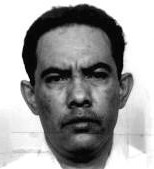
Robert Moreno Ramos
Murderer Brian Kevin Rosenfeld
Murderer · USA · 1985
Brian Kevin Rosenfeld Brian Kevin Rosenfeld was sentenced to three concurrent l…
23 victims
Brian Kevin Rosenfeld
Murderer · USA · 1985
Brian Kevin Rosenfeld Brian Kevin Rosenfeld was sentenced to three concurrent l…
23 victims
 Russell Ellwood
Murderer · USA · 1991
Russell Ellwood was a former taxi driver. Authorities suspected him of killing…
20 victims
Russell Ellwood
Murderer · USA · 1991
Russell Ellwood was a former taxi driver. Authorities suspected him of killing…
20 victims
 Robert Martines Perez
Murderer · USA · 1994
Name: Robert Martines Perez · Other name used in proceedings: Robert Martinez P…
15 victims
Robert Martines Perez
Murderer · USA · 1994
Name: Robert Martines Perez · Other name used in proceedings: Robert Martinez P…
15 victims
 Billy Frank Vickers
Murderer · USA · 1993
Billy Frank Vickers Vickers was executed by lethal injection in Texas on Januar…
14 victims
Billy Frank Vickers
Murderer · USA · 1993
Billy Frank Vickers Vickers was executed by lethal injection in Texas on Januar…
14 victims
 Mark Howard McClain
Murderer · USA · 1994
Mark Howard McClain was a white male. He was known by the aliases “A.K.A. MALAC…
1 victim
Mark Howard McClain
Murderer · USA · 1994
Mark Howard McClain was a white male. He was known by the aliases “A.K.A. MALAC…
1 victim
 Ivon Ray Stanley
Murderer · USA · 1976
Ivon Ray Stanley was convicted in the Decatur County, Georgia Superior Court of…
1 victim
Ivon Ray Stanley
Murderer · USA · 1976
Ivon Ray Stanley was convicted in the Decatur County, Georgia Superior Court of…
1 victim
 Werner Boost
Serial killer · Germany · 1953
Werner Boost was a German offender who carried out attacks on lovers’ lanes and…
5 victims
Werner Boost
Serial killer · Germany · 1953
Werner Boost was a German offender who carried out attacks on lovers’ lanes and…
5 victims
 Antonio Richardson
Homicide · USA · 1991
Defendant: Antonio Richardson Co-defendants mentioned: Marlin Gray, Reginald Cl…
2 victims
Antonio Richardson
Homicide · USA · 1991
Defendant: Antonio Richardson Co-defendants mentioned: Marlin Gray, Reginald Cl…
2 victims
 Virginia Sims
Murderer · USA · 2011
Virginia Sims was a 47-year-old South Georgia woman who pleaded guilty in conne…
1 victim
Virginia Sims
Murderer · USA · 2011
Virginia Sims was a 47-year-old South Georgia woman who pleaded guilty in conne…
1 victim
- Gender
- male
- Country
- USA
- Location
- Hidalgo County, Texas, USA
- Date of birth
- May 23, 1954
- Age at first offence
- 38
- Characteristics
- parricide
- Victim profile
- His wife Leticia Ramos, 42, and their children Abigail, 7, and Jonathan, 3
- Method of murder
- Hitting with a hammer
- Date(s) of murder
- February 7, 1992
- Years active
- 1992
- Date of arrest
- April 7, 1992
- Status
-
Sentenced to death
Sentenced to death on May 6, 1993
Name
Robert Moreno Ramos
Status and sentence
Robert Moreno Ramos was convicted of capital murder of his wife and two children and was sentenced to death. The court stated that, at the time of sentencing, Texas law allowed for parole of an individual sentenced to life imprisonment after 35 years. The jury answered "yes" to the future dangerousness special issue and "no" to the mitigating circumstances special issue. The trial court sentenced Robert Moreno Ramos to death. Had the jury answered the future dangerousness special issue negatively, the court would have been required to sentence Robert Moreno Ramos to life imprisonment rather than death.
Timeline
- In November 1991 — Robert Moreno Ramos began an extramarital affair with Ms. Marisa Robledo.
- In January 1992 — Robert Moreno Ramos and Ms. Robledo made plans to marry.
- On February 7, 1992 — A neighbor heard a woman's scream and vulgar language emanating from the Ramos house.
- On February 10, 1992 — Robert Moreno Ramos married Ms. Robledo.
- On March 4, 1992 — Robert Moreno Ramos told his cousin that his family had died in a car accident and that the bodies had been cremated.
- After nearly two months of conflicting explanations — Robert Moreno Ramos's sister-in-law alerted the police of the disappearance of Robert Moreno Ramos's wife and children.
- On March 30, 1992 — Police arrived at Robert Moreno Ramos's home to question him about his missing family.
- On April 6, 1992 — Officers searched the Ramos home and discovered extensive blood evidence throughout the house, most notably the bedroom, hallway, and bathroom.
- On April 7, 1992 — Robert Moreno Ramos told officers that, upon returning home one day in February, he found his wife and children dead.
- In 1993 — Robert Moreno Ramos was indicted for and convicted of the capital murder of his wife and two children.
- On April 2, 1999 — Robert Moreno Ramos filed a motion for federal habeas corpus relief in the district court.
- On February 14, 2002 — The appellate panel issued its opinion.
- In 2002 — The request for a Certificate of Appealability and a motion for reconsideration were denied by the appellate court.
Background
In November 1991, Robert Moreno Ramos began an extramarital affair with Ms. Marisa Robledo. In January 1992, they made plans to marry. Although Robert Moreno Ramos was already married and had a family, he told Ms. Robledo that he was giving shelter to a widow and her two children.
Investigation and evidence
On February 7, 1992, a neighbor heard a woman's scream and vulgar language emanating from the Ramos house. Over the next few days, members of the family's church visited the Ramos residence. Robert Moreno Ramos told them that the family was moving to California to handle the affairs of his recently departed mother and that they were too busy to say goodbye.
After nearly two months of conflicting explanations as to his family's whereabouts, Robert Moreno Ramos's sister-in-law alerted the police of the disappearance of Robert Moreno Ramos's wife and children.
On March 30, 1992, the police arrived at Robert Moreno Ramos's home to question him about his missing family. Over the course of twenty minutes, Robert Moreno Ramos gave several contradictory accounts of his family's whereabouts, telling police that his family was in Austin, San Antonio, and Mexico.
Robert Moreno Ramos voluntarily accompanied officers to the police station where he was arrested on various traffic warrants.
On April 6, 1992, officers searched the Ramos home and discovered extensive blood evidence throughout the house, most notably the bedroom, hallway, and bathroom. All of the family's clothes and as well as the children's toys had been secreted away in the attic.
On April 7, 1992, Robert Moreno Ramos told officers that, upon returning home one day in February, he found his wife and children dead. He stated that a few days later, he dug a hole in his bathroom floor and buried them. He later changed his story, claiming that after finding his children dead and his wife mortally wounded from an apparently self-inflicted wound, he ultimately delivered the fatal blow to her head with a hammer.
Officers obtained a search warrant and exhumed the bodies of Robert Moreno Ramos's wife and two children from underneath the newly-tiled floor in Robert Moreno Ramos's bathroom.
All victims died from blunt head injuries, most likely caused by blows from a hammer. A miniature sledge hammer with blood stains was recovered from Robert Moreno Ramos's residence in Mexico.
A forensic pathologist testified that all the victims died and were buried within a 12 to 24 hour time period and that it was very unlikely that the injuries to Robert Moreno Ramos's wife were self-inflicted.
Testimony at trial revealed that Robert Moreno Ramos's mother was still alive.
Offence details
Robert Moreno Ramos was convicted of the capital murder of his wife and two children.
Charges
Robert Moreno Ramos was indicted for and convicted of the capital murder of his wife and two children.
Trial
At the penalty phase and pursuant to Texas Criminal Procedure article 37.071, the jury was presented with two special issues concerning future dangerousness and mitigating circumstances.
The jury answered "yes" to whether it was probable that Robert Moreno Ramos would commit future violent act and would pose a continuing threat to society.
The jury answered "no" to whether there were mitigating circumstances that would warrant a sentence of life imprisonment rather than the death penalty.
The court noted that, had the jury answered the mitigating circumstances special issue affirmatively, a life sentence would have been imposed.
Appeal and habeas proceedings
Federal habeas and Certificate of Appealability
On April 2, 1999, Robert Moreno Ramos filed a motion for federal habeas corpus relief in the district court. The state moved for summary judgment. District Judge Vela adopted the magistrate's report and granted summary judgment to the state. Robert Moreno Ramos filed an application for a Certificate of Appealability (COA) in the district court. The district court denied Robert Moreno Ramos's petition for a COA, and Robert Moreno Ramos sought a COA in the Court of Appeals for the Fifth Circuit.
The appellate panel stated that a habeas petitioner could not appeal the denial of habeas relief unless the petitioner obtained a COA, and that a COA may not issue unless the applicant made a substantial showing of the denial of a constitutional right.
Issues raised in the COA request
Robert Moreno Ramos sought a COA arguing:
- The trial court erred in not instructing the jury that a life sentence would mean that he was ineligible for parole for 35 years.
- The trial court erred in excusing a venireperson who expressed reluctance with regard to the death penalty.
- The trial court erred in refusing Robert Moreno Ramos's request for a lesser included offense of voluntary manslaughter.
Robert Moreno Ramos also filed a motion for reconsideration after an earlier denial of a request that this case be remanded to the district court.
The appellate court denied both the COA request and the motion for reconsideration.
Parole eligibility claim
Robert Moreno Ramos contended that the trial court violated his Fifth, Sixth, Eighth, and Fourteenth Amendment rights by denying his request to instruct the jury that a sentence of life would have resulted in his being ineligible for parole for 35 years, when he would be approximately 73 years old.
The appellate court addressed the argument using Simmons v. South Carolina and related Fifth Circuit precedent, including Allridge v. Scott and Muniz v. Johnson. The court concluded the claim had no merit under the law of the circuit and denied the COA request on this issue.
Juror exclusion / Witherspoon claim
Robert Moreno Ramos contended that the trial court violated his rights under the Sixth, Eighth, and Fourteenth Amendments by excluding Ms. Olga Linda Perez for cause as a potential juror due to her general objection to the death penalty, in violation of Witherspoon v. Illinois.
The appellate court discussed the standard from Witherspoon v. Illinois, Adams v. Texas, and Wainwright v. Witt, and it described federal habeas deference to trial court credibility and demeanor determinations.
The appellate court described Ms. Perez's voir dire statements and questionnaire response as follows:
- Robert Moreno Ramos argued that during voir dire, Ms. Perez indicated she would follow the law and consider the entire range of punishment if chosen as a juror.
- Ms. Perez stated that she would be able to listen to the evidence and decide if the state met its burden and that she would be able to set aside her religious beliefs about the death penalty "and answer the Special Issues No. 1 and 2 honestly, based on the evidence presented."
- When the prosecutor explained that the jury's answers to the special issues may force the trial court to impose the death penalty, Ms. Perez indicated that her beliefs would "prevent" and "impair" her from being a juror in this case.
- Robert Moreno Ramos admitted that during other portions of voir dire, Ms. Perez gave unambiguous answers indicating she could not assess the death penalty.
- In response to a written questionnaire, Ms. Perez stated, "I could never under any circumstances return a verdict which requires assessing the death penalty."
The appellate court concluded that the trial court's decision to exclude Ms. Perez was made after listening to her responses and observing her conduct and demeanor, that the findings were fairly supported by the record, and that Robert Moreno Ramos was not entitled to a COA on this claim.
Lesser included offense / Beck claim
Robert Moreno Ramos argued that the trial court instructed the jury on capital murder and the lesser included offense of murder but erroneously denied his request to instruct on voluntary manslaughter in violation of the Fifth Amendment.
The appellate court addressed Beck v. Alabama and the requirement that a lesser included offense instruction be given only if the evidence would permit a jury to rationally find guilt of the lesser offense and acquit of the greater, and that voluntary manslaughter must be given if there is proof necessary to establish the offense charged and some evidence in the record that the defendant is guilty only of voluntary manslaughter.
The appellate court described the relevant Texas standard for voluntary manslaughter at the time of trial, including the statutory definition of "adequate cause" as:
- "cause that would commonly produce a degree of anger, rage, resentment, or terror in a person of ordinary temper sufficient to render the mind incapable of cool reflection."
The appellate court concluded there was inadequate evidence in the record to support a charge for the lesser included offense of voluntary manslaughter. The court described the only possible evidence in the record as testimony by an officer who interviewed Robert Moreno Ramos, who stated that Robert Moreno Ramos told him:
- "[f]ound a hammer in [his wife's] hand and he got upset because the kids were dead. He tried CPR or something like that and then got the same hammer and hit her on the head."
The appellate court concluded that this story was only one version of several stories Robert Moreno Ramos told to police and that, besides his own assertions, Robert Moreno Ramos cited no evidence to warrant a voluntary manslaughter charge. The court also noted that the assertion that he tried to perform CPR belied the claim that conduct arose out of "the immediate influence of sudden passion arising from an adequate cause."
The appellate court denied a COA on this ground.
Motion to remand and motion for reconsideration
After filing his motion for a COA, Robert Moreno Ramos moved to remand the case to the district court by raising an equitable tolling argument and by arguing that the Texas Court of Criminal Appeals refused to provide him with Ake motions in the case. The appellate court denied the motion because the claims were wholly unrelated to the case.
Robert Moreno Ramos then filed for reconsideration, raising an argument that failing to continue the appointment of Mr. Joe Connors as counsel for applicant in the state habeas corpus proceedings violated precedent in Stotts v. Wisser and Stearnes v. Clinton (en banc).
The appellate court described Robert Moreno Ramos's recognition that the claim was procedurally barred because it was not raised in the district court, and Robert Moreno Ramos's attempt to raise it nonetheless under Martinez v. Johnson based on cause and actual prejudice.
The appellate court described Robert Moreno Ramos's allegations that certain documents were "secretly" filed under seal in the Texas Court of Criminal Appeals to which he did not have access. Based on that contention, the court allowed him to file a supplemental brief and documentation.
The appellate court then described what the documents showed, including that Robert Moreno Ramos was denied the opportunity to have his appointed trial counsel continue as his counsel in the state habeas proceeding, despite requests by Robert Moreno Ramos and his appellate counsel, and that Robert Moreno Ramos was granted leave to file his letter brief out-of-time.
The appellate court rejected Robert Moreno Ramos's contention that the key documents were secretly filed under seal and stated that:
- the trial court's findings describing the request of Robert Moreno Ramos and Mr. Connors to appoint Mr. Connors as state habeas counsel were clearly available in the state and federal habeas record, and
- the order of the Texas Court of Criminal Appeals appointing Mr. Kyle Welch as state habeas counsel instead of Mr. Connors was clearly available in the state and federal habeas record.
The appellate court concluded that Robert Moreno Ramos's allegation that he did not have access to these documents was unfounded and that his argument for "cause" to excuse his failure to raise the argument in the district court was without merit. It denied the motion for reconsideration.
Outcome
The appellate court denied:
- Robert Moreno Ramos's request for a Certificate of Appealability, and
- Robert Moreno Ramos's outstanding motion for reconsideration of the earlier denial of his motion to remand the case to the district court.
Other details
The opinion stated that it was issued by the panel of DAVIS, EMILIO M. GARZA, and DENNIS, Circuit Judges, in No. 00-40633, Robert Moreno Ramos, Petitioner-Appellant, v. Janie Cockrell, Director, Texas Department of Criminal Justice, Institutional Division, Respondent-Appellee, with an appeal from the United States District Court for the Southern District of Texas (99-CV-134).
The opinion contained a procedural reference under Teague v. Lane that barred relief, stating that Simmons based on lifetime parole ineligibility created a new rule and that extension of Simmons would be barred under Teague as described in Clark v. Johnson, Tinger v. Cockrell, Wheat v. Johnson, and Montoya v. Scott. It also cited Ake v. Oklahoma.


Spotted an error, or have more information about this case?