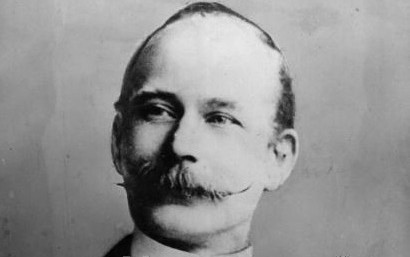
Frederick Seddon
Murderer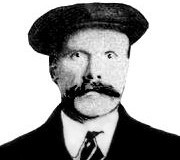 Albert Burrows
Murderer · United Kingdom · 1920
Albert Burrows (also named Albert Edward Burrows): married farm labourer who to…
4 victims
Albert Burrows
Murderer · United Kingdom · 1920
Albert Burrows (also named Albert Edward Burrows): married farm labourer who to…
4 victims
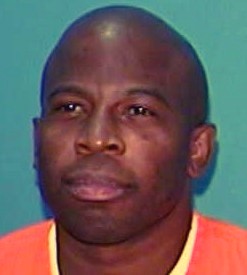 Rodney Tyrone Lowe
Murderer · USA · 1990
Rodney Tyrone Lowe was prosecuted in the Nineteenth Judicial Circuit, Indian Ri…
1 victim
Rodney Tyrone Lowe
Murderer · USA · 1990
Rodney Tyrone Lowe was prosecuted in the Nineteenth Judicial Circuit, Indian Ri…
1 victim
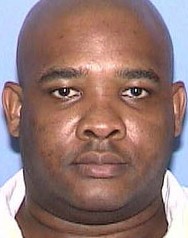 Shannon Charles Thomas
Murderer · USA · 1993
Shannon Charles Thomas was executed by lethal injection in Texas on November 16…
3 victims
Shannon Charles Thomas
Murderer · USA · 1993
Shannon Charles Thomas was executed by lethal injection in Texas on November 16…
3 victims
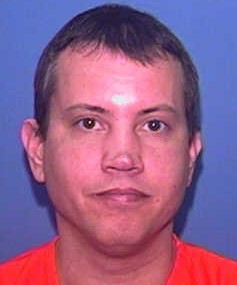 Thomas Wyatt
Murderer · USA · 1988
Thomas Anthony Wyatt, born 01/06/64, was sentenced to death on February 22, 199…
4 victims
Thomas Wyatt
Murderer · USA · 1988
Thomas Anthony Wyatt, born 01/06/64, was sentenced to death on February 22, 199…
4 victims
- Gender
- male
- Country
- United Kingdom
- Location
- London, England, United Kingdom
- Date of birth
- 1870
- Age at first offence
- 41
- Characteristics
- poisoner, robbery
- Victim profile
- Eliza Mary Barrow, 49
- Method of murder
- Poisoning (arsenic)
- Date(s) of murder
- September 14, 1911
- Years active
- 1911
- Date of arrest
- December 4, 1911
- Status
-
Executed
Executed by hanging at Pentonville Prison on April 18, 1912
Case details
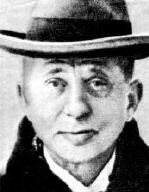
Frederick Henry Seddon (sometimes called Sedden; 1870 – 18 April 1912) was a British poisoner who was executed by hanging in 1912 for murdering Eliza Mary Barrow.
Timeline
- 26 July 1910 — Eliza Mary Barrow moved in with Frederick Seddon and her ward Ernest Grant.
- August 1911 — The Seddons, Barrow, and her young ward went on holiday together to Southend.
- 9 September 1911 — A local doctor visited Barrow again.
- 13 September 1911 — Barrow made a will dictated to and executed by Seddon, witnessed by Seddon’s relatives.
- 14 September 1911 — Barrow died at 6:15 on the morning of 14 September while being looked after by Mrs. Seddon.
- 15 September 1911 — Seddon arranged a cheap funeral with an undertaker.
- 15 November 1911 — Barrow’s body was exhumed; Sir William Willicox and Bernard Spilsbury discovered about two grains of arsenic.
- 29 November 1911 — The inquest was adjourned.
- 4 December 1911 — Seddon was arrested.
- March — Seddon and his wife were committed for trial at the Old Bailey in March, under Mr Justice Bucknill.
- 18 April 1912 — Seddon was hanged by John Ellis and Thomas Pierrepoint at Pentonville Prison.
Background
In 1910 Seddon was a 40-year-old Superintendent of Collectors for a national insurance company. He and his wife, Margaret Ann, had five children, and his father also lived with him.
Seddon had at one time been a Freemason, being initiated into Liverpool's Stanley Lodge No. 1325 in 1901, but he resigned a year later to move south. In 1905 he was named as a founding petitioner of Stephens Lodge No. 3089 at Bourne End, Buckinghamshire, and he resigned from both lodges in 1906.
In 1909 Seddon bought a fourteen-room house at 63 Tollington Park, near London’s Finsbury Park area (by the Finsbury Park area close to Seven Sisters Road in London). He had an obsession with making money, ran a second-hand clothes business in his wife’s name, and speculated in real estate.
At some stage Seddon developed an idea of duping money out of another person. He and his wife advertised to let out the second floor of their London home.
The offence
Eliza Mary Barrow was a 49-year-old eccentric spinster who responded to Seddon’s advertisement and moved in with her ward Ernest Grant, the ten-year-old nephew of her friend, on 26 July 1910. She previously had shared lodgings with her cousin, Frank Vonderahe, but she hoped the new arrangement with Seddon would be cheaper.
Being easily led, and as keen on making money as Seddon was himself, Barrow was quickly persuaded by Seddon to sign over to him a controlling interest in all her savings and annuities, including £1,500 of India Stock. In return, Seddon would take care of her for the rest of her life, giving her a small annuity and allowing her to live in his home rent free.
After Seddon persuaded Barrow to oversee her investments in return for an annuity and a remission in rent, early in 1911 he persuaded Barrow to sink her £3,000 capital into an annuity, which he told her would provide an income of three pounds a week for life. He made all arrangements himself, paying her out each quarter in gold, but £3,000 had gone into Seddon’s own pocket and not to the insurance company.
During August 1911, the Seddons, Barrow, and her young ward went on holiday together to Southend. On their return, Seddon’s daughter Maggie was sent to buy a threepenny packet of flypaper from the local chemist. Shortly after, Barrow began to suffer from agonising stomach pains. The local doctor was called and prescribed bismuth and morphine.
On 9 September the local doctor visited Barrow again. By the following Monday Barrow’s condition had deteriorated, and she refused to go to hospital. She improved slightly for a few days, but was confined to her bed. On 13 September Barrow made a will dictated to and executed by Seddon, and it was witnessed by Seddon’s relatives.
At 6:15 on the morning of 14 September, while being looked after by Mrs. Seddon, Barrow died.
Seddon went to the doctor and the doctor issued a death certificate without seeing the body, claiming he was unable to attend due to overwork brought on by an epidemic current in the area at that time.
Barrow died after poisoning, with about two grains of arsenic discovered on examination of her body.
Investigation
After Barrow’s death, Seddon visited an undertaker and arranged a cheap funeral, keeping a commission for himself. Barrow’s burial took place in a common burial plot, a pauper’s grave, although her family had a vault in Islington.
Seddon’s explanation for the burial arrangements was that Barrow’s family had snubbed his daughter during an earlier visit and he was not prepared to allow his family to be treated in the same way again. He also said that if Barrow’s family missed the funeral it might teach them better manners for the future.
After the funeral the Seddon family left for Southend for a fortnight’s holiday.
Barrow’s cousin, Frank Vonderahe, became suspicious over the suddenness of the death and how quickly the funeral arrangements had been made, and arrived to take over possession of Barrow’s estate. Seddon told him that nothing was left because substantial funeral expenses had been paid and the cost of Ernest Grant’s upkeep had been covered by Seddon himself.
The Vonderahe family then went to the police and voiced their suspicions.
Barrow’s body was exhumed on 15 November 1911. Sir William Willicox, the senior Home Office specialist, and young pathologist Bernard Spilsbury examined the body and discovered about two grains of arsenic. Another account recorded that by calculations there were at least five grains present at the time of death. The inquest was adjourned on 29 November 1911.
Arrest
Seddon was arrested on 4 December 1911. His wife was arrested six weeks later.
Trial
Seddon and his wife were committed for trial at the Old Bailey in March, under Mr Justice Bucknill.
During the trial at the Old Bailey, the prosecution was led by the Attorney General, Sir Rufus Issacs. The prosecution started its case by noting that although the case lacked hard evidence, it asked “who else in the world had anything to gain by the death of Miss Barrow?” The prosecution tried to demonstrate that Seddon was devious, callous, and ruthless and would have been capable of murder, and that he had appropriated money and valuables belonging to Miss Barrow.
The defence was led by the renowned barrister Edward Marshall-Hall, sometimes referred to as Edward Marshall Hall or Marshall Hall. The defence cast doubt on the evidence referring to arsenic found in the body, with Sir William Willicox giving evidence. The defence proposed that the amount could have been smaller and ingested over a period of time in the normal course of nursing, rather than in one dose designed to kill.
Seddon was advised not to give evidence, but he insisted on giving evidence in his own defence. It was said he turned the jury against himself through his arrogant and condescending attitude. Seddon’s claim included that Barrow might have drunk water from the dishes of flypaper that had been placed in her room to keep away flies.
Margaret Seddon went into the witness box and was acquitted of any involvement in the murder. The jury took one hour to find Frederick Seddon guilty and acquit his wife.
Sentencing
After the jury’s guilty verdict, Seddon was asked if he had anything to say. He gave a carefully and well prepared speech appealing to the judge, Sir Thomas Townsend Bucknill, as a brother Mason for a reversal of the jury’s guilty verdict.
Seddon replied as follows:
“I declare before the great Architect of the Universe I am not guilty”
He raised his arm and gave a Masonic sign. The judge, Mr Justice Bucknill, pronounced sentence of death.
Mr Justice Bucknill was reported as having said, with some emotion:
"It is not for me to harrow your feelings – try to make peace with your Maker. We both belong to the same Brotherhood, and though that can have no influence with me this is painful beyond words for me to have to say what I am saying, but our Brotherhood does not encourage crime, it condemns it "
Execution
Seddon was hanged by John Ellis and Thomas Pierrepoint at Pentonville Prison on 18 April 1912.
People involved
- Frederick Henry Seddon — accused; British poisoner.
- Margaret Ann Seddon / Margaret Seddon — Seddon’s wife; acquitted of any involvement in the murder.
- Eliza Mary Barrow — victim; 49-year-old spinster; died on 14 September 1911.
- Ernest Grant — Barrow’s ward and nephew of her friend; ten-year-old.
- Frank Vonderahe — Barrow’s cousin; suspicious and involved in voicing suspicions to police.
- Sir Rufus Issacs — Attorney General; led the prosecution.
- Edward Marshall-Hall / Marshall Hall — led the defence.
- Sir William Willicox — senior Home Office specialist; examined the body after exhumation.
- Bernard Spilsbury — pathologist; examined the body after exhumation; gave evidence during the trial.
- Mr Justice Bucknill / Sir Thomas Townsend Bucknill — judge; pronounced sentence of death.
- John Ellis — executed Seddon.
- Thomas Pierrepoint — executed Seddon.
Other details
Seddon became executor and guardian of Ernie Grant after Barrow’s death, and later appropriated Barrow’s remaining stock and property, claiming he had had to dig into his own pockets for funeral expenses and Ernest Grant’s upkeep.
The trial narrative included that in course of events Seddon signalled to the Judge that he was in distress, and that his appeal in the name of a Masonic fraternity influenced what occurred during sentencing.
Another narrative included that Seddon had initiated into the Stanley Lodge No. 1325 in 1901, later became a founder of Stephens Lodge No. 3089 but resigned from both in 1906, and that Mr Justice Bucknill was himself a prominent Freemason. It was also said that Bernard Spilsbury was not yet involved in Freemasonry at the time and so the meaning of what passed between Seddon and Bucknill was lost on him.
The crowd at the execution numbered over 7,000 people assembled outside Pentonville Prison, and it was said the crowd would have been larger had it not been for news of the sinking of the Titanic three days earlier.
Spotted an error, or have more information about this case?