David Greenwood
Murderer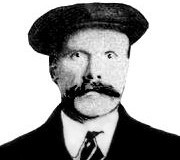 Albert Burrows
Murderer · United Kingdom · 1920
Albert Burrows (also named Albert Edward Burrows): married farm labourer who to…
4 victims
Albert Burrows
Murderer · United Kingdom · 1920
Albert Burrows (also named Albert Edward Burrows): married farm labourer who to…
4 victims
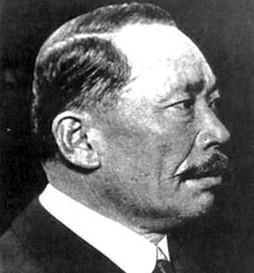 Lock Ah Tam
Murderer · United Kingdom · 1925
Lock Ah Tam was 54 when he killed his wife and two daughters. He had been a suc…
3 victims
Lock Ah Tam
Murderer · United Kingdom · 1925
Lock Ah Tam was 54 when he killed his wife and two daughters. He had been a suc…
3 victims
 Earl Clanton
Homicide/Murderer · USA · 1972
Earl Clanton Jr. was executed in the electric chair. He was 33 years old when h…
2 victims
Earl Clanton
Homicide/Murderer · USA · 1972
Earl Clanton Jr. was executed in the electric chair. He was 33 years old when h…
2 victims
 Bertha Gifford
Serial killer · USA · 1909
Bertha Gifford (1872- August 20, 1951) was a farmwife in rural Catawissa, Misso…
17 victims
Bertha Gifford
Serial killer · USA · 1909
Bertha Gifford (1872- August 20, 1951) was a farmwife in rural Catawissa, Misso…
17 victims
 Claude Howard Jones
Murderer · USA · 1976
Claude Howard Jones was a Harris County native who refused to speak with report…
3 victims
Claude Howard Jones
Murderer · USA · 1976
Claude Howard Jones was a Harris County native who refused to speak with report…
3 victims
 Christian Magee
Serial killer · Canada · 1974
Name: Christian Magee Aliases/nicknames: “Mad Slasher” Christian Magee was foun…
3 victims
Christian Magee
Serial killer · Canada · 1974
Name: Christian Magee Aliases/nicknames: “Mad Slasher” Christian Magee was foun…
3 victims
 Adam Ezerski
Murderer · USA · 2001
August 11, 2001 — Kevin Begoon met Ezerski at a Polk Street cafe and let Ezersk…
1 victim
Adam Ezerski
Murderer · USA · 2001
August 11, 2001 — Kevin Begoon met Ezerski at a Polk Street cafe and let Ezersk…
1 victim
 Giuseppe Zangara
Murderer · USA · 1933
Giuseppe Zangara was born in Ferruzano, Italy, on September 7, 1900. He served…
1 victim
Giuseppe Zangara
Murderer · USA · 1933
Giuseppe Zangara was born in Ferruzano, Italy, on September 7, 1900. He served…
1 victim
- Gender
- male
- Country
- United Kingdom
- Location
- Eltham, London, England, United Kingdom
- Date of birth
- 1897
- Age at first offence
- 21
- Characteristics
- rape, convicted rapist
- Victim profile
- Nellie Trew (female, 16)
- Method of murder
- Strangulation
- Date(s) of murder
- February 10, 1918
- Years active
- 1918
- Date of arrest
- —
- Status
-
Released
Sentenced to death; commuted to life in prison; released in 1933
Names and identities
- David Greenwood was accused of the wilful murder of Nellie Trew and was later convicted.
- Nellie Trew was the victim; she was described as a sixteen-year-old girl employed at Woolwich Arsenal and as a junior clerk.
Timeline
- 9 February 1918 — Nellie Trew was reported missing by her father; she had left home to go to Plumstead Library and did not return.
- 10 February 1918 — Nellie Trew’s body was found on Eltham Common; the medical evidence showed she had been “outraged and strangled.”
- February 1918 — Two items were found beside the body: a badge of the Leicestershire Regiment (a tiger) and an ordinary coat button attached to a small piece of wire.
- 24 April 1918 — Greenwood’s trial opened at the Old Bailey.
- 31 May 1918 — Greenwood was reprieved on the eve of his execution; his sentence was altered.
- 1933 — Greenwood was released at the age of thirty-six.
Background
Nellie Trew lived with her parents at Eltham near Woolwich and was employed on clerical work at the Arsenal. She had gone to walk across Eltham Common on the night of February 9th, 1918, and she was never seen alive again.
David Greenwood was described as a twenty-one year old discharged soldier who was employed as a turner, and as having worked at Hewson Manufacturing Company. He lived in Well Hall, where Nellie Trew had also lived.
The offence
Nellie Trew’s body was found on Eltham Common the next morning after she was reported missing. Medical evidence showed she had been raped and then strangled. A badge of the Leicestershire Regiment (a tiger) and a bone overcoat button were found at the scene. The badge and button had been threaded together through two holes with a piece of wire.
Investigation
The area was cordoned off and a search was carried out. The newspapers the following day carried pictures of the badge and button in the hope someone would recognize them.
A telephone message came to Inspector Carlin at New Scotland Yard from Tottenham Court Road Police Station saying that a man had called and had seen the photo in a newspaper. The man stated that the badge had belonged to him and that he had sold it to a man on board a tram travelling between Wellhall and Eltham. His statement had been taken down with his name and address, but he had not been detained. Inspector Brown was asked to go to the factory where the man worked and bring him to Carlin at Scotland Yard, which was done “within a couple of hours or so.”
Inspector Carlin examined Greenwood’s face and clothing. He saw that Greenwood’s overcoat hung open and had no buttons; where buttons should have been there were threads sticking out except in one place. Carlin described a large hole where the top button should have been and said it appeared as if the button had been forcibly torn off. Carlin then picked up the button found beside Nellie Trew’s body and fitted it to the hole in Greenwood’s coat, stating that it fitted “exactly.”
Carlin described the absence of “any clues which would lead to the identification of the likely murderer” and described the case as involving circumstantial evidence linking Greenwood to the murder.
Carlin also described wire identification work. He asked the works manager where the wire came from and whether it could be identified. The manager replied that the wire was “all specially made for us” for aeroplane fitting work and that it was possible to identify it. Carlin laid down several pieces of wire, including the piece of wire attached to the button found beside Nellie Trew’s body, and asked the manager which pieces were theirs. The manager answered: “All of them.” Carlin asked, “Every piece ? Are you sure ?” and the manager answered: “I am perfectly sure.” Carlin then repeated the test with the works foreman, who gave “exactly the same unequivocal answers” as the manager. Carlin concluded that the wire attached to the button had come from the aeroplane works in Newman Street where Greenwood worked.
Carlin arranged to secure evidence relating to an alibi. He visited Greenwood’s relatives and learned there were disagreements about Greenwood’s coat buttons and about the timing of when Greenwood left home on the night of the crime. One relative claimed Greenwood had left home late after supper at a time “obviously later” than the time medical evidence proved death had taken place, and that Greenwood had gone out without his coat despite being told to put it on. Another relative said it was not clear Greenwood had gone out without his coat and that the hour of leaving did not tally with the other relative’s account. Carlin searched among Greenwood’s things for bloodstains and interviewed another relative at Greenwood’s place of work, again finding disagreement about the time Greenwood left home.
Carlin described Greenwood’s account. When Carlin asked Greenwood to provide an account of his movements on Saturday, Greenwood replied: “I should like it taken down.” Greenwood made a statement that he was never near the scene and that although he had gone out that evening he had not worn his overcoat; he said he spent most of the evening at home and later went out “about ten o'clock” to get supper.
While Greenwood observed the badge and the button on Carlin’s desk, Greenwood picked up the button and held it, then said: “ If I say it is my button, what will it mean ? ” Carlin replied: “ I cannot tell you,” and Greenwood muttered: “ Well, I won't say it then/' ” (as written). Carlin told Greenwood he would detain him pending further inquiries and ordered him to be taken to Cannon Row Police Station.
Carlin charged Greenwood with the wilful murder of Nellie Trew on “the gth February on Eltham Common.” Greenwood responded with “Yes,” and at the formal charging at Woolwich Police Station Greenwood did not speak further.
Arrest
Greenwood went to Tottenham Court Road police station and gave a statement. Detectives then visited him at his work the next day and showed him the badge, which he admitted was his. He was asked to accompany them back to Scotland Yard.
On the way back, Inspector Carlin noticed Greenwood’s coat had no buttons and a tear where one button had come out. The button found beside the body was then used to fit the hole in Greenwood’s coat, described as an exact fit. Greenwood was later brought into a cell at Cannon Row Police Station pending further inquiries.
Trial
Greenwood’s trial opened at the Old Bailey on 24 April 1918. The Crown counsel was Mr. (now Sir) Travers Humphreys and Mr. Slesser defended Greenwood.
The prosecution built its case on circumstantial evidence. The defence line included an alibi and an allegation that Greenwood had sold the badge to another man and did not have it at the time of the murder. The prosecution evidence included that Greenwood had worn the badge on the evening of the murder, and that the top button of his overcoat was missing on the Monday after the crime, with a rent where the button had been torn off.
During cross-examination of Dr. Spilsbury (now Sir Bernard Spilsbury), defence counsel attempted to suggest that because Greenwood had been discharged from the army suffering from disordered action of the heart and fainting fits, he could not have caused the injuries. Sir Bernard Spilsbury replied: “he could not say that such a man would not be able to do so.”
The jury retired and returned after nearly three hours with a verdict of “ Guilty.” The foreman added that “ in view of the youth of the prisoner, his service to his country, and his previous good character, they desired to recommend him to mercy.”
When receiving sentence, Greenwood stood up and addressed the judge. Greenwood said:
" I wish your Lordship to take no notice of the recommendation (of the jury) as rather than face the disgrace I would pay the full penalty of this crime."
Greenwood declared his innocence again.
Justice Atkin addressed Greenwood. Justice Atkin said:
" You have been found guilty of a most heinous crime. You have taken your unfortunate victim's life, and for that crime there is only one penalty. At the same time, I shall forward the recommendation of the jury to the proper authorities where, I have no doubt, it will receive every consideration. It is not right, however, that you should anticipate that the course of the law will necessarily be interfered with on account of that recommendation . ' ' "
The judge passed the sentence after the black cap was produced.
Sentencing
Greenwood was sentenced to death. He was reprieved “on the eve of his execution, 31 May,” and his sentence was altered to penal servitude for life.
Appeals
Greenwood was reprieved on the eve of his execution, 31 May, and his sentence was altered from death to penal servitude for life.
Outcome
Greenwood’s death sentence was commuted to penal servitude for life. He was released in 1933 at the age of thirty-six.
Other details
- Carlin wrote that he brought Greenwood into the dock at the Old Bailey for “the wilful murder of Nellie Trew.”
- Carlin described the early investigation as taking place after he arrived at the scene “four or five days after it had been committed.”
- Carlin said he sent photographs “immediately to the Press.”
- The discovery included: “a badge of the Leicestershire Regiment, and an ordinary coat button, to which was attached a small piece of wire.”
- Carlin described an alibi as the “only possible loophole” by which Greenwood might “escape his just conviction,” and he investigated Greenwood’s relatives’ accounts to assess timing and coat-wearing details.
- Carlin described a heated argument between Greenwood and a fellow-workman after the photograph appeared in newspapers; the fellow-workman told Greenwood: “ You've got to go to the police station and tell them that it is your badge that's in the photo. If you don't go, I'll take you there myself.”
Spotted an error, or have more information about this case?