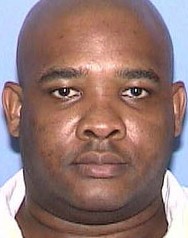
Shannon Charles Thomas
Murderer Brian Kevin Rosenfeld
Murderer · USA · 1985
Brian Kevin Rosenfeld Brian Kevin Rosenfeld was sentenced to three concurrent l…
23 victims
Brian Kevin Rosenfeld
Murderer · USA · 1985
Brian Kevin Rosenfeld Brian Kevin Rosenfeld was sentenced to three concurrent l…
23 victims
 Russell Ellwood
Murderer · USA · 1991
Russell Ellwood was a former taxi driver. Authorities suspected him of killing…
20 victims
Russell Ellwood
Murderer · USA · 1991
Russell Ellwood was a former taxi driver. Authorities suspected him of killing…
20 victims
 Robert Martines Perez
Murderer · USA · 1994
Name: Robert Martines Perez · Other name used in proceedings: Robert Martinez P…
15 victims
Robert Martines Perez
Murderer · USA · 1994
Name: Robert Martines Perez · Other name used in proceedings: Robert Martinez P…
15 victims
 Billy Frank Vickers
Murderer · USA · 1993
Billy Frank Vickers Vickers was executed by lethal injection in Texas on Januar…
14 victims
Billy Frank Vickers
Murderer · USA · 1993
Billy Frank Vickers Vickers was executed by lethal injection in Texas on Januar…
14 victims
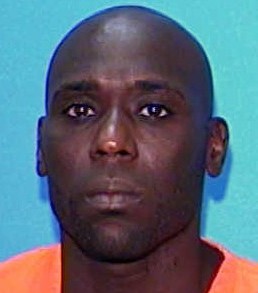 William Earl Sweet
Murderer · USA · 1990
William Earl Sweet was sentenced to death on August 30, 1991. The case was in t…
2 victims
William Earl Sweet
Murderer · USA · 1990
William Earl Sweet was sentenced to death on August 30, 1991. The case was in t…
2 victims
 Wyley Gates
Homicide · USA · 1986
Wyley Gates was a 17-year-old computer whiz and honors student who was describe…
4 victims
Wyley Gates
Homicide · USA · 1986
Wyley Gates was a 17-year-old computer whiz and honors student who was describe…
4 victims
 Kenneth Chad Charm
Murderer · USA · 1993
Kenneth Chad Charm was tried and convicted for the 1993 rape and murder of 14-y…
1 victim
Kenneth Chad Charm
Murderer · USA · 1993
Kenneth Chad Charm was tried and convicted for the 1993 rape and murder of 14-y…
1 victim
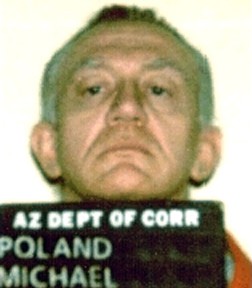 Michael Poland
Murderer · USA · 1977
Michael Poland was executed by lethal injection in Arizona on June 16, 1999. He…
2 victims
Michael Poland
Murderer · USA · 1977
Michael Poland was executed by lethal injection in Arizona on June 16, 1999. He…
2 victims
 Mary Pearcey
Murderer · United Kingdom · 1890
Mary Pearcey (Mary Eleanor Wheeler; also known as Mary Eleanor) was born in 186…
2 victims
Mary Pearcey
Murderer · United Kingdom · 1890
Mary Pearcey (Mary Eleanor Wheeler; also known as Mary Eleanor) was born in 186…
2 victims
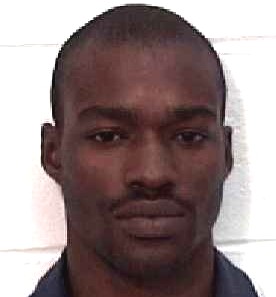 Norris Speed
Murderer · USA · 1991
Norris Speed, 26, was sentenced to death in October 1993 in Fulton County for k…
1 victim
Norris Speed
Murderer · USA · 1991
Norris Speed, 26, was sentenced to death in October 1993 in Fulton County for k…
1 victim
- Gender
- male
- Country
- USA
- Location
- Harris County, Texas, USA
- Date of birth
- J uly 27, 1971
- Age at first offence
- 22
- Characteristics
- robbery, torture, drugs, convicted rapist
- Victim profile
- Roberto Rios, 32, and his two children, Victor, 11, and Maria, 10
- Method of murder
- Shooting
- Date(s) of murder
- December 24, 1993
- Years active
- 1993
- Date of arrest
- December 1995
- Status
-
Executed
Executed by lethal injection in Texas on November 16, 2005
Case record: Shannon Charles Thomas
Background
Shannon Charles Thomas was executed by lethal injection in Texas on November 16, 2005.
During his death row period, he wrote a letter seeking pen-pal correspondence and described himself as “a very honest person and those are the type of people with whom I choose to associate myself with.” In the letter, he gave a birthday of “7-27-71,” a height of “5ft 8 inches,” and a weight of “roughly 235 pounds.” He said his nationality was “African American by label,” and he said he preferred “females of 23 years old or older” if possible, while stating that “men are equally welcome to respond.” He listed interests including sports and music, and he said, “race/ethnic or religious background are of no concern to me.” He wrote: “Well I'm a serious person but I do have a sense of humor and I enjoy nothing more than to see a person smile.” He also wrote that he wanted “to correspond with a pen-friend in hopes of building a truly genuine friendship” and that he was “in great need” of correspondence.
In the letter, he addressed the recipient: “To Whom It May Concern: Well, let me begin this letter by saying hello.” He wrote: “My name is Shannon C. Thomas.” He wrote: “I'm a very easy going, open minded person, somewhat of an optimist, as well as a leader by nature.” He also wrote: “Really I'm a people person but mostly I enjoy interaction with females on all levels.” In closing he wrote: “Respectfully, Shannon C. Thomas.”
He signed the letter and included prison identifying and address information: “Polunsky Unit/999213 3872 FM 350 South Livingston, TEXAS 77351 USA.”
The offence
On Christmas Eve in 1993, Thomas shot and killed Maria Rios, 10, and Victor Rios, 11, in the upstairs portion of their Baytown home. Thomas and an accomplice, Keith Clay, had just killed Roberto Rios, the children’s father, in the downstairs area of the home. Roberto Rios was severely beaten, shot three times, and stabbed in the neck with a pair of shears.
The children were shot once in the head through a pillow as they lay side by side on the floor. Family members discovered the victims about 7 p.m. that day.
The killings were described as involving robbery and the elimination of witnesses. Roberto Rios was described as having sold small amounts of marijuana from his home. Thomas bought marijuana from him at the home on several occasions before the killings.
A postal worker delivering mail to the victim’s home at “around noon” on Christmas Eve noticed a “beige-looking, maybe white” car parked in front of the home and saw two men walk down the driveway, get into the car, and leave.
At trial, the postal worker identified Thomas as one of the men he saw walking down the driveway of the victims’ home.
Thomas was also linked to a separate convenience store robbery in which a clerk was shot and killed. During the punishment phase evidence, the prosecution presented that Thomas participated in another capital murder on January 4, 1994. A witness testified that Thomas, Clay and the witness stopped at a convenience store and that Clay shot and killed the clerk during a robbery while Thomas sat in the car “rapping’ to a song on the radio.”
The convenience store clerk was identified as Melathethil “Tom” Varughese.
Investigation
The case remained unsolved for over a year. Thomas and Clay did not become suspects until after police arrested one of Thomas’ friends on a narcotics violation and that friend provided information implicating Thomas and Clay in the murders.
Joseph Jones was described as a friend of Clay and Thomas who implicated them after his arrest, and Jones agreed to tape record a conversation with Thomas in which Thomas made incriminating statements. At trial, a friend testified that Thomas told him shortly after the slayings he was responsible for the Rios family killings.
At the time of the killings, Thomas was on probation for delivery of a controlled substance, and a motion to revoke his probation was pending.
Thomas had also served time at a Harris County boot camp after an assault conviction.
Arrest
Thomas was arrested soon after the narcotics-related arrest of one of Thomas’ friends led to information implicating Thomas and Clay.
Trial
Thomas was convicted of capital murder for the deaths of two children. During the punishment phase, the prosecution presented evidence that when Thomas committed the killings, he was on probation for the felony offense of delivery of a controlled substance, and that a motion to revoke his probation was pending when the murders occurred.
The prosecution also presented evidence that Thomas participated in another capital murder on January 4, 1994 involving a convenience store clerk.
At trial, witnesses testified that Thomas made incriminating statements to them. Jones agreed to tape record a conversation with Thomas, and the record states that Thomas made incriminating statements about the murders in that taped conversation.
Sentencing
On November 8, 1996, the jury decided punishment, and the trial court sentenced Thomas to death.
In the appellate record summary appearing in the material, it is stated that the jury answered special issues in a manner requiring the imposition of a death sentence.
Appeals
On direct appeal, the Texas Court of Criminal Appeals affirmed Thomas’ conviction and sentence.
Thomas did not file a petition for writ of certiorari to the U.S. Supreme Court.
While his direct appeal was pending, Thomas filed a petition for state writ of habeas corpus on November 24, 1998, and the Texas Court of Criminal Appeals denied relief.
Thomas filed a federal habeas petition in U.S. district court on March 20, 2003, and an amended petition on May 20, 2003. On December 10, 2003, the federal district court denied Thomas’ federal writ.
Thomas filed an application for a certificate of appealability (“COA”) in the 5th U.S. Circuit Court of Appeals on October 11, 2004. On December 27, 2004, the 5th Circuit Court denied Thomas’ application for COA.
Thomas filed a petition for writ of certiorari in the U.S. Supreme Court on April 4, 2004. The Court dismissed the petition as jurisdictionally out of time on April 12, 2005.
Thomas filed a successive state habeas application. On Nov. 15, 2005, the Texas Court of Criminal Appeals dismissed the application as an abuse of the writ.
A separate federal appellate summary included in the material stated: “The Court of Appeals held that: (1) petitioner was not entitled to COA on claim challenging admission of in-court identification, and (2) petitioner was not entitled to COA on claim alleging that state court violated due process by failing to instruct jury that, if given life sentence, petitioner would be eligible for parole in 40 years. Request denied.”
The material includes a verbatim passage from the appellate decision denying the COA:
“JERRY E. SMITH, Circuit Judge Shannon Thomas seeks a certificate of appealability ("COA") from the denial of his petition for a writ of habeas corpus pursuant to 28 U.S.C. § 2254. Because Thomas cannot make a substantial showing of the denial of a federal constitutional right, we deny a COA.”
Outcome
Thomas was scheduled to be executed after 6 p.m. Wednesday, November 16, 2005. He was executed by lethal injection in Texas on November 16, 2005.
He was pronounced dead at 6:52 p.m., five minutes after the lethal drugs began flowing, and the lethal dose began before that time. Another account in the material states he was pronounced dead at 6:52 p.m. and also notes that execution was delayed for about 30 minutes by a late appeal to the U.S. Supreme Court. Another account states he was pronounced dead at 6:52 p.m., five minutes after the lethal drugs began to flow.
Before execution, Thomas declined to speak with reporters in the weeks before his scheduled punishment.
In the final statement, Thomas addressed people by first name and encouraged family members. He made the following statements:
“I want you to be strong and get through this time,” Thomas said with his sister standing a few feet from him, looking through a window.
“Do not fall back. Keep going forward. Don't let this hinder you. Let everybody know I love them.”
“This is kind of hard to put words together. I am nervous and it is hard to put my thoughts together. Sometimes you don't know what to say. I hope these words give you comfort. ... Let everybody know I love them and love is unconditional as mama always told us. I may be gone in flesh but I am always with you in spirit.”
The material includes a later verbatim statement reported during the execution process:
“This is kind of hard to put words together. I am nervous and it is hard to put my thoughts together. Sometimes you don't know what to say,” he told execution witnesses, who included his sister and a friend.
“Let everybody know I love them, and love is unconditional as Mama always told us. I may be gone in the flesh, but I am always with you in spirit. I love you,” Thomas said.
It also includes a question he asked as the drugs took effect:
“Is the mic still on?”
After being told it was on, he lost consciousness and was pronounced dead.
Other details
Victims and family details
Roberto Rios was described as 32. Maria Rios was described as 10. Victor Rios was described as 11.
The material includes that Roberto Rios’s ex-wife lived in Monterrey, Mexico. Relatives bringing Christmas gifts to the home discovered the bodies.
Accomplice and related matters
Keith Bernard Clay was described as an accomplice in the Rios family killings. Clay was put to death after a separate conviction related to the convenience store clerk murder. Another part of the material states Clay confessed in writing to being involved in the December 1993 murder of Roberto Rios and his two daughters, but he was charged but not tried for that case; he was found guilty in the convenience store robbery/murder and was sentenced to death.
The material includes details about Clay’s execution being carried out on March 20, 2003 and includes quotes from Clay’s final statement, which included apologies and requests for forgiveness addressed to the Varughese family and to his mother. The content of those quotations appears in the material, but it is not presented here as part of Thomas’s case record beyond their mention as related executions.
Evidence and claimed theories
The material states that the motive for the killings was robbery and the elimination of witnesses.
It also states that Thomas and Clay had bought drugs from Roberto Rios before the killings and assumed he had drugs and money to steal.
The material includes an account asserting that the case against Thomas involved circumstantial evidence and stated there was no physical evidence presented at trial in that account. It also includes claims about witness reliability and discussions of a gun similar to the murder weapon being part of the circumstantial evidence.
In that same account, the postal worker described seeing a car and two men leaving the driveway; the postal worker tentatively identified Thomas after undergoing hypnosis and participating in photograph identification arrays and a live line-up. Another witness secretly tape-recorded a conversation in which Thomas made incriminating statements.
Dates and procedural time points cited in the material
The material includes multiple dates related to motions, petitions, and filings, including November 24, 1998; March 20, 2003; May 20, 2003; December 10, 2003; October 11, 2004; December 27, 2004; April 4, 2004; April 12, 2005; and Nov. 15, 2005. It also includes that Thomas was sentenced to death following the November 8, 1996 jury decision.
Execution-day references
The material states that Thomas’ execution was set after 6 p.m. on Wednesday, November 16, 2005, and includes references to other executions occurring in Texas in close sequence, including Robert Rowell and Tony Ford. It also states that the U.S. Supreme Court refused to consider an appeal earlier in the year and that lawyers lost a late appeal to the Texas Court of Criminal Appeals before taking the case back to the U.S. Supreme Court on an argument involving alleged nondisclosure about an agreement for testimony regarding a witness drug charge; prosecutors said there was no deal, and the Supreme Court denied the appeal.
Spotted an error, or have more information about this case?