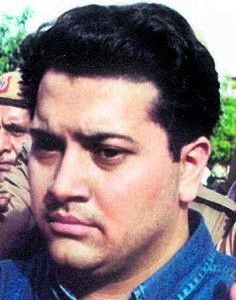
Manu Sharma
Murderer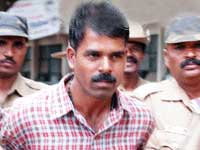 Umesh Reddy
Murderer · India · 1998
Umesh Reddy was sentenced to death on October 27, 2006. The Karnataka High Cour…
18 victims
Umesh Reddy
Murderer · India · 1998
Umesh Reddy was sentenced to death on October 27, 2006. The Karnataka High Cour…
18 victims
 Dhananjoy Chatterjee
Murderer · India · 1990
Dhananjoy Chatterjee was born in Kuludihi, West Bengal, India on August 14, 196…
1 victim
Dhananjoy Chatterjee
Murderer · India · 1990
Dhananjoy Chatterjee was born in Kuludihi, West Bengal, India on August 14, 196…
1 victim
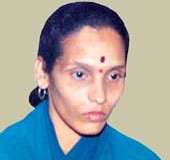 Renuka Shinde
Murderer · India · 1990
Renuka Shinde was sentenced to death on June 29, 2001. The High Court upheld th…
9 victims
Renuka Shinde
Murderer · India · 1990
Renuka Shinde was sentenced to death on June 29, 2001. The High Court upheld th…
9 victims
 Seema Gavit
Murderer · India · 1990
Seema Mohan Gavit and her sister Renuka Shinde received death sentences. The se…
9 victims
Seema Gavit
Murderer · India · 1990
Seema Mohan Gavit and her sister Renuka Shinde received death sentences. The se…
9 victims
 Marvallous Keene
Murderer · USA · 1992
Marvallous Keene was a Black male executed by lethal injection in Ohio on July…
5 victims
Marvallous Keene
Murderer · USA · 1992
Marvallous Keene was a Black male executed by lethal injection in Ohio on July…
5 victims
 Cyril Darville
Serial killer? · The Bahamas · 1990
Cyril Darville was convicted for a murder committed in 1990. He had a prior rec…
9 victims
Cyril Darville
Serial killer? · The Bahamas · 1990
Cyril Darville was convicted for a murder committed in 1990. He had a prior rec…
9 victims
 Matthew Beck
Mass murderer · USA · 1998
On March 6, 1998, Matthew Beck killed four of his supervisors at the Connecticu…
4 victims
Matthew Beck
Mass murderer · USA · 1998
On March 6, 1998, Matthew Beck killed four of his supervisors at the Connecticu…
4 victims
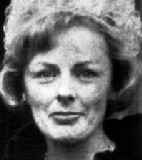 Sheila Garvie
Murderer · United Kingdom · 1967
Sheila Garvie was convicted of the murder of her husband, Maxwell Garvie. Sheil…
1 victim
Sheila Garvie
Murderer · United Kingdom · 1967
Sheila Garvie was convicted of the murder of her husband, Maxwell Garvie. Sheil…
1 victim
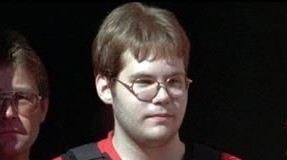 Luke Woodham
Homicide · USA · 1997
Luke Woodham (born February 5, 1981) was a convicted American murderer. He was…
3 victims
Luke Woodham
Homicide · USA · 1997
Luke Woodham (born February 5, 1981) was a convicted American murderer. He was…
3 victims
- Gender
- male
- Country
- India
- Location
- New Delhi, India
- Date of birth
- 1977
- Age at first offence
- 22
- Characteristics
- alcohol
- Victim profile
- The model Jessica Lall, 34
- Method of murder
- Shooting
- Date(s) of murder
- April 29, 1999
- Years active
- 1999
- Date of arrest
- 7 days after (surrenders)
- Status
-
Life imprisonment
Sentenced to life in prison on December 20, 2006
Case name
Manu Sharma
Parties
Defendant
Manu Sharma — son of the India politician Venod Sharma; model-killing convicted murderer in the Jessica Lall murder case; (b. 1977). The name Siddharth Vashisht was also given for Manu Sharma.
Victim
Jessica Lall (also spelled Jessica Lal in the media) — a model in New Delhi who was working as a celebrity barmaid at a crowded socialite party; 34 when she was killed.
Defence counsel
R K Naseem — Manu Sharma’s lawyer.
Status and legal outcome
Manu Sharma was acquitted of all charges by judge S. L. Bhayana on February 21, 2006, after a trial that ended with the court finding flaws in the prosecution and insufficient evidence for a conviction. Following public outcry, the Delhi High Court admitted an appeal and, on December 18, 2006, held Manu Sharma guilty of murdering Jessica Lall. On December 20, 2006, the High Court sentenced Manu Sharma to life imprisonment and ordered compensation of Rs 50,000 to Jessica’s family. The High Court also sentenced Vikas Yadav and Amardeep Singh Gill to four-year terms of imprisonment for destroying evidence.
Timeline
- April 29, 1999 — Jessica Lall was shot dead while working as a celebrity barmaid at a crowded party in Delhi.
- August 1999 — The case went up for trial, with Manu charged with murder and his friends charged with related crimes such as destroying evidence and sheltering criminal suspects.
- February 21, 2006 — Manu Sharma was acquitted of all charges by judge S. L. Bhayana.
- March 25, 2006 — The Delhi High Court admitted an appeal by the police against the Jessica Lall murder acquittals, issued bailable warrants against Manu Sharma and eight others, and restrained them from leaving the country.
- April 18, 2006 — A division bench comprising Justice Manmohan Sareen and Justice J M Malik released Manu Sharma on Rs 1 Lakh bail.
- September 9, 2006 — Tehelka sting operation was shown on TV program Star News, revealing how witnesses had been bribed and coerced into retracting their initial testimony.
- October 6, 2006 — Venod Sharma resigned from the Congress ministry in Haryana.
- December 18, 2006 — The High Court bench of Justice R S Sodhi and Justice P K Bhasin held Manu Sharma guilty of murdering Jessica Lall in a 61-page judgement.
- December 20, 2006 — The High Court sentenced Manu Sharma to life imprisonment and ordered compensation of Rs 50,000 to Jessica’s family; Vikas Yadav and Amardeep Singh Gill received four-year jail terms.
The offence
On April 29, 1999, Jessica Lall was shot dead while working as a celebrity barmaid at a crowded party in Delhi.
Manu Sharma and friends allegedly entered the restaurant Tamarind Court around 2 AM, when the bar had just closed. Jessica refused to serve him liquor; this led to an altercation. Multiple people present around the bar saw him fire twice: once in the air and once at Jessica. Jessica later died at Apollo hospital after being shot; her temple was struck.
Places named in relation to the offence
- Tamarind Court (also described as Tamarind Court Cafe and associated with “Qutub area of South Delhi” and the “Once upon a time” bar)
- South Delhi (context for the restaurant and other events)
Investigation
The investigation became the subject of extensive public scrutiny following retractions and hostile witness testimony in the trial.
The prosecution sought death sentence for Manu Sharma, but the High Court sentenced him to life imprisonment after holding that there was no evidence to support that the murder was pre-planned.
The proceedings included allegations that the case involved a conspiracy to pervert justice and that witnesses had been pressured, bribed, or coerced into retracting statements. The High Court also criticized aspects of witness credibility testing and the prosecution case presented to the lower court.
Confession and tape recording (audiotape)
Seven days after the murder, Manu Sharma surrendered to the police and made a confession that was tape recorded. On October 2, 2006, the NDTV news channel obtained the audiotape of the confession and broadcast segments from it:
Manu: “There was Jessica Lall, I did not know her name. I was told even if you give a thousand bucks, I will not give a sip of wine and I said that we have got an arrangement there. I pulled out my pistol there ... and I fired one shot in the air.” Police: “Air?” Manu: “Yes, that is inside the Colonnade. So it went into the roof and nobody bothered, nobody moved. Then I pointed at Jessica and what I intended to do was I pointed slightly away from her so that I could see her hair, I wanted to generally shoot.” Police: “What was the idea?” Manu: “The idea at that time was to shoot in challenge. It was embarrassing to hear that even if I paid a thousand bucks I would not get a sip of drink. I pointed towards her a little and fired the shot. So I think I hit someone, I was just trying to see what had happened, when this lady comes up there.” Police: “What type of lady?” Manu: “Oldish, thin and she says you don't worry and stay here and then I realised something had happened. Then I could hear people saying somebody has shot. I knew I should move. I took a lift on scooter/motorcycle and I saw a little garden and sort of a dhaba and I put my pistol there. I took a hitch from a scooter, a Tata Safari and a tractor before I reached right in front of Tony's house. Alok and Vikas were all there by that time. When I inquired, they told me, "I think she is dead". I said single gunshot, he said, "yes". I said who is she – "Jessica Lall".”
The Delhi Police made no attempt to formalize the statement in front of a magistrate or to obtain evidence based on this confession for the trial.
Arrest and surrender
Manu Sharma surrendered to the police seven days after the murder and later surrendered in Chandigarh. Vikas Yadav also surrendered following Manu’s surrender.
Trial
Original trial (lower court)
The case was tried over seven years. In the original trial, many witnesses who initially claimed to have seen the murder later turned hostile.
Eyewitnesses named as turning hostile included:
- Shyan Munshi
- Karan Rajput
- Shivdas Yadav
The trial finally collapsed in February 2006 when the lower court judge found loopholes and insufficient evidence for a conviction. The lower court acquitted Manu Sharma and other accused on February 21, 2006.
During the original trial, a consistent story emerged in testimony and was connected to the confession, though later retracted. Witnesses and statements had been retracted or thrown out by the court due to inadequate legal process.
Key testimony and changes
Malini Ramani testimony (court)
Malini Ramani described the events as follows, including direct quotation:
Asked by the prosecutor what happened next, she said: “He asked for drinks. I told him that the bar was closed. He said that he would pay cash. I said it did not matter. Then he said that he would pay Rs 1000 for a drink. Then he made a comment that "I could have a sip of you for Rs 1000," Malini Ramani told the crowded court.”
She identified Manu Sharma in court and testified: “The man who asked for drinks looked like him,” she said. “Are you sure?” “Absolutely,” she said.
She stated: “What did you do then?” “I was irritated by the comment and left the Tamarind Court and went towards the courtyard where I crossed my mother,” she said. “I had hardly gone out for a minute or two when Shyan ran towards me screaming Jessica had been shot. I passed out and fainted. It was only at 6 in the morning when I came to know from my mother that Jessica was dead. I was told this on phone,” Ramani told the court.
Malini Ramani’s prior account also included a quote: Then he made a comment that 'I could have a sip of you for Rs 1000'”.
Shyan Munshi testimony and “two-gun theory”
Shyan Munshi initially said in his statement recorded with police (FIR) that both shots were fired by the same person, and that the police statement was in Hindi although he had narrated in English as he did not know Hindi. During court he later changed the story to say Manu fired only once into the air and that another bullet fired by someone else hit Jessica. He was evasive about his clothes, describing them only as “light-coloured” shirt.
Forensic evidence dispute
The bullets were sent for testing; subsequent tests indicated that the two cartridges had been fired from different guns. The weapon was never recovered. There were allegations that the forensic evidence may have been introduced in a misleading way, including switching one of the spent cartridges for another 0.22 cartridge, with tests indicating different guns. There was also discussion that the “two-gun theory” was built with police assistance based on Shyan Munshi’s testimony.
Sentencing
Lower court acquittal
On February 21, 2006, Manu Sharma was acquitted of all charges by judge S. L. Bhayana.
High court conviction and sentence
On December 20, 2006, the High Court bench of Justice R S Sodhi and Justice P K Bhasin sentenced Manu Sharma to life imprisonment.
The High Court also ordered compensation of Rs 50,000 to Jessica’s family.
The High Court also sentenced:
- Vikas Yadav — four years’ imprisonment for destroying evidence.
- Amardeep Singh Gill — four years’ imprisonment for destroying evidence.
Appeals
The Delhi High Court admitted an appeal by the police against the Jessica Lal murder acquittals on March 22, 2006, issuing bailable warrants against prime accused Manu Sharma and eight others and restraining them from leaving the country. Another admission date is stated as March 25, 2006 for the appeal by the police against the Jessica Lall murder acquittals.
The prosecution also appealed to the President of India and other officials, and the case was reopened after acquittals in February 2006 were followed by public outcry and media campaigns.
The High Court’s decision on December 18, 2006 held Manu Sharma guilty, and on December 20, 2006 it sentenced him to life imprisonment.
Outcome
Manu Sharma was convicted by the Delhi High Court for murdering Jessica Lall and was sentenced to life imprisonment on December 20, 2006. The High Court’s conviction followed an acquittal by the lower court on February 21, 2006.
Two other co-accused were sentenced to four years in jail for destroying evidence: Vikas Yadav and Amardeep Singh Gill.
Other details
Judge and court remarks in the High Court judgement
In its judgement, the High Court bench of Justice R S Sodhi and Justice P K Bhasin criticized the lower court and specifically criticized how witness credibility had been tested.
The judgement included: “With very great respect to the learned judge, we point out that this manner of testing the credibility of the witness is hardly a rule of appreciation of evidence... Obviously, this reflects total lack of application of mind and suggests a hasty approach towards securing a particular end, namely the acquittal.”
The judgement criticized Shyan Munshi’s repudiation of his own FIR. The judgement stated: “[Munshi] is now claiming is that the said statement was recorded in Hindi while he had narrated the whole story in English as he did not know Hindi at all... We do not find this explanation of Munshi to be convincing.”
Regarding Munshi’s testimony about the “two-gun theory,” the judgement stated: “In court he has taken a somersault and came out with a version that there were two gentlemen at the bar counter. ... [W]e have no manner of doubt that on this aspect he is telling a complete lie... ”
All 32 witnesses who turned hostile were summoned to explain why they should not be tried for perjury, and the High Court stated that the lower court had been lax in not considering witness testimony.
Statements attributed to the defendant’s defence position
Manu Sharma’s lawyer R K Naseem said the decision would be appealed in the Supreme Court because the judgement was wrong in holding Bina Ramani to have been an eyewitness.
After the trial, a widely circulated media report attributed the following words to Manu Sharma in Hindi: “mere bhaagya main yehi thaa. taqdeer kaa faislaa yehi thaa”
Victim’s family and public reaction
Jessica Lal’s sister Sabrina Lal told reporters after sentencing: “I am really happy with the judgement. I really could not ask for more,”
Public reaction included protest rallies, sustained media campaigns, candle-light vigils at India Gate in New Delhi, and widespread circulation of petitions forwarded by media channels and newspapers seeking remedies for alleged miscarriage of justice.
A poll conducted by Hindustan Times showed faith in law enforcement in India at about 2.7 on a scale of 1 to 10.
Police and inquiry
Surender Sharma, the police inspector responsible for the investigation, was transferred from Hauz Khas to a bureaucratic post, and the police launched an inquiry against the potentially deliberate ineptness of the earlier investigation.
The case reopening included steps such as questioning several witnesses and police officials involved.
Venod Sharma background and resignation
Venod Sharma was described as a minister at the centre in the Narasimha Rao cabinet, president of the Congress Party in Haryana at the time of the crime, and later a Minister of Power in the Haryana government.
Venod Sharma was denied a congress ticket for the Parliamentary elections, but he managed to win an election to the state legislature in 2004 and was inducted into the State cabinet as Minister of Power.
The Tehelka sting operation exposed alleged bribery and threats involving key witnesses, and Venod Sharma was named as behind bribes paid to key witnesses. Venod Sharma resigned to national party chief Sonia Gandhi in October 2006 and resigned from the Congress ministry in Haryana on October 6, 2006.
Venod Sharma’s mobile phone number was said to have been found among numbers listed on Karan Rajput’s mobile, and these calls could also be traced.
Tehelka sting operation details
The magazine Tehelka conducted a three-month sting operation against key witnesses, aired in a leading Hindi News channel. It revealed details of bribes and threats used to intimidate witnesses, including Karan Rajput, Surendra (speaking to the Tehelka reporter), Shivdas Yadav, and Shyan Munshi.
The Tehelka expose included a quote attributed to Surendra: “Question: Where at Okhla? Surendra: From Sharma’s place. In front of Okhla depot there is a building. Sharma owns entire building. We used to collect money from there itself. Question: How much money? Surendra: Whatever we needed. Question: Whatever you say? Surendra: Whatever we demand. We used to get 20-25 thousand every month just like that. His number is in mamu’s ( Karan Rajput) diary. ... Question: Would you accompany Rajput when he used to go to collect money ? Surendra: Yes. Question: How would they pay, cheque or cash? Surendra: Cheque. Question: How much money would come? Surendra: They gave twice in Nepal. Question: When you would go to Okhla was the amount fixed? Surendra: Later they fixed it at 20 thousand. Initially he would get 60 thousand, sometime up to one or two lakh.”
Tehelka was shown on Star News on September 9, 2006, and it revealed how witnesses were bribed and coerced.
Witnesses named in relation to the trial
- Deepak Bhojwani — referenced in relation to the High Court’s critique of witness credibility testing.
- Karan Rajput — turned hostile; described as having been an alcoholic; died of cirrhosis of the liver in January 2005.
- Surendra — described as speaking to Tehelka about collecting money connected to Karan Rajput.
- Shivdas Yadav — initially claimed to have witnessed the murder; later retracted; opened an electrician’s business in Uttar Pradesh after coming into money; later accepted initial confession and that he was scared to tell the truth.
- Shyan Munshi (pronounced “Shayan”) — model serving behind the bar; testimony changed in court; Hindi-related issue discussed.
- Bina Ramani — mentioned in the High Court appeal context and as an eyewitness claim.
- Parikshit Sagar — described as having left the place before the incident.
- Tony’s house, Alok, Vikas, and others — named in the confession segments and related movement after the shooting.
- Jitendra — nephew and manager at the bar.
Other individuals sentenced or mentioned
- Vikas Yadav — son of gangster and former Rajya Sabha MP D. P. Yadav; sentenced to four years for destroying evidence; described as already in jail as an undertrial in the Nitish Katara murder case.
- Amardeep Singh Gill — former manager with Coca-Cola; sentenced to four years for destroying evidence.
- Georges Mailhot — husband of Bina Ramani; going abroad for six months (farewell party context).
- Yudhvir Singh Dadwal — Delhi Police Joint Commissioner described as elevated to Commissioner in July 2007; described as present at the party but not present at the bar during the incident.
- D. P. Yadav — named as prime accused in the Nitish Katara murder case.
- Amit Jhingan — named among the group entering the restaurant.
- Alok Khanna — named among the group entering the restaurant.
- Vikas Yadav and Alok Khanna were also described as being senior executives with Coca-Cola India in the account.
- Piya Rai Chaudhuri — named as Shyan Munshi’s wife.
- Bina Ramani’s mother — referenced as part of Malini Ramani’s testimony about crossing her mother.
Media and cultural references
A 2008 film, Halla Bol, by Rajkumar Santoshi was described as being based around a murder similar to Jessica Lall’s in a public bar and showing a similar public uprising upon acquittal leading to eventual retrial and sentencing.
Spotted an error, or have more information about this case?