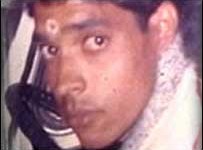
Dhananjoy Chatterjee
Murderer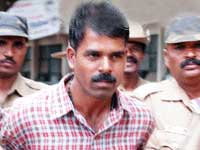 Umesh Reddy
Murderer · India · 1998
Umesh Reddy was sentenced to death on October 27, 2006. The Karnataka High Cour…
18 victims
Umesh Reddy
Murderer · India · 1998
Umesh Reddy was sentenced to death on October 27, 2006. The Karnataka High Cour…
18 victims
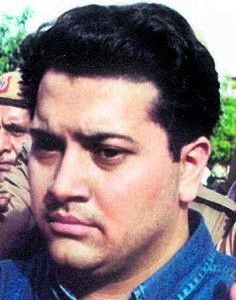 Manu Sharma
Murderer · India · 1999
Manu Sharma Manu Sharma — son of the India politician Venod Sharma; model-killi…
1 victim
Manu Sharma
Murderer · India · 1999
Manu Sharma Manu Sharma — son of the India politician Venod Sharma; model-killi…
1 victim
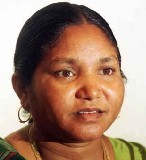 Phoolan Devi
Murderer · India · 1981
Phoolan Devi was shot dead by three masked gunmen outside her Delhi bungalow on…
20 victims
Phoolan Devi
Murderer · India · 1981
Phoolan Devi was shot dead by three masked gunmen outside her Delhi bungalow on…
20 victims
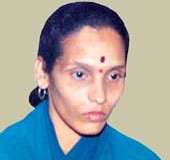 Renuka Shinde
Murderer · India · 1990
Renuka Shinde was sentenced to death on June 29, 2001. The High Court upheld th…
9 victims
Renuka Shinde
Murderer · India · 1990
Renuka Shinde was sentenced to death on June 29, 2001. The High Court upheld th…
9 victims
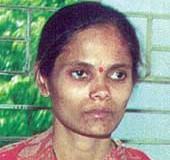 Seema Gavit
Murderer · India · 1990
Seema Mohan Gavit and her sister Renuka Shinde received death sentences. The se…
9 victims
Seema Gavit
Murderer · India · 1990
Seema Mohan Gavit and her sister Renuka Shinde received death sentences. The se…
9 victims
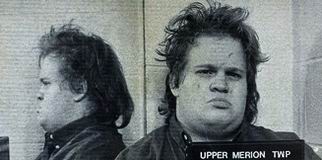 Caleb Fairley
Murderer · USA · 1995
Caleb Fairley (born October 21, 1973) was an American murderer from Gulph Mills…
2 victims
Caleb Fairley
Murderer · USA · 1995
Caleb Fairley (born October 21, 1973) was an American murderer from Gulph Mills…
2 victims
 Charles Douglas Raby
Murderer · USA · 1992
October 15, 1992 — Charles Douglas Raby was convicted of killing Edna Franklin;…
1 victim
Charles Douglas Raby
Murderer · USA · 1992
October 15, 1992 — Charles Douglas Raby was convicted of killing Edna Franklin;…
1 victim
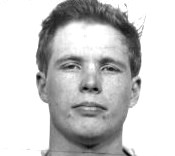 Danny Lee Barber
Serial killer · USA · 1978
Danny Lee Barber was condemned and executed by lethal injection in Texas on Feb…
4 victims
Danny Lee Barber
Serial killer · USA · 1978
Danny Lee Barber was condemned and executed by lethal injection in Texas on Feb…
4 victims
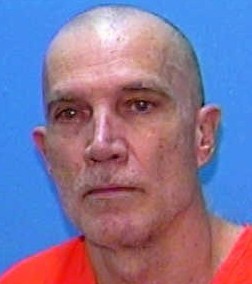 James Franklin Rose
Murderer · USA · 1976
James Franklin Rose was convicted of kidnapping (Count I) and first-degree murd…
1 victim
James Franklin Rose
Murderer · USA · 1976
James Franklin Rose was convicted of kidnapping (Count I) and first-degree murd…
1 victim
- Gender
- male
- Country
- India
- Location
- Bhowanipur, Kolkata, West Bengal, India
- Date of birth
- August 14, 1965
- Age at first offence
- 25
- Characteristics
- rape, convicted rapist
- Victim profile
- Hetal Parekh (female, 14)
- Method of murder
- Suffocation
- Date(s) of murder
- March 5, 1990
- Years active
- 1990
- Date of arrest
- —
- Status
-
Executed
Executed by hanging at the Alipore Central Jail in Kolkata on August 14, 2004
Case record
Background
Dhananjoy Chatterjee was born in Kuludihi, West Bengal, India on August 14, 1965. He worked as a security guard. Hetal Parekh was 14 years old.
Chatterjee wrote three letters—one each to his father, wife, and two former jailmates. One of those letters was handed over by a wife named Poornima before his execution.
At his home in the village of Kuludihi, his family threw stones at journalists trying to speak to them. Heavy rain fell in the village all night. His family heard about his execution at 6 am on a little transistor radio, and immediately loud wails were heard from the house. A large police team was deployed in his village, where his family had threatened to commit mass suicide if he was executed.
Chatterjee spent time in solitary confinement before his execution and spent a sleepless night before the execution, during which he refused food. In the days leading up to the execution, he listened to Hindu devotional songs in his solitary cell.
As per sources, he went calmly to the gallows on his birthday with a copy of Bhagavad Gita.
The offence
Chatterjee was sentenced to death for raping and murdering Hetal Parekh in her house in Bhowanipore on March 5, 1990.
Investigation
Chatterjee’s lawyers argued that his conviction was based on circumstantial evidence and that DNA testing was not carried out.
Trial
His conviction was later subject to appeals and a plea for clemency.
Appeals
Chatterjee’s mercy plea was rejected on August 4. A family petitioned the Supreme Court of India and filed a mercy plea with President Abdul Kalam. The execution was stayed after the family petitioned the Supreme Court and filed the mercy plea.
President APJ Abdul Kalam rejected a plea for clemency “last week”. The Supreme Court rejected another appeal “on Thursday”.
Sentencing
Arrest
Chatterjee was kept at Alipore for nearly 14 years prior to his execution.
Timeline
- August 4, 2004 — Mercy plea was rejected.
- August 14, 2004 — Executed by hanging at the Alipore Central Jail in Kolkata.
- March 5, 1990 — Rape and murder of Hetal Parekh occurred in her house in Bhowanipore.
Outcome
Chatterjee was executed by hanging at the Alipore Central Jail in Kolkata on August 14, 2004.
The execution was carried out at the scheduled time of 4:30 am. The body was handed over to Hindu Satkar Samity for cremation because no near relation turned up for taking his body.
Chatterjee’s family did not collect his body for cremation, and none of the family members even attended the execution. An ambulance carrying his body to the crematorium was escorted by a convoy of police vehicles. Hindu Satkar Samity, a local social welfare organisation, arranged for the last rites.
As per the execution procedure, the body was kept hanging for 30 minutes, before the doctors formally declared Dhananjoy dead.
According to Inspector General of Police (Prisons) Joydev Chakraborty, the IGP said:
"The execution of Dhananjoy's death sentence has duly been carried out at the scheduled time (4:30 am). His body has been handed over to Hindu Satkar Samity for cremation as no near relation turned up for taking his body"
Chatterjee was offered sweets and curd as his last wish. He was given a new shirt and pyjamas, which he wore to the gallows.
Chakraborty said:
"Dhananjoy behaved normally. He took a bath by himself inside the cell, offered prayers and walked to the gallows without any help"
Chatterjee’s wish to donate his eyes could not be fulfilled because his family’s consent was not received. He asked for his kidneys and eyes to be donated after his death.
The execution was carried out by 84-year-old hangman Nata Mullick, assisted by his 21-year-old grandson, Prabhat.
The execution date had been fixed at a high-level meeting at the office of Jail Minister Biswanath Choudhury.
The execution was the first hanging at Alipore since 1993, when murder convicts Kartik Sil and Sukumar Burman were hanged. It was also the first execution in India since 1995.
Aftermath
Human rights organisation Manab Adhikar Surakha Manch and some students of the Bishop's College held a vigil outside the Alipore jail, where the execution took place. Demonstrators lit candles, held anti-death penalty banners, and sang songs outside the prison but left at the scheduled hour of the execution.
One banner said:
"120 countries abolished death penalty. Why not India?"
Another banner said:
"Abolish death penalty!"
Some protesters sang folk star Pete Seeger’s “We Shall Overcome” during their night-long vigil outside the jail.
Human rights activist Sujato Bhadra told the BBC they would begin a “door to door campaign” to abolish death penalty.
BBC News reported that at least three children had died while acting out the recent hanging of an Indian convict and that other children were reported to have hurt themselves in similar incidents.
Mock trial incidents included:
- A 14-year-old boy in the western city of Bombay (Mumbai) died after he hanged himself by a rope from a ceiling fan at home in an apparent re-enactment of the execution. A senior police official told Reuters news agency:
- The Hindu newspaper reported another 14-year-old boy died in the eastern state of West Bengal over the weekend while re-enacting the hanging; Samiran Tiwari hanged himself with a cycle tube while his parents were away from home.
- A 12-year-old girl died in West Bengal trying to show her younger brother how Dhananjoy had been executed. The girl’s father told The Telegraph newspaper:
- Anjan Saha of West Bengal played out the execution with his friends in a primary school when the rope gave away, The Hindu reported.
- Sheikh Aslam Khan, 12, almost choked to death when his friends “hanged” him from a tree after a mock trial in the same state.
- Psychiatrists said such copycat incidents were often provoked by media overkill, to which children were susceptible. Psychiatrist Anjali Chhabria told Reuters:
"Children have a natural curiosity about anything out of the ordinary," "Also, several newspapers and TV channels had given detailed sketches of execution by hanging, making it easier for the kids to imitate."
"I shouldn't have left her home alone especially when she's been talking about the Dhananjoy hanging all the time,"
"The boy's father told us Prem was a very bright but curious kid and kept asking questions about how Dhananjoy would be hanged,"
"Dhananjoy was the top news on all TV channels for so many days and Prem would watch very closely," he said.
In one example described, friends played roles of the executioner, doctor, and prison warder.
Chatterjee’s execution in Calcutta on 14 August whipped up a media frenzy, with some news outlets covering it in great detail.
Chatterjee’s execution was described as the first execution in India since 1995.
Spotted an error, or have more information about this case?