
Wang Shujin
Serial killer Yang Xinhai
Serial killer · China · 2000
Yang Xinhai (simplified Chinese: 杨新海; pinyin: Yáng Xīnhǎi; 17 July 1968–14 Febr…
67 victims
Yang Xinhai
Serial killer · China · 2000
Yang Xinhai (simplified Chinese: 杨新海; pinyin: Yáng Xīnhǎi; 17 July 1968–14 Febr…
67 victims
 Yang Xinhai
Serial killer · China · 2000
Yang Xinhai (simplified Chinese: 杨新海; pinyin: Yáng Xīnhǎi; 17 July 1968–14 Febr…
67 victims
Yang Xinhai
Serial killer · China · 2000
Yang Xinhai (simplified Chinese: 杨新海; pinyin: Yáng Xīnhǎi; 17 July 1968–14 Febr…
67 victims
 Huang Yong
Serial killer · China · 2001
Huang Yong was born in 1974 in Henan, China. He was executed on December 26, 20…
17 victims
Huang Yong
Serial killer · China · 2001
Huang Yong was born in 1974 in Henan, China. He was executed on December 26, 20…
17 victims
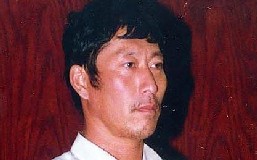 Bai Baoshan
Serial killer · China · 1996
Bai Baoshan was executed by shot in the head on May 6, 1998. · October 16, 1997…
14 victims
Bai Baoshan
Serial killer · China · 1996
Bai Baoshan was executed by shot in the head on May 6, 1998. · October 16, 1997…
14 victims
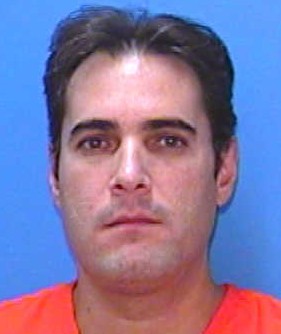 Samuel Jason Derrick
Murderer · USA · 1987
Name: Samuel Jason Derrick · Date of birth: 04/05/67 · Case number: 87-1775 · C…
1 victim
Samuel Jason Derrick
Murderer · USA · 1987
Name: Samuel Jason Derrick · Date of birth: 04/05/67 · Case number: 87-1775 · C…
1 victim
 Alvie Kiles
Murderer · USA · 1989
Alvie Kiles lived in Yuma with his girlfriend, Valerie Gunnell, and her two dau…
3 victims
Alvie Kiles
Murderer · USA · 1989
Alvie Kiles lived in Yuma with his girlfriend, Valerie Gunnell, and her two dau…
3 victims
 Vanessa Williamson
Murderer · USA · 2010
Vanessa Kay Williamson was convicted by a Shasta County jury and was sentenced…
1 victim
Vanessa Williamson
Murderer · USA · 2010
Vanessa Kay Williamson was convicted by a Shasta County jury and was sentenced…
1 victim
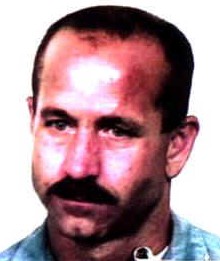 Darrell Keith Rich
Serial killer · USA · 1978
Darrell Keith Rich Darrell Keith Rich was executed by lethal injection in Calif…
4 victims
Darrell Keith Rich
Serial killer · USA · 1978
Darrell Keith Rich Darrell Keith Rich was executed by lethal injection in Calif…
4 victims
 Shawn Tyson
Homicide · USA · 2011
Shawn Tyson was a 16-year-old resident of Sarasota, Florida at the time of the…
2 victims
Shawn Tyson
Homicide · USA · 2011
Shawn Tyson was a 16-year-old resident of Sarasota, Florida at the time of the…
2 victims
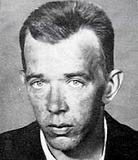 John Ingvar Lövgren
Serial killer · Sweden · 1957
John Ingvar Lövgren (22 October 1930 - 9 February 2002) was a Swedish serial ki…
4 victims
John Ingvar Lövgren
Serial killer · Sweden · 1957
John Ingvar Lövgren (22 October 1930 - 9 February 2002) was a Swedish serial ki…
4 victims
- Gender
- male
- Country
- China
- Location
- Hebei Province, China
- Date of birth
- 1967
- Age at first offence
- 27
- Characteristics
- rape, convicted rapist
- Victim profile
- Women
- Method of murder
- Strangulation - Suffocation
- Date(s) of murder
- 1994 - 1995
- Years active
- 1994–1995
- Date of arrest
- 2005
- Status
-
Sentenced to death
Sentenced to death in 2007; death sentence upheld by Hebei High People's Court in 2013, pending review and approval by the Supreme People's Court
Case overview
Wang Shujin was a death row prisoner who was convicted of raping and killing at least four women. In 2007, an intermediate court in Handan sentenced him to death. In 2013, the Hebei High People's Court rejected his appeal and endorsed the original death sentence. Wang appealed for clemency, arguing that his testimony in a fourth murder case could clear the name of another man executed for the same crime almost 20 years earlier.
Timeline
- 1995 — Nie Shubin was executed for raping and murdering Kang in Shijiazhuang, Hebei province.
- 2005 — Wang Shujin was arrested on suspicion of committing other crimes; during questioning, he confessed to a rape-and-murder case involving Nie Shubin.
- March 12, 2007 — Wang Shujin was sentenced to death.
- February 22 (year not stated) — Xu Xin wrote on Weibo: "In the new year, we will stick to Nie Shubin's case and never surrender."
- June (year not stated) — Prosecutors said in a court hearing that Wang could recount part of the details because he worked in a factory only 100 meters away from the crime scene and he was interrogated by police as a witness during the investigation.
- September 27, 2013 — The Hebei Provincial Higher People's Court turned down Wang Shujin’s appeal and endorsed the original death sentence.
- September 28, 2013 — The Hebei High People's Court turned down the appeal and endorsed the original death sentence; reporting stated that the death sentence would be carried out after review and approval by the Supreme People's Court.
- September 14 (year not stated) — Policemen arrived at Nie Shubin’s home and told Zhang Huanzhi that Nie Shubin was suspected of committing a crime and had been apprehended the previous night.
- October 26 (year not stated) — The Shijiazhuang Daily published an article detailing Nie Shubin’s crime.
- April 1995 — Nie Shubin was executed.
- 1996 — Nie Shusheng was bedridden and paralyzed after attempting suicide twice.
- 2005 onward (as described) — Zhang Huanzhi went to the High Court of Hebei Province every month for the past eight years to appeal, and was told to "wait for notice at home."
The offence
Wang Shujin was convicted of raping and killing at least four women. He later insisted on his role in a fourth murder case and claimed that another executed man had been wrongly convicted for that crime.
In the case involving the woman identified as Kang, the crime was described as rape and murder. The police believed a floral shirt was involved in the strangulation and suffocation, and officials described disagreements about how Wang said the victim was killed, including whether she was smothered or strangled and trampled.
Investigation and evidence
Wang Shujin was able to recount part of the details in Kang’s case. Prosecutors argued that his ability to provide some accurate details was due to his work in a factory near the corn field and his interrogation by police as a witness while the case was being investigated.
The appeal court and judges identified contradictions between Wang’s confession and important evidence uncovered by police. The Hebei Provincial High Court’s online listing of contradictions included:
- "The neck of the victim was tangled with a floral shirt and Wang Shujin did not mention that in his confession."
- "The victim was smothered while Wang Shujin said he strangled and trampled her to death."
- "The times of murder do not match."
- "The heights of the victim do not match either."
Chief judge Liu Zhiting said Wang could recount part of the details in Kang’s case, but his testimony did not correspond to some important evidence uncovered by police. Liu said Wang’s confession about how he committed the crime did not include a colorful shirt, described as the lethal weapon leading to Kang’s suffocation. Liu also said Wang’s recollection about Kang’s height and the time of committing the crime did not correspond to witness testimony.
Prosecutors said in a court hearing in June that Wang could recount part of the details because he worked in a factory only 100 meters away from the crime scene and was interrogated by police as a witness while the case was being investigated.
Arrest and custody
Wang Shujin was arrested in 2005 for other crimes, at which point his confession included a detailed account of what had happened to Kang. He was a 46-year-old man at the time of reporting in 2013. Reporting also described him being escorted into the Higher Court of Handan City, Hebei province on June 25, when he faced further appeal proceedings.
Trial
First trial and sentencing
Wang Shujin was convicted of raping and killing three women in 1994 and 1995 and was sentenced to death in 2007. The first trial in 2007 was conducted by Handan Intermediate People’s Court, which imposed the death sentence.
Appeal court proceedings
The Hebei High People’s Court rejected Wang Shujin’s appeal and endorsed the original death sentence. The verdict stated that Wang’s version of events regarding the crime he "confessed" to did not correspond to several important details uncovered by police. The appeal court said Wang’s recounting of the crime scene was attributed to his nearby factory work and not because he was involved in the murder.
Clemency request and disputed confession
Wang appealed for clemency, arguing that his testimony of raping and murdering Kang might clear the name of Nie Shubin, who had been executed in 1995 for raping and murdering Kang in Shijiazhuang, Hebei province.
Wang was described as having confessed in 2005. He appealed in 2007 based on the fact that his testimony would clear Nie’s name.
Sentencing
Wang Shujin was sentenced to death in 2007 by Handan Intermediate People’s Court.
The death sentence would be carried out after being reviewed and approved by the Supreme People’s Court, the nation’s top court.
Appeals
The Hebei High People’s Court rejected Wang Shujin’s appeal in September 2013. The appeal court endorsed the original death sentence.
Legal commentary and calls for reconsideration
Zhu Aimin, Wang’s lawyer, said he was disappointed by the result and would deliver his opinions regarding the case to the Supreme People’s Court, hoping it may push the top court to rethink the case.
Zhang Huanzhi, Nie Shubin’s mother, said she still believed her son was innocent and would continue to petition the top court.
Lawyers and legal experts urged the Supreme People’s Court to suspend approval of Wang’s execution and provide time to retry Nie’s case.
Zhou Ze, a law professor at China Youth University for Political Sciences, agreed with the Friday verdict but said Wang’s confession was enough to raise reasonable doubts about Nie’s case, which should be reheard. Zhou Ze said:
"Because judges are only able to hear what the prosecutors have proposed in court, they cannot convict a suspect on a charge that the prosecutors did not mention in their indictment," he said.
Xu Xin, a law professor at Beijing Institute of Technology, said he was not optimistic. Xu Xin said:
"Police officers, prosecutors and judges may be held accountable for a miscarriage of justice in Nie's case if the investigation and court verdict are proved to be flawed," he said.
Additional reported commentary included that some scholars questioned whether Wang Shujin killed the woman, while also emphasizing the principle that suspects must be presumed innocent until proven guilty.
Mao Lixin, an expert in criminal procedure law, stated: There is not adequate evidence to sustain Wang's guilt or Nie's conviction. Under these circumstances, the principle of 'innocent until proven guilty' should apply to the trial of Wang and Nie. The court did not convict Wang of the Shijiazhuang's murder now, nor should it have convicted Nie then. The sentencings in Nie's first and second trial were too simplistic and rough to tolerate. Regardless of historical reasons, it reflected the nation's perfunctory and arbitrary attitude toward its citizens' lives. Only by implementing the principle of 'innocent until proven guilty' can the criminal judiciary make substantial improvements and establish rule of law. It is not hard to understand the landslide of rebuke of the court and support for Nie Shubin's innocence, given what happened to the Nie family and the extraction of Nie Shubin's confession by torture.
He Weifang, a constitutional scholar at Peking University, commented on Wang’s performance as follows:
"I think Wang Shujin has performed major meritorious services because he insists on taking responsibility for a forth crime, and he has thwarted the movers and shakers from covering up the wrongful conviction."
He Weifang also asked:
"Why has the procuratorate deferred the presenting of the evidence? Why couldn't this have happened at some point during the past eight years? What evidence was presented in this trial? Did any witnesses attend to be questioned by the lawyers? Most importantly, was the court neutral? How opaque!"
A column and social media posts were also quoted verbatim. Xu Xin wrote:
"Zhang Huanzhi is struggling for the redemption of the judiciary in the name of mothers. To overturn Nie Shubin's wrongful conviction is not only to give an explanation to Nie's family but also to fulfill a promise to all Chinese mothers that the judiciary will not wrongly kill their children."
Xu Xin also wrote:
"Nie Shubin's case might be the last straw that causes the judiciary to collapse."
In an interview, Zhang Huanzhi was quoted about her actions:
"I will take good care of myself and conserve my strength to keep on appealing."
A sarcastic post summary was quoted: "Wang Shujin: I killed the person. Defenders: Yes he did. Prosecutors: No, he did not."
Zhu Zhiyong, a columnist, tweeted:
"The Hebei prosecutors reject Wang Jinshu's confession outright. It is the flagrant blaspheming of the law and the darkest moment in the history of the judiciary. Jurisdiction should be handed over to another court."
Other details
People and their roles
- Wang Shujin — convicted serial killer; death row prisoner; 46 at the time of reporting; confessed in 2005 to a rape-and-murder case involving Kang.
- Kang — the woman who was raped and murdered in the case tied to Nie Shubin’s conviction and execution.
- Nie Shubin — 22-year-old executed man convicted of raping and murdering Kang in Shijiazhuang, Hebei province; executed in 1995.
- Zhang Huanzhi — Nie Shubin’s mother; believed her son was innocent and continued to petition the top court.
- Nie Shusheng — Nie Shubin’s father; received an arrest warrant at the factory; attempted suicide twice and was bedridden and paralyzed since 1996.
- Liu Zhiting — chief judge at Wang’s trial.
- Zhu Aimin — Wang’s lawyer.
- Zhou Ze — law professor at China Youth University for Political Sciences.
- Xu Xin — law professor at Beijing Institute of Technology.
- He Weifang — constitutional scholar at Peking University.
- Mao Lixin — expert in criminal procedure law.
- Zhu Zhiyong — columnist.
- Jiabao Du — identified as the author of a piece quoted in the material; no role in the case proceedings was established.
- Writer Tianyou — a Weibo user who hailed Wang Shujin and described prosecutors as devils.
- The People’s Daily — mentioned as a Party mouthpiece paper whose online presence influenced imitation.
Specific quoted statements and reported actions in Nie Shubin’s case
Policemen told Zhang Huanzhi on September 14 that Nie Shubin was suspected of committing a crime and had been apprehended the previous night. Zhang Huanzhi was working at the time when policemen arrived.
Nie Shusheng said when asked to sign his name on an arrest warrant:
"No! My son is not the kind of person who would do such a thing!"
Nie Shusheng was told:
"Sign it," the police said, "Your son has confessed."
A Shijiazhuang Daily article was described as stating that Nie Shubin was riding bicycle when he was apprehended at the scene and that he admitted to nothing at first; the quoted content was:
"He admitted to nothing but molesting the woman at first. But with the police's ingenious use of psychological methods and evidence, the barbaric perpetrator confessed to his crime after a week of interrogation."
In an interview with the Oriental Morning Post on June 25, Zhang Huanzhi said she went to the High Court of Hebei Province every month for the past eight years to appeal and was always told to:
"wait for notice at home."
Reported background on alleged miscarriage of justice
The material stated that Nie Shubin was convicted based solely on his confession and that prosecutors did not prove guilt with witnesses or physical evidence such as fingerprints, blood, or semen. It also described that many believe his confession was forced and that his mother and family pursued appeals and petitions.
Article and publication timing references
Reporting referenced a time when Wang’s trial decision was described as coming nearly eight years after it began, and it stated that the verdict had been deferred once again. It also stated that the official Sina microblog of the Hebei Provincial High Court listed contradictions and that social media posts had been widely forwarded.


Spotted an error, or have more information about this case?