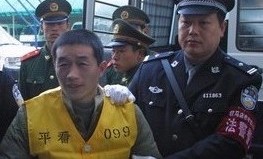
Huang Yong
Serial killer Yang Xinhai
Serial killer · China · 2000
Yang Xinhai (simplified Chinese: 杨新海; pinyin: Yáng Xīnhǎi; 17 July 1968–14 Febr…
67 victims
Yang Xinhai
Serial killer · China · 2000
Yang Xinhai (simplified Chinese: 杨新海; pinyin: Yáng Xīnhǎi; 17 July 1968–14 Febr…
67 victims
 Yang Xinhai
Serial killer · China · 2000
Yang Xinhai (simplified Chinese: 杨新海; pinyin: Yáng Xīnhǎi; 17 July 1968–14 Febr…
67 victims
Yang Xinhai
Serial killer · China · 2000
Yang Xinhai (simplified Chinese: 杨新海; pinyin: Yáng Xīnhǎi; 17 July 1968–14 Febr…
67 victims
 Bai Baoshan
Serial killer · China · 1996
Bai Baoshan was executed by shot in the head on May 6, 1998. · October 16, 1997…
14 victims
Bai Baoshan
Serial killer · China · 1996
Bai Baoshan was executed by shot in the head on May 6, 1998. · October 16, 1997…
14 victims
 Derek Rocco Barnabei
Murderer · USA · 1993
Derek Rocco Barnabei — convicted person; petitioner-appellant · Sarah Wisnosky…
1 victim
Derek Rocco Barnabei
Murderer · USA · 1993
Derek Rocco Barnabei — convicted person; petitioner-appellant · Sarah Wisnosky…
1 victim
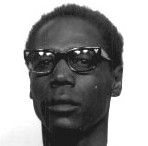 Samuel Christopher Hawkins
Murderer · USA · 1976
Samuel Christopher Hawkins Hawkins was executed by lethal injection in Texas on…
2 victims
Samuel Christopher Hawkins
Murderer · USA · 1976
Samuel Christopher Hawkins Hawkins was executed by lethal injection in Texas on…
2 victims
 Timothy Boham
Murderer · USA · 2006
Timothy Boham also known as Marcus Allen (born May 27, 1981) was a former adult…
1 victim
Timothy Boham
Murderer · USA · 2006
Timothy Boham also known as Marcus Allen (born May 27, 1981) was a former adult…
1 victim
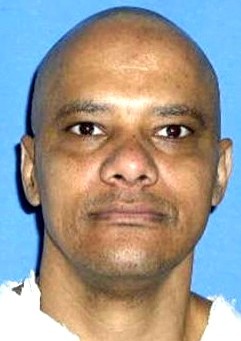 Michael Wayne Richard
Murderer · USA · 1986
Michael Wayne Richard was executed by lethal injection in September 25, 2007. M…
1 victim
Michael Wayne Richard
Murderer · USA · 1986
Michael Wayne Richard was executed by lethal injection in September 25, 2007. M…
1 victim
 Kelly Gissendaner
Murderer · USA · 1997
Kelly Gissendaner was convicted in 1998 of recruiting her lover to kill her hus…
1 victim
Kelly Gissendaner
Murderer · USA · 1997
Kelly Gissendaner was convicted in 1998 of recruiting her lover to kill her hus…
1 victim
- Gender
- male
- Country
- China
- Location
- Beijing, Henan, China
- Date of birth
- 1974
- Age at first offence
- 27
- Characteristics
- homosexual rapist
- Victim profile
- Teenagers boys
- Method of murder
- Strangulation with a rope
- Date(s) of murder
- 2001 - 2003
- Years active
- 2001–2003
- Date of arrest
- November 12, 2003
- Status
-
Executed
Executed by a gunshot to the head on December 26, 2003
Background
Huang Yong was born in 1974 in Henan, China. He was executed on December 26, 2003 in Henan, China.
Huang Yong worked as a migrant laborer in southern China after a tour of duty in the army. He lived alone in Dahuangzhuang Village in Pingyu County in southeastern Henan Province during the period of the killings.
The offence
Huang Yong was accused of luring and murdering 17 teenage boys and was suspected of 25 murders between September 2001 and 2003.
Investigators described that in September 2001 Huang began luring young people from video halls, Internet cafes and video game rooms to his house by offering to recommend them for well-paid jobs or to fund their schooling or sightseeing tours. The victims were all males and ranged in age from 15 to 21.
Huang Yong drugged youths, raped them after strangling them with a rope, and suffocated some victims with a piece of cloth tied up to a noodle-processing contraption he called the “intelligent hobbyhorse.” He also tied victims with a rope and strangled them before burying their bodies under his house and in his garden.
Accounts of the method included that Huang refitted a household noodle-making machine into a killing tool that he called the “intelligent wooden horse,” described as looking like a four-leg stool with a rectangle wooden board fixed on it. He tempted victims lying on the device and suddenly strangled them to death with a strap. Another description said he counted to 1,000 while victims were tied to a four-legged wooden table.
After killings, accounts described that Huang stripped off victims’ clothes, cut the bodies into several parts, and hid them in a pit in his home. He buried bodies under his house or in a garden behind it. Reports also described that he dismembered and buried bodies.
Huang Yong kept some victims’ belts as souvenirs.
An escaped victim told police Huang said: “I killed at least 25 people. You're number 26.”
One report described that Huang began his killing spree in September 2001, luring his victims to his home in Zengzhuang Village from Internet cafes and video arcades, then sometimes got his victims drunk before tying them to the “intelligent hobbyhorse” and strangling them to death with a cloth band, and then dismembering and burying the bodies.
Investigation
In September 2001, when Huang’s first victim went missing, his parents rushed to the local police station but were told: “Without a body, we can't have a case.”
Over the next three years, 18 teenage boys from Pinyu County went missing, some only a few days apart, all from Internet cafes and video arcades located near schools. Reports said local police failed to act and did not take the case seriously, while boarding schools failed to alert parents that children were not coming to class. Local education authorities were also informed by parents but shirked responsibility.
Police should have been tipped off when two chopped-off hands were left on the doorstep of an Internet cafe which Huang frequented. The hands had two notes attached, which local sources said was the killer trying to leave a tip for police. Police refused to provide details.
When the case was first reported, it involved a man who strangled the teenagers with rope in his home in a farming community in central China’s Henan Province after luring them from Internet cafes and electronic gaming halls. Reports said police arrested suspect Huang Yong and found the teenagers’ bodies buried in his yard.
Numbers of victims were presented differently in different reports. State media reported there were 25 victims, while a police officer in Zhumadian city’s Pinyu County told AFP the number was in fact 17. Henan newspapers also reported there were 17 victims. Another report later said parents were told there were more than 20 victims before later claims that there had been only 17 victims.
Arrest
In November 2003, 16-year-old Zhang Liang went to the police and reported that Huang had invited him to his apartment by offering him a job, but once there, Huang tried to strangle him and that he was into unconsciousness three times. The investigators at first were not convinced of Liang’s story, but Liang claimed that after the boy awoke, Huang told him: “I killed at least 25 people. You're number 26.” Liang escaped and reported Huang to the police.
Police believed Liang’s story and arrested Huang Yong. Reports described that police arrested Huang on November 12, only days after a boy escaped from Huang’s home after spending several days tied up.
Trial
Huang Yong was sentenced to death on December 9, 2003. His trial in the People’s Court of Pingyu County lasted more than three hours.
Court officials said Huang tied the youths to what he called the “intelligent hobbyhorse” and suffocated them with a piece of cloth, and did not elaborate further on some details. A court spokesman surnamed Sun said:
“Due to premeditated murder he (the defendant) was sentenced to death with his political rights taken away for the rest of his life,”
The court was told that Huang seduced high school boys from local internet cafes and electronic gaming centres with the promise of jobs, or in some cases new computer games, before tying them up and strangling them with a rope. Police found bodies buried under his house or in a garden behind it.
Reports described intense public interest and large crowds at the courthouse, including up to 50,000 onlookers, and that some victims’ family members disrupted proceedings and hurled insults at Huang. A report described that the trial was suspended for about 10 minutes after family members caused disruptions. Another report described loudspeakers installed outside the courtroom for more than 2,000 residents to follow the trial, and that some family members attempted to attack Huang when he was taken into the courtroom but were foiled by court bailiffs.
Huang confessed to the murders, and his lawyers lodged no appeals after his trial. It was described that the confession was read out and that he reportedly said he had dreamed of being a killer since childhood. Huang also told the court he did not pick female victims because it would make him less of a “hero,” and he said elderly men were too vigilant.
In an interview with CCTV, Huang said he wished to be a professional killer from early childhood, and he described that violent and bloody video shows and games pushed him to act as a warrior in real life. Another reported statement attributed to Huang was:
“I've always wanted to be an assassin since I was a kid, but I never had the chance,”
The charge narrative included that Huang was convicted of murdering 17 mostly teenage high-school boys after luring them to his rural home and strangling them before burying their bodies under his house and in his garden.
Sentencing
Huang Yong received the death penalty. The sentence deprived him of political rights for life.
Appeals
Huang Yong’s lawyers lodged no appeals after his more than three-hour trial.
Outcome
Huang Yong was executed by a gunshot to the head on December 26, 2003.
Aftermath
Reports described that following exposure of the crimes, five officials were removed from their posts for negligence or dereliction of duties. These included the chief of the county’s public security bureau, head of the county’s education and sports bureau, cultural bureau director, and two high-school principals. Another report described that five police officers in the county, including the county’s police chief, had been removed for negligence.
Local internet bar owners suspended their business after the case came to media attention for fear of getting involved.
Parents of some victims planned to sue local police, and families decided to file an administrative lawsuit. A lawyer representing the victims’ families, Zhu Jingling, said:
they had complained to the local government but it had failed to carry out a proper investigation after they continued to report missing children.
Two decomposed bodies were found buried at the home of Huang Yong on April 17, 2004. The bodies were dug up by reporters and a forensic expert after police failed to investigate reports that there were more victims than the police claimed. The revelation raised doubts about the police investigation and renewed criticism of the local government, which had previously failed to investigate numerous reports of missing youths over a two-year period. The report said the murders took place from September 2001 in rural Pingyu County in central China’s Henan Province.
Huang Yong was described as the 29-year-old son of a pig farmer in one report, and it was stated that he confessed to the murders and was executed in December.
According to the report, police initially told parents there were more than 20 victims despite later claims there had been only 17 victims. Parents whose children were still missing demanded authorities confirm whether the two newly found bodies were those of their children.
Other details
One escaped victim said Huang lured him by claiming to have developed a new video game called “God Riding on a Wooden Horse.” It was described that Huang tricked the youth into thinking part of the game involved lying on a four-legged wooden table, allowing Huang to tie their hands and feet to the table and count to 1,000, after which Huang strangled him.
One account said an elderly relative told the Beijing Youth Daily that the boy was tied up and lost consciousness three times when Huang choked him.
It was described that what saved the boy may have been that he kept trying to talk Huang out of killing. Another report said Huang fed Zhang instant noodles, which allowed the boy to stay alive during his four days of torture. The boy tried escaping twice but failed. On the last day, Huang paced back and forth in the house, muttering to himself “Kill? Don't kill?” Zhang then told him, “If you let me go, I will take care of you when you are old” and was then released.
A report described that the boy had many needle wounds on his stomach and that Police and school officials refused to comment. Another report described that Huang fed and released the boy after he promised to take care of Huang in his old age if released.
A report described that court officials said Huang told the court he did not pick female victims because it would make him less of a “hero,” and that elderly men were too vigilant.
Additional context included that another case in China involved a man accused of killing 65 people and a court in Wenzhou sentenced Chen Yongfeng, 20, to death on December 5 for robbing and killing 10 competitors in a three-month murder spree. It also mentioned a prior case involving a man in Nanjing who killed at least 42 people by slipping rat poison into food at a rival’s shop.
China teenage serial killings coverage said local media reported that police should have investigated earlier, including when parents first reported disappearances in September 2001.
A phrase from Huang about motive was included in coverage:
“I've always wanted to be an assassin since I was a kid, but I never had the chance,” said Huang.
Spotted an error, or have more information about this case?