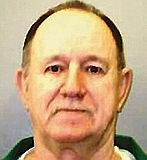
Charles Shuler
Murderer Russell Ellwood
Murderer · USA · 1991
Russell Ellwood was a former taxi driver. Authorities suspected him of killing…
20 victims
Russell Ellwood
Murderer · USA · 1991
Russell Ellwood was a former taxi driver. Authorities suspected him of killing…
20 victims
 Robert Martines Perez
Murderer · USA · 1994
Name: Robert Martines Perez · Other name used in proceedings: Robert Martinez P…
15 victims
Robert Martines Perez
Murderer · USA · 1994
Name: Robert Martines Perez · Other name used in proceedings: Robert Martinez P…
15 victims
 Billy Frank Vickers
Murderer · USA · 1993
Billy Frank Vickers Vickers was executed by lethal injection in Texas on Januar…
14 victims
Billy Frank Vickers
Murderer · USA · 1993
Billy Frank Vickers Vickers was executed by lethal injection in Texas on Januar…
14 victims
 Colton Pitonyak
Murderer · USA · 2005
Colton Pitonyak was convicted of murder and was sentenced to 55 years in prison…
1 victim
Colton Pitonyak
Murderer · USA · 2005
Colton Pitonyak was convicted of murder and was sentenced to 55 years in prison…
1 victim
 Robert W. White
Murderer · USA · 1978
Robert W. White Jr. was 50 years old and formerly lived in Easton. He lived in…
1 victim
Robert W. White
Murderer · USA · 1978
Robert W. White Jr. was 50 years old and formerly lived in Easton. He lived in…
1 victim
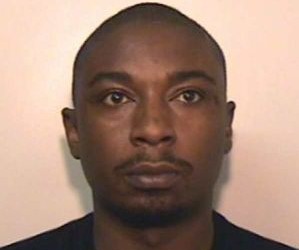 Pierre Williams
Murderer · United Kingdom · 2007
Pierre Williams was described by neighbours as the mother’s boyfriend and as a…
3 victims
Pierre Williams
Murderer · United Kingdom · 2007
Pierre Williams was described by neighbours as the mother’s boyfriend and as a…
3 victims
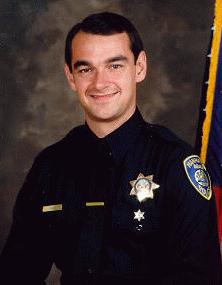 Roger Hoan Brady
Murderer · USA · 1993
Roger Hoan Brady was a convicted killer who pleaded innocent to gunning down a…
2 victims
Roger Hoan Brady
Murderer · USA · 1993
Roger Hoan Brady was a convicted killer who pleaded innocent to gunning down a…
2 victims
 Johnnie Baston
Murderer · USA · 1994
Johnnie R. Baston was the defendant. He was born February 8, 1974. He was 20 ye…
1 victim
Johnnie Baston
Murderer · USA · 1994
Johnnie R. Baston was the defendant. He was born February 8, 1974. He was 20 ye…
1 victim
- Gender
- male
- Country
- USA
- Location
- Orangeburg County, South Carolina, USA
- Date of birth
- July 17, 1948
- Age at first offence
- 51
- Characteristics
- alcohol, drugs, murder-for-hire
- Victim profile
- His former girlfriend, Linda Williams, 38; her mother, Dorothy Gates, 63; and her daughter, Stacy Gates, 13
- Method of murder
- Shooting (12-gauge shotgun)
- Date(s) of murder
- September 8, 1999
- Years active
- 1999
- Date of arrest
- Same day (suicide attempt)
- Status
-
Died in custody
Sentenced to death on March 22, 2001; died in prison on April 2, 2013
Case record: Charles O. Shuler
Background
Charles O. Shuler was convicted of murdering his former girlfriend, her mother, and her daughter. He was of Elloree. During the period leading up to the shootings, the relationship between Shuler and Linda Williams ended and he was described as angry because his former girlfriend ended their relationship.
The offence
Shuler was sentenced to death in March 2001 for murdering his former girlfriend, her mother, and her daughter on September 8, 1999.
On September 8, 1999, Shuler broke into Linda Williams' Myrtle Drive home near Cordova and opened fire on Linda Williams and the other victims inside the home using a 12-gauge shotgun.
The victims were:
- Linda Williams, 38
- Dorothy Gates (also referred to as Dorothy “Dot” Gates), 63
- Stacy Williams, 13
A 911 recording was introduced during the trial and was central to the prosecution’s case. During that proceeding, Stacy Williams told an Orangeburg County 911 emergency dispatcher:
"I've been shot!"
When the dispatcher asked:
"Who shot you?"
Stacy answered:
"Charles Shuler."
Investigation
Orangeburg County Sheriff’s Office investigators charged Shuler in the shooting deaths of Linda Williams, Dorothy Gates, and Stacy Williams.
Testimony in the trial described Shuler as having been threatened and warned about his behavior by the victims’ family before the September 8, 1999 shootings. A county deputy had been at the residence when Shuler called after earlier calls and threats. Shuler demanded to speak with Linda Williams, and when the deputy refused and told him not to call her again, Shuler said:
"I don’t give a d - - - what you think; I ain’t afraid of the law."
After the deputy left, Shuler continued to call and said:
"Your little deputy dog, tell him to kiss my a - -."
Investigators arriving on scene found Shuler had a self-inflicted gunshot wound.
Law enforcement officers arriving at the scene testified that the gunman was still screaming profanity at the women and that, when an officer took the gun away from him, Shuler said:
"F--- you, f--- them all, let ‘em die'. ... ‘Kill the m - - - - - f - - - - - - and finish the job.' He kept mumbling that."
Arrest
A family member testified that the family tried having Shuler arrested on several occasions before the shooting. They feared that Shuler would act on threats to kill Linda Williams. An arrest warrant for unlawful communication—typically a threat made over the phone—was signed, but it became useless on September 8, 1999. Just days before, Williams, 38, said she believed Shuler would act on his threats. She ended her relationship with Shuler on September 3.
Trial
Shuler’s guilt phase resulted in a guilty verdict. A jury spent little more than an hour before finding Shuler guilty.
Defense counsel admitted that Shuler killed Linda Williams, her thirteen-year-old daughter Stacy, and Linda’s mother, Dorothy Gates. Defense counsel stated that Shuler “snapped.” Evidence indicated Shuler lived with Linda for two years. On September 3, 1999, Linda asked Shuler to move out of her home. The following day, police were summoned to Linda’s home and a deputy told Shuler to leave. Over the next day or two, Shuler telephoned Linda’s home numerous times and left threatening messages on her answering machine.
One message stated:
"you can run, and you can hide, but you can’t go on forever, because Charles is coming for your g___d___ ass. Because you, Linda Gates, Dot Gates, Terry Gates, Lori Gates, and all you m_____f____, because I am coming for you ! I am coming for you. You know what I mean? . . ."
On September 6, a police officer was dispatched to Linda’s home. While listening to the answering machine tapes, the telephone rang and the officer answered. Shuler stated:
"[p]ut that whore on the phone. She owes me $40,000."
The officer told Shuler not to call again and Shuler responded:
"I’ll see her later."
Buster Williams was 8 years old at the time of the shootings. He testified that around 7:00 p.m. on September 8, 1999, he saw Shuler’s car circle the block three times before driving into his yard. Shuler exited the vehicle carrying a “long gun” and “busted through” a front window of Buster’s home. Buster testified he ran inside and heard Shuler tell his mother:
"put the mother f___ phone down"
and Shuler said:
"I got you now, you bitch."
While running to his neighbor’s home, Buster heard a shot.
Over Shuler’s objection, the State played a redacted tape recording of several 911 calls. The record described that:
- On the first call, screaming and three gunshots were heard, and the 911 operator stated:
"we’ve been going to this house all weekend."
- During another call, a neighbor stated that her neighbor’s child had come over and reported his mother’s boyfriend was trying to kill his mother.
- On the last call, Stacy stated five people had been shot by Shuler. When asked where she had been shot, Stacy said she could not feel below her waist and did not know where she had been shot.
Sheriff’s Department officers arrived at Linda’s home. Linda, Stacy, and Dorothy had been shot. Shuler had also been shot. Initially, Linda appeared to be alive. Stacy, wounded in the back, was moving on the living room floor and inquired about her brother. Stacy stated “Charles” had shot them. Dorothy was dead. Shuler was lying on the floor in the hallway. An officer testified a shotgun lay beside him and Shuler’s finger was in the trigger release.
Shuler stated:
"F___ them. F___ them all. Let them die."
The officer took the shotgun from Shuler and removed a live shell.
Another officer stated Shuler stated:
"Kill me. Finish me off. Finish the job."
A paramedic testified Stacy asked about her brother and begged not to let her die, stating she was having trouble breathing. The paramedic estimated Stacy died within ten minutes of his arrival.
A detention center nurse testified that while arguing over who would receive medical treatment first, Shuler told another inmate:
". . . I’ve killed three people and don’t mind making it four."
A detention center officer testified that on the one-year anniversary of the shootings, Shuler pointed to a newspaper picture of Dorothy and stated either:
"I killed this witch"
or: "I killed this bitch"
and referred to her as the devil. The officer testified Shuler stated he loved Linda and Stacy.
Sentencing
Shuler’s sentencing proceeding lasted three days.
At the beginning of the sentencing proceeding, Shuler moved to exclude the admission of the unredacted 911 tape, arguing the tape’s probative value did not outweigh its prejudicial impact. The trial judge overruled the objection and concluded that the tape, while “extremely prejudicial,” was relevant to the aggravating circumstance of torture.
After the State played a portion of the 911 tape, Stacy’s father identified the scream on the tape as belonging to his daughter. The State then played the tape in its entirety. In addition to identifying Shuler as the shooter, the tape contained several minutes of Stacy’s conversation with the 911 dispatchers. Stacy’s breathing was labored and she had difficulty speaking. Several times, Stacy stated:
"I’m hurting"
and: "please hurry."
The record described that Stacy’s pain and suffering were evident.
Shuler offered several witnesses in mitigation. An expert in clinical social work testified Shuler lacked socialization skills, was emotionally immature, dependent on relationships, and that chronic alcohol problems ran in his family. An expert in psychopharmacology testified Shuler suffered from chronic depression, anxiety, and alcohol dependency, and suggested alcohol usage may have caused some brain damage. An expert in neurology testified Shuler’s MRI revealed a loss of brain tissue. An expert in psychiatry diagnosed Shuler with depression, possible post-traumatic stress syndrome as a result of the shootings, and possible malingering. An expert in forensic psychiatry diagnosed Shuler with “adjustment disorder with depressed mood” as a result of the shootings.
Detention center witnesses testified Shuler had not caused any problems in jail while awaiting trial. An expert in the field of prisons and corrections testified Shuler could be confined in a correctional environment for the rest of his life without harm to himself or others.
Shuler did not testify and did not make a final statement to the jury.
During closing argument, the solicitor played a portion of the 911 tape and later played all of the tape.
The South Carolina Supreme Court’s opinion recited that Shuler was convicted of three counts of murder and first-degree burglary. He was sentenced to death for the murders and life imprisonment for burglary.
The Supreme Court’s opinion described the jury’s statutory aggravating circumstances alleged by the State:
- For Dorothy: two murders by one act or pursuant to one scheme or course of conduct and during the commission of burglary
- For Linda: two murders by one act or pursuant to one scheme or course of conduct and during the commission of burglary
- For Stacy: two murders by one act or pursuant to one scheme or course of conduct; the murder was committed during the commission of burglary; and the murder was committed while in the commission of physical torture
The opinion recited the trial judge instructed the jury on statutory mitigating circumstances:
- appellant had no significant history of prior criminal convictions involving the use of violence against another person
- the murder was committed while appellant was under the influence of mental or emotional disturbance
- appellant’s capacity to appreciate the criminality of his conduct or to conform his conduct to the requirements of the law was substantially impaired
- appellant’s mentality at the time of the crime
After the passing of the sentence, Circuit Court Judge Thomas W. Cooper Jr. asked Shuler:
"Do you have any comments before the passing of the sentence?"
Shuler responded:
"No comments at all,"
Appeals
Shuler’s conviction and death sentence were reviewed on appeal.
The Supreme Court case was “The State of South Carolina” in “The Supreme Court,” “The State, Respondent, v. Charles O. Shuler, Appellant,” “Appeal From Orangeburg County,” with “Thomas W. Cooper, Jr., Circuit Court Judge,” “Opinion No. 25591,” “Heard December 3, 2002 - Filed February 3, 2003.”
The Supreme Court’s disposition stated that the judgment was affirmed:
"AFFIRMED"
The Supreme Court’s opinion stated: “Appellant was convicted of three counts of murder and first degree burglary. We affirm.”
The opinion recited the issues raised in the appeal: I. Whether the trial judge erred by allowing the solicitor to “exploit” portions of the unredacted version of the 911 tape during the sentencing proceeding. II. Whether, during closing argument, the solicitor improperly commented on Shuler’s constitutional right not to testify. III. Whether the solicitor’s closing argument injected an arbitrary factor into the jury’s deliberations.
On issue II, the opinion quoted closing argument events. The solicitor said:
"I’m going to go ahead and play [the answering machine] tape [the] again, and when you listen to that tape, I want you to think about the circumstances of the crime and the characteristics of the Defendant, which is what you all will need to base your decision on."
The defense counsel objected and the court ruled:
"Your honor, I believe that is burden shifting. He’s starting to really - - -
The Court: No, sir. I’ll note your objection. I overrule it. Thank you."
The trial judge instructed the jury:
"Ladies and gentlemen, I tell you now, and I emphasize to you again that the fact that the Defendant did not testify in this portion of the trial of this case is not a factor to be considered by you in your deliberation and in your consideration on the question of his sentence. It must not be considered by you in any way. It must not mitigate [sic] against him in any respect because the Defendant has a constitutional right to remain silent, and if he chooses to assert that right, that fact cannot and must not be considered by you in your deliberations; and so, please reach no inference and draw no conclusion whatsoever from the fact that the Defendant did not testify in this portion of the case. That should not even be discussed by you. The burden of proof on issues that are in dispute, as I have told you, is upon the State, and the Defendant has no obligation to take the stand or testify, and the fact that he did not take the stand and testify is not a factor to be considered by you in your decision in this case."
On the third issue, the opinion quoted the solicitor’s closing argument:
"We know that [appellant] didn’t snap. We know that he planned this. It was premeditated. He thought about it for days beforehand.
Defense Counsel: Your honor, object to any arguments of deterrence.
The Court: Excuse me. I’m sorry, the objection is to what?
Defense Counsel: I object to any arguments that goes into the line of deterrence, Your Honor.
The Court: I don’t think it’s going to do to that. That’s not where you’re going with it.
Defense Counsel: Yes, sir, Your Honor.
The Court: All right, under the law he’s allowed to argue general deterrence, I think as I understand. Thank you.
Solicitor: He thought about it before he did it. If you impose the death penalty on [appellant] maybe it will cause somebody else thinking of murder not to do it, and you might spare an innocent life or save a life."
A post-conviction relief motion was later denied. Circuit Court Judge Casey Manning denied Shuler’s arguments for a new sentencing hearing to allow him to receive a lesser sentence. The decision stated:
"The application for post-conviction relief is denied in its entirety,"
and:
"Applicant has failed to show error, and he failed to show prejudice such as would support the granting of either a new guilt proceeding, or a new sentencing proceeding."
The opinion stated that the application was dismissed with prejudice, meaning the Elloree man could not argue the same points again.
Lisa Armstrong, Shuler’s attorney for the PCR motion, did not return a message seeking comment.
Outcome
Shuler was sentenced to death on March 22, 2001.
He died in prison on April 2, 2013, at Lieber Correctional Institution—Death Row. Officials with the South Carolina Department of Corrections confirmed the Elloree man died of heart failure.
The record described that Terry Gates hoped the nightmares would now go away and stated:
"I see my mama, my sister, I see them all,"
"But they never say anything."
The record also included a statement:
"I guess this is all the justice we’ll get,"
he said.
Aftermath
After the shootings, the family filed a civil suit against Orangeburg County for failing to act on repeated warnings that Shuler was dangerous. Orangeburg County settled the case in 2003 for an unspecified amount under $180,000.
An Associated Press article in 2003 focused on the loneliness of Death Row and quoted Lori Edens, sister of Terry Gates and Linda Williams:
"They do not realize what we are going through? When he dies, we have to live on with the torment every night," she said.
"It’s the first thing I think about when I go to bed at night and the first thing I think about every morning.
"What more do they want?"
The record included that Edens died in December 2010 after an extended illness and remained concerned about the man who murdered her three family members. Gates continued to plan a trip to Columbia to discuss shortening the legal process of death penalty cases with legislators. The record also included that Shuler had been held at Lieber Correctional Institution in Ridgeville after being sentenced to death in 2001. The record included that Shuler had asked for a new trial a few months before the 2011 proceedings described in the text, and that the delay in execution setting was described as very common.
Other details
Shuler’s age was stated multiple times in the material as 64 at the time of his death and as turning 63 in relation to the June 3, 2011 post-conviction decision.
The record described that four live shotgun shells were found in Shuler’s pockets during trial proceedings.
The Supreme Court opinion included several bracketed clarifications, including that appellant requested a large portion of the third 911 call be redacted for purposes of the guilt phase, and that the trial judge agreed to redact the bulk of the third call over the State’s objection.
The record named attorneys and officials connected to the Supreme Court appeal:
- Deputy Chief Attorney Joseph L. Savitz, III, of South Carolina Office of Appellate Defense, of Columbia, for appellant.
- Attorney General Charles M. Condon, Chief Deputy Attorney General John W. McIntosh, Assistant Deputy Attorney General Donald J. Zelenka, Assistant Attorney General Derrick K. McFarland, all of Columbia; and Solicitor Walter M. Bailey, Jr., of Summerville, for respondent.
The record’s Supreme Court opinion listed the justices: JUSTICE BURNETT; and that TOAL, C.J., MOORE, WALLER, PLEICONES, JJ., concur.
The record included a civil testimony about Shuler’s entry into the home from Buster Williams and included the quote attributed to Linda Williams about Shuler’s speech:
"Put the m-----f------ phone down.' He was cussin' to my mama. He said, ‘I got you now, you b----.' I ran out the back door."
The record included testimony attributed to Then-Lt. M.L. Varnadoe about Stacy’s condition while speaking to 911:
"She was moaning. She was trying to get up, asking for help,"
"She was saying, ‘Please help me, please help me.' She was in extreme pain. I was telling her to be calm, that help was on the way."
And the record included Stacy’s father as identifying the scream on the 911 tape.
The record included that on the one-year anniversary, Shuler pointed to a newspaper picture of Dorothy and referred to her as the devil.
The record included the statement that Shuler’s attorneys argued various points in post-conviction proceedings, including arguments about the shotgun and about threats made to another person before opening statements, and that the final version alleged ineffective trial and appeals attorneys.


Spotted an error, or have more information about this case?