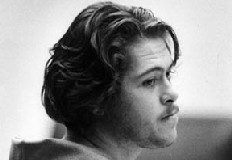
Gregory Sturm
Murderer Brian Kevin Rosenfeld
Murderer · USA · 1985
Brian Kevin Rosenfeld Brian Kevin Rosenfeld was sentenced to three concurrent l…
23 victims
Brian Kevin Rosenfeld
Murderer · USA · 1985
Brian Kevin Rosenfeld Brian Kevin Rosenfeld was sentenced to three concurrent l…
23 victims
 Yahweh ben Yahweh
Murderer · USA · 1980
Yahweh ben Yahweh was born and legally named Hulon Mitchell Jr. (October 27, 19…
23 victims
Yahweh ben Yahweh
Murderer · USA · 1980
Yahweh ben Yahweh was born and legally named Hulon Mitchell Jr. (October 27, 19…
23 victims
 Russell Ellwood
Murderer · USA · 1991
Russell Ellwood was a former taxi driver. Authorities suspected him of killing…
20 victims
Russell Ellwood
Murderer · USA · 1991
Russell Ellwood was a former taxi driver. Authorities suspected him of killing…
20 victims
 Robert Martines Perez
Murderer · USA · 1994
Name: Robert Martines Perez · Other name used in proceedings: Robert Martinez P…
15 victims
Robert Martines Perez
Murderer · USA · 1994
Name: Robert Martines Perez · Other name used in proceedings: Robert Martinez P…
15 victims
 Earl Frederick
Murderer · USA · 1989
Earl Frederick was executed by lethal injection in Oklahoma on July 30, 2002. ·…
2 victims
Earl Frederick
Murderer · USA · 1989
Earl Frederick was executed by lethal injection in Oklahoma on July 30, 2002. ·…
2 victims
 James Michael Briddle
Murderer · USA · 1980
James Michael Briddle was executed by lethal injection in Texas on December 12,…
2 victims
James Michael Briddle
Murderer · USA · 1980
James Michael Briddle was executed by lethal injection in Texas on December 12,…
2 victims
 David Hotyat
Mass murderer · France · 2003
David Hotyat was convicted of murdering the five members of the Flactif family…
5 victims
David Hotyat
Mass murderer · France · 2003
David Hotyat was convicted of murdering the five members of the Flactif family…
5 victims
 Willie Crain
Murderer · USA · 1998
Willie Crain was tried in the Thirteenth Judicial Circuit, Hillsborough County,…
1 victim
Willie Crain
Murderer · USA · 1998
Willie Crain was tried in the Thirteenth Judicial Circuit, Hillsborough County,…
1 victim
 Misty Stoddard
Murderer · USA · 2012
Misty Stoddard was a 37-year-old resident of Sarasota County. She was the stepm…
1 victim
Misty Stoddard
Murderer · USA · 2012
Misty Stoddard was a 37-year-old resident of Sarasota County. She was the stepm…
1 victim
 Kelly Ryan
Murderer · USA · 2005
Kelly Ryan (born July 10, 1972 in Minneapolis, Minnesota) was a former Internat…
1 victim
Kelly Ryan
Murderer · USA · 2005
Kelly Ryan (born July 10, 1972 in Minneapolis, Minnesota) was a former Internat…
1 victim
- Gender
- male
- Country
- USA
- Location
- Tustin, Orange County, California, USA
- Date of birth
- 1970
- Age at first offence
- 20
- Characteristics
- rape, rapist, drug addict, drugs, robbery, armed robbery, kidnapping, abuse
- Victim profile
- Russell Williams, 21; Chad Chadwick, 22; and Darrell Esgar, 22 (former co-workers)
- Method of murder
- Shooting
- Date(s) of murder
- August 19, 1990
- Years active
- 1990
- Date of arrest
- 4 days after
- Status
-
Sentenced to death
Resentenced to three consecutive terms of life in prison without the possibility of parole plus 12 years on June 18, 2009; death sentence imposed in February 1993 and reversed on appeal in 2006
Case identification
Gregory Allen Sturm
Timeline
- Aug. 19, 1990 — Gregory A. Sturm convicted in the deaths of Russell Williams, 21; Chad Chadwick, 22; and Darrell Esgar, 22, during a $1,100 robbery at a Super Shops store in Tustin.
- Aug. 20, 1990 — Police officers discovered the bodies of Darrell Esgar, Chad Chadwick and Russell Williams in the Super Shops automotive store in Tustin, California.
- Aug. 21, 1990 — Police first interviewed defendant; he denied involvement in the murders or robbery but admitted going to Super Shops that day.
- Aug. 23, 1990 — Defendant climbed over the fence of Randy Dusseau's yard in Riverside, was pursued by a tree trimmer, and was found hiding underneath a trailer.
- Nov. 23, 1992 — The jury determined that the death penalty should be imposed.
- Feb. 1993 — Sturm was sentenced to death.
- June 10, 1992 — The jury announced it could not reach a penalty verdict; the court declared a mistrial.
- Oct. 20, 1992 — A second penalty phase jury trial began.
- May 8, 1992 — The jury returned guilty verdicts on all counts and found true the weapon-use allegation and all special circumstance allegations.
- Nov. 29, 1990 — After arrest, defendant was transferred to Western Medical Center in Anaheim to have his ankle X-rayed; he required a wheelchair and later attempted escape.
- June 18, 2009 — Sturm was resentenced to three consecutive terms of life in prison without the possibility of parole plus 12 years.
- June 19, 2009 — The Orange County District Attorney's Office dropped its efforts to win a second death penalty against a Tustin man convicted more than a decade ago of mowing down three co-workers during a robbery at an auto parts store.
- March 06, 2006 — California Supreme Court decision number No. S031423 reversed the death sentence while affirming convictions.
Background
Gregory Allen Sturm was 27 at the time of the Aug. 19, 1990 killings of three former co-workers: Chad Chadwick (22), Russell Williams (21), and Darrell Esgar (22).
The offence
Robbery and killings at a Tustin auto parts store
Sturm killed three employees at a Super Shops store in Tustin during a robbery. The victims were bound and shot execution-style in the backs of their heads. The killings occurred during a robbery at an auto parts store. Police later determined that money had been stolen from the store, described as “$1,103.56” and also as “$1,100,” and that $1,100 was stolen during a robbery at a Super Shops store in Tustin on Aug. 19, 1990.
Use of tape and gunshots
An autopsy revealed injuries consistent with gunshots to the head. Chad Chadwick had a defensive bullet entry wound on the palm of his left hand and a re-entry wound in the right side of his head. Russell Williams had two gunshot wounds to his head and bite marks on his tongue indicating that he had bitten his tongue before he was shot. Darrell Esgar had one gunshot wound to the left side of his head.
Investigation
Discovery of bodies and stolen money
On Aug. 20, 1990, police officers discovered the bodies of employees Darrell Esgar, Chad Chadwick and Russell Williams in the Super Shops automotive store in Tustin, California. The store had been robbed and money was later determined to have been stolen.
Police information about guns and defendant
Laurie Stevenson called her friend John Orr, a reserve police officer for the Garden Grove Police Department, informing him that her roommate, Rick LaBare, had loaned defendant two guns the day before the bodies were discovered. Orr telephoned Tustin police with the information.
LaBare was a former salesman at Super Shops and had used cocaine with defendant. On Aug. 19, 1990, LaBare loaned defendant a .38-caliber revolver and a shotgun. Defendant told LaBare he wanted to borrow the guns to go shooting in the desert near Barstow. That same day, Robert Paleno, who was advertising his motorcycle for sale for $5,000, received a phone call from defendant about the motorcycle; defendant mentioned he worked at Super Shops and later told Paleno he would be back that evening with cash to purchase the motorcycle.
On the day the victims’ bodies were discovered, LaBare asked defendant to return the guns and defendant promptly complied. LaBare contacted the Tustin police and voluntarily gave the guns to police.
Evidence found and ballistics
Ballistics tests revealed that the revolver defendant borrowed from LaBare was the murder weapon.
After an initial interview, police executed a warrant to search the apartment where defendant lived and found a gold T-shirt and a pair of shorts that both had blood on them. Subsequent tests determined that the blood could only have come from Esgar. A bill from a jewelry store with defendant's address on it was found at the crime scene.
Arrest and custody
Initial interview and denial
Police first interviewed defendant on Aug. 21, 1990. He denied involvement in either the murders or the robbery, but did admit he had gone to Super Shops that day. Defendant was not placed under arrest at that time.
Arrest during pursuit
On Aug. 23, 1990, defendant climbed over the fence of Randy Dusseau's yard in Riverside. Dusseau saw him and asked John Hauver, one of several tree trimmers working at that property, to pursue defendant. Hauver chased defendant on foot for more than two hours and finally found him hiding underneath a trailer. Hauver stayed with defendant until police arrived. While under the trailer, defendant began crying and told Hauver that he had not committed the murders. Hauver had not mentioned the murders.
Escape attempt at the hospital
After arrest, defendant was videotaped for an interview and provided a “walk-through” of the crimes.
On Nov. 29, 1990, after his arrest, defendant was transferred to Western Medical Center in Anaheim for an ankle X-ray. He required a wheelchair to get around the hospital. At one point, he said to one of the transporting deputies: “Guess I won't try to escape because you will probably shoot me.”
After having a half-cast put on his leg, defendant was required to use crutches. While at the hospital, he attempted to escape by throwing away his crutches and running outside the building, where he was apprehended.
Confession and statements to police
After police indicated they did not believe defendant's version, defendant confessed to committing the robberies and murders. In an interview with Detective Nasario Solis, defendant stated that on the night of the murders, he stayed in the Super Shops after closing and told friends working there that he wanted to buy some car parts. Defendant pulled out a gun; the victims did not think he was being serious.
Defendant made the three victims open the safe in the back of the store. Defendant then became scared and made Esgar use tape to bind the hands and feet of the other two victims, and then bind his own hands. Defendant turned to leave and his gun went off. He returned to where the three victims were, and Chadwick told him it was “not too late.”
Defendant shot Chadwick. Defendant said that Esgar started crying and said: “Oh, my God.” Defendant then shot Williams. Esgar repeated the phrase, “oh, my God” with his head down, and defendant shot him. Defendant walked away, grabbed the money out of an open cash register, and rode away on his bicycle.
At first, defendant attempted to implicate a Mexican drug dealer named “John Davis,” claiming Davis committed the robbery and that defendant assisted him in exchange for cocaine. After police indicated they did not believe his version, defendant confessed.
Charges and procedural history
Counts and allegations in first amended information
On April 15, 1992, the Orange County District Attorney filed an eight-count first amended information charging defendant with three counts of first degree murder (of Darrell Esgar, Chad Chadwick and Russell Williams, respectively) in violation of section 187; one count of burglary in violation of section 459; three counts of robbery (of Esgar, Chadwick and Williams, respectively) in violation of section 211; and one count of attempted escape by a prisoner in violation of section 4532, subdivision (b).
The information alleged that defendant personally used a firearm in the commission of the murders and robberies in violation of section 12022.5. It further alleged that defendant committed the murders while in the commission of second degree burglary and robbery in violation of sections 190.2, subdivision (a)(17)(vii) and (i), 211, and 460, and that defendant committed multiple first degree murders in violation of section 190.2, subdivision (a)(3).
Plea and trial verdicts
Defendant pled guilty to the attempted escape charge and not guilty to the remaining charges.
On May 8, 1992, the jury returned guilty verdicts on all counts and found true the weapon-use allegation and all special circumstance allegations. The jury did not return a verdict finding whether defendant committed premeditated and deliberate first degree murder.
Penalty phase mistrial and second penalty phase
The penalty phase of the trial commenced. On June 10, 1992, the jury announced it could not reach a penalty verdict and the court declared a mistrial. A poll of the jury indicated that the jurors were split 10 to 2, with the majority favoring life without the possibility of parole.
A second penalty phase jury trial began on October 20, 1992. On November 23, 1992, the jury determined that the death penalty should be imposed.
Sentencing at the time of death penalty
The trial court sentenced defendant to death for the murders, imposed a two-year sentence for the attempted escape, and imposed a four-year penalty enhancement for the use of a firearm during the murder of Esgar. Pursuant to section 654, the court stayed the remaining weapon-use enhancement related to the robbery counts and the other murder counts, pending the death sentence being carried out. The appeal was automatic.
Trial: guilt phase evidence
Police discovery and autopsy findings
Police officers discovered the bodies in the Super Shops automotive store in Tustin. The autopsies showed injuries including defensive and re-entry bullet wounds for Chad Chadwick, gunshot wounds and bite marks for Russell Williams, and a gunshot wound for Esgar.
Trial witnesses about guns and behavior
Laurie Stevenson informed John Orr about guns loaned by Rick LaBare. Orr telephoned Tustin police.
LaBare was friendly with defendant and used cocaine with him frequently. Defendant had worked at Super Shops until August of 1990 and was described as having erratic behavior at work and being chronically tardy. LaBare testified about the guns loaned and their return, and that he voluntarily gave the guns to police after he became concerned about defendant’s involvement.
Defendant’s initial statements to police
On Aug. 21, 1990, defendant denied involvement in the murders or robbery but admitted going to Super Shops that day. He was not placed under arrest at that time.
Defendant’s videotaped interview and walk-through
Following his arrest, defendant gave a videotaped interview and “walk-through” of the crimes.
Hospital transfer and escape
After his arrest, defendant was transferred to Western Medical Center in Anaheim for an ankle X-ray. He required a wheelchair, later used crutches after a half-cast, and attempted escape by throwing away his crutches and running outside the building, where he was apprehended.
Trial: defense evidence at guilt phase
During opening and closing statements of the guilt phase, defense counsel conceded that defendant killed the victims but argued that defendant was guilty of first degree felony murder and was not guilty of premeditated and deliberate murder.
Cocaine addiction and mitigation of premeditation
The focus of the defense was to provide evidence of defendant’s cocaine addiction to show that prolonged drug use affected his ability to premeditate the crimes.
Randy Pettit testified that when defendant was apprehended three days after the victims’ bodies were found, defendant exhibited symptoms of a person “coming down” from drugs. Pettit identified symptoms including disjointed conversation and staring into space because he was a former drug addict.
A deputy sheriff present at the hospital when defendant attempted escape testified that after apprehension, defendant expressed disappointment that he had not been shot.
Courtney Maxwell testified that he socialized with defendant outside of work and had occasionally overheard conversations between defendant and another Super Shops employee about using cocaine. Maxwell also observed defendant in a parking lot with a bag of white powder and said in his opinion defendant had a drug problem.
Larry Stein, Ph.D., chairman of the Department of Pharmacology at the University of California at Irvine College of Medicine testified about how stimulants such as cocaine affect brain and behavior. Stein testified that cocaine initially produces positive feelings, but chronic cocaine use greatly increases anxiety, results in heightened focus on obtaining and using cocaine, and may predispose a user to commit violent acts including homicide.
Trial: penalty phase evidence
Because the second penalty phase jury had not been present at the guilt phase, the prosecution introduced evidence of underlying crimes, including description of the crime scene, autopsies, and ballistic analysis.
The prosecution also introduced evidence of defendant’s cocaine use similar to guilt-phase evidence, evidence of defendant’s attempt to purchase a motorcycle, interviews given to police by defendant, and testimony by defendant’s former supervisor.
Victim-impact witnesses
The prosecution presented seven victim-impact witnesses: Sharon Chadwick (Chad Chadwick's mother), Leslie McLeod (Chad Chadwick's girlfriend), Clayton Esgar (Darrell Esgar's father), Gina Whitmeyer (Darrell Esgar's girlfriend), Linda Esgar (Darrell Esgar's mother), Grace West (Russell Williams's grandmother), and Melinda Williams (Russell Williams's mother).
Trial: penalty phase defense evidence
Defense presented numerous witnesses including friends, neighbors, and teachers who testified that defendant was well-liked, considered helpful and a good worker, and like family to many people. A family friend and neighbor testified that defendant had been unhappy at home and had been considered for adoption.
Witnesses testified they would be devastated if he were given the death penalty. Witnesses testified that defendant had been on the cheerleading squad in high school; he was supportive, friendly, helpful, and well-liked by other cheerleaders. The cheerleading squad coach testified defendant was polite and cooperative and had been a pleasure to have on the squad.
Childhood and school testimony
Defendant’s kindergarten teacher, Laura Kennelly, testified defendant was immature and ill-prepared for kindergarten, not ready for academic work, and often unkempt. She recommended defendant be held back, but he was advanced anyway.
Sam Ruiz, defendant’s Little League coach when defendant was 13–15 years old, testified defendant became angry with himself when he made a mistake and was often overly self-critical. Ruiz visited defendant’s home to speak with defendant’s mother about this behavior; the conversation was interrupted by defendant’s mother’s boyfriend, Tom Sturm, who became very angry at defendant.
Testimony about Tom Sturm’s mistreatment
Multiple witnesses described mistreatment of defendant by Tom Sturm. Witnesses testified Tom Sturm was not affectionate to defendant, frequently cursed at him and called him names beginning when defendant was young. Witnesses testified Tom Sturm hit defendant. Heidi Sturm testified Tom Sturm often yelled at defendant and began hitting defendant when he was a toddler. She testified that he restricted defendant to his room for two- to five-day periods and allowed defendant to leave only to eat and use the bathroom when defendant was three or four years old. She testified Tom Sturm spanked defendant on a near-daily basis with pieces of wood, a belt, fishing poles, and a paddle used for spanking.
Heidi Sturm testified that when she was 15 years old, defendant saw Tom Sturm touching her breasts and putting his hand down her pants. Heidi Sturm testified she had a good relationship with defendant, who protected her once when she was being threatened by several males. She testified she would feel empty were her brother to be given the death penalty.
Della Garrett, defendant’s grandmother, testified Tom Sturm had never displayed affection toward defendant and had confined defendant to his room. She testified Tom Sturm told her and her husband they were not welcome in his house and that she was not to buy gifts for the children. She testified that when Tom Sturm was at home, the Sturm family acted differently than when he was not present. She testified that if defendant were given the death penalty, she would feel as if she had lost everything.
Irridell Garrett, defendant’s grandfather, testified he loved defendant and would be very hurt if defendant were given the death penalty.
Family history involving biological father and life in Virginia
Errol Medeiros, defendant’s biological father, testified that when he and defendant’s mother separated, he did not know she was pregnant with defendant. He moved to Virginia in 1970 and had no contact with defendant until 1985, when defendant’s mother asked if defendant could live with him in Virginia. Errol Medeiros testified defendant had been kicked out and that he was happy to have defendant move in with him. Errol Medeiros testified defendant got along well with his other sons and formed close relationships with them.
Cindy Medeiros, Errol’s wife, testified that while defendant lived with them, he did his chores well, stayed in touch, and she would feel like she lost a son if defendant were to be sentenced to death.
Testimony about defendant living with the Mickeys
Cathy Mickey met defendant when he was 13 through Little League baseball; her husband was president of the league. Several years later, defendant moved into the Mickeys’ house. She testified defendant had been living in his car prior to moving in. Defendant lived with the Mickeys for four or five months. David Mickey testified defendant caused no trouble and did many voluntary chores. David Mickey also testified defendant umpired Little League games for free and was a good umpire.
Cocaine use testimony
Witnesses testified defendant used cocaine in 1989 and 1990. Courtney Maxwell testified he saw defendant under the influence of cocaine three or four times and saw him with a bag of white powder. Rick LaBare testified he used cocaine with defendant two or more times a week for a few months, and that defendant appeared to use a growing amount, increasing from four to five lines of cocaine per night to more than seven lines per night in August 1990. Another witness testified defendant used large amounts of cocaine as early as 5:00 a.m. and even when police officers were near.
Deputy Sheriff Sheldon Berg testified that on Nov. 30, 1990, defendant tried to escape from custody. Berg chased and tackled defendant, and defendant told Berg he wished officers had shot him.
Jail and church testimony about remorse and mental health
Susan Webster, a registered nurse at the Orange County jail, testified that defendant expressed some desire to kill himself and that she recommended defendant be placed in the mental health ward because he was depressed and suicidal. Webster testified defendant expressed remorse for the crimes.
Deputy Sheriff David Albert testified defendant volunteered to help with cleaning duties when he was in county jail awaiting trial and never caused trouble with other inmates and deputies.
Deputy Sheriff John Sprague met defendant in isolation due to the escape attempt. Sprague testified defendant was crying and very upset; defendant expressed remorse for his crimes. Sprague testified that during the six months he was assigned to defendant’s module, defendant never gave him trouble and caused no trouble with other inmates.
The head of Prison Ministry at Calvary Chapel Church testified he had monthly meetings with defendant and defendant expressed remorse and repentance for his crimes and cried when they spoke about the crimes.
Expert testimony about cocaine and family system
Dr. Larry Stein testified about general effects of cocaine abuse, including that cocaine overstimulates movement, sensory, and aggression systems, predisposing a user to violence. Stein testified early cocaine use produces positive feelings but chronic use leads to anxiety, extreme euphoria, and disregard for anything but obtaining cocaine. Stein testified severe cocaine abuse impairs judgment of consequences and lowers impulse control. Stein testified addiction may cause addicts to lose jobs, families, and health, yet the need for cocaine is so great that addicts ignore these negative consequences. Stein testified that stopping cocaine leads to a “crash phase” with depression, fatigue, sleepiness, and extreme hunger.
Dr. Susan Fossum performed a social history of the Sturm family based on interviews with defendant, Linda Sturm, Heidi Sturm, other family members, and neighbors, and reviewed records. Fossum opined that defendant’s family constituted a “malignant family system” involving criminal activities and life-threatening situations for developing children. Fossum opined there was usually an “identified problem,” a person parents blame; Fossum testified defendant was the “identified problem” and that anger directed at Tom Sturm was directed toward defendant. Fossum testified “shifting coalitions” occurred in the Sturm family and gave children mixed messages as to whether Tom Sturm’s violent behavior was acceptable. Fossum testified that because the Sturm children mistakenly believed Tom Sturm was married to their mother, his status as stepfather gave his actions greater authority. Fossum testified that Linda Sturm distorted defendant’s sense of reality by trying to convince him abuse by Tom Sturm was his own fault. Fossum diagnosed defendant with chronic childhood depression, developmental reading disorder, developmental writing disorder, and undifferentiated attention deficit disorder between ages six and 13. Fossum testified defendant was first exposed to drugs at ages 13 or 14, dependent upon cocaine between ages 14 and 18, and between ages 18 and 20 had recurrent major depression and continued cocaine dependence and also had borderline personality disorder. Fossum testified cocaine use began to medicate ongoing depression originating in childhood.
Sentencing
Death sentence and subsequent reversal
Sturm was sentenced to death in February 1993. The death sentence was reversed on appeal in 2006 by the California Supreme Court while affirming his convictions.
Resentencing in 2009
On June 18, 2009, Superior Court Judge Frank F. Fasel resentenced Sturm to three consecutive terms of life in prison without the possibility of parole plus 12 years.
Attempt by prosecutors to pursue death penalty and decision not to
The Orange County District Attorney's Office dropped its efforts to win a second death penalty against Sturm, and Susan Schroeder said at the time in 2006 that she would seek a new death penalty in a third trial. In June 19, 2009, Schroeder said prosecutors decided against going forward with a third penalty phase and that she declined to elaborate on mitigating factors. Deputy District Attorney Ebrahim Baytieh told Fasel in court:
“in light of everything, including the age of the case and additional information that became available — (we) are no longer seeking the death penalty against Mr. Sturm.”
Susan Schroeder had previously said in 2006:
“This was a cold-blooded murder of three innocent victims in robbery for the paltry sum of $1,100,''
“This is a multi-murderer motivated by greed, and the death penalty is appropriate. This is painful for the families of the victims who thought justice was done 13 years ago and now have to go through this again. Our hearts go out to them.”
Appeals
California Supreme Court disposition
The California Supreme Court in 2006 affirmed Sturm’s convictions but reversed the death sentence. The reversal was based on finding that Orange County Superior Court Judge Donald McCartin made improper remarks disparaging defense attorney William Kelley and some expert witnesses for the defense in front of the jury. The high court also cited McCartin’s mischaracterization of the murder case to the jury.
The decision included procedural and statutory context stating that a jury convicted defendant Gregory Allen Sturm of first degree murders of Darrell Esgar, Chad Chadwick, and Russell Williams (Pen.Code, § 187), and found true special circumstance allegations that defendant committed multiple murders (§ 190.2, subd. (a)(3)) and that each murder was committed during commission of a robbery (§§ 190.2, subd. (a)(17)(i), 211).
The decision further stated: After a penalty phase mistrial, a second jury determined that the death penalty should be imposed, and the appeal from the resulting judgment was automatic (§ 1239, subd. (b)). The court affirmed convictions and reversed the death sentence.
Outcome
The judgment was reversed as to penalty and affirmed in all other respects. The death sentence was reversed on appeal in 2006. Sturm was resentenced on June 18, 2009.
Other details
Jury deadlock and penalty phase votes
Sturm’s first jury deadlocked in the penalty phase in 1992 at 10-2 for life without parole. Jurors asked prosecutors not to retry the case, claiming it would be a waste of time and money and likely would not result in a death sentence.
Statements by judge in 1993 sentencing
When Sturm was sentenced to death in February 1993, Orange County Superior Court Judge Donald McCartin said he could not get over the callousness of the killings, according to news accounts in The Orange County Register.
Defendant’s age at resentencing
In June 2009 reporting, Sturm was described as now 38.
Procedural pleading about attempted escape
In the first amended information, attempted escape by a prisoner was charged under section 4532, subdivision (b), and defendant pled guilty to the attempted escape charge.
Conflicting narration about date framing
The case summary referred to Aug. 19, 1990 killings and also described them as “As close to the St. Valentine’s Day Massacre as you’ll get 1990,” including the sentencing history and appeal.
Dissenting opinion in California Supreme Court
A dissenting opinion stated it would not vacate the death judgment and included commentary on the majority’s reliance on judicial misconduct, emphasizing the aggravated nature of the capital crimes and the overwhelming evidence.
The dissent stated that after voir dire resumed, the trial court advised prospective jurors to “disregard[ ] the court's comment [about premeditation] before.” It also stated that the trial court reiterated eligibility for a death sentence required more than conviction of first degree premeditated murder, citing special circumstance finding. The dissent also stated judicial comments during examination of defense witnesses were “hardly as significant as the majority suggests,” describing references as humorous quips.
The dissent concluded it would not justify a third trial to determine appropriate punishment and therefore dissented.


Spotted an error, or have more information about this case?