
James Michael Briddle
Murderer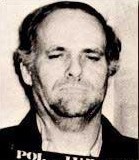 Ervil LeBaron
Murderer · USA · 1972
Ervil Morrell LeBaron (1925 to August 16, 1981) was the leader of a polygamous…
35 victims
Ervil LeBaron
Murderer · USA · 1972
Ervil Morrell LeBaron (1925 to August 16, 1981) was the leader of a polygamous…
35 victims
 Brian Kevin Rosenfeld
Murderer · USA · 1985
Brian Kevin Rosenfeld Brian Kevin Rosenfeld was sentenced to three concurrent l…
23 victims
Brian Kevin Rosenfeld
Murderer · USA · 1985
Brian Kevin Rosenfeld Brian Kevin Rosenfeld was sentenced to three concurrent l…
23 victims
 Marvin Gray
Murderer · USA · 1975
Marvin Gray was convicted killer who claimed responsibility for 23 slayings and…
23 victims
Marvin Gray
Murderer · USA · 1975
Marvin Gray was convicted killer who claimed responsibility for 23 slayings and…
23 victims
 Yahweh ben Yahweh
Murderer · USA · 1980
Yahweh ben Yahweh was born and legally named Hulon Mitchell Jr. (October 27, 19…
23 victims
Yahweh ben Yahweh
Murderer · USA · 1980
Yahweh ben Yahweh was born and legally named Hulon Mitchell Jr. (October 27, 19…
23 victims
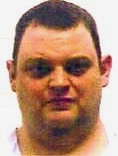 Russel William Burket
Murderer · USA · 1993
Russel William Burket was executed by lethal injection in Virginia on August 30…
2 victims
Russel William Burket
Murderer · USA · 1993
Russel William Burket was executed by lethal injection in Virginia on August 30…
2 victims
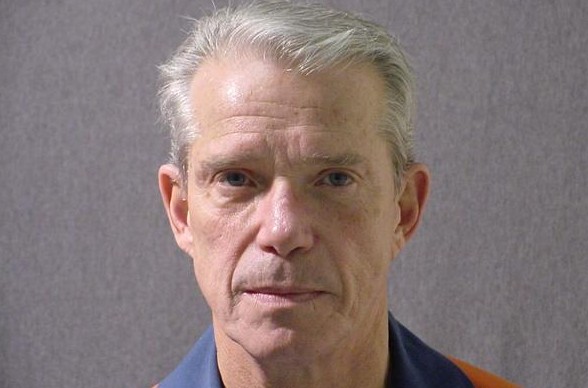 Lowell Amos
Serial killer · USA · 1979
Lowell Edwin Amos (January 4, 1943 – January 5, 2022) was an American former Ge…
4 victims
Lowell Amos
Serial killer · USA · 1979
Lowell Edwin Amos (January 4, 1943 – January 5, 2022) was an American former Ge…
4 victims
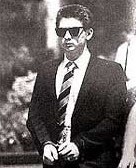 John Raymond Travers
Murderer · Australia · 1986
John Raymond Travers (born February 27, 1967) was an Australian murderer. He wa…
1 victim
John Raymond Travers
Murderer · Australia · 1986
John Raymond Travers (born February 27, 1967) was an Australian murderer. He wa…
1 victim
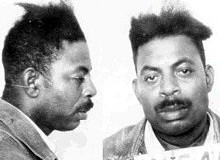 Ernest Patton
Murderer · USA · 1936
Ernest Patton was executed by asphyxiation-gas in Arizona on August 13, 1937. E…
1 victim
Ernest Patton
Murderer · USA · 1936
Ernest Patton was executed by asphyxiation-gas in Arizona on August 13, 1937. E…
1 victim
- Gender
- male
- Country
- USA
- Location
- Harris County, Texas, USA
- Date of birth
- April 7, 1955
- Age at first offence
- 25
- Characteristics
- robbery, drug addict, history of mental illness, white supremacist
- Victim profile
- Robert Banks, 30, and Bob Skeens, 26
- Method of murder
- Strangulation with a rope
- Date(s) of murder
- February 25, 1980
- Years active
- 1980
- Date of arrest
- —
- Status
-
Executed
Executed by lethal injection in Texas on December 12, 1995
Case record: James Michael Briddle
Background
James Michael Briddle was executed by lethal injection in Texas on December 12, 1995.
Briddle was a Texas death row inmate. He was 40 years old at the time of execution and had an education level described as 7th grade or less.
Briddle had served time in prison in California for theft and forgery. While in prison in California, he apparently joined the Aryan Brotherhood, described as a white supremacist prison gang born in California in the 1960s. Members were described as wearing a tattoo of a swastika and lightning bolt.
In 1984, Briddle and another condemned killer were implicated in a death row firebombing in which a black inmate was seriously hurt in his cell.
Briddle had an extensive history of incarceration, including juvenile detention. He was described in relation to mental condition as having “history of mental illness.”
Briddle had tattoos, including teardrop tattoos, and there was discussion at trial of two possible interpretations of those tattoos: one view was that the person was void of tears and could only show them by a tattoo; the other view was that a member of the person’s family had died.
Briddle was also described as being nicknamed “Cosmo.” J.K. Wilcox, Chaplain at Huntsville, said:
“He walked a different beat.
He could lead you out into the ozone when you talked to him.”
Wilcox said Briddle had spoken with him but told him he could not believe he was doing it because it was not cool to be talking to the chaplain. Wilcox also said:
“I couldn’t even begin to guess what condition Briddle’s spirit was in.”
The offence
Briddle, his ex-wife, and another female companion, Pamela Perillo, were hitchhiking near the Astrodome the night of February 24, 1980. They were picked up by Robert Banks, an oil company worker described as 30 years old, who invited them to his apartment.
The next day, the trio robbed and strangled Robert Banks and his friend, Bob Skeens, described as 26 years old.
Robert Banks of Houston was found strangled in his home in Houston. Bob Skeens was also found strangled, with a rope around the neck.
A supervisor went to Banks’ house to investigate when Banks failed to appear for work for two days. A man with the supervisor looked in a window and saw a body. Police found the bodies of Banks and Skeens, each bounded and with a rope around the neck.
Dr. Joseph Jachimczyk, the Chief Medical Examiner, testified that each died from asphyxia due to strangulation with a rope.
Investigation
On March 3, 1980, Perillo gave a statement to Denver, Colorado police and described Briddle. With her consent, police entered a room at a hotel in Denver and found Briddle, his wife, and two boys. The backpack was found in the room.
A Houston detective went to Denver and interviewed Briddle and obtained an oral confession. In that confession, Briddle told of his participation in the alleged offense. He admitted putting a rope around Banks’ neck and pulling on it with Perillo until Banks was unconscious. He admitted he took the wallets, several hundred dollars, the machete and shotgun. He maintained his wife (Fletcher) was outside the house during the entire incident.
Arrest
Briddle was found in a hotel room in Denver, Colorado during the investigation on March 3, 1980, when police entered the room with Perillo’s consent and found Briddle, his wife, and two boys.
Trial
Briddle was indicted by a Texas grand jury on March 1980 and reindicted in October 1980 on two counts of capital murder committed in Harris County, Texas, February 23, 1980, including:
- capital murder of Robert Skeens while committing robbery, and
- capital murder of Robert Banks while committing robbery.
The state elected to proceed only on the count concerning Banks.
Pre-trial motions were heard on January 19 and 20, 1982. Voir dire lasted from January 21, 1982, through February 10, 1982. The trial proper commenced February 17, 1982.
Judge Perry Pickett presided at all trial proceedings.
In the state trial court, Briddle was represented by attorney Mark Vela until approximately October 6, 1981, when representation was taken over by attorneys Al Thomas and Jim Sims.
On his direct appeal to the Texas Court of Criminal Appeals, Briddle was represented by attorney Allen Isbell.
On February 24, 1982, the jury returned a verdict of guilty of the capital murder of Banks.
On February 25, 1982, after a separate punishment hearing, the jury answered affirmatively the two special issues submitted under Tex. Code Crim. P. Ann. art. 37.071 as then in effect. After the answers to the special issues, the state district court sentenced Briddle to death.
The Court of Criminal Appeals’ description of the circumstances of the offence included the following:
- Linda Joyce Fletcher, Briddle’s former wife, was the state’s chief witness.
- The record reflected that Fletcher and Briddle married in California.
- Fletcher and Briddle began hitchhiking to Florida with a few clothes and $30.00; they were joined in Arizona by Pamela Perillo.
- On February 22, 1980, after reaching Houston, they hitchhiked near the Astrodome when they were picked up by Robert Banks.
- Banks was in the process of moving to another house and the three hitchhikers assisted him in moving some belongings.
- Banks treated them to dinner; when Banks paid for the meal, Fletcher and Perillo observed he had several hundred dollars in his wallet, and Perillo told appellant about the money.
- Briddle, Fletcher, and Perillo spent the night at Banks’ house and helped him move other belongings the next day.
- Appellant discovered Banks had some guns.
- When Banks took a shower, appellant telephoned a friend in California and invited him to come to Texas, saying he had “a pigeon out here with lots of money and guns.”
- Appellant proposed a robbery, but the California friend declined.
- Banks took his three guests to a carnival and rodeo at the Astrodome. Perillo told appellant she wanted to kill Banks and appellant answered “Okay.”
- Appellant went off to do “planning,” telling Perillo to relax when she agitated to “do it tonight.”
- After the rodeo, Banks and his guests went to dinner and returned to Banks’ house where they met Bob Skeens, Banks’ friend from Louisiana, who arrived in his green Volkswagen.
- On Sunday, February 24, Banks and Skeens left the house to get coffee and doughnuts for everyone.
- While they were gone, appellant armed himself with a shotgun and Perillo got a handgun.
- When waiting for the two men to return, appellant jumped up and down with excitement.
- When Banks and Skeens returned, Perillo hid in the bedroom and appellant got inside a closet; appellant made a tapping sound.
- When Banks reached to open the closet door, appellant jumped out announcing “This is a robbery.”
- Skeens pleaded for mercy.
- Banks came toward appellant, who struck him in the face with the butt end of the shotgun.
- Perillo came out and told Banks to get on the floor, saying “that it wasn’t any joke.”
- Perillo obtained a machete and cut up some rope; she and appellant tied Banks and Skeens with rope.
- After they were bound, appellant and Perillo took the wallets from the two.
- Appellant took $800.00 from Banks’ wallet and waved it around saying “he had it.”
- Appellant ransacked the bedroom, taking clothes and a backpack.
- Perillo found a cassette recorder and camera.
- Appellant took Skeens into the bedroom and told Skeens that he had killed five people and two more didn’t matter.
- Fletcher ordered to wait in Skeens’ green Volkswagen.
- About 20 minutes later Perillo came to the car with the shotgun wrapped in a blanket, and she brought out a machete, handgun and other items.
- Appellant brought out the backpack and a rifle; they drove the Volkswagen to Dallas, abandoned it, and took a bus to Colorado.
- Banks failed to appear for work for two days, leading to the discovery described above.
Confession and evidence
Assistant District Attorney Joe Bailey remembered the nylon rope and described it in court:
“During the trial, I got down on my knees and opened the grocery bag containing the nylon rope used in the murder. It still had caked blood on it that was chipping off and my hands were sweating the whole time.”
Bailey also described the timing of the deaths:
“Briddle pulled on one side of Banks and Perillo pulled on the other. It took around 12-13 minutes for Banks and Skeens to die.”
Witness and family testimony
Fletcher testified against Briddle. The case narrative indicated Fletcher was the state’s chief witness.
Briddle’s ex-wife testified against him and was convicted of robbery and received five years probation. Perillo was sentenced to death, but her sentence later was reduced because her trial attorney was friends with and previously represented the ex-wife.
Sentencing
Briddle was sentenced to death after the jury answered affirmatively both special issues.
The state district court sentenced Briddle to death on the basis of the jury’s answers to the two special issues.
Appeals
Direct appeal (Texas Court of Criminal Appeals)
On September 23, 1987, the Texas Court of Criminal Appeals affirmed Briddle’s conviction and sentence without dissent.
Briddle v. State, 742 S.W.2d 379 (Tex. Crim. App. 1987).
United States Supreme Court certiorari and stay activity
On October 28, 1987, the Court of Criminal Appeals granted Briddle’s motion filed by attorney Isbell to stay issuance of the mandate for sixty days to allow filing of a petition for writ of certiorari in the United States Supreme Court.
Because no petition was filed, the Court of Criminal Appeals issued its mandate on January 15, 1988.
On February 1, 1988, Briddle, whose representation had been taken over by attorney Alton Stephens, moved the Court of Criminal Appeals to recall its mandate to allow a certiorari petition asserting an inability to locate five volumes of the record. The Court of Criminal Appeals denied the motion.
The Texas trial court scheduled Briddle’s execution for March 21, 1988 on February 4, 1988.
On March 11, 1988, Stephens moved for a stay pending filing of a petition for certiorari and represented that he had received the missing portions of the record on February 26, 1988. On March 15, 1988, the Court of Criminal Appeals granted the motion and stayed execution for sixty days.
The state trial court, Judge C.V. Milburn, on October 26, 1988 set Briddle’s execution for December 1, 1988.
On October 27, 1988, Stephens filed a petition for certiorari with the Supreme Court and moved the Supreme Court for a stay of execution.
On November 22, 1988, Justice White entered an order stating Briddle’s execution was “stayed pending the disposition by this Court of the petition for a writ of certiorari. Should the petition for a writ of certiorari be denied, this stay terminates automatically.”
On December 8, 1988, the Supreme Court denied the petition for certiorari. The cited case was Briddle v. Texas, 488 U.S. 986, 109 S. Ct. 543, 102 L. Ed. 2d 573 (1988).
State habeas
On December 15, 1988, Judge Michael McSpadden reset Briddle’s execution date for February 14, 1989 and ordered that Alton L. Stephens file any application for writ of habeas corpus concerning the conviction by January 17, 1989 raising any and all arguable claims known to counsel.
No habeas filing was made until February 2, 1989, when Stephens, with co-counsel Foy joined by attorney Eden Harrington, filed a petition for habeas corpus, request for evidentiary hearing, and application for stay of execution in the state trial court and the Texas Court of Criminal Appeals.
On February 13, 1989, Judge McSpadden reset Briddle’s execution date for April 21, 1989. Judge McSpadden directed that the state file its answer by not later than March 8 and that trial attorneys Thomas and Sims file affidavits by not later than March 5 summarizing actions taken to represent Briddle, including trial preparation, and responding to ineffective assistance allegations in the habeas application.
On March 8, 1989, the state filed its original answer. On March 17, 1989, the affidavits of Thomas and Sims were filed. On March 27, 1989, the state filed its amended answer.
On March 27, 1989, State District Judge Ted Poe issued an order stating that after reviewing the file, including the habeas petition and request for evidentiary hearing, the affidavits and the state’s amended answer, “there are no controverted, previously unresolved facts material to the legality of Applicant’s confinement which require an evidentiary hearing” and directed the parties to submit findings of fact and conclusions of law by not later than April 5, 1989.
On April 5, 1989, the state and Stephens each submitted proposed findings of fact and conclusions of law. On April 11, 1989, Judge McSpadden adopted the state’s proposed findings of fact and conclusions of law and recommended denial.
On April 14, 1989, the Texas Court of Criminal Appeals issued an order denying relief “on the basis of the trial court’s findings of fact and conclusions of law.”
Federal habeas (Section 2254)
On February 10, 1989, Briddle, through attorneys Stephens, Foy, and Harrington, filed a petition under section 2254 in the district court below, along with a motion for stay of execution and motion for evidentiary hearing.
On April 18, 1989, Briddle moved for stay of the execution set for April 21, 1989 and to reinstate and supplement the section 2254 petition. The district court stayed the execution the same day.
The district court entered orders including the requirement that counsel review state court records and interview Briddle within twenty-one days; advise Briddle that all grounds existing at the time of the conference for granting a writ must be forthwith stated and that failure would constitute waiver of omitted grounds; review the Rules Governing Section 2254 Cases; and explore as fully as possible all potential grounds for relief. The court also required that within thirty days counsel file an amended petition including all claims asserted in previous state or federal petitions, separately numbered, and stating whether each claim was exhausted or decided, along with current claims of constitutional violation or deprivation and a statement on entitlement to an evidentiary hearing related to ineffective assistance.
On May 18, 1989, counsel Stephens and Harrington reported they met with Briddle, who reviewed the April 18 order, was advised concerning it, and was discussed “all potential grounds for relief and fully advised him of the present states of proceedings.”
On May 19, 1989, Briddle, through Stephens, Foy, and Harrington, filed an amended habeas petition and requested evidentiary hearing to cross examine attorneys Sims and Thomas on their affidavits and to inquire into “Linda Briddle’s [Linda Fletcher’s] annulment” in April 1981 of her marriage to Briddle. The amended petition alleged all claims were presented and exhausted in state courts and sought a stay pending the Supreme Court’s decision in Penry v. Lynaugh, cert. granted, 487 U.S. 1233, 108 S. Ct. 2896, 101 L. Ed. 2d 930 (1988).
On June 21, 1989, the state filed an amended answer, motion for summary judgment, and brief.
On July 20, 1989, the district court entered an interim order denying the requested evidentiary hearing. It noted the state process was adequate and there was no allegation the process failed, and regarding the annulment it found the annulment documents were “regular on their face, and admitted so” and stated: “[a]dequate opportunity to set aside the alleged void judgment of annulment between the petitioner and Fletcher has existed.”
On August 18, 1989, Stephens moved for a stay until the Texas Court of Criminal Appeals decided another case pending regarding whether Penry claims would be waived by failure to assert them at trial where trial took place before Penry was handed down. The state filed an opposition.
On August 3, 1990, the district court issued a memorandum opinion denying all relief. It held state trial court habeas findings adopted by the Court of Criminal Appeals were entitled to the statutory presumption of correctness under 28 U.S.C. § 2254(d). It rejected each asserted basis for relief. It noted “the evidence of the petitioner's guilt is overwhelming.”
It concluded there was no indication Briddle was mentally ill or unable to conform his conduct, and that drug use the day before the murder did not prevent him from conforming his conduct. It also concluded Penry-type claims and challenges to Texas statutory sentencing scheme were procedurally barred and, in any event, without merit, and that nothing in Texas statutes prevented Briddle from offering mitigating evidence.
On August 15, 1990, Briddle filed a timely motion to reconsider focused on the procedural bar of the Penry claim and sought in the alternative a stay pending Selvage v. Collins, 897 F.2d 745 (5th Cir. 1990), which asked the Texas Court of Criminal Appeals whether a failure to request special instructions or object to the form of special issues regarding Penry-type evidence constituted a procedural bar under Texas law.
On August 8, 1991, attorney Jane Disko filed a motion to be substituted for Stephens as counsel.
On September 20, 1991, Disko and attorney Schaffer filed a “Supplement to Petitioner's Motion to Alter and Amend Judgment” and a memorandum in support.
The memorandum included requests including dismissal without prejudice and remand to state court to present issues to an unbiased judge, or in the alternative alteration and amendment of judgment, leave to amend the habeas petition, and an evidentiary hearing. It recited multiple reasons, including:
- due process denial because the state district judge who denied a request for an evidentiary hearing and selected another judge was initially his prosecutor, and that the order was therefore void under state law;
- federal issues not raised previously in state or federal court and requests to allow proper raising of all issues or to dismiss without prejudice and remand to an unbiased judge;
- a contention that Penry v. Lynaugh should have been considered on the merits rather than procedurally barred, arguing that in Selvage v. Collins the Court of Criminal Appeals held that a Penry claim like Briddle’s was not barred.
The district court, in a brief order dated September 26, 1991, denied both the August 15, 1990 motion to reconsider and the September 20, 1991 supplemental motion without stating reasons.
Briddle filed a timely notice of appeal.
Fifth Circuit decision
The appeal reached the United States Court of Appeals for the Fifth Circuit. The panel included GARWOOD, DAVIS and WIENER, Circuit Judges.
In the decision referenced in the record, the Court of Appeals affirmed the district court’s denial of habeas relief and held:
- It rejected Briddle’s first point that the district court should not have accorded 2254(d) presumption of correctness to state habeas findings based on the alleged prosecutor assignment by Judge Poe.
- It rejected Briddle’s second point regarding denial of his motion to amend to comply with McCleskey v. Zant.
- It rejected Briddle’s third point regarding application of Selvage v. Collins and rejection of a Penry claim on the merits, concluding there was no Penry evidence introduced or offered at trial.
- It rejected Briddle’s fourth point regarding denial of motions to alter and amend judgment.
Outcome
The federal habeas petition was denied and the judgment of the district court was affirmed.
Briddle’s execution was carried out by lethal injection in Texas on December 12, 1995.
Aftermath
During execution preparation, the flow of solution was described as so low in Briddle’s left arm that after eight minutes the needle was removed and placed in his left hand. Eight minutes later, the needle was placed into his left forearm due to further complications. Twelve minutes later, James Michael Briddle was pronounced dead.
Briddle’s final statement recorded in the narrative included:
“I love you.”
The narrative described that the statement was made to “two brothers standing in the death chamber.”
The narrative also described a small boot with an inscription on Joe Bailey’s desk that said, “Well done Joe.” It was described as a gift from the families of Robert Banks and Robert Skeens to show they had lost a family member.
Other details
Victims
- Robert Banks was 30 years old and was found strangled in his home in Houston.
- Bob Skeens was 26 years old and was found strangled with a rope around the neck.
Briddle’s claimed criminal background and conduct during confinement
The narrative described Briddle as joining the Aryan Brotherhood and as being implicated in a 1984 death row firebombing in which a black inmate was seriously hurt in his cell.
Dates and procedural milestones mentioned
- Pre-trial motions: January 19 and 20, 1982.
- Voir dire: January 21, 1982 through February 10, 1982.
- Trial proper commenced: February 17, 1982.
- Verdict of guilty: February 24, 1982.
- Punishment hearing and death sentence: February 25, 1982.
- Texas Court of Criminal Appeals affirmed: September 23, 1987.
- Court of Criminal Appeals mandate stayed and later issued: October 28, 1987 and January 15, 1988.
- Texas trial court reset dates and Supreme Court stay mechanics were described across late 1987 through December 1988.
- Federal habeas proceedings and related orders: February 10, 1989; April 18, 1989; July 20, 1989; August 3, 1990; August 15, 1990; August 8, 1991; September 20, 1991; September 26, 1991.
Spotted an error, or have more information about this case?