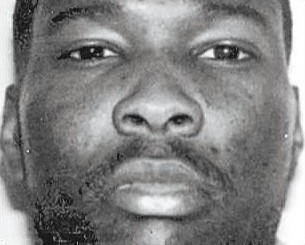
Mark Arlo Sheppard
Murderer Brian Kevin Rosenfeld
Murderer · USA · 1985
Brian Kevin Rosenfeld Brian Kevin Rosenfeld was sentenced to three concurrent l…
23 victims
Brian Kevin Rosenfeld
Murderer · USA · 1985
Brian Kevin Rosenfeld Brian Kevin Rosenfeld was sentenced to three concurrent l…
23 victims
 Russell Ellwood
Murderer · USA · 1991
Russell Ellwood was a former taxi driver. Authorities suspected him of killing…
20 victims
Russell Ellwood
Murderer · USA · 1991
Russell Ellwood was a former taxi driver. Authorities suspected him of killing…
20 victims
 Robert Martines Perez
Murderer · USA · 1994
Name: Robert Martines Perez · Other name used in proceedings: Robert Martinez P…
15 victims
Robert Martines Perez
Murderer · USA · 1994
Name: Robert Martines Perez · Other name used in proceedings: Robert Martinez P…
15 victims
 Billy Frank Vickers
Murderer · USA · 1993
Billy Frank Vickers Vickers was executed by lethal injection in Texas on Januar…
14 victims
Billy Frank Vickers
Murderer · USA · 1993
Billy Frank Vickers Vickers was executed by lethal injection in Texas on Januar…
14 victims
 Wilbur Lee Jennings
Serial killer · USA · 1981
Wilbur Lee Jennings was a serial killer who was convicted of killing four women…
4 victims
Wilbur Lee Jennings
Serial killer · USA · 1981
Wilbur Lee Jennings was a serial killer who was convicted of killing four women…
4 victims
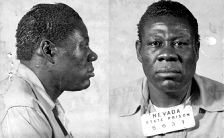 James Williams
Murderer · USA · 1948
James Williams was executed by asphyxiation-gas in Nevada on August 25, 1950. J…
2 victims
James Williams
Murderer · USA · 1948
James Williams was executed by asphyxiation-gas in Nevada on August 25, 1950. J…
2 victims
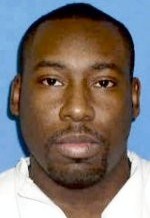 Frederick Patrick McWilliams
Murderer · USA · 1996
Frederick Patrick McWilliams McWilliams was executed by lethal injection in Tex…
1 victim
Frederick Patrick McWilliams
Murderer · USA · 1996
Frederick Patrick McWilliams McWilliams was executed by lethal injection in Tex…
1 victim
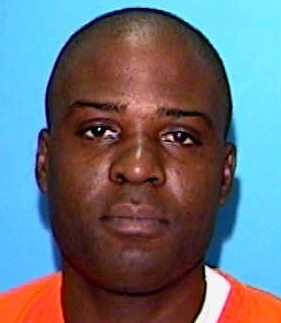 Matthew Marshall
Murderer · USA · 1988
Matthew Marshall was identified in the case as: Florida Supreme Court opinion 7…
1 victim
Matthew Marshall
Murderer · USA · 1988
Matthew Marshall was identified in the case as: Florida Supreme Court opinion 7…
1 victim
- Gender
- male
- Country
- USA
- Location
- Chesterfield County, Virginia, USA
- Date of birth
- 1971
- Age at first offence
- 22
- Characteristics
- drugs
- Victim profile
- Richard, 40, and Rebecca Rosenbluth, 34
- Method of murder
- Shooting
- Date(s) of murder
- November 28, 1993
- Years active
- 1993
- Date of arrest
- —
- Status
-
Executed
Executed by lethal injection in Virginia on January 20, 1999
Timeline
- November 28, 1993 — Mark Arlo Sheppard and his companion Andre Graham shot and killed Richard and Rebecca Rosenbluth.
- November 1994 — Sheppard was sentenced to death.
- February 11, 1998 — The district court denied Sheppard postconviction relief.
- April 1998 — The district court denied Sheppard's motion to alter or amend judgment.
- October 23, 1998 — The court affirmed the denial of habeas relief.
- November 17, 1998 — The court denied rehearing and rehearing en banc.
- November 17, 1998 — The Attorney General of Virginia sent a letter to the state trial court notifying it of the denial of habeas corpus relief and seeking a hearing to set an execution date for Sheppard.
- November 23, 1998 — The state trial court conducted a telephonic hearing and set an execution date of January 20, 1999.
- November 25, 1998 — The court denied a motion by Sheppard for a stay of execution and mandate.
- December 22, 1998 — Sheppard filed the present § 1983 action and a motion for a preliminary injunction in district court.
- January 7, 1999 — The Commonwealth filed a motion to dismiss.
- January 11, 1999 — The district court conducted a hearing.
- January 12, 1999 — Sheppard filed a notice of appeal and a motion for expedited appeal.
- January 19, 1999 — The United States Court of Appeals, Fourth Circuit decided the appeal.
- January 20, 1999 — Sheppard was executed by lethal injection in Virginia.
Background
Mark Arlo Sheppard was executed by lethal injection in Virginia on January 20, 1999. He was 27 at the time of execution.
Richard A. Rosenbluth was 40 when he died. Rebecca W. Rosenbluth was 35 when she died. They were killed in their suburban Chesterfield County home in Virginia.
Sheppard had been sentenced to death for the 1993 murders of Richard A. and Rebecca W. Rosenbluth. Graham received a life term in the Rosenbluths' slayings and was on death row for another murder.
Stanley Rosenbluth and Phyllis Rosenbluth were named as witnessing family members. Their ages and relationship details appeared in the account of what the witnesses said.
The offence
On November 28, 1993, Mark Arlo Sheppard and his companion Andre Graham shot and killed Richard and Rebecca Rosenbluth.
Richard Rosenbluth had been shot twice in the face. Rebecca Rosenbluth had been shot four times in the head and neck.
The bodies were found later. Police discovered the bodies several days later when Rebecca's employer, alerted by a concerned Rosenbluth, went to check on the couple at their home.
The two killers stole the couple's vehicles and some personal items before fleeing the house.
Sheppard and Graham were described as having been selling cocaine to the Rosenbluths.
Investigation
Sheppard admitted to being at the scene of the murders. His fingerprints were found in 61 spots. Circumstantial evidence alluded to Sheppard's possession of the gun.
A few weeks prior to the murder, Sheppard accidentally shot Vaughan with the gun that was used to kill Rosenbluth, and Richard Rosenbluth's father had seen it in his room a few days before the crime.
At trial, the prosecution brought out a maimed witness from a previous unadjudicated crime of Sheppard's while attempting to prove future dangerousness.
Arrest
No arrest event was described as occurring in the provided material.
Trial
Sheppard testified that he and 2 partners, Andre Graham and Benji Vaughan, went to the Rosenbluth home early in the morning of the murders.
Sheppard insisted that he was not the trigger man. He said Graham killed the couple.
The victims' personal records showed that, during the several months immediately preceding their deaths, the couple made substantial cash withdrawals and credit card charges averaging hundreds of dollars per day, apparently to support their addiction to the drug.
The account described that autopsies detected cocaine in the Rosenbluths' bodies and drug paraphernalia was found in their home.
The jury convicted Sheppard and sentenced him to death.
The appellate court denied Sheppard's appeal, stating that conflicting testimony on whether he was the actual perpetrator presented a credibility question for the jury to resolve. The account also stated that the jury did not accept Sheppard's denial of guilt.
Graham was convicted of killing Mrs. Rosenbluth and was given a life sentence.
Sentencing
In December 1994, Sheppard was sentenced to death.
The sentencing outcome included that Sheppard was sentenced to death for the crime and that Graham received life plus 23 years in the Rosenbluths slayings.
The account stated that Sheppard became the first condemned inmate to be put to death in Virginia that year and the 60th overall since the state resumed executions in 1982.
Appeals
Sheppard brought an action pursuant to 42 U.S.C.A. § 1983.
In that action, Sheppard argued that Va. Code Ann. § 53.1-232.1 violated his right to equal protection guaranteed by the Fourteenth Amendment. He argued the statute required the Commonwealth to set an execution date within approximately 60 to 70 days after receiving written notice that the court denied habeas corpus relief, truncating the time normally permitted for a petitioner to request certiorari and placing limitations on the amount of time the Supreme Court had to consider that request.
Procedural background cited in the appeal
- Sheppard was convicted of capital murder and sentenced to death before a Virginia jury. His convictions and sentences were affirmed on direct appeal before the Supreme Court of Virginia, and the Supreme Court denied certiorari, with citation to Sheppard v. Commonwealth, 250 Va. 379, 464 S.E.2d 131, 141 (1995), cert. denied, 517 U.S. 1110, 116 S.Ct. 1332, 134 L.Ed.2d 483 (1996).
- In 1996, Sheppard sought and was denied postconviction relief from the Supreme Court of Virginia.
- In 1997, Sheppard filed a petition for a writ of habeas corpus in the United States District Court for the Eastern District of Virginia, 28 U.S.C.A. § 2254 (West 1994 & Supp.1998). The district court denied relief on February 11, 1998 and denied Sheppard's motion to alter or amend judgment in April 1998.
- Following oral argument, the court affirmed the denial of habeas relief on October 23, 1998; and on November 17, 1998, the court denied rehearing and rehearing en banc.
- On the same day, the Attorney General of Virginia sent a letter to the state trial court notifying it of the denial of habeas corpus relief and seeking a hearing to set an execution date for Sheppard. Relying on § 53.1-232.1, the Commonwealth requested that the hearing be conducted within 10 days and that the execution be set within 60 days thereafter.
- The state trial court conducted a telephonic hearing on November 23, 1998. During this proceeding, the state trial court set an execution date of January 20, 1999.
- The court subsequently denied a motion by Sheppard for a stay of execution and mandate on November 25, 1998.
- On December 22, 1998, Sheppard filed the present § 1983 action and a motion for a preliminary injunction in district court. The Commonwealth filed a motion to dismiss on January 7, 1999. The district court conducted a hearing on January 11, 1999. The following day it entered an order granting the Commonwealth's motion to dismiss and denying Sheppard's motion for preliminary injunction.
- Sheppard filed a notice of appeal and a motion for expedited appeal on January 12, 1999. The Commonwealth filed its response to the motion on January 13, 1999.
Court decision
The appellate court affirmed the dismissal of the action.
The opinion stated that Va.Code Ann. § 53.1-232.1 requires an execution date to be set within 60 to 70 days following notification of the court's denial of habeas corpus relief.
The opinion concluded that the statute did not violate Sheppard's right to equal protection, and granted the motion for expedited appeal and affirmed the dismissal.
In addition, the appellate court addressed procedural bases and stated that all three were without merit: Eleventh Amendment, Rooker-Feldman doctrine, and that the constitutionality of § 53.1-232.1 was not relevant to whether Sheppard was entitled to a stay of execution or mandate under Supreme Court standards, and therefore the earlier ruling neither expressly nor impliedly rejected the equal protection claim on the merits.
Outcome
Sheppard was executed by lethal injection in Virginia on January 20, 1999.
Sheppard asked for a final statement by Warden David Garraghty and mumbled 4 dates and, after each one, said, "I love you." Sheppard's attorney Chris Collins said he believed the dates were birthdays of family members or close friends.
Prosecutors said Sheppard and an accomplice, Andre Graham, were cocaine dealers who killed the Rosenbluths when their finances began to dwindle.
Autopsies detected cocaine in the Rosenbluths' bodies, and drug paraphernalia was found in their home.
Richard Rosenbluth was shot twice in the head; his wife Rebecca Rosenbluth was shot four times in the head and neck from close range.
The account also stated that the bodies were found in the den of their suburban Chesterfield County home.
Aftermath
The account included statements from Mr. Rosenbluth and Mrs. Rosenbluth about watching Sheppard die.
Mr. Rosenbluth said:
- "People have asked me, 'Why do you want to go? Why do you want to witness?'"
- "Watching Sheppard die is not about retribution, he said."
- "You (take) someone's life, and you pay the consequences. It's not as if you didn't know what you were doing. There's no revenge. There's no vengeance,"
- "Watching Sheppard die is not about forgiveness."
- "I say, 'I really don't. But when somebody wrongs your child you're going to do everything to right that wrong as much as you can do,'"
- "I feel this way, I've done, up to this point, everything that I can humanly do to right the wrong for my child. The last act is coming up. "What it is, is my obligation...as a parent to my child,"
- "This is the last thing I can do for him to right that wrong."
Mrs. Rosenbluth said:
- "Why would I forgive someone who, first of all never asked to be forgiven? At no time during the trial at I hear anyone ever say that they were sorry...or asked for forgiveness."
- "Don't use that word with me. I hate that word. I don't know who made that word up,"
- "There is no closure. So many people don't seem to understand that: There is no closure,"
- "I can't even come to terms with myself that I'm never going to see Richard again. Every time the damn phone rings I still think it might be them calling."
- "You have to understand, it's not a big thing in my life to go to this execution. It's just that sometimes you have to stand up for what you believe in."
The account described family and background details. Richard grew up in Northern Virginia. He started college at East Carolina University and then attended the Berklee College of Music in Boston. He was described as a musician and a percussionist. Richard met Rebecca when he was playing with a band in Myrtle Beach, S.C., and they married in 1987. He went into the coffee service business, working sweeping floors in a warehouse for The Coffee Butler, moving up management, and eventually winding up in Richmond as regional manager.
Rebecca went to high school in West Virginia and was living in Myrtle Beach when she met Richard. She was a secretary at Air Distribution Sales Inc.
Louise Dillon of Montgomery, W.Va., was named as Rebecca's mother and was described as not attending the execution. She said, "I just hope that this goes through on the 20th." She also said, "She was a beautiful young lady....She was just a joy to be around. A beautiful smile. She was just a lovely young lady."
Richard and Rebecca were last seen on Thanksgiving. The couple returned to Richmond on Friday and spoke on the phone. Mrs. Rosenbluth remembered chatting over the phone with Rebecca that Saturday morning as the last contact. The Rosenbluths could not get an answer at their son's house on Sunday or Monday; on Tuesday morning he called Rebecca's employer. The account included: "It's like a quarter to one and the doorbell rings. There are 3 Arlington County police officers and...they came in and they told us," Mr. Rosenbluth said. Mrs. Rosenbluth said, "You're in a state of shock... You don't even have the time to mourn" because there were funeral arrangements to make, police investigators to meet with, and media questions to answer. When asked what it was like those first few days, she said: "I try and answer honestly. Looking back, everything is a blur, it's one big blur. You've got a big ache in your heart. That's all you can feel."
The account included commentary from Mr. Rosenbluth about the Graham case. It stated that at the first trial, when Graham was given life imprisonment, he flipped out because the jury was not told that life imprisonment meant eligibility for parole. After the meeting with then-Virginia Secretary of Public Safety Jerry W. Kilgore, he spoke at a town hall meeting scheduled that week on then-Gov. George Allen's plan for abolishing parole and establishing truth in sentencing. After the meeting, 25 homicide victims (family members) got together in November '94 to discuss whether there was a need for an umbrella organization for several crime victims organizations in the state. As a result, they formed Virginians United Against Crime, a victims' advocacy group. Mr. Rosenbluth was described as the group's president. The group supported Allen's parole abolition and truth in sentencing reforms and supported the crime victim's rights bill. The reforms included true life sentences.
Spotted an error, or have more information about this case?