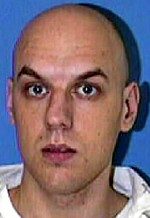
Robert Alan Shields
Murderer Brian Kevin Rosenfeld
Murderer · USA · 1985
Brian Kevin Rosenfeld Brian Kevin Rosenfeld was sentenced to three concurrent l…
23 victims
Brian Kevin Rosenfeld
Murderer · USA · 1985
Brian Kevin Rosenfeld Brian Kevin Rosenfeld was sentenced to three concurrent l…
23 victims
 Russell Ellwood
Murderer · USA · 1991
Russell Ellwood was a former taxi driver. Authorities suspected him of killing…
20 victims
Russell Ellwood
Murderer · USA · 1991
Russell Ellwood was a former taxi driver. Authorities suspected him of killing…
20 victims
 Robert Martines Perez
Murderer · USA · 1994
Name: Robert Martines Perez · Other name used in proceedings: Robert Martinez P…
15 victims
Robert Martines Perez
Murderer · USA · 1994
Name: Robert Martines Perez · Other name used in proceedings: Robert Martinez P…
15 victims
 Billy Frank Vickers
Murderer · USA · 1993
Billy Frank Vickers Vickers was executed by lethal injection in Texas on Januar…
14 victims
Billy Frank Vickers
Murderer · USA · 1993
Billy Frank Vickers Vickers was executed by lethal injection in Texas on Januar…
14 victims
 Bai Baoshan
Serial killer · China · 1996
Bai Baoshan was executed by shot in the head on May 6, 1998. · October 16, 1997…
14 victims
Bai Baoshan
Serial killer · China · 1996
Bai Baoshan was executed by shot in the head on May 6, 1998. · October 16, 1997…
14 victims
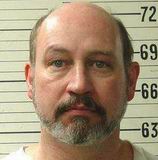 Michael Dale Rimmer
Murderer · USA · 1997
Michael Dale Rimmer was convicted of one count of premeditated murder, one coun…
1 victim
Michael Dale Rimmer
Murderer · USA · 1997
Michael Dale Rimmer was convicted of one count of premeditated murder, one coun…
1 victim
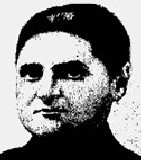 Júlia Fazekas
Serial killer · Hungary · 1911
Júlia Fazekas was a midwife in Nagyrév, Hungary, who arrived in Nagyrév in 1911…
45 victims
Júlia Fazekas
Serial killer · Hungary · 1911
Júlia Fazekas was a midwife in Nagyrév, Hungary, who arrived in Nagyrév in 1911…
45 victims
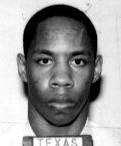 Gaylon Walbey
Murderer · USA · 1993
Gaylon George Walbey Jr. was the defendant in a capital-murder case. · The appe…
1 victim
Gaylon Walbey
Murderer · USA · 1993
Gaylon George Walbey Jr. was the defendant in a capital-murder case. · The appe…
1 victim
- Gender
- male
- Country
- USA
- Location
- Galveston County, Texas, USA
- Date of birth
- January 23, 1975
- Age at first offence
- 19
- Characteristics
- robbery
- Victim profile
- Paula Stiner (female, 27)
- Method of murder
- St abbing with knife
- Date(s) of murder
- September 21, 1994
- Years active
- 1994
- Date of arrest
- 3 days after
- Status
-
Executed
Executed by lethal injection on August 23, 2005
Case overview
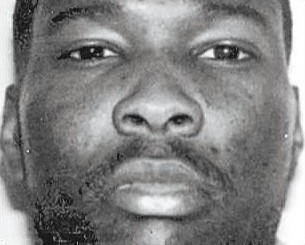
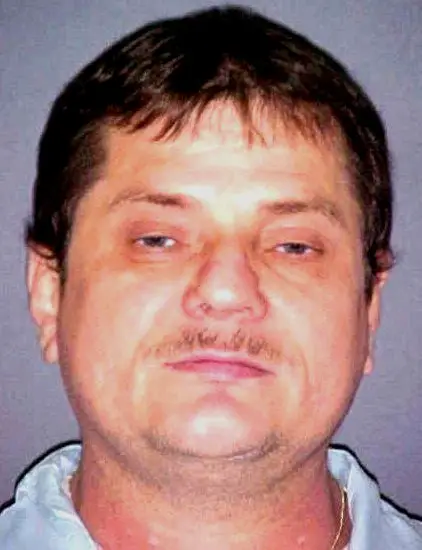
Robert Alan Shields Jr. was convicted of capital murder and sentenced to death for the 1994 killing of Paula Stiner in Galveston County. He was executed by lethal injection on August 23, 2005.
Timeline
- September 21, 1994 — Shields broke into the Friendswood home of Tracy and Paula Stiner, waited for Paula Stiner to return from work, repeatedly stabbed her, and left in her car; her body was found later that day.
- September 24, 1994 — Shields was arrested in The Woodlands while driving Paula Stiner’s car; he had cuts on his fingers and chin and his underwear was saturated with blood.
- October 27, 1994 — A Galveston County grand jury indicted Shields for the capital murder of Paula Stiner.
- October 16, 1995 — Shields was sentenced to death.
- December 8, 1997 — Shields filed his original application for writ of habeas corpus in the state trial court on December 22, 1997 (as stated in the procedural history).
- February 25, 1998 — The Texas Court of Criminal Appeals affirmed Shields’ conviction and sentence.
- December 9, 1998 — The Texas Court of Criminal Appeals denied habeas corpus relief.
- May 11, 2000 — The federal court dismissed Shields’ petition without prejudice.
- August 25, 2003 — The federal court denied Shields’ petition, finding all of his claims to be without merit.
- January 22, 2004 — The Galveston federal court denied Shields’ motion to alter or amend judgment.
- March 30, 2004 — The federal court denied Shields request for a COA.
- February 17, 2005 — The 5th Circuit Court denied Shields’ request for a COA.
- May 13, 2005 — Shields filed a petition for writ of certiorari in the U. S. Supreme Court.
- August 23, 2005 — Shields was executed by lethal injection in Texas.
The offence
On the morning of September 21, 1994, Shields broke into the Friendswood home of Paula and Tracy Stiner and ransacked the house. When Paula Stiner returned home shortly after 4:45 p.m., Shields repeatedly stabbed her and then took the victim’s credit cards, checkbook, and car keys, as well as the murder weapon and several other household items, before leaving in the victim’s car.
Tracy Stiner discovered Paula Stiner’s body when he came home from work at about 5:45 p.m. Evidence introduced at trial established that Paula Stiner’s body was found by her husband, Tracy. The room and the victim were covered in blood, and the breakfast area was in disarray. A hammer was found on the floor of the breakfast area, and Paula Stiner had suffered multiple stab and cut wounds, along with blunt trauma to the head.
Victim details
- Victim: Paula Stiner (27)
- Victim’s husband: Tracy Stiner
Injuries and evidence at the scene
Paula Stiner was repeatedly stabbed in the throat, chest, and torso and suffered defensive wounds indicating she struggled with her assailant before she died. Galveston County’s Chief Medical Examiner testified she had suffered blunt trauma to the head and was repeatedly stabbed. Another account states Paula had at least 28 cut and stab wounds.
Law enforcement evidence included:
- Shields’ fingerprints lifted from the laundry room and found on Paula’s checkbook, the door leading from the laundry room to the garage, and in Paula’s car.
- Bloody shoeprints at the scene consistent with Shields’s shoes.
- Blood on the purse, carpet, and a large amount of blood in the laundry room.
- A wooden-handled screwdriver found outside a broken window and another screwdriver found on the carpet below a broken window.
- A cigarette butt with saliva consistent with Shields’s saliva.
- The contents of Paula Stiner’s purse strewn about; missing items included socks, shirts, a book bag, and a kitchen knife.
Investigation and arrest
Police later arrested Shields after spotting him driving Mrs. Stiner’s auto. Shields had cuts on his fingers and chin, and his underwear was heavily saturated with blood. He had blood on his shoes as well.
Evidence described at trial and during the arrest included:
- Shields was arrested on September 24, 1994.
- Officers noticed cuts on his hands, a cut on his right chin, and what appeared to be blood on his shoes.
- His underwear was saturated with blood.
- Blood obtained from Shields’s underwear and from a paper towel at the Stiner home was consistent with Shields’s blood.
- Shields was wearing clothing belonging to Tracy Stiner as described in the trial evidence.
- Tracy Stiner identified several items in Paula’s car as having been in his home before his wife’s murder.
- A manager of a men’s clothing store in Willowbrook Mall testified that Shields came into the store around 6:15 p.m. on the day of the murder and purchased a suit with a credit card in the name of Paula Stiner; Shields signed the credit card slip in the name of Tracy Stiner.
Trial
Indictment
On October 27, 1994, a Galveston County grand jury indicted Shields for the capital murder of Paula Stiner.
Guilt-innocence phase
Evidence at trial established that Shields broke into the Friendswood home and stabbed Paula Stiner. The jury returned a verdict of guilty.
The defense put no witnesses on the stand during the guilt-innocence phase.
Penalty phase
At the penalty phase, the State introduced evidence related to Shields’s prior criminal history and behavior.
The jury heard testimony including:
- Shields was assessed deferred adjudication probation for theft/burglary of a motor vehicle in 1992 and violated the conditions of his probation.
- Authorities arrested Shields in Florida in 1994 for grand theft auto.
- In January 1994, Shields and two friends broke into a car in Friendswood, stole a checkbook and a credit card, and charged $150 in cigarettes before the card was reported stolen.
- Around the same time, the three friends broke into a house next door to Shields and stole cash, car keys, and later the car itself; they drove to Florida in the car and shoplifted along the way; they were arrested in Florida for grand theft auto.
- They attempted to break into a home in Florida but fled when a neighbor spotted them.
- The jury also heard testimony that in July 1994, Shields was involved in stealing credit cards and a cell phone from another car.
In addition, the jury heard:
- Based on testimony of Shields and his mother, a Florida court liaison officer recommended and a court ordered that the conditions of probation be amended to allow Shields to enter St. Joseph’s Psychiatric Hospital for at least one month for psychiatric evaluation and possible drug treatment; after twelve days, the court allowed outpatient reporting.
- Shields later missed two appointments in July 1994.
- On August 10, Mrs. Shields urged the court officer to issue a warrant for Shields so she could retrieve her missing car, which Shields had stolen.
The jury also heard testimony concerning an incident in June 1994 where Shields loaded a pistol and pointed it at a friend; when the friend objected, Shields shoved the gun in the friend’s face and said: “could point the f***ing gun in [his] face if he felt like it.” Another account quotes this statement as: “He ‘could point the [expletive] gun in my face if he felt like it.’” Shields then went into the backyard and fired the gun twice over the fence, and told his friends he “had just shot at his mail carrier.” A detective testified no mail carrier recalled a shooting incident on that day.
The State also presented rebuttal testimony:
- To refute defense psychiatric testimony, the State called Dr. Edward Gripon as a rebuttal witness.
- Dr. Gripon testified that, based on a hypothetical question paralleling the facts of Paula Stiner’s murder, such an offender lacks concern and remorse for his own action.
- Dr. Gripon testified that Shields’s psychiatric records showed poor impulse control and aggressiveness and diagnosed “personality disorder with features of aggressivity, features of antisocial personality, which is the absence of a social conscience, not caring what one does, that sort of thing.”
- Dr. Gripon testified that in his opinion Shields was a future danger and that he never personally interviewed Shields.
Defense evidence
Mrs. Shields testified about Shields’s family relationship history and behavior changes:
- She testified that Shields had a close relationship with his family until two years after they moved to Colorado from Texas.
- She testified that when the family moved back to Texas, Shields’s grades were average and he was a typical fifteen-year-old.
- She testified that his relationship deteriorated after an arrest for theft; he associated with “undesirable” people, disappeared from home for a day or two, and the family dropped him off and picked him up daily from high school.
- She testified that a month or two before graduation, Shields moved out without notice, returned only to tell his parents he could not live under his father’s rules, and later went to Florida in a neighbor’s stolen car.
- She testified she arranged professional counseling in 1993 but Shields quit after three or four visits and refused further professional help.
- She testified that by June 1994, Shields was no longer taking anti-depressant medication prescribed by the St. Joseph’s doctor, and his behavior deteriorated.
- She testified that Shields left his parents’ home in July 1994 to live in an abandoned house in the Woodlands.
- She testified she believed Shields could not have murdered Mrs. Stiner unless Mrs. Stiner confronted him first and that she did not believe he entered the home with intent to hurt her.
On cross-examination, Mrs. Shields admitted that she and her husband changed the locks twice to prevent Shields from breaking in and stealing.
A clinical social worker, Fran St. Peter, testified after performing a three-hour biopsychosocial assessment on the night before her testimony and interviewing Shields’s mother, father, sister, and brother-in-law. St. Peter testified that:
- One of Shields’s close friends had been killed when Shields was eleven, which traumatized him.
- The family’s move to Colorado isolated him and caused him to withdraw.
- Shields’s first introduction to narcotics occurred when he was a thirteen- to fourteen-month-old baby when doctors prescribed medication to ease pain after he burned himself.
- Shields tried Valium when he was eleven.
- Shields consumed alcohol continuously since age fourteen.
- By age seventeen, 70 to 75 percent of Shields’s time related to procuring, using, or recovering from drugs and alcohol.
- St. Peter stated that she questioned Shields’s attentiveness to their son and said the family essentially led separate lives.
Dr. Fred Fason testified about future dangerousness:
- He testified that a psychiatrist would need to perform a scientifically-based medical evaluation before making a diagnosis of future dangerousness.
- He testified that the American Psychiatric Society recommended its members not testify about future dangerousness because no test had demonstrated scientific validity.
- He testified that, responding to a hypothetical question tracing the facts of Paula Stiner’s murder, his diagnostic impression was that “he’s a sociopath or antisocial personality disorder.”
Dr. James Marquart testified about studies and that future violence prediction was difficult. The jury also heard that there were jail misbehavior instances over a year and testimony about Shields’s classification as minimum security based on representations about his prior criminal record, chemical dependency problem, and living situation.
Special issue finding and sentencing
After hearing both State and defense evidence, the jury answered the special issue question of future dangerousness in the affirmative and recommended death. Shields was sentenced to death.
Appeals
State proceedings
After conviction and sentencing, Shields filed habeas corpus proceedings in state and federal court.
Procedural history described:
- December 22, 1997 — Shields filed his original application for writ of habeas corpus in the state trial court.
- October 14, 1998 — The state trial court recommended that habeas relief be denied.
- April 3, 2002 — The Texas Court of Criminal Appeals dismissed Shields’s successive state habeas petition as an abuse of the writ.
The Texas Court of Criminal Appeals affirmed the conviction and sentence on February 25, 1998.
Federal proceedings and COA
Shields filed federal habeas petitions and motions including:
- December 8, 1999 — Shields filed a petition for a writ of habeas corpus in a Galveston federal court.
- May 11, 2000 — The federal court dismissed the petition without prejudice.
- June 28, 2002 — Shields filed a petition for a writ of habeas corpus in a Galveston federal court.
- August 25, 2003 — The federal court denied the petition and found all claims without merit.
- September 8, 2003 — Shields filed a motion to alter or amend judgment.
- January 22, 2004 — The Galveston federal court denied the motion to alter or amend judgment.
- February 13, 2004 — Shields filed a motion for a certificate of appealability (COA) in Galveston federal court.
- March 30, 2004 — The federal court denied the request for a COA.
- June 20, 2004 — Shields filed a motion for a COA in the 5th U.S. Circuit Court of Appeals.
- February 17, 2005 — The 5th Circuit Court denied Shields’s request for a COA.
- May 13, 2005 — Shields filed a petition for writ of certiorari in the U.S. Supreme Court.
A federal appellate decision described:
- Shields sought a COA on multiple issues.
- The Court of Appeals denied Shields’s application for a COA.
- The Court of Appeals held that claims not fairly presented to state court were procedurally defaulted, that the probative value of hammer and knives admitted in evidence was not outweighed by the danger of unfair prejudice, and that denial of evidentiary hearing was proper.
Outcome
Shields was scheduled to be executed after 6 p.m. Tuesday, August 23, 2005. A Texas death warrant was signed by State District Court Judge David Garner.
The effort to obtain relief from the U.S. Supreme Court failed, with justices rejecting a petition a few hours before Shields’s scheduled execution time.
Execution details
The execution took place at Huntsville’s Walls prison unit inside Texas.
- After being strapped onto a gurney, Shields was asked by the warden if he had a final statement.
- Shields responded twice, saying “No.”
- Officials administered lethal injection starting at 6:07 p.m. in one account; another account states lethal injection was administered and that he was pronounced dead at 6:15 p.m.
- A doctor pronounced Shields dead after about eight minutes, and he was pronounced dead at 6:15 p.m. in multiple accounts.
- Shields did not testify at trial and declined interview requests prior to execution.
Statements and observations by others
Michael Guarino said: “The world will be a better place without him; that's for sure,” and also stated: “It was an extremely vicious, brutal murder. It was one of the worst capital murder scenes I've seen, and I've seen many over 20 years as district attorney.”
Paula Stiner’s father, John A. Ross, read a prepared statement asserting the process from death sentence to death was “offensive” to Stiner’s loved ones and: “As the offender is entitled to a speedy trial, the victim and the victim’s family should be entitled to see a speedy administration of justice.”
After Shields’s final breath, Robert Shields Sr. said: “Murdered by the state.” Another account records additional words said by Shields’s father shortly after: “Murdered,” “Murdered by the state,” and “Bastards.”
Aftermath
Families of Shields and the victim attended the execution. Gov. Perry did not attend the execution. First Assistant District Attorney Mo Ibrahim did not attend but said he hoped it would allow the family to take the next step in healing their heartache.
Shields wrote a letter to Governor Rick Perry inviting him to attend the execution and asking that he answer questions from loved ones. The letter included the sentences: “I think it is important that you see with your own eyes that this is lives and devastation, not just another political stepping stone,” “I would ask that you be there to answer my loved ones [sic] questions,” “Explain to them why they too had to become victims. It is time for you to have the courage of your convictions and stand there looking me in the eyes as those lethal drugs take my life.”
Shields declined to make a final statement before the release of the chemicals that would stop his bodily functions.
Spotted an error, or have more information about this case?