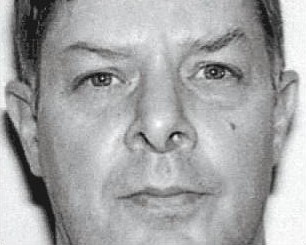
Roy Bruce Smith
Murderer Brian Kevin Rosenfeld
Murderer · USA · 1985
Brian Kevin Rosenfeld Brian Kevin Rosenfeld was sentenced to three concurrent l…
23 victims
Brian Kevin Rosenfeld
Murderer · USA · 1985
Brian Kevin Rosenfeld Brian Kevin Rosenfeld was sentenced to three concurrent l…
23 victims
 Yahweh ben Yahweh
Murderer · USA · 1980
Yahweh ben Yahweh was born and legally named Hulon Mitchell Jr. (October 27, 19…
23 victims
Yahweh ben Yahweh
Murderer · USA · 1980
Yahweh ben Yahweh was born and legally named Hulon Mitchell Jr. (October 27, 19…
23 victims
 Russell Ellwood
Murderer · USA · 1991
Russell Ellwood was a former taxi driver. Authorities suspected him of killing…
20 victims
Russell Ellwood
Murderer · USA · 1991
Russell Ellwood was a former taxi driver. Authorities suspected him of killing…
20 victims
 Robert Martines Perez
Murderer · USA · 1994
Name: Robert Martines Perez · Other name used in proceedings: Robert Martinez P…
15 victims
Robert Martines Perez
Murderer · USA · 1994
Name: Robert Martines Perez · Other name used in proceedings: Robert Martinez P…
15 victims
 John Mills
Murderer · USA · 1982
John Mills Jr. was a Florida prison inmate. In 1982, a jury convicted him of fi…
1 victim
John Mills
Murderer · USA · 1982
John Mills Jr. was a Florida prison inmate. In 1982, a jury convicted him of fi…
1 victim
 Dellmus Colvin
Serial killer · 1987
Dellmus Colvin (also written as Dellmus Colvin; truck driver): convicted serial…
7 victims
Dellmus Colvin
Serial killer · 1987
Dellmus Colvin (also written as Dellmus Colvin; truck driver): convicted serial…
7 victims
 Richard England
Murderer · USA · 1987
Richard England (born 08/29/71) was the defendant in a Florida case from the Se…
2 victims
Richard England
Murderer · USA · 1987
Richard England (born 08/29/71) was the defendant in a Florida case from the Se…
2 victims
 Matthew Beck
Mass murderer · USA · 1998
On March 6, 1998, Matthew Beck killed four of his supervisors at the Connecticu…
4 victims
Matthew Beck
Mass murderer · USA · 1998
On March 6, 1998, Matthew Beck killed four of his supervisors at the Connecticu…
4 victims
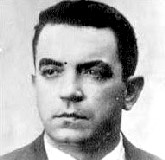 José María Jarabo
Murderer · Spain · 1958
José María Jarabo was a Spanish spree killer. · April 28, 1923 — José María Jar…
4 victims
José María Jarabo
Murderer · Spain · 1958
José María Jarabo was a Spanish spree killer. · April 28, 1923 — José María Jar…
4 victims
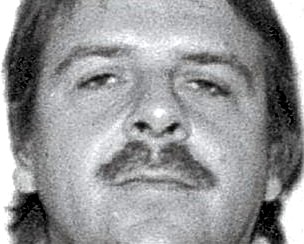 Ronald Lee Hoke
Murderer · USA · 1985
Ronald Lee Hoke Sr. was executed by lethal injection in Virginia on December 16…
1 victim
Ronald Lee Hoke
Murderer · USA · 1985
Ronald Lee Hoke Sr. was executed by lethal injection in Virginia on December 16…
1 victim
- Gender
- male
- Country
- USA
- Location
- Prince William County, Virginia, USA
- Date of birth
- 1947
- Age at first offence
- 41
- Characteristics
- to avoid arrest
- Victim profile
- John Conner ( Manassas City Police Sgt. )
- Method of murder
- Shooting ( assault rifle and handgun)
- Date(s) of murder
- July 24, 1988
- Years active
- 1988
- Date of arrest
- Same day
- Status
-
Executed
Executed by lethal injection in Virginia on July 17, 1997
Case record: Roy Bruce Smith
Background
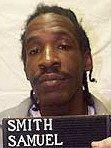
Roy Bruce Smith was executed by lethal injection in Virginia on July 17, 1997. He was 50 years old and had been a former computer technician.
The offence
Roy Bruce Smith murdered Manassas Police Sergeant John Conner. Smith shot Sgt. Conner with an assault rifle and handgun during a standoff at his home.
On July 24, 1988, after engaging in an ongoing dispute with his wife, Smith drank “prodigious amounts of beer” and then returned to his Manassas, Virginia home. Smith strapped on two loaded pistols (a .357 magnum and a .44 magnum) and took a loaded assault rifle out to his front stoop. Smith shot into the air with his rifle.
When neighbors complained, Smith said: “Wait 'til I start shooting people.” Smith’s neighbors recalled that he also said: “I hope somebody calls the police because I will shoot the first one that arrives and I hope they shoot me in return.”
Smith reentered his house. After a motion sensitive light was triggered in his backyard, he went outside again to investigate.
Investigation
Just before 9:00 p.m., a number of police officers arrived on the scene and parked where their vehicles would not arouse Smith’s suspicions. Officer Anderson, in one of the units, observed Smith “sitting on his front porch.” Anderson directed the dispatcher to: “[h]ave a unit cruise around ... to the rear of the townhouses.”
The dispatcher relayed the order to Sgt. John Conner, a uniformed officer, who indicated that “he was en route.” At this point, Smith “was still on [his] front steps,” but when “some person ... started across the street,” Smith “immediately got up” and went inside.
In a few moments, Sgt. Conner reported on his portable radio: “I've got him in sight he's coming out the back door.” Other officers proceeded toward the rear of the house. James K. Ryan heard Sgt. Conner say: “Drop the rifle, drop the rifle now.” Ryan then heard “gunfire going off,” consisting of “eight to 12 ... real sharp ... cracks,” followed by “a short pop and after that ... there was a succession of real sharp cracks again.”
Ryan heard a man “groaning or ... moaning” and, when he ran around the end of a fence separating Smith’s back yard from his neighbor’s, he saw Sgt. Conner lying on the ground in a “bare spot in the alleyway.” Ryan observed “a lot of blood around [Conner's] head and two wounds in his back.” Ryan left Conner in the care of another officer and went to help subdue Smith, who was struggling with several officers some twenty to twenty-five feet from Conner’s location.
Officer Steven Bamford “started up the alleyway” after he heard the shots fired. When he arrived at the rear of Smith’s house, he saw Smith “crouching down [or sitting] next to the deck” with “a long barreled weapon laid across his lap.” A light above the door to Smith’s house “shown back out onto the alleyway and that yard, [and] illuminated that area.”
As Bamford “took a step,” Smith saw him and tried to “put a magazine in the bottom of the weapon.” Bamford attempted to “get back out of the way,” but slipped and fell. When he regained his feet, Smith started to get up, and Bamford pointed his shotgun at him and yelled, “[d]rop it” several times.
Smith said: “I give up, I give up” and dropped his rifle, which was still equipped with a bayonet. Bamford told Smith to get down on his knees. Smith complied, but when Bamford ordered him to “put his hands on the ground and walk out, to lay flat,” Smith refused. A struggle ensued involving several officers, who were unable to “get the rifle from under [ Smith ].”
When one of the officers said, “he's got another gun,” Bamford kicked Smith in the face, but Smith continued to struggle. The struggle ended only after Smith had been placed in leg restraints and handcuffed behind his back.
During the struggle, Smith told the officers to “[g]o ahead and kill [him].” After he was subdued, Smith said that Conner was the “first priority, take care of him, take care of him. He's one of us, he's one of ours.”
Mortally wounded, Sgt. Conner died several hours later.
Trial
A Virginia jury convicted Smith of the willful, deliberate, and premeditated killing of Sgt. John Conner on July 24, 1988. The jury recommended a sentence of death, concluding that Smith’s crime was vile and that Smith presented a future danger.
Evidence about the shooting and wounds
The wound to the head caused “a peach size section of skull [to be] missing,” and proved fatal. Gunpowder debris was found in the head wound, indicating the wound was caused by a gunshot fired within three feet if inflicted by a handgun or six feet if inflicted by a rifle.
Smith’s trial included expert testimony. Dr. Frances Field testified that there was powder residue in Sgt. Conner’s head wound consistent with “a close gunshot wound,” meaning within three feet for a pistol, and within six feet for a rifle. Field stated that blood found on the barrel of Smith’s .357 magnum was consistent with “blow back” from a gun shot four to six inches away from Sgt. Conner.
Julien Mason, a firearms identification expert, explained that there were bullet abrasions on Smith’s fence consistent with bullets of a .357 magnum. Donald McClanrock, a forensic scientist, testified that Smith had more barium gas on his left hand than on his right hand, consistent with Smith having shot a revolver with his left hand.
Smith’s trial counsel attacked the prosecution’s theory through cross-examination. Dr. Field admitted on cross-examination that the blood on the muzzle of the .357 was not necessarily the result of a “blow back,” and that the bullet that caused Sgt. Conner’s back wound might have ricocheted. Firearms expert Julien Mason recognized that the bullet that caused the back wound likely ricocheted off of Sgt. Conner’s belt, and that the same bullet may have caused the head wound. Mason acknowledged that he found no gunpowder residue in his examination of tissue from Sgt. Conner’s head wound and could not determine when the spent .357 casings had been fired.
On cross-examination McClanrock conceded that the gases on Smith’s hand could have come from the rifle.
Trial testimony also indicated that the amount of time between Smith’s apprehension and the sound of shots was too short for Smith to traverse the distance of his driveway, shoot Sgt. Conner, and return to the side door of his house.
At trial, Leslie Freed, Smith’s emergency room nurse, testified that the trajectory of the entrance and exit of Smith’s foot wound was consistent with Smith facing towards Sgt. Conner (and therefore possibly firing first).
Lucien Haag testified before the habeas court that the bullet came from the other side, which was more consistent with Smith facing a different direction (and possibly not firing first). The court later described this evidence as having little consequence because the direction Smith was facing was not pivotal to the prosecution’s case.
Sentencing
The trial court entered a sentence of death on May 26, 1989.
Appeals
Direct appeal and certiorari
The Virginia Supreme Court affirmed the conviction and sentence in Smith v. Commonwealth, 239 Va. 243, 389 S.E.2d 871 (1990). The United States Supreme Court denied Smith’s petition for a writ of certiorari in Smith v. Virginia, 498 U.S. 881, 111 S.Ct. 221, 112 L.Ed.2d 177 (1990).
After Smith filed a petition for habeas corpus with the state court, that petition was dismissed on August 19, 1991. After an unsuccessful appeal to the Virginia Supreme Court, the United States Supreme Court again denied certiorari in Smith v. Virginia, 506 U.S. 848, 113 S.Ct. 142, 121 L.Ed.2d 95 (1992).
Federal habeas and appellate decision
On October 22, 1993, Smith petitioned for a writ of habeas in federal court pursuant to 28 U.S.C. § 2254. The district court denied the writ on June 10, 1996, and Smith appealed to the United States Court of Appeals for the Fourth Circuit.
The panel included NIEMEYER, LUTTIG, and MOTZ, Circuit Judges. The court affirmed by published opinion and held that the district court correctly denied habeas relief.
The court addressed whether the in forma pauperis filing fee provisions of the Prison Litigation Reform Act (PLRA) applied to habeas proceedings. The court held that the in forma pauperis filing fee provisions of the PLRA did not apply in habeas corpus actions.
The court also addressed Smith’s ineffective assistance of counsel claims. Smith claimed ineffective assistance because trial counsel did not seek appointment of various non-psychiatric experts for testimonial and trial preparation purposes. The prosecution had presented expert testimony to establish that Smith shot Sgt. Conner in the head with a .357 magnum pistol at close range, and trial counsel attacked the prosecution theory through cross-examination of the State’s experts.
On federal habeas, Smith presented new expert testimony aimed at establishing that he did not shoot Sgt. Conner in the head with the .357 magnum pistol. Gary Laughlin testified that metal fragments in Sgt. Conner’s head wound could not have come from a .357, but could have come from Smith’s rifle, and that there was no powder residue in the head wound. Stewart James opined that the blood on the .357 magnum could not have been “blow back” and that if it was blow back, there should have been blood on Smith’s clothes.
Forensic pathologist Dr. Vincent DiMaio stated that Sgt. Conner’s head wound was caused by the rifle and from at least two or more feet away. Lucien Haag concluded that there was evidence that Smith had not fired the .357 the night of July 24, 1988.
The court applied Strickland v. Washington, 466 U.S. 668 (1984), and agreed with the district court that Smith failed under Strickland’s performance prong because trial counsel reasonably chose to rely upon cross-examination of the State’s witnesses to establish Smith’s case.
Smith also argued that the district court erred in finding certain claims procedurally barred. Smith asserted that there was “cause” for the procedural default due to his state habeas attorney’s refusal to present his federal claims despite Smith’s orders. The court held that Smith had no constitutional right to counsel in state post-conviction proceedings under Coleman v. Thompson, so any attorney errors in state habeas could not constitute cause.
Smith additionally challenged the district court’s denial of his July 1995 motion to amend his habeas petition. The proposed amendment raised new claims of prosecutorial misconduct based upon taped interviews of Officer Goodman and Officer Ryan. Smith asserted the tapes were exculpatory and that the prosecution failed to disclose the tapes at trial.
The district court denied leave to amend based on unreasonable delay and inordinately prejudicial delay to the State. The court reviewed and affirmed this denial, concluding that Smith had notice and access to the tapes from at least October 1994, that the motion to amend came after discovery and on the eve of trial, and that granting the amendment would have required the State to address new claims and conduct additional preparation.
The court concluded: “For the foregoing reasons the judgment of the district court is hereby AFFIRMED.”
Outcome
Other details
Court’s discussion of PLRA and habeas filing fees
The court considered whether PLRA in forma pauperis filing fee provisions applied to habeas proceedings. It noted that multiple sister circuits had held the PLRA filing fee provisions inapplicable in habeas proceedings and joined that holding.
The court discussed that habeas proceedings were often determined to be outside the reach of “civil action” due to their hybrid nature, and it described factors including the PLRA’s focus on prisoner civil rights litigation, the chronology of AEDPA enactment two days before the PLRA, the habeas filing fee remaining $5 compared to a $120 filing fee for civil complaints, and the risk of barring habeas access due to “three prior actions” being dismissed as frivolous.
Ineffective assistance and related argument about due process
Smith attempted to recast his ineffective assistance claim as a due process claim and cited Hicks v. Oklahoma and Buchanan v. Angelone. The court declined to recognize the due process framing on the basis that failure of state habeas counsel to pursue federal constitutional claims did not violate a due process right and that those claims had been reviewed on direct appeal.
Discussion of alleged prosecutorial misconduct and taped interviews
Smith asserted that the taped interviews of Officers Goodman and Ryan proved:
- “Smith could not have recognized Sgt. Conner as a police officer because the visibility was poor the night of the shooting and”
- “Smith did not walk down the alley and shoot Sgt. Conner at close range.”
The court described that the officers on the tapes said visibility was poor, but that Smith had already presented similar evidence at trial and the State had countered it with testimony that visibility was adequate. The court also stated that the tapes made clear that neither Officer Goodman nor Officer Ryan was positioned to report what Smith could see or whether Smith had shot Sgt. Conner at close range. The court concluded that the tapes were minimally helpful and would almost surely fail the materiality test of Brady v. Maryland.
Spotted an error, or have more information about this case?