
John Mills
Murderer Ervil LeBaron
Murderer · USA · 1972
Ervil Morrell LeBaron (1925 to August 16, 1981) was the leader of a polygamous…
35 victims
Ervil LeBaron
Murderer · USA · 1972
Ervil Morrell LeBaron (1925 to August 16, 1981) was the leader of a polygamous…
35 victims
 Brian Kevin Rosenfeld
Murderer · USA · 1985
Brian Kevin Rosenfeld Brian Kevin Rosenfeld was sentenced to three concurrent l…
23 victims
Brian Kevin Rosenfeld
Murderer · USA · 1985
Brian Kevin Rosenfeld Brian Kevin Rosenfeld was sentenced to three concurrent l…
23 victims
 Marvin Gray
Murderer · USA · 1975
Marvin Gray was convicted killer who claimed responsibility for 23 slayings and…
23 victims
Marvin Gray
Murderer · USA · 1975
Marvin Gray was convicted killer who claimed responsibility for 23 slayings and…
23 victims
 Yahweh ben Yahweh
Murderer · USA · 1980
Yahweh ben Yahweh was born and legally named Hulon Mitchell Jr. (October 27, 19…
23 victims
Yahweh ben Yahweh
Murderer · USA · 1980
Yahweh ben Yahweh was born and legally named Hulon Mitchell Jr. (October 27, 19…
23 victims
 Russell Ellwood
Murderer · USA · 1991
Russell Ellwood was a former taxi driver. Authorities suspected him of killing…
20 victims
Russell Ellwood
Murderer · USA · 1991
Russell Ellwood was a former taxi driver. Authorities suspected him of killing…
20 victims
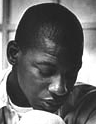 Glen Charles McGinnis
Homicide · USA · 1990
Glen Charles McGinnis was executed by lethal injection in Texas on January 25,…
1 victim
Glen Charles McGinnis
Homicide · USA · 1990
Glen Charles McGinnis was executed by lethal injection in Texas on January 25,…
1 victim
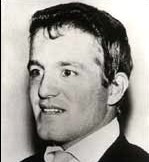 James Hanratty
Murderer · United Kingdom · 1961
James Hanratty was convicted of murder and rape and was executed by hanging at…
1 victim
James Hanratty
Murderer · United Kingdom · 1961
James Hanratty was convicted of murder and rape and was executed by hanging at…
1 victim
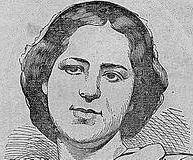 Lizzie Lloyd King
Murderer · USA · 1873
Elizabeth “Lizzie” Lloyd King (born 1847) was accused of murdering Charles Good…
1 victim
Lizzie Lloyd King
Murderer · USA · 1873
Elizabeth “Lizzie” Lloyd King (born 1847) was accused of murdering Charles Good…
1 victim
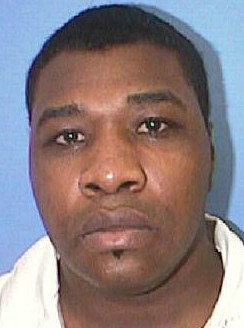 Elkie Lee Taylor
Murderer · USA · 1993
Elkie Lee Taylor (also known as Ronnie Lee Watkins). Elkie Lee Taylor was a par…
2 victims
Elkie Lee Taylor
Murderer · USA · 1993
Elkie Lee Taylor (also known as Ronnie Lee Watkins). Elkie Lee Taylor was a par…
2 victims
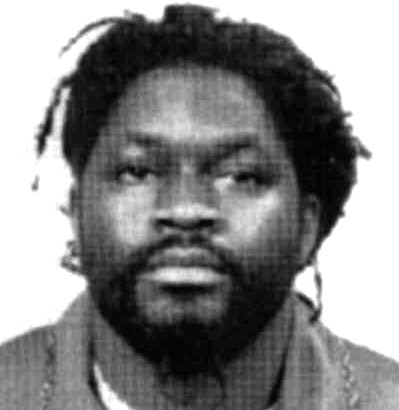 Darnell Williams
Murderer · USA · 1986
Darnell Williams received a death sentence on March 23, 1987. On July 2, 2004,…
2 victims
Darnell Williams
Murderer · USA · 1986
Darnell Williams received a death sentence on March 23, 1987. On July 2, 2004,…
2 victims
- Gender
- male
- Country
- USA
- Location
- Wakulla County, Florida, USA
- Date of birth
- 1955
- Age at first offence
- 27
- Characteristics
- arson, kidnapping, burglary, robbery
- Victim profile
- Les Lawhon (male)
- Method of murder
- Shooting (12-gauge shotgun)
- Date(s) of murder
- March 5, 1982
- Years active
- 1982
- Date of arrest
- May 9, 1982
- Status
-
Executed
Executed by electrocution in Florida on December 6, 1996
Case overview
John Mills Jr. was a Florida prison inmate. In 1982, a jury convicted him of first-degree murder, first-degree arson, kidnapping, burglary of a dwelling while armed, and grand theft. The trial court, following the jury's recommendation, sentenced Mills to death on the murder conviction; the court sentenced him to terms of imprisonment for the other crimes. The Florida Supreme Court affirmed Mills’ convictions and sentences on direct appeal. After his convictions became final and he failed to obtain post-conviction relief in state courts, Mills brought a petition for a writ of habeas corpus in the United States District Court for the Northern District of Florida seeking vacation of his convictions and his death sentence. The district court denied relief, and the United States Court of Appeals for the Eleventh Circuit affirmed the denial of the petition.
Mills was executed by electrocution in Florida on December 6, 1996.
Timeline
- March 5, 1982 — Mills picked up Michael Fredrick at Fredrick’s residence in Wakulla County, Florida, used a 12-gauge shotgun that Fredrick had given earlier in the week, and proceeded with Fredrick to burglarize a house. Les Lawhon was shot at an abandoned airstrip and the Lawhons’ trailer was set on fire.
- March 9, 1982 — Four days after Les Lawhon’s murder, Fredrick sold Shirley Lawhon’s high school ring to a Tallahassee pawn shop.
- April 28, 1982 — Mills moved the trial court under Rule 3.850 of the Florida Rules of Criminal Procedure to vacate his convictions and sentences.
- August 15, 1995 — Federal appeal proceedings described in the reported opinion.
- December 6, 1996 — Mills was executed by electrocution in Florida.
Background
On the morning of March 5, 1982, Mills picked up Michael Fredrick at Fredrick's residence in Wakulla County, Florida. Mills was driving an orange 1982 Dodge pickup truck that belonged to his mother. Mills and Fredrick went to Mills’ mother’s house for a short while; after they stepped outside the house to leave, Mills went back inside and retrieved a single-barrel, single-shot, 12-gauge shotgun that Fredrick had given Mills earlier in the week and placed it behind the seat of the truck. Following a brief stop, the two set out to burglarize a house.
Mills and Fredrick then drove around Panacea, Florida in search of a target. After stopping at a trailer that appeared to be unoccupied but discovering that an elderly woman was at home, Mills and Fredrick left Panacea and drove into the Lake Ellen area. At some point, Mills became disoriented in some heavy rain and turned the truck around in front of a house; Fredrick later identified the house for the authorities.
Sometime after turning around, Mills and Fredrick arrived at the trailer home of Les and Shirley Lawhon; because Shirley had gone to work in Tallahassee earlier that day in the Lawhons’ only car, the trailer appeared unoccupied. Mills parked the truck, went to the door, and knocked. Les Lawhon answered the door and let Mills in; shortly thereafter Mills reappeared at the door and motioned Fredrick inside.
When Fredrick entered the trailer, Mills was using the Lawhons’ kitchen phone while Lawhon was rummaging through what appeared to Fredrick to be a phone book or a newspaper. Soon after Fredrick entered, Mills dropped the phone, grabbed a kitchen knife, and held it to Lawhon’s throat.
Lawhon said: “Please don't hurt me. Y'all take what you all want.”
Mills replied: “Shut up, cracker.”
Mills instructed Fredrick to check out the rest of the trailer. Fredrick looked into the trailer’s bedrooms; no one was there. Mills then told Fredrick to check outside. Lawhon, apparently realizing that he would be forced to leave with his assailants, asked if he could put on his shoes. Mills told him he would not need his shoes where he was going.
Fredrick left the trailer to check outside; Mills and Lawhon soon exited the trailer as well.
The offence
Mills had taken a double-barrel, 12-gauge shotgun from the trailer and walked behind Lawhon with the shotgun to Lawhon’s head. Mills threw the truck keys to Fredrick and asked him to drive. Lawhon sat in the passenger’s seat; Mills sat in the small space in the cab directly behind him, kept the shotgun trained on him, and gave Fredrick directions. Lawhon was trembling.
Near the end of the drive, Lawhon asked what Fredrick and Mills were going to do to him. Mills told him, “I'm going to do to you what your forefathers did to my forefathers.”
After driving approximately seven miles, Mills, Fredrick, and Lawhon arrived at an abandoned airstrip. Mills forced Lawhon out of the truck, ordered him to his knees, and tied his hands behind his back with a belt. Then, while Lawhon was on his knees, Mills struck him on the back of his head with a tire iron. Lawhon fell forward, bleeding from the back of his head.
Mills watched Lawhon for a few moments and then turned to leave, saying, “Let's go.”
When Mills spoke, Lawhon sprang up and ran. Mills, shotgun in hand, chased him. Mills caught up with Lawhon in a nearby canal and grabbed his arm; Lawhon butted Mills in the stomach with his head and fled up the far bank of the canal, disappearing into thick underbrush. Mills, still pursuing Lawhon, vanished into the underbrush as well.
Shortly after Fredrick lost sight of both men, he heard two gunshots. Mills returned to the truck; Lawhon did not. Mills’ shirt was bloodied in the stomach area. Mills warned Fredrick not to say “anything about this” and suggested that they “go back to the house and clean it out and get everything we can sell.”
Fredrick and Mills got back into the truck; Mills drove. At some point, Mills took off the bloody shirt and threw it on the passenger-side floorboard. Shortly thereafter, Mills stopped the truck and discarded the shirt in the bushes beside the road.
When Mills and Fredrick arrived at the Lawhons’ trailer, they removed virtually everything of value, including Shirley Lawhon’s jewelry and several guns. Mills exited the trailer last; he wiped the doorknob of the trailer as he left. Mills had set the trailer on fire.
Mills and Fredrick stopped at a nearby lake to better secure a cover concealing the stolen property. At that time, Fredrick took Shirley Lawhon’s high school class ring from her jewelry box.
After dropping Fredrick off near his house, Mills brought the stolen property to his mother’s house, where he lived with his girlfriend, Fawndretta Galimore. He and Galimore put most of the property in a shed behind the house. Unbeknownst to Galimore, Mills put some of the property, including the firearms, in the house.
Meanwhile, the Lawhons’ neighbors discovered that the Lawhon trailer was on fire and called the fire department. By the time the fire was extinguished, most of the trailer had burned.
Investigation
The authorities soon realized that Les Lawhon was missing and began an intensive search for him. The case remained unsolved, and Lawhon’s body was undiscovered, for two months.
On May 4, Gary Lassiter, an investigator in the Tallahassee Police Department, discovered that Fredrick, for whom an arrest warrant had issued on a burglary charge in an unrelated case, had pawned Shirley Lawhon’s ring. Lassiter promptly informed the Wakulla County Sheriff’s Office, and on May 6, Fredrick was arrested in Leon County.
After Fredrick had been transported to Wakulla County, Lassiter and Sergeant Roxie Vause of the Wakulla County Sheriff’s Office began questioning Fredrick about the burglary for which he had been arrested. They asked him whether he had obtained the ring in that burglary; they knew, of course, that it had been taken in the Lawhon burglary but said nothing about that case. Fredrick lied about where he had gotten the ring, and Lassiter and Vause did not press the issue. They did so the next day, though, when they began questioning Fredrick about Les Lawhon’s disappearance, but Fredrick offered another lie about the ring’s origin.
On May 8, prior to confessing his involvement in Les Lawhon’s murder, Fredrick led Ray Fredericks, an agent of the FDLE, and Al Gandy, an investigator from the state prosecutor’s office, to the abandoned airstrip where Mills shot Lawhon. Fredrick told Ray Fredericks and Gandy that Mills had brought him to the airstrip and asked him to guard someone, but he had refused.
An extensive search of the area soon led to the discovery of Lawhon’s remains.
Despite the discovery of the victim’s body and his obvious involvement in the homicide, Fredrick continued to vacillate, offering varying accounts of what he had done—or not done—and how he had obtained Shirley Lawhon’s ring. Finally, on the evening of May 8, Fredrick confessed to Ray Fredericks and Gandy his and Mills’ involvement in the Lawhon murder.
Based on Fredrick’s implication of Mills, the Wakulla County Sheriff obtained Mills’ mother’s consent to search her house. The police found a shotgun and other property matching the description of the Lawhons’ property, executed a search warrant that day, and returned to the house and seized, among other things, a Stevens Model 311, double-barrel, 12-gauge shotgun. At trial, Fredrick identified that shotgun as the murder weapon, and Les Lawhon’s father identified it as belonging to the victim.
The police also arrested Galimore when she arrived at the house during the search; she turned all of the stolen property in her possession over to the police.
Arrest
On May 6, Fredrick was arrested in Leon County.
In connection with Mills’ arrest, a Wakulla County deputy sheriff recognized Mills at the Wakulla County courthouse and arrested him on an outstanding parole violation warrant. The deputy allowed Mills to say goodbye to Galimore before he was taken away. As Mills embraced Galimore, he quietly told her to get “rid of the property and stuff out of the shed and in the bedroom,” instructing her to look for the firearms under the bed.
About five minutes later, while in the booking room of the county jail, Mills again whispered to Galimore to “[m]ake sure you get everything out of the shed and in the back room and under the bed.”
Galimore did as Mills instructed, moving the property to her mother’s house in Tallahassee.
Trial
Charges and indictment
On May 19, 1982, a Wakulla County grand jury indicted Fredrick and Mills with one count each of first-degree murder, first-degree arson, kidnapping, burglary of a dwelling while armed, grand theft, and possession of a firearm by a convicted felon. The firearm possession charges were severed.
Plea by co-defendant
On October 4, Fredrick entered into a plea agreement with the State. Fredrick pled guilty to burglary, grand theft, and kidnapping; he pled no contest to second-degree murder and first-degree arson. The plea agreement required that Fredrick testify truthfully at Mills’ trial.
Jury conviction
Mills’ trial commenced on November 29, 1982. The prosecution presented testimony from Fredrick and Galimore. The prosecution also presented the testimony of several expert witnesses. The experts opined that Lawhon was probably killed by a gunshot wound to the face. They also opined that small holes in palmetto leaves near Lawhon’s remains were consistent with number six shot, used in 12-gauge shotgun shells; that shot found on the ground near Lawhon’s remains were also consistent with number six shot; and that two shotgun waddings found near Lawhon’s remains were from a 12-gauge shotgun shell. They also said that no shoes had been discovered with or near the remains and that a shirt had been found where Fredrick said that Mills had disposed of his shirt as they drove back to the Lawhons’ trailer after the killing. Tests indicated a blood stain on the shirt’s lower front.
Gandy recounted Mills’ false exculpatory statements. A witness testified that she had seen an orange Dodge pickup truck with two or three black individuals inside turn around in her driveway on the afternoon of Lawhon’s murder. Fredrick had led the police to the witness’ house; he identified a photograph of the residence before the jury.
The defense strategy was to paint Fredrick as an untruthful witness by highlighting his inconsistent stories to the police and by raising the possibility that Fredrick had kidnapped and murdered Lawhon alone or with the help of unknown accomplices.
Mills testified in his own defense. His testimony emphasized that Fredrick had owed him money. Mills and Fredrick had met in jail in February 1982, when they shared a cell for fifteen days, and Galimore had bailed Fredrick out of jail at Mills’ request by posting a $175 bond. Mills testified that Fredrick had agreed to pay him $200 on the day he was released from jail if Mills would post the $175 bail; Mills testified that after Fredrick was released, Fredrick did not repay him.
Mills testified that he lied to Gandy because he had argued with him before in a previous case.
At the conclusion of the guilt phase, the jury convicted Mills on all counts of the indictment.
Sentencing
The trial then entered its sentencing phase. In the State’s case, the prosecutor called one witness: a probation and parole officer from the Florida Department of Corrections, who testified that Mills was on parole at the time he killed Les Lawhon. Aside from this testimony, the State relied exclusively on the testimony and evidence presented during the guilt phase to support its case for a death penalty recommendation.
Mills’ case consisted of testimony by a psychiatrist, Dr. Na’im Akbar, who described Mills’ mental and psychological outlook and opined that Mills’ potential for rehabilitation was excellent.
The court instructed the jury that it should consider five statutory aggravating circumstances, including:
- whether the crime was committed while the defendant was under a sentence of imprisonment;
- whether the crime was committed while the defendant was engaged in the commission, attempted commission, or flight after the commission or attempted commission of kidnapping;
- whether the crime was committed for pecuniary gain;
- whether the crime was committed in a “cold, calculated or premeditated manner without any pretense of moral or legal justification” (the “cold, calculated circumstance”); and
- whether the crime was “especially wicked, evil, atrocious, or cruel” (the “atrociousness circumstance”).
The court instructed the jury regarding both statutory and nonstatutory mitigating circumstances.
The jury recommended by a vote of ten to two that Mills receive the death penalty. The court followed the jury’s recommendation and sentenced Mills accordingly.
In the written judgment, the trial court found the five aggravating circumstances listed above but no statutory or nonstatutory mitigating circumstances.
The trial court also sentenced Mills to 99 years imprisonment for burglary, 99 years imprisonment for kidnapping, 30 years imprisonment for arson, and 5 years imprisonment for grand theft.
Appeals
Direct appeal and post-conviction review in Florida
The Supreme Court of Florida affirmed Mills’ convictions and sentences on direct appeal. Mills v. State, 462 So.2d 1075 (Fla.) (per curiam) (“Mills I”), cert. denied, 473 U.S. 911, 105 S.Ct. 3538, 87 L.Ed.2d 661 (1985).
The Governor of Florida signed a death warrant setting Mills’ execution for May 7, 1987.
Nine days before Mills’ scheduled execution, on April 28, Mills moved the trial court under Rule 3.850 to vacate his convictions and sentences. In his Rule 3.850 petition, Mills raised seventeen claims including ineffective assistance of counsel during the guilt phase, ineffective assistance of counsel during the sentencing phase, failure of the prosecution to reveal exculpatory evidence in violation of Brady v. Maryland, and improper comments by the prosecution in closing argument at both guilt and sentencing phases. The trial court, after a two-day evidentiary hearing on the Brady claim and the ineffective assistance of counsel during sentencing phase, denied relief. The trial court did not hold an evidentiary hearing on the ineffective assistance of counsel during the guilt phase claim, finding it “not ... cognizable under Rule 3.850.” State v. Mills, No. 65-82-CF-50A, slip op. at 6 (Fla. Cir. Ct. May 4, 1987). The Supreme Court of Florida affirmed. Mills v. State, 507 So.2d 602 (Fla. 1987) (per curiam) (“Mills II”).
Federal habeas proceedings
While Mills’ Rule 3.850 appeal was pending, Mills filed a first petition for writ of habeas corpus and an application for stay of execution in the Supreme Court of Florida; the court denied both. Id.
On May 6, 1987, Mills filed the instant petition for a writ of habeas corpus in the United States District Court for the Northern District of Florida, presenting twenty claims. The district court granted a stay of execution, dismissed nineteen of Mills’ claims as legally insufficient, and held a two-day evidentiary hearing on Mills’ claim of ineffective assistance of counsel during the guilt phase. After considering the evidence, the district court rejected that claim as meritless and denied relief. The court issued a certificate of probable cause, and Mills appealed.
Eleventh Circuit ruling
The United States Court of Appeals for the Eleventh Circuit affirmed the district court’s denial of the habeas petition. The court held that the district court properly declined to issue the writ and affirmed the judgment.
The appellate decision addressed Mills’ claims relating to:
- pretrial publicity and events during trial that Mills argued rendered his trial fundamentally unfair;
- prosecutor’s pretrial solicitation of comments about potential jurors;
- alleged withholding of exculpatory evidence under Brady;
- alleged ineffective assistance of counsel; and
- whether procedural bars applied to claims alleging improper comments by the prosecution in closing argument.
Outcome
The Eleventh Circuit affirmed the district court’s denial of Mills’ petition for a writ of habeas corpus. The Florida Supreme Court had earlier affirmed Mills’ convictions and sentences on direct appeal and on Mills’ Rule 3.850 proceedings.
Other details
Jury and publicity
Mills moved for a change of venue on four separate occasions, citing adverse pretrial publicity. His first motion was filed seven weeks before trial began; after an evidentiary hearing concerning the extent of publicity, it was denied without prejudice to renewal. Mills renewed immediately before voir dire and presented a recent newspaper article and repeated his earlier argument that it was impossible to empanel a fair and impartial jury. His third request occurred after he exercised his last peremptory challenge and the court refused his request for additional challenges. The final request occurred after the prosecution accepted the twelve venirepersons seated in the jury box. The trial court found that a fair and impartial jury could and would be empaneled.
On direct appeal, Mills’ claim of error was rejected by the Supreme Court of Florida in Mills I. The district court also rejected the claim.
Prosecutor’s solicitation of comments
The prosecutor gave copies of the venire list to the Wakulla County Sheriff, a deputy sheriff, the bailiff assigned to the case, the clerk of the court, and the victim’s father, and asked for comment. Those individuals returned the lists with notations opposite the names of the people they knew. Mills asserted this denied him a fair trial. The Rule 3.850 court found no evidence of misconduct and found that no venireman was contacted and no venireman was aware that the State spoke to those individuals.
Brady-related allegations and related factual disputes
Mills alleged the prosecution withheld a statement by Fredrick to law enforcement in 1980 that he had “ripped off a .357 to blow somebody away,” contained in an incident report narrative form completed by Sergeant Roxie Vause on March 28, 1980. The appellate court agreed with the district court that the information was not material.
Mills also argued that the prosecution should have disclosed that, two days before he was questioned about the Lawhon murder, Fredrick “talked his way out of charges for possession of stolen property by placing the blame on someone else.” Mills claimed the information was contained in the deposition of Gary Lassiter. The appellate court concluded that Mills’ defense attorney knew about the information before trial.
Mills further alleged coercion and fabrication regarding Fredrick’s confession, attaching affidavits. At the Rule 3.850 evidentiary hearing, Fredrick testified that the affidavit statements were not true. The Rule 3.850 court found a total lack of competent evidence that Fredrick was threatened, coerced, or secretly induced, and it found Fredrick’s recantation at the hearing credible and corroborated by Gandy’s testimony. The Supreme Court of Florida summarily affirmed.
Mills alleged the prosecution failed to disclose Fredrick’s subsequent post-May 8 statements contradicting his May 8 statement and argued that the prosecution argued falsely that Fredrick decided to tell the truth on May 8. The appellate court stated the Rule 3.850 court found no inconsistent statements after May 8 and that the district court found no credible evidence of deviation, agreeing with those findings.
Mills also alleged that the prosecution prepared typed “scripts” for Fredrick and Galimore and rehearsed them. The Rule 3.850 court found the lists of questions did not constitute scripts and that the prosecution did nothing improper by using the lists without disclosing them. The appellate court agreed that using the lists was not improper and that the lists were not Brady material.
Mills argued the prosecution concealed a secret deal made with Galimore under Giglio. The lead prosecutor testified that Anthony L. Bajoczky, Galimore’s attorney, said there was no case and that she would testify; the prosecutor said: “You're probably right. It is a very weak case and that we will probably nolle prosse [sic] it.” The appellate court concluded there was no undisclosed agreement within Giglio.
Mills alleged the prosecution should have notified defense that Fredrick had been placed under psychiatric care and medication for depression after he attempted suicide while incarcerated before Mills’ trial. The appellate discussion included that Fredrick attempted suicide on May 26; emergency service assessment resulted in doctor-prescribed Sinequan (Adapin) for sleeplessness, anxiety, and suicidal tendencies; ACHS staff met with Fredrick on June 7, June 14, and June 21; on July 12 Fredrick told ACHS through jail personnel he stopped his prescription and did not wish to see counselors; ACHS canceled the prescription and discontinued contact. The appellate court agreed the information was not Brady material because it was available to defense counsel and there was no reasonable probability of a different outcome given counsel’s admitted strategy.
Mills also alleged false testimony and improper argument. The Rule 3.850 court found no evidence that the prosecution placed false testimony before the jury, and the appellate court agreed.
Ineffective assistance of counsel allegations
Mills alleged ineffective assistance by counsel Randolph for:
- failing to investigate Fredrick’s background and psychiatric treatment;
- failing to investigate and present mitigating evidence during sentencing.
The appellate court concluded Randolph was reasonably effective regarding curtailing further investigation into Fredrick’s psychiatric treatment and that counsel’s strategy was not deficient. The court also addressed Mills’ request for an evidentiary hearing regarding mitigating circumstances and held the district court was not required to hold such a hearing, then held the merits of counsel’s performance were not constitutionally deficient.
The appellate decision discussed Dr. Na’im Akbar’s sentencing testimony, describing that Mills did not suffer from mental or emotional disorders, was at a “borderline intelligence level” with difficulty making “good social judgments,” and had converted to Islam while in prison from 1978 to late 1981, resulting in a “jailhouse version of Islam and not the full understanding of it,” with hostilities toward whites due to deficient understanding. The decision quoted Dr. Akbar’s testimony regarding difficulty understanding people’s actions and the “rationale for rules and regulations in society,” and his testimony that Mills was “rehabilitatable.”
The appellate court noted that counsel chose not to present additional mitigation evidence after a thorough investigation and held it was reasonable, also concluding no reasonable probability existed that the jury would have reached a different outcome.
Sentencing-phase closing argument discussion
In discussing procedural-barred claims, the appellate decision quoted remarks from the prosecution and the defense response.
The prosecutor made the following remarks: “The real scary thing about this--and I've alluded to this before--is Les Lawhon is totally innocent in this case.... Les Lawhon's only crime in this whole matter is being a compassionate human being who when asked for help, allowed people into his home to use his phone and to help them find out the information they needed. That is the only thing that he did wrong.... For that, he received a death sentence from John Mills, Jr., a death sentence. You know, I sure wi[sh] that when they took that drive out there and they got on that air strip, that Les could have said: Wait a minute. Wait a minute. Let's get my family doctor. He'll tell you that I'm sick and he'll tell you that I can be better. Something better can be done for me. Let's get my doctor and let him tell you about this. I wish he could have said: Let's go get my lawyer. Lord knows, my lawyer can give a good reason for me to be alive. My lawyer can tell you I can be productive in society; that I can help; that I'm not beyond redemption. My lawyer will do a good job. Please, John Mills. Let's go get my lawyer. Or he could have said: Let my family be here. Let them be here, and let them argue for me, please. Let's get a jury [of] 12 people from Wakulla County and see if I deserve to die like this. See if I deserve to be treated like a mad dog. Please. Let's get that jury. I don't want to die. But John Mills, Jr., made another one of those social judgments. He became the jury, the judge, the lawyers, the bailiffs, and the executioner.”
Randolph’s closing response included: “Now, I guess you ask: Well, what did Mr. Lawhon appreciate? That's what the prosecutor was saying. He can't make that choice anymore. Well, that's true. That's true. There is nothing I can say here or that Mr. Kirwin can do to you to bring Les Lawhon back. It just can't be done, but you have a responsibility, not only to this community and yourselves, but to everybody involved in the criminal justice system.”
The trial judge instructed the jury regarding its duty: “[I]t is your duty to follow the law which will now be given you by the Court and render to the Court an advisory sentence based upon your determination as to whether sufficient aggravating circumstances exist. To justify the imposition of the death penalty and whether sufficient mitigating circumstances exist to outweigh aggravating circumstances existing, your verdict should be based upon the evidence which you have heard while trying the guilt or innocence of the Defendant and the evidence which has been presented to you in these proceedings. .... The sentence that you recommend to the Court must be based on the facts as you find them from the evidence and the law. You should weigh the aggravating circumstances against the mitigating circumstances and your advisory sentence must be based on these considerations. .... Before you ballot, you should carefully weigh, sift and consider the evidence and all of it. Realize that a human life is at stake and bring to [bear] your best judgment in reaching your advisory sentence.”
Other quoted statements
Mills told Lawhon, “I'm going to do to you what your forefathers did to my forefathers.”
Mills whispered to Galimore to “[m]ake sure you get everything out of the shed and in the back room and under the bed.”
In a letter to Galimore, Mills told her: “for all they know, you could have a receipt for the stuff,” and Mills wrote that “[t]hey might just tell you, you could [go to prison for] 10 to 30 years to see your reaction” and that she should read the letter “with sense.”
Spotted an error, or have more information about this case?