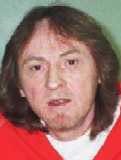
Robert Allan Smith
Murderer Brian Kevin Rosenfeld
Murderer · USA · 1985
Brian Kevin Rosenfeld Brian Kevin Rosenfeld was sentenced to three concurrent l…
23 victims
Brian Kevin Rosenfeld
Murderer · USA · 1985
Brian Kevin Rosenfeld Brian Kevin Rosenfeld was sentenced to three concurrent l…
23 victims
 Russell Ellwood
Murderer · USA · 1991
Russell Ellwood was a former taxi driver. Authorities suspected him of killing…
20 victims
Russell Ellwood
Murderer · USA · 1991
Russell Ellwood was a former taxi driver. Authorities suspected him of killing…
20 victims
 Robert Martines Perez
Murderer · USA · 1994
Name: Robert Martines Perez · Other name used in proceedings: Robert Martinez P…
15 victims
Robert Martines Perez
Murderer · USA · 1994
Name: Robert Martines Perez · Other name used in proceedings: Robert Martinez P…
15 victims
 Billy Frank Vickers
Murderer · USA · 1993
Billy Frank Vickers Vickers was executed by lethal injection in Texas on Januar…
14 victims
Billy Frank Vickers
Murderer · USA · 1993
Billy Frank Vickers Vickers was executed by lethal injection in Texas on Januar…
14 victims
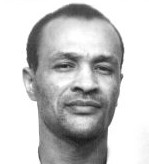 Herman Clark
Murderer · USA · 1981
Herman Robert Charles Clark Jr. was convicted in connection with a capital murd…
1 victim
Herman Clark
Murderer · USA · 1981
Herman Robert Charles Clark Jr. was convicted in connection with a capital murd…
1 victim
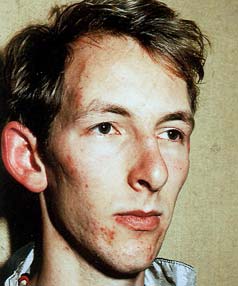 David Bain
Mass murderer ? · New Zealand · 1994
David Cullen Bain (born 27 March 1972) was a New Zealander who featured in one…
5 victims
David Bain
Mass murderer ? · New Zealand · 1994
David Cullen Bain (born 27 March 1972) was a New Zealander who featured in one…
5 victims
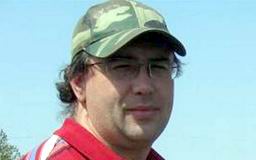 Matej Curko
Murderer · Slovakia · 2010
Matej Curko was an alleged cannibal. · May 10, 2011 — Matej Curko died in a fir…
2 victims
Matej Curko
Murderer · Slovakia · 2010
Matej Curko was an alleged cannibal. · May 10, 2011 — Matej Curko died in a fir…
2 victims
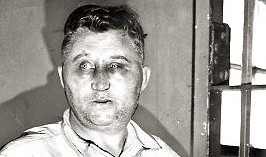 Herman Drenth
Murderer · USA · 1931
Herman Drenth was also known by the aliases Harry F. Powers and Cornelius O. Pi…
5 victims
Herman Drenth
Murderer · USA · 1931
Herman Drenth was also known by the aliases Harry F. Powers and Cornelius O. Pi…
5 victims
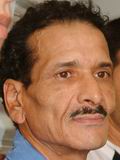 Abdelaâli Hadi
Serial killer · M orocco · 2001
Abdelaâli Hadi was a homeless man living near the place where the bodies of the…
9 victims
Abdelaâli Hadi
Serial killer · M orocco · 2001
Abdelaâli Hadi was a homeless man living near the place where the bodies of the…
9 victims
- Gender
- male
- Country
- USA
- Location
- Sullivan County, Indiana, USA
- Date of birth
- March 3, 1950
- Age at first offence
- 45
- Characteristics
- revenge
- Victim profile
- Michael Wedmore, 33 ( fellow DOC inmate )
- Method of murder
- St abbing with homemade knife 37 times
- Date(s) of murder
- June 30, 1995
- Years active
- 1995
- Date of arrest
- Same day
- Status
-
Executed
Executed by lethal injection in Indiana on January 29, 1998
Case record: Robert Allan Smith (DOC# 30636)
Background
Robert Allan Smith was a white male incarcerated in the Indiana Department of Correction. At the time of the 1995 killing, he was serving a 38-year sentence for battery with a deadly weapon.
Smith previously received a prison sentence for robbery in 1984. While serving that sentence, he attacked a corrections officer and stabbed another inmate, which added so much time to his sentence that he would not be eligible for release until he was almost 90.
Smith was also convicted as a habitual criminal. He spent time in solitary confinement at the Indiana DOC, including lights on continuously, no television, and no human contact even with guards.
In 1995, Smith, along with inmate Ronald Lunsford, killed inmate Michael Wedmore while both were inmates at the Indiana Department of Correction.
The offence
On June 30, 1995, Robert Smith, Ronald Lunsford, and Michael Wedmore were inmates at the Wabash Valley Correctional Institution in Carlisle, Indiana.
Early that morning, a correctional officer heard noise coming from Smith’s cell. When the correctional officer opened the cell door, Smith and Lunsford repeatedly stabbed Wedmore, with Smith stabbing Wedmore with a honed putty knife and Lunsford stabbing Wedmore with one blade of a dismantled pair of scissors.
Wedmore died from the thirty-seven stab wounds he received, including two of which pierced his heart. An autopsy revealed that the two heart wounds did not come from the same instrument.
Smith and Lunsford surrendered immediately after the attack, turning over the murder weapons.
Smith admitted intentionally stabbing and killing Wedmore while incarcerated, though he would not say why.
Smith stated that he lured Michael Wedmore to his cell with the intent of killing him.
Investigation
The State charged Smith and Lunsford with murder and conspiracy to commit murder.
At the initial hearing on July 12, 1995, the court appointed Thomas H. Hicks as Smith’s attorney and set trial for September 11, 1995.
On July 23, 1995, the State requested the death penalty. Accordingly, the court permitted Hicks to withdraw because he was not qualified under Indiana Criminal Rule 24 to try a capital case, and appointed William G. Smock and Joseph K. Etling.
From July to November, Smith’s lawyers filed three requests for speedy trial and eventually withdrew all three.
With a trial date of January 22 looming, on December 27, 1995, the court issued an order requiring Smith to produce handwriting samples to determine whether a letter sent to the Sullivan Daily Times editor was in fact written by Smith.
On January 4, 1996, the court granted the State a continuance and set trial for March 11, over Smith’s objection, finding that an emergency existed due to the State Police Laboratory’s inability to provide a crucial piece of evidence by the January 22 trial date.
At a hearing on January 30, the court addressed contempt after Smith refused to cooperate when the prosecutor appeared on January 12 to obtain the handwriting sample. Smith agreed to comply with the court’s order.
The court also addressed a letter Smith sent on January 15 requesting dismissal of his counsel and seeking to proceed pro se; Smith orally withdrew that request at the hearing.
Smith later sought to dismiss his state-appointed attorneys to arrange his own plea agreement with prosecutors.
Arrest / custody details
Smith was in custody at the Indiana DOC while the offence occurred, including at Wabash Valley Correctional Institution.
Trial
Pretrial proceedings and letters
On July 23, 1995, Smith mailed a letter to Sullivan Daily Times:
Editor - I'm one of the men charged with the murder at [the Wabash Valley Correctional Facility] i understand the county is having aruff time figuring out where there gonna get the money to take this case to *1266 trial. they dont have to on my account if they file the death penalty on me i will pled guilty & wont appeal, if by chance they take the case to trial & find me guilty & give me 50 or 60 more years, if they do that it would be awaste of taxpayers money, my earliest out date in Indiana is 2028, then i have a 15 year parole hold to do in Michigan. i'm 45 years old. as it stands right now ill be in my 90s when i get out. 50-60 more years would be--meaning-less, aslap on the hand, a Joke. Let me tell you just where im coming from if they dont give me the death penalty for the murder of the Baby Killer the next one to die will be a tax payer--The only tax payers in here "work here". I don't say things i dont mean. Robert A Smith # 30636
On February 14, 1996, the trial court received a second letter from Smith stating:
Judge Pierson, I would like to change my plea. I no longer feel I can get a fair trial. Too many months have gone by since I filed for a fast and speedy trial. I would appreciate it if you would set a court date in the very near future.
Plea negotiations and guilty plea
At a February 26 pretrial conference, Smith stated, against the advice of his counsel, that he was willing to plead guilty if the State would draw up a plea agreement under which Smith would receive the death penalty.
A colloquy occurred during the pretrial proceedings:
THE COURT[:] Mr. Smith, this is highly unusual. You've been charged, sir, with Murder ...
DEFENDANT[:] I understand that.
THE COURT[:] ... and Conspiracy to Commit Murder, sir, and the State at a later date has filed what is known as the death penalty. You're request is very unusual, sir.
DEFENDANT[:] Well, if they don't give me my request the next time I butcher somebody it won't be a, I won't be as selected in my butchering.
THE COURT[:] Mr. Smith, I need to advise you that you understand ...
DEFENDANT[:] Well, he filed a death penalty on me. He feels the case merits it. I feel it merits the death penalty, you know. I'm asking the Court to grant that, you know.
THE COURT[:] But you understand, Mr. Smith, that you have the right to a speedy and public trial by a Jury?
DEFENDANT[:] I haven't had a fast and speedy ... I've been seven, eight, nine months waiting on a fast and speedy trial, you know.
THE COURT[:] Do you also understand that you also have the right to require the State of Indiana to bring forward all witnesses against you and to see, hear, question and cross-examine those persons?
DEFENDANT[:] I understand the case completely. I've read everything that Mr. Smock has got, every piece of paper that he's had access to I've had access to, and I'm just asking the Court and the Prosecutor and he feels it merits the death penalty, I feel it merits the death penalty, draw a contract up and I will sign it and we can get on about our business and quit "pissin' " around with this. If he doesn't do it I'm telling the Court that the next person that I go at won't be a baby killer, it will be a state employee and I will butcher him. It will be a massacre. I'll butcher the son-of-a-bitch.
THE COURT[:] Mr. Smith, I need to inform you, you've had your counsel present, please do not make any further statements against your interests. Do you understand that?
DEFENDANT[:] I know what my interests are. You know, I understand them completely, your [sic] know.
THE COURT[:] Have you been forced to make this statement?
DEFENDANT[:] No, no, no, no, I did it. (R. 670-73 (quotation marks in original).)
Smith’s counsel refused to sign an agreement for the death penalty, noting that Smith had been offered a term of years in exchange for a guilty plea, and thus they could not sign an agreement for death when a “lesser punishment” had been offered to their client.
After a recess, the State submitted a “Negotiated Plea Agreement” signed by Smith, providing that Smith would plead guilty to murder in exchange for the State’s recommending the death penalty and dropping the conspiracy charge.
The court read through the agreement on the record and asked Smith if he understood each specific aspect of it.
The court questioned Smith about his mental capacity and conducted a detailed inquiry about each right he would waive by pleading guilty.
At a plea hearing on March 6, the court questioned Smith about his signature and initials on the agreement, his mental capacity, and his understanding of the rights he would waive by pleading guilty.
Once the court was satisfied that Smith’s plea was knowing and voluntary, the judge and prosecutor questioned him about the charges.
The court entered conviction for murder and took the agreement and the plea under advisement for purposes of determining whether to accept it.
The court set a sentencing hearing for April 4, 1996, ordered preparation of a presentence report, and informed Smith he could withdraw his plea and proceed to trial any time before the sentencing hearing.
Competency and pro se proceedings
A few days before the sentencing hearing, Smith’s counsel moved to transfer Smith to the Sullivan County jail pursuant to Indiana Code § 35-33-10-2 and moved for a competency hearing. The court heard these motions on April 4.
Dr. Howard Wooden, a clinical psychologist, testified that Smith suffered from severe depression which caused him to be incompetent to stand trial or make rational decisions regarding his defense. Wooden said the cause of the major depression was Smith being housed in solitary confinement after killing Wedmore. Wooden stated:
"If he was out of the [solitary housing unit] and in a different living situation, he has told me point-blank on two occasions that he would probably change his mind about the death penalty." (R. at 777 (capitalization in original omitted).)
The court denied the motion to transfer and ordered an examination by two neutral psychiatric professionals.
Smith requested the opportunity to speak and then made statements to the court. Smith stated:
I don't feel I'm incompetent, you know. I don't think my attorneys feel I'm incompetent. You know, I feel [my attorneys actions are] more of a humanitarian act now, you know, and--you know, I'm through pissing around with it. I mean, you know, I come here today to get sentenced, you know. I mean, that's what I want. You know, my attitude has not changed, you know. You probably could hire 50 psychiatrists and have my attorneys pay half of them and the prosecutor pay half of them and they would come up with 50 different evaluations, you know. .... I know what I'm doing, you know. I'm fully aware, you know. This is one of the tests they gave me here. I want to read it to the court here, some of the questions on here, and this is how they say I'm extremely depressed, you know. I mean, I'm in prison. Everybody in prison is depressed, you know. I'm tired of being in prison, you know, and I'm at the point now where life doesn't have a whole lot of meaning for me and--you know, these are some of the questions that they--Question One, ["]I feel downhearted, blue, and sad.["] It says ["]none or little of the time, some of the time, a good part of the time, more or all of the time.["] I mean, how would anybody in prison answer that question? All of the time. I mean, you know, I'm not living at the Hilton Hotel, you know. The second question is, ["]Morning is when I feel the best.["] You know, I don't feel good any of the time, you know. I'm miserable. You know, my life is miserable. It's a miserable existence. I don't blame anybody for it, you know. I put myself in prison, you know, and I'm dealing with what I've got to do, you know.... ["]My mind is as clear as it used to be.["] My mind is probably more clear now than its ever been.... ["]I feel hopeful about the future. ["] I don't have a future, you know. I mean, if I don't get the death sentence, I still don't have a future. What I've got is a slow death. I'm asking the court to give me justice, give me--let me die, you know. I mean, I've got a slow death right now, you know. I'm never getting out of prison. You know, I killed somebody. You know, I'm asking the court to give me what I've got coming, you know. .... I'm asking the court to get it on. Let's do it and get it over with because you're wasting my time and the court's time, you know. I'm not going to participate in any more psychiatrists or therapists or any of that there, you know. I'm no more incompetent now than I was June 30th when the crime was committed and I will not participate. I mean, if you want to drop the charges on me, go ahead and drop them. If you don't want to drop the charges, then give me what I've got coming and let's get it over with because I'm through pissing around.... I'm not going to sit here and have this guy's family sit in here and look at me. (R. at 815-22 (continual capitalization omitted).)
The court held a hearing concerning Smith’s competency on May 15, 1996. Dr. Surjit Singh found that Smith had depression but that it did not interfere with his ability to understand the proceedings or assist his attorney. Dr. Singh stated:
"was very much impressed that [Smith] was competent." (R. at 844.)
Dr. Singh stated that Smith told him he did not want to stay in prison for fifty years and die an old person with a mental disease. Dr. Singh also stated:
He has seen other inmates, they are going through the same, and after a couple of years, they start hearing voices, they become psychotic, and they are not in contact with reality, so he does not want to go through all that, and he knows he will be in prison for [sic] long time.
Dr. Michael Murphy testified that Smith exhibited two mental disorders, but that neither rendered him incompetent to participate in legal proceedings. Murphy agreed with Wooden that Smith’s solitary housing affected his decision to seek the death penalty. Murphy testified:
If he can make his own decision depending upon those circumstances and [it] varies as a consequence, that would indicate his ability to assess and make judgments about his environment and his future actions on the basis of that environment and that he is not inflexibly, as a consequence of mental disorder or disease, unable to exercise that judgment.
After the experts testified, Smith moved to withdraw the plea agreement and proceed pro se while retaining counsel as “legal advisors.” The court granted withdrawal of the plea and set a hearing for May 20 to determine whether Smith could proceed pro se.
At the May 20 hearing, the court engaged Smith in a lengthy colloquy about self-representation, concluded Smith could adequately represent himself, and Smith withdrew his request saying he needed time to think about it. The court then withdrew the request to proceed pro se and set trial for July 22, 1996.
On June 4, 1996, Smith sent a letter requesting to proceed on his own. The court held a hearing on June 26 and, after an exhaustive inquiry, determined Smith understood and knowingly and voluntarily waived his right to an attorney. The court appointed Smock and Etling as stand-by counsel.
Smith requested assurances that stand-by counsel would not be able to object to anything Smith decided to do. The court stated that stand-by counsel would not be able to participate without Smith’s permission.
Smith and the prosecutor then submitted a plea agreement identical to the previously offered one. The court interrogated Smith about whether he read it, signed it, understood how it affected his case procedurally, and understood he could withdraw it up to the sentencing phase of the bifurcated process.
The court took the plea agreement under advisement, directed the probation department to conduct another presentence investigation, and scheduled a hearing for July 9, 1996. At the July 9 hearing, the court questioned Smith about constitutional rights, the charges, and his mental capacity.
Once satisfied that Smith was competent and fully cognizant, the court asked the State to make a prima facie showing of guilt through testimony by Smith and others. The court found that Smith knowingly and voluntarily pled guilty to killing Michael Wedmore, that a factual basis existed, took the plea agreement under advisement, and scheduled a second hearing for July 12.
At the July 12 hearing, the court discussed the presentence report, offered Smith a chance to supplement it in mitigation, which Smith declined. The judge permitted a victim representative to speak. The court found sufficient evidence to support the plea, found an aggravating factor based on Smith’s incarceration at the time of the murder, found no mitigating factors, and accepted the plea agreement.
Sentencing
On July 12, 1996, the court sentenced Smith to death.
A first sentencing order was issued following the July 12, 1996 sentencing hearing. The order listed five “findings,” four addressing non-capital aggravating circumstances and one addressing a valid death penalty aggravator. The court stated it did not find any mitigating factors.
On July 7, 1997, the Indiana Supreme Court issued a written order vacating the sentencing order due to problems discerned, including the trial court’s findings about aggravating factors not contained in the death penalty statute and failure to indicate whether the trial court evaluated mitigating evidence under Indiana Code § 35-50-2-9(c).
On July 18, 1997, the trial court issued an amended sentencing order. It found the aggravating circumstance had been proven beyond a reasonable doubt, held there were no mitigating circumstances, held the aggravating circumstance outweighed “any mitigating circumstances that exist,” and then entered sentence in accordance with the plea agreement. It made findings relating to lack of remorse and criminal history without calling these as mitigators or aggravators.
At the July 12, 1996 sentencing hearing, the court permitted Chris Wedmore, sister of the victim, to make a statement. The statement encompassed four pages of transcript and addressed positive characteristics of the victim, the emotional impact of his death on the family, and the family’s request that Smith receive a death sentence.
Appeals
Smith continued pro se on appeal, asserting a desire to be executed. The Indiana Supreme Court appointed standby counsel as Amicus.
The trial court certified a jurisdictional question after counsel challenged the court’s authority to hear Smith’s pro se request. The case then proceeded in the Indiana Supreme Court.
The case included the direct appeal citation: Robert Smith v. State, 686 N.E.2d 1264 (Ind. October 23, 1997) (Direct Appeal)
The Indiana Supreme Court held that:
- negotiated plea agreements for the death penalty were permissible;
- Smith was competent and his plea was voluntary;
- appointment of special counsel to present mitigating evidence was not warranted;
- the death sentence was appropriate;
- trial court findings on matters not charged as aggravating circumstances were harmless; and
- victim impact evidence was harmless.
The judgment was affirmed. The Chief Justice’s statement included:
SHEPARD, Chief Justice. Robert Smith pled guilty to the murder of Michael Wedmore under a plea bargain that called for the death sentence. Over Smith's objection, we have reviewed his case to assure that the sentence is a proper one. We now affirm. Facts On June 30, 1995, Robert Smith, Ronald Lunsford, and Michael Wedmore were inmates in the Wabash Valley Correctional Institution in Carlisle, Indiana.
As part of his appeal, Smith wrote:
I Robert A. Smith on June 30, 1995, lured Michael Wedmore to a cell i was being housed in at the Walbash Corr. Inst with the intent of Killing him. i'm proud to say it is the only thing i ever did in my life that turned out as planned although it could of been carryed out a bit more proficient im very satisfied with the results. I'm asking the court to let justice be served & carry out the sentence. Very Truly yours, Robert A. Smith (Pro se Written Summ. in Lieu of Oral Arg., June 20, 1997 (capitalization, spelling and punctuation in the original).)
The Indiana Supreme Court also addressed sentencing procedure issues and quoted statutory reasoning, including discussion of the penal code provision:
The penal code shall be founded on the principles of reformation, and not of vindictive justice.
Outcome
Smith pled guilty to murder under a plea agreement requiring a death sentence and was sentenced to death on July 12, 1996.
Smith waived all appeals and was executed by lethal injection on January 29, 1998, at 12:27 a.m. EST.
The execution occurred at Indiana State Prison in Michigan City. Prison officials reported that Smith died at 12:27 a.m. CST.
Aftermath
Ronald Lunsford received a 40-year sentence after pleading guilty to involuntary manslaughter.
Smith attempted to sell rights to witness his execution for $1,000 apiece to raise money for a hospital fund in the name of the 2-year-old girl killed by Michael Wedmore; correction officials refused the request. Protesters from Amnesty International and other anti-death penalty groups staged demonstrations at the Indiana governor’s mansion against Smith’s death sentence.
Samuel Jordan of Amnesty International USA stated:
"It would appear that his (death) sentence is a result of the state of Indiana complying with his wish to die, thereby making it a case of state-assisted suicide," said Samuel Jordan of Amnesty International USA.
Ahead of the execution, Smith made statements immediately before the chemicals were administered. Smith said:
"I'm ashamed of the way I lived my life and I've prayed God will forgive me," Smith said before the chemicals were administered.
"I hope the angels are flying close to the ground. I'm sorry I helped make the world the way it is today."
Pam Pattison, an Indiana Department of Correction spokeswoman, stated:
"Based on the statute, the department believes this prohibits him from selling tickets to his execution," said Pam Pattison, an Indiana Department of Correction spokeswoman.
Al Parke was identified as the Indiana State Prison superintendent. Smith was instructed to submit his list of witnesses by Jan. 9 for final approval by Indiana State Prison superintendent Al Parke, and every name on the list was subjected to an FBI background check.
Timeline
- 1984 — Smith was sent to prison for robbery.
- 1995-06-30 — Smith, Ronald Lunsford, and Michael Wedmore were inmates at Wabash Valley Correctional Institution; Smith and Lunsford stabbed Wedmore, who died from thirty-seven stab wounds.
- 1995-07-12 — Initial hearing appointed Thomas H.
- 1995-07-23 — The State requested the death penalty; Hicks withdrew; William G. Smock and Joseph K. Etling were appointed.
- 1995-12-27 — Court ordered Smith to produce handwriting samples to determine whether a letter sent to Sullivan Daily Times was written by Smith.
- 1996-01-04 — Court granted the State a continuance and set trial for March 11, over Smith’s objection.
- 1996-01-12 — Prosecutor visited the prison to obtain the handwriting sample; Smith refused to cooperate.
- 1996-01-30 — Smith was brought before the court for contempt; he agreed to comply.
- 1996-02-14 — Court received Smith’s letter requesting change of plea and a near-future court date.
- 1996-02-26 — Pretrial conference occurred regarding Smith’s willingness to plead guilty for a plea agreement recommending death.
- 1996-03-06 — Plea hearing occurred; the court questioned Smith about his signature, mental capacity, and rights waived.
- 1996-04-04 — Hearing on motions to transfer and for competency; Dr. Howard Wooden testified; court denied transfer and ordered examination by neutral psychiatric professionals.
- 1996-05-15 — Competency hearing occurred with testimony from Dr. Surjit Singh and Dr. Michael Murphy.
- 1996-05-20 — Hearing on whether Smith could proceed pro se occurred.
- 1996-06-26 — Hearing occurred about Smith proceeding without counsel; court determined he waived the right to an attorney and appointed standby counsel.
- 1996-07-09 — Hearing occurred; court asked for prima facie showing of guilt and scheduled second hearing.
- 1996-07-12 — Sentencing hearing occurred; Smith was sentenced to death; Chris Wedmore made a statement.
- 1997-07-07 — Indiana Supreme Court issued a written order vacating the sentencing order.
- 1997-07-18 — Trial court issued an amended sentencing order.
- 1997-10-23 — Indiana Supreme Court affirmed Smith’s conviction and death sentence in Robert Smith v. State, 686 N.E.2d 1264.
- 1998-01-29 — Smith was executed by lethal injection in Indiana at 12:27 a.m. EST.
Spotted an error, or have more information about this case?