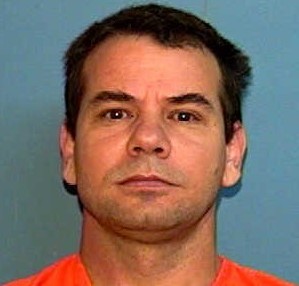
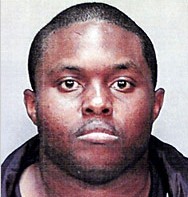
John Calvin Taylor
Murderer Russell Ellwood
Murderer · USA · 1991
Russell Ellwood was a former taxi driver. Authorities suspected him of killing…
20 victims
Russell Ellwood
Murderer · USA · 1991
Russell Ellwood was a former taxi driver. Authorities suspected him of killing…
20 victims
 Robert Martines Perez
Murderer · USA · 1994
Name: Robert Martines Perez · Other name used in proceedings: Robert Martinez P…
15 victims
Robert Martines Perez
Murderer · USA · 1994
Name: Robert Martines Perez · Other name used in proceedings: Robert Martinez P…
15 victims
 Billy Frank Vickers
Murderer · USA · 1993
Billy Frank Vickers Vickers was executed by lethal injection in Texas on Januar…
14 victims
Billy Frank Vickers
Murderer · USA · 1993
Billy Frank Vickers Vickers was executed by lethal injection in Texas on Januar…
14 victims
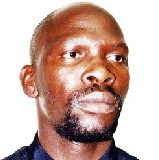 Chippa Mateane
Mass murderer · South Africa · 2006
Chippa Mateane was a police superintendent who went on a killing spree in the W…
8 victims
Chippa Mateane
Mass murderer · South Africa · 2006
Chippa Mateane was a police superintendent who went on a killing spree in the W…
8 victims
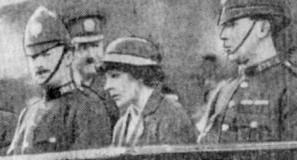 Susan Newell
Murderer · USA · 1923
Susan Newell (1893–1923) was convicted in Glasgow of the murder of newspaper bo…
1 victim
Susan Newell
Murderer · USA · 1923
Susan Newell (1893–1923) was convicted in Glasgow of the murder of newspaper bo…
1 victim
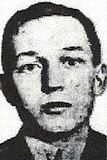 Paul Geidel
Murderer · USA · 1911
Paul Geidel (April 21, 1894 - May, 1987) was an American prison inmate whose se…
1 victim
Paul Geidel
Murderer · USA · 1911
Paul Geidel (April 21, 1894 - May, 1987) was an American prison inmate whose se…
1 victim
 Tracey Wigginton
Murderer · Australia · 1989
Tracey Wigginton (born 1965) was an Australian murderer who achieved notoriety…
1 victim
Tracey Wigginton
Murderer · Australia · 1989
Tracey Wigginton (born 1965) was an Australian murderer who achieved notoriety…
1 victim
- Gender
- male
- Country
- USA
- Location
- Clay County, Florida, USA
- Date of birth
- September 19, 1960
- Age at first offence
- 37
- Characteristics
- robbery
- Victim profile
- Shannon Holzer (convenience store clerk)
- Method of murder
- St abbing with knife
- Date(s) of murder
- December 29, 1997
- Years active
- 1997
- Date of arrest
- Next day
- Status
-
Sentenced to death
Sentenced to death on October 7, 1999
Case information
John Calvin Taylor
- Date of sentence: 10/07/99
- Registry date of offense: 12/29/97
- Fourth Judicial Circuit, Clay County
- Case number: 97-1547
- Name referenced in appeal: John Calvin Taylor, II
- Direct appeal: filed in the Florida Supreme Court on 11/03/99
- Florida Supreme Court decision: affirmed convictions and sentences on 06/05/03
- Petition for Writ of Certiorari filed in the United States Supreme Court: 12/08/03
- Petition denied: 03/08/04
- State collateral motions filed:
- 3.851 Motion: 10/29/04
- Amended 3.851 Motion: 04/26/07 (currently pending)
Timeline
- 12/29/1997 — Shannon Holzer left Buddy Boy’s convenience store to make bank deposits and was later murdered.
- 12/30/1997 — Jeff Holzer reported Shannon Holzer missing; Holzer’s vehicle was found on a firebreak road and her body was later found off the same road in the woods; Taylor was arrested on unrelated burglary charges and later interviewed by deputies at his mobile home.
- 10/07/1999 — Taylor was sentenced to death for first-degree murder and sentenced to life for robbery with a firearm.
- 11/03/1999 — Taylor filed a direct appeal in the Florida Supreme Court.
- 06/05/2003 — The Florida Supreme Court affirmed Taylor’s convictions and sentences.
- 12/08/2003 — Taylor filed a Petition for Writ of Certiorari in the United States Supreme Court.
- 03/08/2004 — The Petition for Writ of Certiorari was denied.
- 10/29/2004 — Taylor filed a 3.851 Motion in the state circuit court.
- 04/26/2007 — An Amended 3.851 Motion was filed in the state circuit court.
Background
John Calvin Taylor was tried and convicted for the robbery and murder of Shannon Holzer.
Holzer was employed at Buddy Boy’s, a small convenience store in St. Johns County, Florida. Holzer periodically deposited money received for purchases at Buddy Boy’s and sometimes deposited money for the owner of a meat shop located behind Buddy Boy’s.
Taylor knew Holzer because he and Holzer had worked at Buddy Boy’s.
Taylor was convicted of first-degree murder and robbery with a deadly weapon.
The offence
Events leading to the murder
On 12/29/97, Holzer left Buddy Boy’s around 1:00 p.m. to make a bank deposit. Holzer intended to deposit about $6,000 for Buddy Boy’s, and she also made a deposit for the meat shop.
Cindy Schmermund, a coworker and friend of Holzer, testified that on 12/29/97 Holzer pulled up in front of Buddy Boy’s with Taylor in the car, pumped gas, and then entered Buddy Boy’s. Schmermund questioned Holzer about why Taylor was with her. Holzer said she was giving Taylor a ride to Green Cove Springs so he could pick up a rental car.
Schmermund testified that Holzer said: “[Taylor] was harmless. [I'll] be fine. Don't worry about it. I'll be back in a minute.”
Other individuals, including Joe Dunn, Arthur Mishoe, and Nolan Metcalf, testified that they saw Taylor accompanying Holzer as she left to make the deposit and heard Holzer make various statements about taking Taylor to Green Cove Springs, including statements that she did not want anyone to tell her husband that she was giving Taylor a ride.
Disappearance and discovery of the victim
Jeff Holzer, the victim’s husband, reported Holzer missing when she did not return home the following day.
Police learned Holzer had not deposited the money into Buddy Boy’s account, and she had not been to feed or tend to her horse.
On the evening of 12/30/97, Holzer’s car was found on a firebreak road. Her body was later found off the same road in the woods.
Cause of death and forensic testimony
A forensic pathologist, Dr. Bonifacio Floro, testified that Holzer had been stabbed nine times in the abdomen and upper chest. Dr. Floro testified that of the nine stab wounds, six had penetrated her heart and three had penetrated her left lung, and that each of the wounds was potentially fatal.
Dr. Floro testified that one wound, believed to be the initial wound, was consistent with having been made by someone sitting in the passenger seat while Holzer was seated in the driver’s seat, and that the rest of the wounds were consistent with the victim lying on her back.
Dr. Floro testified that evidence was consistent with Holzer struggling to escape or protect herself.
Dr. Floro discovered two small bruises inside Holzer’s vagina and opined that they were made no more than twelve hours before Holzer’s death.
Investigation
Police coordination and discovery near Vineyard Trailer Park
Police put out information with Taylor’s address and a description of his rental car.
Deputy Chris Strickland was off duty and driving with a friend near Vineyard Trailer Park when he learned from dispatch about Holzer’s disappearance. Strickland proceeded to Taylor’s mobile home and discovered Taylor’s rental car parked outside.
Arrest and pretrial events
Taylor’s unrelated burglary arrest
Taylor was arrested on the day Holzer disappeared on unrelated burglary charges involving the theft of a briefcase from a vehicle belonging to Chip Yelton.
At the time of his arrest, Taylor was wearing a pair of boxer shorts that were later discovered to have a blood stain containing genetic material consistent with Holzer’s DNA profile.
Taylor was not in custody for the burglary arrest when deputies interviewed him at his mobile home for Holzer’s disappearance; Taylor was present at the residence.
Deputies’ entry at the mobile home
Deputies Strickland and Lindsey knocked on the door; McJunkin answered and invited the officers inside.
Taylor had been taking a shower and walked into the living room wearing only a towel. Deputy Strickland suggested Taylor get dressed and watched Taylor get dressed to ensure Taylor did not arm himself.
Deputies informed Taylor that Holzer was missing and that he had been the last person seen with her. Deputies also told Taylor that Detective Ronnie Lester wanted to speak with him at the station.
Deputies John Noble and Shawn Lee later arrived and entered the open door; at the time the other deputies arrived, Strickland and his friend left.
Deputy Lindsey took Taylor’s driver’s license to his patrol car to check for outstanding warrants while maintaining an unobstructed view of Taylor through a window.
Deputy Lindsey observed Taylor reach into his pocket, remove something, and shove it under the chair cushion. Lindsey was alarmed that Taylor had placed a weapon under the cushion and asked Taylor to get up and move toward the kitchen.
Taylor denied placing anything under the cushion. After obtaining Taylor’s permission, the deputies looked under the cushion and discovered a roll of cash totaling around $1,600.
The police handcuffed Taylor, read him his rights, and took him outside. At Noble’s request, Taylor signed two consent forms to search the mobile home and his rental car.
Deputy Noble testified that Taylor told him there was additional money under the passenger’s seat of his car. Noble looked under the seat and observed a purple bag full of money.
Searches and related admissions
Taylor consented to searches of his mobile home and rental car.
Trial
Charges and jury verdict
Taylor was indicted on:
- Count I: First-Degree Murder
- Count II: Robbery with Firearm
The jury found Taylor guilty on each count.
Penalty phase recommendation and sentence
At sentencing, by a vote of ten to two, the jury recommended the death penalty.
The trial court sentenced Taylor:
- Count I: First-Degree Murder — Death
- Count II: Robbery with Firearm — Life
Aggravating circumstances and mitigation
The trial court found four aggravating circumstances, with two merged.
The four aggravating circumstances were:
- Taylor was previously convicted of another violent felony.
- The crime was committed while Taylor was engaged in the commission of a robbery.
- The murder was committed for pecuniary gain.
- Taylor was under sentence of imprisonment at the time the murder was committed.
The trial court merged the murder in the course of a felony and pecuniary gain aggravators and considered them as a single aggravator.
In mitigation, the trial court found Taylor had proven three nonstatutory mitigating circumstances, which were reflected in the sentencing order as follows:
- Proven: Taylor was raised in a dysfunctional family and suffered neglect and abuse during his first eleven years.
- Proven: by the time Taylor was encouraged to have an interest in education, it was too late and he dropped out of junior high school.
- Proven: Taylor had shown he could be skilled, reliable, and a diligent worker inside and outside of prison.
Nonstatutory mitigating circumstances were rejected as not proven, including:
- As a child and adult, Taylor was known to be a thief, but not a violent person and an act of violence was out of character for him.
- Taylor made friends easily, enjoyed people who also enjoyed him, and had done good deeds for friends and even perfect strangers.
- Taylor enjoyed family relationships and activities.
- Taylor performs well when he has structure in his life.
- Taylor had been and can continue to be a positive influence in the lives of family members.
After weighing the aggravators and mitigators, the trial court determined that the aggravation “greatly outweighs the relatively insignificant nonstatutory circumstances established by this record” and sentenced Taylor to death.
Taylor’s defense theory
Taylor testified at trial in his own defense.
He denied telling Deputy Noble about the money under the passenger’s seat of the rental car.
Taylor alleged that McJunkin committed the robbery and murder.
Taylor claimed he walked to Buddy Boy’s after McJunkin took the rental car and left him without transportation at his estranged wife’s home. Taylor alleged he requested a ride from Holzer to his mobile home, and that when they arrived, McJunkin requested a ride to Green Cove Springs.
Taylor claimed he went to pick up McJunkin after he called from a gas station in Green Cove Springs.
Taylor testified that the money he deposited at the bank and hid in the trailer was from stealing a man’s briefcase belonging to Chip Yelton.
Witnesses and roommate testimony
James Bullard and Michael McJunkin testified for the State.
They testified Taylor made comments about wanting to have sex with Holzer.
They also testified Taylor was having financial trouble and had difficulty paying his bills, and that Taylor had recently been involved in an accident with his truck, waiting on insurance payments while driving a rented white Geo Metro.
McJunkin testified that Taylor spoke about robbing Holzer because Holzer made deposits at the bank for Buddy Boy’s, near their mobile home park.
McJunkin testified that he and Taylor planned to rob Buddy Boy’s. McJunkin testified that at Taylor’s request he dropped Taylor off at Buddy Boy’s and was instructed to return to Taylor’s estranged wife’s house and wait for Taylor to call.
McJunkin testified that after he picked up Taylor following a call from a gas station in Green Cove Springs, they stopped in a parking lot where Taylor counted money he placed into a purple bag. McJunkin testified Taylor said that “if [Holzer] didn't show up within a couple days then things would be okay.”
McJunkin testified that Taylor changed clothes, put the clothes he had been wearing into a trash bag, and threw the trash bag into a dumpster behind the restaurant where Taylor had paid for bad checks.
McJunkin testified that as they drove from location to location, they crossed the Bridge of Lions in St. Augustine and that Taylor directed McJunkin to throw a knife off the bridge.
Two witnesses claimed to see Taylor sitting in a car with a man fitting McJunkin’s description shortly before Holzer left to make the deposit.
Motion to suppress and appellate issues
Motion to suppress and arguments
Taylor moved to suppress physical evidence seized from his residence and rental car, statements he made to police on December 30, 1997, and the clothes he was wearing when he was arrested. The trial court denied the motion after a hearing over two separate days.
On appeal, Taylor raised nine issues. They included:
- Trial court error in failing to suppress evidence seized from Taylor’s house and vehicle, Taylor’s statements, and the clothing seized from Taylor at arrest.
- Trial court error in allowing hearsay testimony from witnesses about Holzer’s statements.
- Trial court error in admitting the credit application Taylor filled out at the car dealership.
- Trial court error in allowing Deputy Noble’s prior consistent statement into evidence.
- Trial court error in admitting boxer shorts with the victim’s blood stains.
- Marital privilege violation because Taylor’s wife was required to testify about certain communications with Taylor.
- Trial court error in instructing the jury on and finding the “under sentence of imprisonment” aggravating circumstance.
- Trial court error in failing to find several nonstatutory mitigating circumstances.
- Trial court error in imposing a disproportionate death sentence.
Suppression ruling affirmed
The Florida Supreme Court affirmed the convictions and sentences and stated it found sufficient evidence supported the convictions.
It concluded the initial contact with police at Taylor’s trailer was a consensual encounter, and held that looking under the chair cushion and temporarily detaining Taylor were not unreasonable.
It held Taylor’s consent to search the trailer and car was not invalidated by illegal detention and upheld the admission of Taylor’s statement to Deputy Noble because it was not the product of illegal activity and was admissible after Miranda warnings.
The court also held Taylor was not in custody in a manner that would make his later interrogation a fruit of illegal arrest, and it concluded the clothing taken from Taylor was taken in a valid inventory search incident to a lawful arrest for the burglary of Chip Yelton’s truck.
Hearsay statements
The Florida Supreme Court found trial court error in admitting Holzer’s statements as hearsay under the “state of mind” rationale, but concluded the error was harmless. It reasoned that witnesses saw Taylor get into the passenger seat and drive away with Holzer, and the jurors knew Holzer had a large amount of money when she left and was going to banks in Green Cove Springs.
Credit application
The Florida Supreme Court found error in admitting the credit application Taylor filled out at the car dealership but held the error was harmless beyond a reasonable doubt.
Deputy Noble prior consistent statement
The Florida Supreme Court found that admission of Deputy Noble’s prior consistent statement was error, but held it was harmless beyond a reasonable doubt.
Boxer shorts and chain of custody
The Florida Supreme Court held the trial court did not abuse its discretion in admitting Taylor’s boxer shorts, finding no showing of tampering and describing that the bag was stored in a locked cabinet and accessible only to booking officers until pickup by FDLE.
Marital privilege
The Florida Supreme Court held it was error to require Mrs. Taylor to continue answering questions about privileged communications, but it held the error was harmless beyond a reasonable doubt because the testimony was brief and did not involve admissions or detailed crime-related communications.
“Under sentence of imprisonment” aggravator
The Florida Supreme Court held the trial court did not err in finding the “under sentence of imprisonment” aggravating circumstance, concluding Taylor should have been serving his sentence in Arkansas at the time the murder occurred based on the testimony of George Brewer, a classification administrator for the Arkansas Department of Corrections.
Appeals
Florida Supreme Court
Taylor filed his Direct Appeal in the Florida Supreme Court on 11/03/99. The Florida Supreme Court affirmed convictions and sentences on 06/05/03.
United States Supreme Court
Taylor filed a Petition for Writ of Certiorari on 12/08/03. The petition was denied on 03/08/04.
Collateral review
On 10/29/04, Taylor filed a 3.851 Motion with the state circuit court. An Amended 3.851 Motion was filed on 04/26/07, and these motions were stated as pending.
Co-defendant
Michael McJunkin
Michael McJunkin was a codefendant in a separate case: Clay County Circuit Court #98-0068.
McJunkin was tried separately and convicted of:
- Being an accessory after the fact
- Robbery with a firearm
On 09/09/99, he was sentenced to 10 years and 6 months for each conviction.
Other details
Deposits and bank records
Bank records showed Holzer deposited the money for the small meat shop at First Union National Bank in Green Cove Springs at 1:22 p.m. However, the second, larger deposit for Buddy Boy’s was never made.
Trial and penalty-phase participants
Sentencing judge: The Honorable William A. Wilkes. Attorney, trial: Nada M. Carey — Assistant Public Defender. Direct appeal: Nada M. Collateral appeals: Frank Tassone, Jr. — Registry.
Defense and state arguments about money
The State argued that the amount of money found in the car plus other money attributed to Taylor (including the bank deposit, money hidden under the cushion, and known spending) exceeded the amount of money in Yelton’s briefcase, and it argued that it was important to Taylor’s defense that Taylor deny knowing about the additional money located in his rental car.
Victim and witness relationships
Holzer’s friend and coworker was Cindy Schmermund. Holzer’s husband was Jeff Holzer. McJunkin’s sister Heather Mishoe and Arthur Mishoe testified as described in the notes.
Additional testimony about Taylor’s spending and purchases
Taylor visited Garber Ford Mercury, a car dealership in Green Cove Springs, and expressed interest in purchasing a truck.
A bartender testified that Taylor bought drinks for other bar patrons on the evening of December 29, 1997, and incurred a bill of approximately $150 to $200. The bartender testified Taylor gave two $100 bills as a tip.
Footnote detail about child inferences
At the time of the murder, McJunkin thought Taylor was his father, but later DNA testing showed that McJunkin was not Taylor’s biological son.
Spotted an error, or have more information about this case?