Thomas Grasso
Murderer Brian Kevin Rosenfeld
Murderer · USA · 1985
Brian Kevin Rosenfeld Brian Kevin Rosenfeld was sentenced to three concurrent l…
23 victims
Brian Kevin Rosenfeld
Murderer · USA · 1985
Brian Kevin Rosenfeld Brian Kevin Rosenfeld was sentenced to three concurrent l…
23 victims
 Yahweh ben Yahweh
Murderer · USA · 1980
Yahweh ben Yahweh was born and legally named Hulon Mitchell Jr. (October 27, 19…
23 victims
Yahweh ben Yahweh
Murderer · USA · 1980
Yahweh ben Yahweh was born and legally named Hulon Mitchell Jr. (October 27, 19…
23 victims
 Russell Ellwood
Murderer · USA · 1991
Russell Ellwood was a former taxi driver. Authorities suspected him of killing…
20 victims
Russell Ellwood
Murderer · USA · 1991
Russell Ellwood was a former taxi driver. Authorities suspected him of killing…
20 victims
 Robert Martines Perez
Murderer · USA · 1994
Name: Robert Martines Perez · Other name used in proceedings: Robert Martinez P…
15 victims
Robert Martines Perez
Murderer · USA · 1994
Name: Robert Martines Perez · Other name used in proceedings: Robert Martinez P…
15 victims
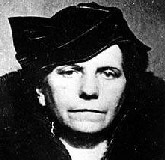 Marie Alexandrine Becker
Serial killer · Belgium · 1932
Marie Alexandrine Becker was born in 1877 and was from Liege, Belgium. She spen…
10 victims
Marie Alexandrine Becker
Serial killer · Belgium · 1932
Marie Alexandrine Becker was born in 1877 and was from Liege, Belgium. She spen…
10 victims
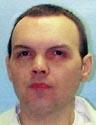 Anthony Keith Johnson
Murderer · USA · 1984
Anthony Keith Johnson was convicted of capital murder for a gun battle that kil…
1 victim
Anthony Keith Johnson
Murderer · USA · 1984
Anthony Keith Johnson was convicted of capital murder for a gun battle that kil…
1 victim
 Sara Ege
Murderer · United Kingdom · 2010
Sara Ege was convicted of murder and perverting the course of justice at Cardif…
1 victim
Sara Ege
Murderer · United Kingdom · 2010
Sara Ege was convicted of murder and perverting the course of justice at Cardif…
1 victim
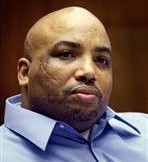 Chester Turner
Serial killer · USA · 1987
Chester Dewayne Turner was born November 5, 1966 in Warren, Arkansas. He became…
13 victims
Chester Turner
Serial killer · USA · 1987
Chester Dewayne Turner was born November 5, 1966 in Warren, Arkansas. He became…
13 victims
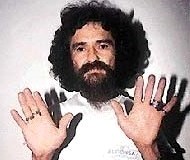 Dorancel Vargas
Serial homicide · Venezuela · 1995
Dorancel Vargas, also known as “el comegente,” was born in 1957. He was describ…
10 victims
Dorancel Vargas
Serial homicide · Venezuela · 1995
Dorancel Vargas, also known as “el comegente,” was born in 1957. He was describ…
10 victims
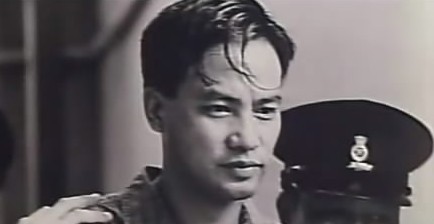 Lam Kor-wam
Serial killer · United Kingdom · 1982
Lam Kor-wan (Traditional Chinese 林過雲, born 1955) was one of Hong Kong's two kno…
4 victims
Lam Kor-wam
Serial killer · United Kingdom · 1982
Lam Kor-wan (Traditional Chinese 林過雲, born 1955) was one of Hong Kong's two kno…
4 victims
- Gender
- male
- Country
- USA
- Location
- Oklahoma/New York, USA
- Date of birth
- 1962
- Age at first offence
- 28
- Characteristics
- —
- Victim profile
- Hilda Johnson (female, 87) / Leslie Holtz (male, 81)
- Method of murder
- Strangulation
- Date(s) of murder
- December 24, 1990 / July 3, 1991
- Years active
- 1990–1991
- Date of arrest
- —
- Status
-
Executed
Executed by lethal injection in Oklahoma on March 20, 1995
Case record: Thomas Grasso
Background
Thomas J. Grasso was a white man who was 29 when he was sentenced to death in Tulsa County for the 1990 slaying of Tulsan Hilda Johnson. He was executed on March 20, 1995 after halting his appeals and spending only 2 years and 5 months on death row.
Grasso strangled an 87-year-old woman in Tulsa with her own Christmas tree lights on Christmas Eve 1990 while stealing a cheap television set and $12. During his last meal, he said: "I did not get my Spaghetti-O's, I got spaghetti. I want the press to know this."
Grasso also killed Leslie Holtz, 81, in the Staten Island boardinghouse where both he and Holtz lived. He was described as having a long criminal record.
The offence
On December 24, 1990, Grasso entered the home of Hilda Johnson, an 87-year-old woman, with the intent to rob her. He knocked on the door and when Ms. Johnson answered it, he pushed his way into the house. After he entered, he took an extension cord from the Christmas tree and used it to choke Ms. Johnson. He also hit her with an iron and a piece of wood from a plant. After he believed her to be dead, he searched the house for money. He took a few dollars and some change and a television set which he later pawned for $125.00.
On July 3, 1991, Grasso lived across the hall from 82-year-old Leslie Holt in a rooming house in Staten Island, New York. He was smoking crack cocaine and went to ask Mr. Holt for some money so that he could get more cocaine. When he left his room, he observed Mr. Holt in the hall attempting to enter his own room. When Mr. Holt unlocked his door, Grasso pushed him into his room, grabbed him around the neck and then choked him with the cord from the TV until Mr. Holt was dead. Grasso and a friend took money from Mr. Holt.
In Grasso’s later recitation of events at the plea hearing, he stated:
"[a]fter I had entered her house, it dawned on me that if I left her alive I would be identified by the police and by her and I would be arrested so we had — we struggled a little bit and I had pulled the extension cord off the Christmas tree and I wrapped it around her neck and choked her." (TR. 27)
Investigation
The case involved custody and appellate issues between New York and Oklahoma relating to Grasso’s sentences and extradition.
Arrest
Grasso was arrested two weeks after Leslie Holtz was killed and was convicted in the slaying of Leslie Holtz in New York. He was then sent to Oklahoma under an outstanding warrant to face charges there.
Trial
Guilty pleas in Oklahoma
Grasso entered pleas of guilty to:
- First Degree Burglary, in violation of 21 O.S. 1991 § 1431 [21-1431], in District Court of Tulsa County, Case No. CF-91-3404.
- First Degree Murder, in violation of 21 O.S. 1991 § 701.7 [21-701.7], in District Court of Tulsa County, Case No. CF-91-3404.
On September 28, 1992, before the trial court, Grasso expressed a desire to waive trial and enter a plea of guilty. Before accepting the plea of guilty, a competency proceeding was held.
Dr. William Cooper, a licensed clinical psychologist with a Ph.D. in Clinical Psychology, testified that he saw Grasso on two different occasions for about five hours, concluded Grasso clearly understood the nature of the charges against him, and was clearly capable of assisting his attorney in his defense. Dr. Cooper reported no indication that Grasso was not competent at the time the offense was committed, and he found no need for treatment based on mental illness. Grasso’s attorney also stated he believed Grasso was competent.
Grasso provided a factual basis for the guilty pleas to robbery and murder by stating his December 24, 1990 actions against Hilda Johnson. To support alleged former convictions, he stated he had been convicted in the State of Florida of the crimes of Unlawful Delivery of Marijuana, Burglary, Possession of Barbiturates, Aggravated Battery, Armed Robbery and Aggravated Battery.
After hearing the factual basis, the trial court again apprised Grasso of his rights and stated Grasso was allowed to withdraw all guilty pleas if he so desired. The trial court accepted the pleas and found Grasso guilty of the charges alleged. Grasso waived his right to a jury or non-jury trial.
Sentencing and execution setting in Oklahoma
At the beginning of the sentencing stage, Grasso advanced his intent to waive his right to have a jury determine punishment. This waiver was allowed only after the trial court determined, after inquiry of Grasso and his counsel, that it was knowingly and voluntarily made.
Regarding sentencing, Grasso was advised he could present evidence in mitigation. His attorney stated Grasso did not wish to present any evidence in mitigation and this was confirmed upon further inquiry of Grasso.
Over the objection of Grasso to the delay, the trial court passed the actual sentencing for two days after he pled guilty to allow time to reconsider and to withdraw the plea of guilty if he so desired.
On September 30, 1992, the trial court found three of four aggravating circumstances alleged had been proven beyond a reasonable doubt. Grasso, against counsel’s advice, requested that the death penalty be imposed. The trial court sentenced Grasso to five hundred years imprisonment on the robbery conviction and imposed the death penalty on the murder conviction.
The district court ordered Grasso’s sentence of death be executed on December 4, 1992. A notice of execution date with an affidavit was filed by Grasso in this Court on October 21, 1992, asserting Grasso desired no appeal of his plea of guilty and sentence. On November 12, 1992, a motion to expedite sentence review with affidavits executed by Grasso’s trial attorney and appellate counsel were filed in this Court. Grasso asked to be allowed to waive any direct appeal by writ of certiorari and for the Court to expedite mandatory statutory review of the death sentence.
On November 23, 1992, this Court ordered Grasso’s execution be stayed for mandatory review. On November 24, 1992, the Court denied Grasso’s motion to expedite mandatory capital sentence review because the statutory period within which an appeal brief was due had not yet expired and no valid waiver of the right to submit such a brief had been filed.
Competency proceedings and waiver of appeal (Oklahoma Court of Criminal Appeals)
Preliminary hearing and competency
A preliminary hearing was held on September 4, 1992, and Grasso was bound over for further proceedings.
On September 11, 1992, defense counsel filed an application for determination of competency in the District Court. After a hearing, the trial court granted the application and ordered Dr. William Cooper to examine Grasso.
Mandatory sentence review and waiver issues
On November 24, 1992, the motion to waive direct appeal was remanded to the district court for a judicial determination of Grasso’s competency and capacity to understand the choice between life and death and to knowingly and intelligently waive any and all rights to appeal his sentence.
On remand, a hearing was held in the District Court of Tulsa County. Findings of fact were entered: I. Grasso fully understood and was competent to waive, and had waived, any right to direct appeal of the trial court’s judgment and sentence. II. Grasso in fact claimed no error in the proceedings requiring an appeal or appellate review. III. Grasso had been afforded counsel at all times who completely explained to him the nature and consequences of his choices. IV. Grasso’s counselors were experienced in capital litigation, both trial and appellate, and gave Grasso the advice necessary for a knowing, intelligent, and voluntary plea of guilty, waiver of appellate rights, and waiver of appeal. V. Grasso had been given the constitutional guarantees and protection of the United States Constitution, the Oklahoma Constitution, the Fifth, Sixth, Eighth, and Fourteenth Amendments to the Constitution, and all applicable, corollary state constitutional provisions. VI. Grasso’s attorneys and an impartial psychologist maintained at all times that Grasso was competent to make these decisions and waivers reflected in the findings.
The district court concluded that:
"the Appellant has the capacity to understand the choice between life and death and has knowingly and intelligently waived any and all rights to appeal his judgment and sentence."
Grasso’s oral argument statement was filed April 7, 1993. Grasso asserted the transcript of the remand hearing proved he was sane, competent, and of above average intelligence. He averred he possessed both capacity to understand the difference between life and death and had knowingly and freely chosen death.
The Oklahoma Court of Criminal Appeals discussed that Oklahoma’s capital statutory scheme did not mandate that a capital defendant take an appeal, that statutory right to a direct appeal could be waived, but that the Court would not allow waiver absent evidence the waiver was executed in a way that did not offend Oklahoma or Federal constitutional principles.
The Court applied a standard adopted from Franz v. State and recognized as undisturbed by Whitmore v. Arkansas: the defendant must have been judicially determined to have the capacity to understand the choice between life and death and to knowingly and intelligently waive any and all rights to appeal the sentence.
The Court found the record supported the district court’s finding of competency to waive direct appeal, noting repeated questions, the competency examination by Dr. William Cooper, and defense counsel’s consistent position.
Aggravating circumstances and sentence review
The Oklahoma Court of Criminal Appeals performed mandatory sentence review to determine whether evidence supported the aggravating circumstances found by the trial judge.
The Bill of Particulars alleged four aggravating circumstances, but the trial judge found the State proved three beyond a reasonable doubt:
- Grasso was previously convicted of felonies involving the use or threat of violence to the person.
- There existed the probability that Grasso would commit criminal acts of violence that would constitute a continuing threat to society.
- The murder was committed for the purpose of avoiding or preventing a lawful arrest or prosecution.
The Oklahoma Court of Criminal Appeals described prior violent felony evidence submitted:
- Florida convictions: Aggravated Battery on July 3, 1985, Case No. 84-1217, in the Circuit Court of Hillsborough County, State of Florida.
- Florida convictions: Armed Robbery and Aggravated Battery on July 3, 1985, Case No. 85-25, in the Circuit Court of Hillsborough County, State of Florida.
The Oklahoma Court of Criminal Appeals discussed statutory similarity and concluded the prior violent felony conviction supported the aggravating circumstance.
For the “continuing threat” aggravating circumstance, the Court cited evidence including a video taped statement admitted as State’s exhibit number eight describing Grasso’s July 3, 1991 killing of Leslie Holt in Staten Island, New York, following his crack cocaine use and his attempt to get money for more cocaine. The Court also referenced Dr. Cooper’s expressed concern about Grasso’s potential dangerousness in the future in light of Grasso’s New York murder conviction.
For the “avoid lawful arrest or prosecution” aggravating circumstance, the Court referenced Grasso’s plea recitation where he stated that leaving Hilda Johnson alive would have meant he would be identified by police and by her, and that they struggled as he pulled the extension cord from the Christmas tree and wrapped it around her neck.
The Court addressed whether the death sentence was imposed under the influence of passion, prejudice, or any other arbitrary factor. It found the district court had provided opportunities to assert rights, took time for reflection, and protected constitutional rights. It also noted the district court refused to find a fourth aggravating circumstance.
The Oklahoma Court of Criminal Appeals concluded:
- Grasso’s waiver of right to direct appeal was made knowingly, intelligently and voluntarily.
- The death sentence was based upon aggravating circumstances supported by evidence.
- The sentence was not imposed under the influence of passion, prejudice, or any other arbitrary factor.
The Court affirmed the judgment and sentence.
Appeals
Oklahoma Court of Criminal Appeals
The case was:
- Case name: GRASSO v. STATE
- Citation: 1993 OK CR 33, 857 P.2d 802
- Case Number: C 92-1001
- Decided: 07/15/1993
- Appeal from: District Court of Tulsa County; Clifford Hopper, District Judge
The judgment and sentence were AFFIRMED.
The opinion included a special concurrence by CHAPEL, Judge.
Aftermath
Grasso requested that no appeal be filed and sought expedited mandatory review and execution.
He was transferred from New York to Oklahoma to await execution. An agreement between New York officials and Oklahoma officials allowed Oklahoma correction officials to take custody of Grasso at Buffalo International Airport and escort him on a commercial flight to Tulsa en route to the state penitentiary at McAlester, Oklahoma.
Oklahoma officials said Grasso could be executed by lethal injection within 60 days, and the timetable depended on Oklahoma’s top appellate court.
Upon arrival, the van carrying Grasso entered the prison and took him to H Unit, where he would be confined to his cell 23 hours a day, like the other 126 inmates on death row.
Mr. Pataki and Gov. Frank Keating publicly commented on the transfer and punishment. Mr. Pataki said: "Today we have accomplished what we promised," and also stated: "Thomas Grasso will face the death penalty for his brutal crimes." Governor Keating said: "New York wants to get rid of a killer. We want him to be returned to be executed. I think anyone who takes a life in a premeditated fashion should lose his own."
Grasso was executed by lethal injection in Oklahoma on March 20, 1995.
A sentencing-episode quotation appeared from Justice Charles A. Kuffner Jr. In a situation where Justice Kuffner asked Grasso to address the court at sentencing and Grasso responded with an obscenity, Justice Kuffner replied:
"You're the worst piece of humanity that could stand in this court. I hope that 20 years from now I'm writing letters to the parole board so you can rot away your entire life in prison."
Timeline
- September 4, 1992 — Preliminary hearing was held; Grasso was bound over for further proceedings.
- September 11, 1992 — Defense counsel filed an application for determination of competency; the trial court granted the application and ordered Dr.
- September 28, 1992 — Grasso expressed a desire to waive trial and enter a plea of guilty; a competency proceeding was held before accepting the plea.
- September 30, 1992 — The trial court sentenced Grasso to five hundred years imprisonment on the robbery conviction and imposed the death penalty on the murder conviction; the district court ordered the death sentence be executed on December 4, 1992.
- October 21, 1992 — A notice of execution date with an affidavit was filed by Grasso in the Oklahoma Court of Criminal Appeals.
- November 12, 1992 — A motion to expedite sentence review and affidavits executed by Grasso’s trial attorney and appellate counsel were filed in the Oklahoma Court of Criminal Appeals.
- November 23, 1992 — The Oklahoma Court of Criminal Appeals ordered Grasso’s execution stayed for mandatory review.
- November 24, 1992 — The Court denied Grasso’s motion to expedite mandatory capital sentence review; the motion to waive direct appeal was remanded for a judicial determination of competency and waiver capacity.
- March 1, 1993 — Grasso filed a Motion to Set Oral Argument concerning his death sentence and its propriety.
- April 20, 1993 — Oral argument was held with Grasso present.
- April 7, 1993 — Grasso’s oral argument statement was filed.
- 07/15/1993 — The Oklahoma Court of Criminal Appeals decided Grasso v. State; the judgment and sentence were AFFIRMED.
- March 20, 1995 — Grasso was executed by lethal injection in Oklahoma.
Spotted an error, or have more information about this case?