
Karl Anthony Terry
Murderer Brian Kevin Rosenfeld
Murderer · USA · 1985
Brian Kevin Rosenfeld Brian Kevin Rosenfeld was sentenced to three concurrent l…
23 victims
Brian Kevin Rosenfeld
Murderer · USA · 1985
Brian Kevin Rosenfeld Brian Kevin Rosenfeld was sentenced to three concurrent l…
23 victims
 Russell Ellwood
Murderer · USA · 1991
Russell Ellwood was a former taxi driver. Authorities suspected him of killing…
20 victims
Russell Ellwood
Murderer · USA · 1991
Russell Ellwood was a former taxi driver. Authorities suspected him of killing…
20 victims
 Robert Martines Perez
Murderer · USA · 1994
Name: Robert Martines Perez · Other name used in proceedings: Robert Martinez P…
15 victims
Robert Martines Perez
Murderer · USA · 1994
Name: Robert Martines Perez · Other name used in proceedings: Robert Martinez P…
15 victims
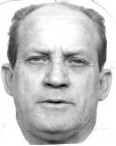 Billy Frank Vickers
Murderer · USA · 1993
Billy Frank Vickers Vickers was executed by lethal injection in Texas on Januar…
14 victims
Billy Frank Vickers
Murderer · USA · 1993
Billy Frank Vickers Vickers was executed by lethal injection in Texas on Januar…
14 victims
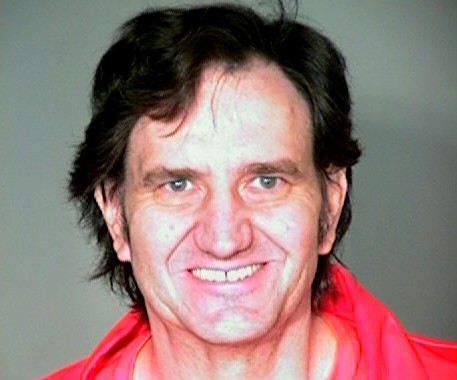 James Styers
Murderer · USA · 1989
James Styers filed a missing child report on December 2, 1989, advising police…
1 victim
James Styers
Murderer · USA · 1989
James Styers filed a missing child report on December 2, 1989, advising police…
1 victim
 Joseph Francis Bryan
Homicide · USA · 1964
Joseph Francis Bryan was born in Camden, New Jersey. He first ran afoul of the…
3 victims
Joseph Francis Bryan
Homicide · USA · 1964
Joseph Francis Bryan was born in Camden, New Jersey. He first ran afoul of the…
3 victims
 Spencer Brasure
Murderer · 1996
Spencer Brasure was sentenced to death on August 25, 1998. The state’s highest…
1 victim
Spencer Brasure
Murderer · 1996
Spencer Brasure was sentenced to death on August 25, 1998. The state’s highest…
1 victim
 Jonathon Edington
Murderer · USA · 2006
Jonathon Edington (born October 29, 1976) was a patent lawyer in Fairfield, Con…
1 victim
Jonathon Edington
Murderer · USA · 2006
Jonathon Edington (born October 29, 1976) was a patent lawyer in Fairfield, Con…
1 victim
- Gender
- male
- Country
- USA
- Location
- Clackamas County, Oregon, USA
- Date of birth
- September 29, 1973
- Age at first offence
- 21
- Characteristics
- —
- Victim profile
- Jeffrey and Dale Brown (brothers)
- Method of murder
- H acking to death with an 18-inch-long Japanese sword
- Date(s) of murder
- August 6, 1994
- Years active
- 1994
- Date of arrest
- 17 days after
- Status
-
Sentenced to death
Sentenced to death on November 22, 1995
Case overview
Karl Anthony Terry was sentenced to death on November 22, 1995.
This case underwent automatic and direct review of the judgment of conviction and sentences of death imposed by the Clackamas County Circuit Court. Raymond Bagley, Judge, presided at the circuit court proceedings. The convictions involved two counts of aggravated murder and sentences of death. The judgment of conviction and sentences of death were affirmed on automatic review.
The case was argued and submitted September 6, 2001. Eric Johansen, Deputy Public Defender, Salem, argued the cause for appellant. David. E. Groom, State Public Defender, and Ingrid MacFarlane, Deputy Public Defender, were listed as being on the briefs. Robert E. Rocklin, Assistant Attorney General, Salem, argued the cause for respondent. Hardy Myers, Attorney General, Michael D. Reynolds, Solicitor General, and Kathleen Cegla and Doug M. Petrina, Assistant Attorneys General, were listed as being on the brief.
The justices were Carson, Chief Justice, and Gillette, Durham, Leeson, Riggs, and De Muniz, Justices. Balmer, J., did not participate in the consideration or decision of this case.
The opinion states, “The judgment of conviction and sentences of death are affirmed.”
Timeline
- August 6, 1994 — Jeffrey Brown (Jeff) invited Karl Anthony Terry to celebrate the birthday of Jeff’s brother, Dale Brown (Dale); Terry and the brothers drank beer and decided to go camping on the Willamette River.
- August 7, 1994 — Bennie Garry and his two sons went fishing at the Jefferson Milwaukee boat landing; the younger son returned and reported that there was a dead man nearby; the older son reported that the man had a hole in his neck; Garry found two bodies.
- August 8, 1994 — Police found Terry’s black motorcycle jacket inside a backpack in Jeff’s apartment; Detective Corson later called Terry after noticing a redial function on the telephone in Jeff’s apartment; Corson spoke with Terry, arranged to meet him in person, received a paper sack containing a knife, and received a written statement from Terry; Terry agreed to go to a Portland police station to give an interview; after Miranda advisement and recording, Terry denied fighting with Jeff and Dale.
- August 9, 1994 — Kidd telephoned Terry and obtained Terry’s consent to take a polygraph examination; Terry refused to submit to the polygraph examination.
- August 19, 1994 — Police obtained a search warrant for Terry’s apartment and executed it.
- August 22, 1994 — Before a polygraph examination, Detective Bryant advised Terry of his Miranda rights; after the examination, Bryant told Terry his answers were deceptive; during conversation with officers, Terry asked to talk to his attorney, stated he was drunk and discussed blackouts, and repeatedly asked to go home; the officers drove Terry home and later drove to the crime scene for a fruitless search for a sword.
- Later the next day after August 22, 1994 — Terry was arrested after police found a note fixed to the door stating Terry did not wish to cooperate further.
- October 1994 — While detained in the Clackamas County Jail, Terry told a fellow prisoner that Jeff had wanted out of the Order of the Black Dove and that the only way out was death; he told the prisoner he had killed Jeff with a “big knife.”
- October 1995 — Victim-impact testimony was provided during the penalty phase by the victims’ mother.
- November 22, 1995 — Terry was sentenced to death.
- September 6, 2001 — The case was argued and submitted before the Oregon Supreme Court.
- 2004 — Noted in the opinion as the first such case decided four years later regarding the alleged ex post facto issue (the opinion refers to State v. Metz decided four years later, with no specific year stated for that decision beyond the four-year description).
Background
Jeffrey Brown (Jeff) invited Karl Anthony Terry to celebrate the birthday of Jeff’s brother, Dale Brown (Dale). The invitation was extended to Terry, and Terry accepted. Terry and Jeff had spent a lot of time together.
According to Terry’s writings, they belonged to an organization that Terry called the “Order of the Black Dove.” The creed of the Order of the Black Dove, as reflected in Terry’s journals, celebrated violence and other anti-social behavior.
Terry met Jeff and Dale at approximately 2:30 or 3:00 p.m. on August 6, 1994. Terry and the brothers drank beer together and eventually decided to go camping on the Willamette River. The brothers collected their gear, and Jeff brought a samurai or ninja knife that he owned. The group obtained cash from an ATM machine and purchased a six-pack of beer. At the river, they drank more beer and argued about where to camp.
Witnesses recalled seeing Terry with Jeff and Dale at the river before 9:00 p.m., and also recalled that Terry was wearing a black leather jacket. Terry was seen alone at the river at about 9:15 p.m.
The offence
Victims and discovery
The following day, Bennie Garry and his two sons went fishing at the Jefferson Milwaukee boat landing. The younger son tired of fishing and decided to play elsewhere. A few minutes later, he returned and reported that there was a dead man nearby. The older son investigated and returned to tell his father that the man had a hole in his neck.
Garry then found two bodies, one that appeared to be sleeping on the ground and one that was in a sleeping bag. He notified police.
The police concluded that the victims had been killed where they were found. Although the police surveyed the area, they did not find a weapon. The victims were identified as Jeff and Dale.
Jeff’s employment and apartment security
Jeff had lived in an apartment above a restaurant where he worked. The owner of the restaurant let police into the apartment, where the police made a brief, preliminary search. The owner noticed that Jeff’s keys were on the counter and that the deadbolt, usually locked, was unlocked.
After notifying the parents and obtaining permission, the police searched Jeff’s apartment more thoroughly. They discovered Terry’s black motorcycle jacket inside a backpack.
Police observation of Terry leaving Jeff’s apartment
A witness had seen Terry leaving Jeff’s apartment on the night of the murders at about 9:30 p.m. The witness recalled that Terry was not wearing a jacket at that time.
Investigation
August 8, 1994 — telephone call and knife
On August 8, 1994, the police again went to Jeff’s apartment. While searching the apartment, Detective Corson noticed that the telephone had a redial function. Corson pressed the button. The person who answered the call identified himself as “Karl,” i.e., Terry. Terry acknowledged that he was a friend of Jeff’s.
Corson asked if he could speak with Terry in person at his apartment in Portland. Terry agreed.
When Corson arrived at Terry’s apartment, Terry gave Corson a paper sack containing a knife, saying that he was aware that police were looking for knives. Terry said the knife had belonged to Jeff. Terry also handed Corson a written statement and agreed to go to a Portland police station to give an interview.
At the interview, Corson advised Terry of his Miranda rights and recorded Terry’s oral statement. In that statement, Terry indicated that he had left Dale and Jeff at the river at about 8:00 p.m. and denied that he had fought with them. Corson and Detective Kidd then took Terry home but stopped for some cigarettes.
At Terry’s apartment, Terry invited police inside and permitted them to look around. The officers explained that they had no right to look inside Terry’s apartment without a warrant and that anything incriminating that they might find could be used against him. Terry was cooperative and signed a consent-to-search form. The police searched the apartment but did not seize anything.
August 9, 1994 — consent to polygraph and refusal
On August 9, 1994, Kidd telephoned Terry and obtained Terry’s consent to take a polygraph examination.
The next day, when Kidd arrived at Terry’s apartment, Terry refused to submit to the polygraph examination and walked away, stating that he had given the police all the information that he had.
August 19, 1994 — search warrant and apartment search
On August 19, 1994, the police obtained a search warrant for Terry’s apartment. Four officers—Corson, Kidd, Trooper Nguyen, and Sergeant McCrum—went to Terry’s apartment to execute the warrant.
The officers talked to Terry through the front door. When that discussion was unavailing, the police forced the door open.
Once the police were inside, Terry sat calmly at a table and watched the officers. Corson informed Terry that he was not under arrest and that he was free to leave while the officers conducted the search. Despite that invitation, Terry remained in the apartment and even assisted the officers in their search.
The police seized various items from the apartment. The police also obtained Terry’s consent to take a polygraph test and to have his blood drawn. The police took Terry to the hospital to obtain a blood sample and then returned him to his apartment.
August 22, 1994 — polygraph examination and interaction with officers
On August 22, 1994, Corson and Nguyen transported Terry to the location of the polygraph examination.
Before the examination, the examiner, Detective Bryant, advised Terry of his Miranda rights. After the examination, Bryant informed Terry that his answers were deceptive. Terry indicated that he wanted to talk to Corson and the others about his test.
During the ensuing conversation with the officers, McCrum referred to inconsistencies in Terry’s statements. Terry became agitated and responded, “How about if I let you talk to my attorney? I want to go home.”
McCrum responded, “That’s fine.”
Terry then sat down and asked McCrum questions about the investigation and stated, “How do you expect me to remember everybody that was outside there that day? I was drunk.”
McCrum answered Terry’s questions and Terry calmed down.
Terry then went outside with the officers to smoke a cigarette. Outside, Terry discussed with the officers whether he would have interfered in a fight between Dale and Jeff. He began to ramble about having blackouts. He also asked about what the DNA analysis of the blood on his jacket might reveal. He was told that, according to preliminary tests, the blood might be Dale’s, but that further testing would be undertaken.
Terry responded, “I just want to go home. Maybe you guys should talk to my attorney.”
McCrum replied, “Okay. Fine.”
Terry and the officers began to walk toward the police vehicle. On the way, Terry asked more questions of the officers and speculated about why a person might black out. Terry asked more questions about the blood on the jacket. After the officers answered his questions, Terry declared, “I want to go home.”
About 7:00 p.m., the officers drove Terry home.
When they arrived at Terry’s apartment, Terry stated, “I’m fucked either way. No matter what I tell you, the D.A. is going [to] put me in prison, that’s for sure.”
Corson told Terry that the district attorney would review the information that the police provided to him. Terry inquired whether the police would appoint him an attorney. Corson said he could not appoint an attorney for Terry and explained that if Terry wanted an attorney, he should say so. Corson asked whether Terry wanted the officer not to ask any further questions without an attorney present.
Corson elaborated: “If you want to have an attorney, you need to tell me and I will not have any contact or conversation with you.”
Terry replied that he knew his rights and asked for Corson’s business card. Terry took the card and said he might call Corson later that night, and that he definitely would call Corson the next day.
The officers left. About a half-hour later, Corson suggested that Nguyen call Terry at his apartment. Nguyen called Terry and asked how he was doing. Nguyen intimated that he knew that Terry wanted to talk to them but was having difficulty doing so. Terry indicated that he was worried about going to jail and no longer receiving his social security checks.
Nguyen explained that the police gathered information and gave that information to the district attorney to make a charging decision. Terry agreed to speak with the police again that evening. Corson and Nguyen arrived at Terry’s residence and Terry spoke to them in an unmarked patrol car.
After being advised of his rights and after acknowledging that he was speaking voluntarily, Terry told the police his version of the events that led to the killings. Terry’s account was that Dale and Jeff started fighting, Dale killed Jeff, and Terry killed Dale in Jeff’s defense.
Terry agreed to help the police search for the murder weapon at the scene. Corson wanted to advise Terry of his constitutional rights again, but Terry refused, stating that he did not want a lawyer and that he knew what his rights were. Terry recited his rights to the officers. He described how and where he had disposed of a sword.
They then drove to the crime scene and engaged in a fruitless search for the sword. Terry identified the area in which the sword should be located.
It was getting late in the evening, and Terry indicated that he would help the police again the next day. Terry said he was hungry, so an officer took Terry to buy some food and then took him home.
The next day, Corson and Nguyen arrived at the front door of Terry’s apartment and found a note fixed to the door stating Terry did not wish to cooperate further. Later that day, the police arrested Terry.
Physical evidence and forensic results
The police also found a samurai sword near the location Terry had identified.
DNA testing of blood on the sword indicated that the blood belonged to Dale and Jeff. Terry’s black leather jacket also had Dale’s and Jeff’s blood on it.
Jail statement to fellow prisoner
In October 1994, while in detention in the Clackamas County Jail, Terry told a fellow prisoner that Jeff had wanted out of the Order of the Black Dove. Terry also told the prisoner that the only way out was death, and that he had killed Jeff with a “big knife.”
Arrest
Later after the police found the note fixed to Terry’s apartment door stating he did not wish to cooperate further, the police arrested Terry.
Trial
Charged offences and conviction
Terry was tried and convicted of the murders of Dale and Jeff and sentenced to death.
The automatic review involved defendant’s convictions for two counts of aggravated murder and sentences of death.
Jury verdict issues on appeal
The opinion indicates that Terry challenged the pre-trial, guilt, and penalty phases of his trial in 22 assignments of error. The opinion states that each of those assignments of error was rejected.
Sentencing
Jury instruction issues described in the penalty phase
During the penalty phase, the jury was asked to determine “whether the conduct of the defendant that caused the death of the deceased was committed deliberately and with the reasonable expectation that death of the deceased or another would result.”
The jury was also asked:
- the conduct under each count, was committed deliberately and with the reasonable expectation that death would result,
- whether there was a probability—meaning it was more likely than not—that the defendant would commit criminal acts of violence that would constitute a continuing threat to society, and
- whether a death sentence should be imposed.
The instruction quoted in the opinion included the following sentence: “You may consider any aspect of the defendant's life in your determination of the answers to these questions .”
Indictment allegations
The indictment stated:
“The above-named defendant is accused by the Grand Jury of the County of Clackamas, State of Oregon, by this indictment of the crimes of AGGRAVATED MURDER (TWO COUNTS) committed as follows:”
“COUNT I (ORS 163.095)” “The said defendant on or about the 7th day of August 1994, in the County of Clackamas, State of Oregon, did unlawfully and intentionally cause the death of another human being, to-wit: Jeffrey Ray Brown by stabbing him, the said defendant having unlawfully and intentionally, in the course of the same criminal episode caused the death of an additional human being, to-wit: Dale Archie Brown by stabbing him * * *.”
“COUNT II (ORS 163.095)” “The said defendant on or about the 7th day of August 1994, in the County of Clackamas, State of Oregon, did unlawfully and intentionally cause the death of another human being, to-wit: Dale Archie Brown by stabbing him, the said defendant having unlawfully and intentionally, in the course of the same criminal episode caused the death of an additional human being, to-wit: Jeffrey Ray Brown by stabbing him * * *.”
The opinion states that Terry was charged with aggravated murder under ORS 163.095(d) (1993), which required that the murder be committed intentionally and that there be more than one murder victim during the same criminal episode.
Victim-impact statement and admission
Terry argued that the trial court erred in admitting victim-impact evidence in the form of a statement the victims’ mother read to the jury during the penalty phase.
The victims’ mother read the following statement to the jury: “Jeffrey Ray Brown, 23 and a half years, Dale Archie Brown, 22 years, I had the privilege of being their mother.
Jeffrey was my first born, my obedient child. After all, he was told to get off the table before he fell and broke something in our nursery, so he did fall off the table and [break] his arm.
Dale was my baby. My loving child. He would be outside playing, suddenly stop, come running inside to say, 'Mommy, I love you,' and run back outside to continue to play.
They will never marry, have children, grow old. They will walk with God forever. They made that choice as young children. I will miss seeing them grow, but this I know, I will be with them in God's good time.
This past year at family gatherings as I listened to my sister-in-law talking about their daughters-in-law, grandchildren, and even a great grandchild, I delighted in hearing the stories and I hope they will always continue. And yet at the same time I was greatly saddened as I will never enjoy the pleasure of a daughter-in-law. I will never enjoy the pleasure of a grandchild and I will never enjoy the pleasure of a great grandchild. Mr. Terry, you took those opportunities from me when you murdered my sons, Jeffrey and Dale.
During this past year, as my brothers and I rallied around my mother to lend her emotional and physical support in dealing with her first year as a widow, I was pleased and proud of our willing ability to do so, and yet at the same time I was greatly saddened as I realized that when either my husband or I reached that stage in life, we will be truly alone, no children to lift us up as my brothers and I lifted my mother. Mr. Terry you have taken that from us when you murdered our sons, Jeffrey and Dale.”
Terry renewed his objection, and the trial court overruled the objection in light of the amended statute. The opinion discusses ex post facto arguments regarding the admission of victim-impact evidence.
Appeals
Automatic review posture
The case came before the Oregon Supreme Court on automatic review of Terry’s convictions for aggravated murder and sentences of death.
The opinion states that it rejected each of Terry’s 22 assignments of error and affirmed the convictions and sentences.
Admissibility of statements to police
Terry argued the trial court erred in permitting Terry’s statements to be admitted into evidence. Before trial, Terry moved to suppress statements to police, claiming he had killed Dale in Jeff’s defense, citing Article I, sections 9, 11, and 12, of the Oregon Constitution, and the Fourth, Fifth, Sixth, and Fourteenth Amendments to the United States Constitution.
After a hearing, the trial court denied the motion. The trial court concluded “that in each of the interviews defendant was not in custody. To the extent his comments regarding an attorney could be construed to be an exercise of his right to counsel, it was waived by his continuing the conversations with police.”
On appeal, Terry argued statements were involuntary, and that police made an express or implied promise of leniency, and used a “false friend” technique. Terry also argued that the trial court should have suppressed statements because he “equivocally invoked” his right to counsel and the police had not clarified his intent.
The opinion states that Terry challenged only the substance of the interview on August 22, 1994, during which he confessed to killing Dale in Jeff’s defense.
The opinion states findings:
- Terry failed to identify evidence that police offered leniency or used a fraudulent tactic to obtain the statement.
- Terry attempted to construe courtesy and civility as deceit, and the police did not mislead Terry.
- Terry acknowledged that police thought Terry was the prime suspect.
- Terry’s mental health argument was not sufficiently developed to conclude his statement was involuntary.
Regarding the right to counsel, the opinion explains:
- Terry was not in custody when he mused that the police perhaps should talk to his attorney.
- Under Article I, section 12, Oregon Constitution, police questioning must cease only when a defendant is in custody.
- The opinion addresses four instances in which Terry referred to an attorney and explains why Terry was free to leave and chose not to.
The opinion quotes one of the four instances through Terry’s statements already reproduced above, including “How about if I let you talk to my attorney? I want to go home.” It also includes explanations for why Terry continued cooperating and engaged in dialogue.
The court concluded Terry’s constitutional right to counsel was not violated and Terry’s statements properly were admitted at trial.
Reference to polygraph at trial
Terry argued that the trial court erred by denying motions to dismiss and for a mistrial after a witness made a passing reference to Terry having taken a polygraph test.
Trooper Nguyen testified that he had been present when Terry was interviewed at the police station on August 22, 1994, and that he had accompanied Corson when they drove Terry home.
Nguyen’s testimony on direct examination included the following portion, after defense counsel cut off the witness: “Q: [Prosecutor] And after you got back to the police station at about 7:40, did you place a telephone call to the defendant?
A: [Nguyen] That's correct, I did.
Q: Before doing that, did you discuss that with Detective Corson?
A: Yes, I did.
Q: What did you -- what was the conversation you had with [defendant] on that occasion?
- A: On that day what I did was I placed a telephone call to [defendant] and spoke to him in general conversation at first. And then [defendant] initiated conversation with me further.
Q: What did you tell him about why you called when you first called him?
A: Oh. I stated to [defendant] that I called because I wanted to see how he was doing because I knew that the polygraph examination that he took and the interviews --”
Defense counsel cut off the witness after that reference. Outside the jury’s presence, defense counsel stated, “[i]t was our understanding, Your Honor, that all witnesses had been cautioned not to get into the issue of polygraphs taken, polygraphs not taken.”
The prosecutor apologized.
Terry moved for a mistrial or, alternatively, for a curative instruction; the trial court later instructed the jury as follows: “Yesterday there was an answer given by the witness on the stand, Mr. Nguyen, that wasn't responsive to the question asked. That testimony is stricken. You will disregard it.”
The opinion concluded the trial court did not err in denying motions to dismiss and for a mistrial given the curative instruction.
Penalty phase issues
The opinion addressed:
- admissibility of victim-impact evidence,
- alleged error in jury instructions, and
- allegedly defective indictment.
In the victim-impact evidence discussion, the opinion stated Terry failed to preserve the ex post facto issue for appellate review and declined to address it as error apparent on the face of the record.
On jury instructions, Terry failed to object at trial, and the opinion declined to address the argument as error apparent on the face of the record.
On indictment defect and deliberation, the opinion stated that even assuming deliberation was an element that must be pled in the indictment, such a defect would not have deprived the court of subject matter jurisdiction; it also concluded that there was no error.
Outcome
The opinion concluded: The judgment of conviction and sentences of death were affirmed.
It further states: “We have considered defendant's other assignments of error and every argument made in support of those assignments. Based on our review, we conclude that no error occurred as claimed in any of the assignments of error, including the ones not discussed in this opinion. The judgment of conviction and sentences of death are affirmed.”
Spotted an error, or have more information about this case?