Rev. John David Terry
Murderer Brian Kevin Rosenfeld
Murderer · USA · 1985
Brian Kevin Rosenfeld Brian Kevin Rosenfeld was sentenced to three concurrent l…
23 victims
Brian Kevin Rosenfeld
Murderer · USA · 1985
Brian Kevin Rosenfeld Brian Kevin Rosenfeld was sentenced to three concurrent l…
23 victims
 Yahweh ben Yahweh
Murderer · USA · 1980
Yahweh ben Yahweh was born and legally named Hulon Mitchell Jr. (October 27, 19…
23 victims
Yahweh ben Yahweh
Murderer · USA · 1980
Yahweh ben Yahweh was born and legally named Hulon Mitchell Jr. (October 27, 19…
23 victims
 Russell Ellwood
Murderer · USA · 1991
Russell Ellwood was a former taxi driver. Authorities suspected him of killing…
20 victims
Russell Ellwood
Murderer · USA · 1991
Russell Ellwood was a former taxi driver. Authorities suspected him of killing…
20 victims
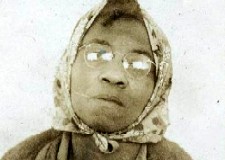 Lena Baker
Homicide · USA · 1944
Lena Baker was born on June 8, 1901, and was executed on March 5, 1945. She was…
1 victim
Lena Baker
Homicide · USA · 1944
Lena Baker was born on June 8, 1901, and was executed on March 5, 1945. She was…
1 victim
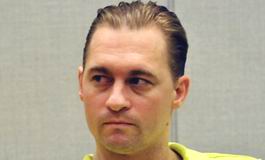 Leonard Gonzalez Jr.
Murderer · USA · 2009
Leonard Patrick Gonzalez Jr. was convicted of two counts of first-degree murder…
2 victims
Leonard Gonzalez Jr.
Murderer · USA · 2009
Leonard Patrick Gonzalez Jr. was convicted of two counts of first-degree murder…
2 victims
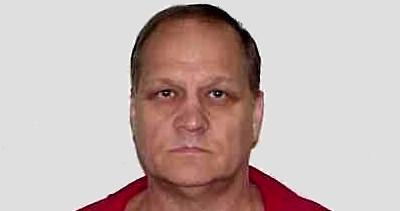 Roger Dale Epperson
Murderer · USA · 1985
Roger Dale Epperson Roger Dale Epperson (DOB 5-19-50) was sentenced to death Ju…
3 victims
Roger Dale Epperson
Murderer · USA · 1985
Roger Dale Epperson Roger Dale Epperson (DOB 5-19-50) was sentenced to death Ju…
3 victims
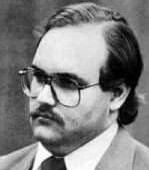 Richard Angelo
Serial killer · USA · 1987
Richard Angelo was 26 years old when he went to work at Good Samaritan Hospital…
25 victims
Richard Angelo
Serial killer · USA · 1987
Richard Angelo was 26 years old when he went to work at Good Samaritan Hospital…
25 victims
 Georg Karl Grossmann
Serial killer · Germany · 1913
Georg Karl Grossmann, who commonly called himself just Karl Grossman (also give…
50 victims
Georg Karl Grossmann
Serial killer · Germany · 1913
Georg Karl Grossmann, who commonly called himself just Karl Grossman (also give…
50 victims
- Gender
- male
- Country
- USA
- Location
- Nashville, Tennessee, USA
- Date of birth
- 1945
- Age at first offence
- 42
- Characteristics
- beheading, arson, mentally ill
- Victim profile
- James C. Matheny, 32 (church handyman)
- Method of murder
- Shooting (.38 caliber pistol)
- Date(s) of murder
- June 15, 1987
- Years active
- 1987
- Date of arrest
- 2 days after (surrenders)
- Status
-
Died in custody
Sentenced to death by electrocution on September 26, 1988; committed suicide in prison in 2003
Background
Rev. John David Terry was a minister and was the Associate Bishop Overseer of the Emmanuel Churches of Christ, a centrally organized governing body of local churches. He was also the pastor of the Woodland Street Church in Nashville.
In 1983, Terry entered a depressive state after his mother passed away, and he later said that he “became overwhelmed by the sense that he had failed in life.” He began to contemplate suicide. He rejected suicide as an option and pursued a plan to stage his death and assume a new identity.
Terry misappropriated church funds beginning in 1984. He began withdrawing large sums of money from the church account after learning he would not be appointed Bishop Overseer.
Terry tried to change his identity by following information he read in books ordered in April through Soldier of Fortune magazine. He searched obituaries and obtained documents under a new identity by forging a baptismal certificate.
Terry befriended James Matheney and planned to incorporate Matheney into his scheme to disappear by staging “some kind of a hoax or some kind of robbery and have . . . him be the one that would come in and . . . find blood or find some kind of robbery attempt.”
The offence
On June 15, 1987, Terry and Matheney were preparing to go on a fishing trip lasting for several days. Terry told the handyman to gas up the car and gave him his credit card and keys to the vehicle.
Terry testified that about half an hour after sending Matheney to get gas, he was making phone calls when he heard a noise in the church. He testified that he went to investigate and found the ladder to the church’s attic unfolded and the trap door open. He had secreted a duffel bag with a gun and some clothes in the attic several weeks earlier.
Terry climbed the stairs, retrieved the gun, and shot Matheney in the back of the head with a .38 caliber pistol.
Terry cut off Matheney’s head and also severed Matheney’s right forearm. He undressed Matheney down to his underwear and placed his own belt around Matheney’s waist. He placed Matheney’s head and arm in one bag and Matheney’s clothes and the tools used to dismember the body in another bag.
Terry disposed of body parts in a lake near Dover, Tennessee, after renting a boat on Kentucky Lake. He returned to the church and left remains of Matheney’s body. He removed tattooed pieces of flesh from each of the victim’s shoulders by cutting away the flesh and flushing it down a toilet.
Terry wrapped the body in carpet, doused it in gasoline, set the church on fire, and fled.
Firefighters extinguished the blaze before it fully consumed the corpse, and a medical examiner determined that the body was not Terry’s.
The jury found that the murder involved statutory aggravating circumstances.
Terry admitted he killed Matheney and dressed the body in his own clothes. He set the Emmanuel Church of Christ Oneness Pentecostal on fire in a scheme to fake his own death.
Terry also admitted misappropriating more than $30,000 in church money.
After setting the fire, Terry traveled to Memphis, paid cash for a two-night motel stay, and attended a Double A baseball game during the first night. On June 17, he threw the .38 caliber pistol into the Mississippi river and called his lawyer. He drove back to Nashville to turn himself in.
Investigation
The events were followed by a search of the burned church. Fire department officials conducted a search and discovered the body wrapped in a carpet.
Medical examiner Dr. Charles Harlan conducted the autopsy and testified that the decapitation, the amputation of the right forearm, and the excisions of skin from both shoulders occurred after the victim’s death. He also testified:
“the cause of death [was] not present in the dismembered body, [but was] located somewhere within the head.” He further testified: “His examination at the Forensic Science Center revealed that the head was very neatly cut all the way across any flesh area. It was just as smooth as if a steak were to be fileted. . . . When it came to the bone in the back–through the vertebra in the back, then those areas were–had real distinct saw marks . . . . The right arm was cut just below the elbow. It also was obvious that it was cut very straight, very neat, until it got to the bone portion and it was a sawing and grains going across the bone that were obvious to my eye.”
Arrest
On June 18, 1987, police apprehended Terry.
Detective Robert Moore testified that Terry’s demeanor upon arrest was “very matter of fact,” not demonstrating any emotion whatsoever. Sergeant Moore explained:
“I guess I was looking for some remorse or some signs. After being involved in a three day manhunt, like we had, I expected an awful lot more than what I saw. But I saw nothing but just plain straight up–just no sign of emotion at all.”
Trial
Terry was tried for capital murder and was convicted in 1988. He was sentenced to die in the electric chair.
The jury returned a death sentence after 13 hours of debate and after a brief church service.
Terry’s strongest ground for appeal was described by his lawyer as challenging whether the murder was committed in conjunction with a larceny, which the jury listed as one of two aggravating circumstances supporting the death penalty.
Lionel Barrett, Terry’s lawyer, argued that it did not amount to larceny under Tennessee’s felony murder statute.
The trial judge at one stage was Walter Kurtz of Circuit Court, who set the execution for April 3.
Sentencing
On September 26, 1988, Terry was sentenced to death by electrocution.
The Supreme Court of Tennessee later granted a new sentencing hearing after determining the trial court erroneously charged the jury that the murder was committed while Terry was committing a larceny.
A resentencing hearing occurred in August 1997. A jury again sentenced Terry to death and found two aggravating circumstances:
- that the murder was especially heinous, atrocious, or cruel in that it involved depravity of mind; and
- that the murder was committed for the purpose of avoiding, interfering with, or preventing a lawful arrest or prosecution of Terry.
The jury found that the aggravating circumstances outweighed the mitigating circumstances.
Consequently, on August 6, 1997, Terry was again sentenced to death.
The trial court entered a judgment in accordance with the jury’s verdict, and the Court of Criminal Appeals affirmed the sentence.
Appeals
Tennessee Supreme Court (automatic appeal)
The case was before the Supreme Court of Tennessee at Nashville on automatic appeal. The Supreme Court affirmed the Court of Criminal Appeals and held that:
- no prosecutorial misconduct occurred when the prosecutor asked the jury to consider certain facts and circumstances when weighing statutory aggravating circumstances against mitigating evidence;
- the trial court did not err in allowing the jury to consider relevant facts and circumstances tending to establish aggravating circumstances or to rebut mitigating circumstances;
- the evidence was sufficient to support a finding that the murder was especially heinous, atrocious, or cruel in that it involved depravity of mind;
- the evidence was sufficient to support a finding that Terry committed murder to avoid lawful arrest or prosecution; and
- the sentence of death was not disproportionate to the sentence imposed in similar cases.
The Supreme Court also noted that for all other issues not specifically discussed, it agreed with and affirmed the Court of Criminal Appeals.
Prosecutorial misconduct
Terry contended that the State erred in closing argument when it asked the jury to “consider in the balance,” “weigh . . . in the balance,” and “put in the balance” six “unique circumstances” against mitigating proof. The prosecutor listed the following factors on a handwritten chart: (1) “extreme premeditation”; (2) “innocent victim”; (3) “brutality of murder”; (4) “violated private trust”; (5) “burning a church”; and (6) “concealment of crime.”
The Supreme Court described the prosecutor’s framing, including these statements:
“We’ve talked about your duties as jurors. And the Judge is going to get very specific with you. But, basically, it’s like there’s two charges here that we have to prove beyond a reasonable doubt. You have to find at least one of them before you go to the next part of your consideration. Have we proved this was heinous, atrocious, or cruel? Have we proved the defendant murdered James Matheney as part of the plan to avoid being prosecuted?”
“Now, when you analyze and balance and you talk all about this, individually, and now, collectively, and the Judge will give you more instructions about that, these two Aggravating Factors, if you decide that one of them has been proven beyond a reasonable doubt, then you have to balance them against anything favorable to the defendant that’s been introduced. They’re called Mitigating Factors. And how do you balance them? Well, there are murders and there are murders. You can kill someone to avoid an arrest by driving by in a car and shooting them, no thought, no planning. But that’s not exactly the same thing we have here. Every case is different. Every case depends on its facts. So it’s the facts, Ladies and Gentlemen, that decides how important, how serious, how bad this crime is. Well, let me show you some of the facts, some of [the] things that I think you should consider in the balance, on how important, how weighty what he did or things that make it bad. These are not Aggravating Factors, but they are evidence that make this crime more serious.”
The Supreme Court held that any adverse effects were erased by jury instructions and that there was no evidence the jury was presented with non-statutory aggravating circumstances to be weighed against mitigating circumstances.
Application of “depravity of mind” aggravator
Terry challenged application of the statutory “heinous, atrocious, or cruel” aggravating circumstance.
The Supreme Court recited that at the time of the offense the aggravator provided that “[t]he murder was especially heinous, atrocious, or cruel in that it involved torture or depravity of mind.” It addressed definitions used by the trial court: “Heinous” means grossly wicked or reprehensible; abominable; odious; vile. “Atrocious” means extremely evil or cruel, monstrous, exceptionally bad, abominable. “Cruel” means disposed to inflict pain or suffering; causing suffering; painful. “Depravity” means moral corruption, wicked or perverse act.
The Supreme Court concluded that the evidence supported finding depravity of mind and held that the murder was especially heinous, atrocious, or cruel in that it involved depravity of mind.
Avoiding arrest or prosecution aggravator
Terry challenged the murder to prevent arrest aggravating circumstance.
The Supreme Court stated the provision:
“The murder was committed for the purpose of avoiding, interfering with, or preventing a lawful arrest or prosecution of the defendant or another.”
It held that the evidence supported that Terry committed murder at least in part to prevent arrest or prosecution for embezzlement of church funds.
The Supreme Court quoted testimony from Sergeant Moore about a change in Terry’s appearance:
“I had seen photographs . . . of John David Terry. . . [but] the person that I saw that morning, I had no idea who I was looking at. It was just a striking difference. . . . [H]is head was shaved, he had a dark tan, he was in casual khaki clothes and he just looked entirely different. I wouldn’t have known him on the street.”
The Supreme Court also reproduced a lengthy closing-argument statement attributed to the State, including:
“He told you that he was thinking about committing suicide, but the evidence is not there to support it. The evidence is there to support that this man was going to selfishly leave his church, leave his family, steal the money, and start new somewhere else. There’s no evidence to support that he was going to stick a gun in his mouth and pull the trigger like he told you he tried to do many times but simply couldn’t get it. There’s no evidence to support that, because he didn’t have any qualms at all about pulling that trigger and shooting James Matheney. He’s planning to leave because he’s realized he stole the money, he’s going to take out a big amount to plan his new life. But he has to leave behind the old David Terry so that he can’t be prosecuted in his new life, so that he can’t be found. So he plans the plan that you’ve heard about. He plans to murder James Matheney. . . . . . . The murder was absolutely committed for no other reason other than for Mr. Terry to get away, to get away from the church and start a new life, because he’d been stealing. And he knew that he’d eventually get caught and would be prosecuted. Examining the evidence in the light most favorable to the State, we hold that a rational jury could have concluded beyond a reasonable doubt that the defendant committed this murder, at least in part, to prevent his arrest for the separate crime of theft.”
Proportionality review
The Supreme Court conducted comparative proportionality review and concluded that the death sentence was not disproportionate and was not arbitrarily applied.
It referenced that the record showed the victim was most likely shot in the back of the head, that there was no evidence of provocation, and that at least one motive was to stage death and escape to avoid lawful arrest or prosecution for embezzlement.
It referenced that Terry was a middle-aged Caucasian male, the pastor of a local church, and had no prior record of criminal activity.
It also noted mitigation evidence that Terry had major depression at the time of the murder, while also concluding that proof showed he did not suffer from such severe mental illness that he could not understand the criminality of his acts.
The Supreme Court stated that upon arrest Terry was cooperative but devoid of remorse, while incarcerated he had shown remorse and continuous effort to rehabilitate himself by participating in religious activities, counseling fellow inmates, and working in the prison job to send money monthly to his wife and daughter.
Outcome
The Supreme Court affirmed the conviction and sentence of death and held that the sentence of death was neither disproportionate nor arbitrarily applied.
The conviction and sentence were affirmed and were to be carried out on October 17, 2001, unless otherwise ordered by the Supreme Court or proper authority.
Terry was indigent, and costs of the appeal were assessed against the State of Tennessee.
Aftermath
In 2003, before appellate attorneys were scheduled to argue for a new trial, Terry hanged himself in a bathroom at Riverbend Maximum Security Institution in Nashville, where he was working as a data-entry clerk while his appeals were pending.
Terry was 58 years old at the time of his suicide. He left a wife and three sons.
Matheney had a 4-year-old son at the time of his death.
Timeline
- June 15, 1987 — Terry and Matheney prepared to go on a fishing trip; Terry provided the victim’s credit card and keys and the victim was sent to get gas.
- June 16, 1987 — Matheney’s headless body was found in Terry’s burning church; Terry set the church on fire.
- June 17, 1987 — Terry threw the .38 caliber pistol into the Mississippi river and called his lawyer.
- June 18, 1987 — Police apprehended Terry.
- September 26, 1988 — Terry was sentenced to death by electrocution.
- August 6, 1997 — Terry was again sentenced to death following resentencing.
- April 25, 2001 — The Supreme Court opinion was filed.
- 2003 — Terry hanged himself in a bathroom at Riverbend Maximum Security Institution in Nashville while his appeals were pending.
Other details
Terry dressed Matheney in Terry’s own clothes and used the victim’s fingerprints on a beer bottle and credit cards. This was done after Terry severed the victim’s forearm to apply the hand to those items.
Inside Terry’s car, police-related items he left included a beer bottle, a towel smeared with Terry’s own blood withdrawn the previous night, credit cards, and the victim’s tackle box, rod, and reel.
After the murder, Terry placed his own wallet in the front room area of the boarding house.
Terry wrapped the body in carpet and chopped wood was placed in the attic.
Terry allegedly planned for Matheney to help him with the plot by staging “some kind of a hoax or some kind of robbery and have . . . . .
Terry placed $100 bills in his three sons’ wallets and gave his wife instructions that she should pay some bills Terry normally handled.
His wife was the beneficiary of a $50,000 life insurance policy. His children were also named beneficiaries of a $100,000 life insurance policy he had taken out on himself.
A retired psychiatrist, Dr. Robert Begtrup, testified that Terry was legally competent to stand trial, that Terry was not insane at the time of the offense, and that Terry was suffering from major depression when he committed the murder, characterizing the depression as a serious mental illness.
Dr. Begtrup testified that Terry’s problem probably started four years prior with the death of Terry’s mother, who was described as Terry’s “only confidante,” and that Terry never recovered from his mother’s death.
Terry testified that he “just knew that [he] was in trouble . . . that [he] had killed somebody.”

Spotted an error, or have more information about this case?