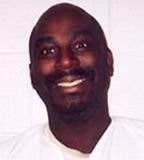
Gregory Thompson
Murderer Brian Kevin Rosenfeld
Murderer · USA · 1985
Brian Kevin Rosenfeld Brian Kevin Rosenfeld was sentenced to three concurrent l…
23 victims
Brian Kevin Rosenfeld
Murderer · USA · 1985
Brian Kevin Rosenfeld Brian Kevin Rosenfeld was sentenced to three concurrent l…
23 victims
 Marvin Gray
Murderer · USA · 1975
Marvin Gray was convicted killer who claimed responsibility for 23 slayings and…
23 victims
Marvin Gray
Murderer · USA · 1975
Marvin Gray was convicted killer who claimed responsibility for 23 slayings and…
23 victims
 Yahweh ben Yahweh
Murderer · USA · 1980
Yahweh ben Yahweh was born and legally named Hulon Mitchell Jr. (October 27, 19…
23 victims
Yahweh ben Yahweh
Murderer · USA · 1980
Yahweh ben Yahweh was born and legally named Hulon Mitchell Jr. (October 27, 19…
23 victims
 Russell Ellwood
Murderer · USA · 1991
Russell Ellwood was a former taxi driver. Authorities suspected him of killing…
20 victims
Russell Ellwood
Murderer · USA · 1991
Russell Ellwood was a former taxi driver. Authorities suspected him of killing…
20 victims
 Parramore Sanborn
Murderer · USA · 1983
Parramore Lee Sanborn was born 8-3-45. The case involved the kidnapping, rape,…
1 victim
Parramore Sanborn
Murderer · USA · 1983
Parramore Lee Sanborn was born 8-3-45. The case involved the kidnapping, rape,…
1 victim
 Ronald Lott
Murderer · USA · 1986
Ronald Clinton Lott was the petitioner-appellant in Lott v. Trammell before the…
2 victims
Ronald Lott
Murderer · USA · 1986
Ronald Clinton Lott was the petitioner-appellant in Lott v. Trammell before the…
2 victims
 Oscar Ray Bolin
Serial killer · USA · 1986
Oscar Ray Bolin was convicted in Florida of first-degree murder and false impri…
3 victims
Oscar Ray Bolin
Serial killer · USA · 1986
Oscar Ray Bolin was convicted in Florida of first-degree murder and false impri…
3 victims
 James Williams
Murderer · USA · 1948
James Williams was executed by asphyxiation-gas in Nevada on August 25, 1950. J…
2 victims
James Williams
Murderer · USA · 1948
James Williams was executed by asphyxiation-gas in Nevada on August 25, 1950. J…
2 victims
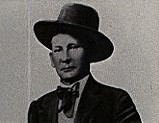 Gregorio Cortez Lira
Murderer · USA · 1901
Gregorio Cortez Lira — defendant; Mexican American folk hero; tenant maize farm…
1 victim
Gregorio Cortez Lira
Murderer · USA · 1901
Gregorio Cortez Lira — defendant; Mexican American folk hero; tenant maize farm…
1 victim
 Susan Eberhart
Murderer · USA · 1872
Susan Eberhart was a white woman aged between 17 and 21. She served as the hous…
1 victim
Susan Eberhart
Murderer · USA · 1872
Susan Eberhart was a white woman aged between 17 and 21. She served as the hous…
1 victim
- Gender
- male
- Country
- USA
- Location
- Coffee County, Tennessee, USA
- Date of birth
- December 13, 1961
- Age at first offence
- 24
- Characteristics
- kidnapping, abuse
- Victim profile
- Brenda Blanton Lane, 28
- Method of murder
- St abbing with knife
- Date(s) of murder
- January 1, 1985
- Years active
- 1985
- Date of arrest
- Next day
- Status
-
Sentenced to death
Sentenced to death on August 22, 1985
Background
Gregory Thompson was diagnosed with undifferentiated schizophrenia, delusions and hallucinations. He did not receive medical treatment until after his incarceration.
Thompson’s family history was described as “positive for mental illness.” His mother died when he was aged three, and he was raised by his grandmother, who had an alcohol dependency. His grandmother sometimes stayed in bed for days without leaving any food in the house for Thompson and his siblings. Thompson witnessed beatings of family members and the brutal beating and rape of his mother. His grandmother remembered that she would “yell” at Thompson and afterward he would repeatedly bang his head into the wall to “try and knock the devil out.”
At school, Thompson hysterically cried so much that he was nicknamed “Fire Engine” due to the sound he made.
Thompson suffered four major head injuries before the age of 23. At age 15 he was in a car accident where he was thrown through the windscreen and suffered a severe seizure following the trauma. During his time in the military, he was attacked by several men wielding crowbars, and he again had a seizure following the attack. After that head injury, several people close to Thompson noted a change in his personality. His girlfriend at the time, Ms Cajulao, described him as “caring and sensitive” before the injury but noted that he became “paranoid and unreasonably concerned about his and her safety” after the attack in the military.
Whilst in the military, Thompson was instructed to see a psychiatrist, but Dr. Sultan stated that Thompson was too frightened to do so. After Thompson returned from the military, his grandmother observed him staring into space for long periods of time and mumbling to himself. His sister, Ms Wharton, described him as “bizarre” and “paranoid” when he returned, noting that she was afraid of him for the first time in her life and that she could no longer identify with her brother. She described serious episodes of emotional upset and aggression that led her to approach her grandmother about obtaining treatment for him.
Dr. Rabun evaluated Thompson in March 2003 and January 2004 and noted that Thompson’s mental illness was present before he went to prison and was exacerbated by his incarceration.
The offence
On New Year’s Day 1985, Thompson and a juvenile accomplice abducted Brenda Blanton Lane at knife point from the parking lot of a Shelbyville Wal-Mart and forced her to drive to a remote location outside Manchester.
Thompson stabbed Lane multiple times in the back and left her alone to die, causing her to bleed to death. Thompson’s only motive for the murder was to obtain Lane’s car.
At the time of her death, Brenda Lane was 28 years old. She was married and a budding journalist, having worked as a reporter and columnist for the Shelbyville Times-Gazette and later for United Methodist Communications in Nashville.
In 1982, Lane was named the “Outstanding Young Woman of Bedford County.” She was the niece of Chief Jesse Blanton, the police chief at the time. Brenda Lane’s sister, Barbara Brown, said Lane “was praying even in the last minute and I know she was scared. She was a very strong Christian, highly intelligent and sweet, an all-around good person.”
Sue Allison, a former editor of the Times-Gazette, recalls Lane as a “wonderful, soft-hearted person who would help the down-trodden.”
Thompson and McNamara held a knife on Lane and forced her to drive them to a remote place in Coffee County where he stabbed Lane to death. The 1982 Chevrolet Cavalier was found burned when returned to Georgia.
Marietta Police reported that at the isolated place in Manchester, Thompson told McNamara “not to look but she did look” and saw the stabbing. McNamara told police where to find Lane’s body.
Lane and Allison “shared a lot of religious and philosophical beliefs and had a lot of conversations,” Allison said.
Allison, now spokeswoman for the state Supreme Court and the state courts of appeal, said:
“I suspect Brenda was born good and stayed good and kept that child-like sweetness,”
Allison also said:
“She never got hard,” like many journalists. “Faith and prayer” said Barbara Brown on how she deals with the loss of a sister. “It’s not peace,” she said. “It’s more acceptance of something I can’t change. I think about Brenda every day.”
Investigation
After the abduction and murder, Marietta Police received information connected to the isolated place in Manchester where Lane was stabbed and where her body was found.
Arrest
Thompson was arrested on 2 January. Whilst in custody he gave a statement admitting his guilt.
Trial
Thompson’s trial involved a “second phase” at which he was sentenced to “death.” He was convicted of first degree murder following a jury trial.
Gregory Thompson received a capital sentence following a jury trial on 22 August, 1985. The essential facts of the case were described as not in dispute.
Sentencing
On 22 August, 1985, Thompson received a capital sentence following a jury trial. He was sentenced to death.
Appeals
On 8 April 2004, the Supreme Court of Tennessee heard an appeal on Thompson’s competency to be executed. Tennessee law stated that a prisoner was not competent to be executed if he lacked the mental capacity to understand the fact of the pending execution and the reason for it (Van Tran 6 S.W 3d).
Prior to the competency hearing, Thompson was evaluated by mental health experts: Dr. Faye Sultan, Dr. George Woods, Dr. Michael First, and Dr. John S. Rabun. Each determined that Thompson was incompetent to be executed because he did not grasp either the reality or nature of his impending execution or the reason for it, and each diagnosed him as suffering from schizophrenia.
The evidence of each expert was presented to the Supreme Court of Tennessee, but the Court denied a hearing on Thompson’s competency to be executed. Although the Court accepted that the mental health reports indicated that Thompson was schizophrenic and noted that each expert stated he was incompetent, the Court held that the reports illustrated his competency to be executed.
The Court placed emphasis on Thompson’s awareness of his impending execution and his understanding that the sentence was passed for the murder of Brenda Lane. The state relied heavily on statements made by Thompson.
In an examination with Dr. Rabun, Thompson mentioned that during the “second phase” of his trial he had been sentenced to “death” and that executions in Tennessee are by “lethal injection or electric chair.” The Court suggested this showed he understood that he was given a capital sentence and knew how the death penalty was carried out.
Thompson told Dr. Rabun that he was convicted in 1985 of first degree murder.
In contrast, the Court rejected the notion that Thompson’s mental illness and corresponding beliefs and psychosis raised genuine issues regarding his competency.
In an evaluation with Dr. George Woods, Thompson stated that even if he is executed, he will “stay alive for two years.” He also mentioned that after his execution he will “go to Hawaii.”
Dr. Sultan noted that Thompson believed he was a “lieutenant” in the Navy and would therefore have a military trial, which would exonerate him, so he believed that he would not be executed. According to the experts, this suggested Thompson did not understand the fact of his execution.
The Supreme Court of Tennessee found Thompson competent to be executed.
Outcome
Gregory Thompson was convicted of first degree murder and received a capital sentence. Thompson was sentenced to death.
The execution date was August 22, 1985. Execution was stayed.
Other details
Thompson had been treated by the Tennessee Department of Corrections since the late 1980’s and assessed by several psychologists, most of whom diagnosed him with undifferentiated schizophrenia, delusions and hallucinations. He had been taking antipsychotic, antidepressant and mood stabilizing drugs. Medical records indicated that his mental health deteriorated after incarceration in 1985.
One psychologist who treated Thompson on death row believed he was malingering and discontinued his medication. Thompson reacted badly to the change in treatment. Dr. Sultan stated that in a non-medicated state Thompson was “floridly psychotic.” Dr. Sultan reported that Thompson’s speech became so disorganised and frantic that it was largely incomprehensible. Dr. Sultan reported that Thompson became agitated, aggressive and perceived danger everywhere around him.
Thompson was experiencing a delusion that he was residing on a slave ship from Africa and that the guards were “slave traders.” Dr. Sultan believed that medication relieved some symptoms, but the major symptoms of schizophrenia remained even when Thompson received medication.
Dr. Sultan stated:
“if you look back in the childhood of this man, the beginnings of mental illness are apparent.”
Thompson’s family also included Ms Cajulao and Ms Wharton, who described him at different times with “paranoid” and “bizarre” characteristics after military-related injury and return.
Spotted an error, or have more information about this case?