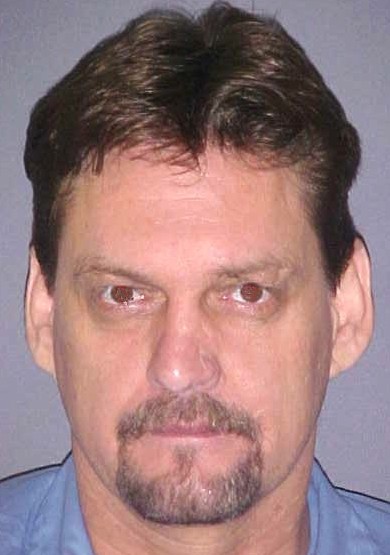
Richard Thornburg
Murderer Russell Ellwood
Murderer · USA · 1991
Russell Ellwood was a former taxi driver. Authorities suspected him of killing…
20 victims
Russell Ellwood
Murderer · USA · 1991
Russell Ellwood was a former taxi driver. Authorities suspected him of killing…
20 victims
 Robert Martines Perez
Murderer · USA · 1994
Name: Robert Martines Perez · Other name used in proceedings: Robert Martinez P…
15 victims
Robert Martines Perez
Murderer · USA · 1994
Name: Robert Martines Perez · Other name used in proceedings: Robert Martinez P…
15 victims
 Billy Frank Vickers
Murderer · USA · 1993
Billy Frank Vickers Vickers was executed by lethal injection in Texas on Januar…
14 victims
Billy Frank Vickers
Murderer · USA · 1993
Billy Frank Vickers Vickers was executed by lethal injection in Texas on Januar…
14 victims
 Gaile Owens
Murderer · USA · 1985
Gaile Kirksey Owens was convicted of accessory before the fact to wit: murder i…
1 victim
Gaile Owens
Murderer · USA · 1985
Gaile Kirksey Owens was convicted of accessory before the fact to wit: murder i…
1 victim
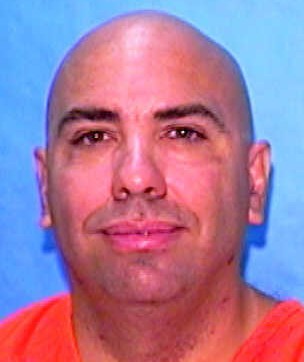 Jose Antonio Jimenez
Murderer · USA · 1990
Jose Antonio Jimenez (DOB: 10/12/63) was sentenced to death on December 14, 199…
2 victims
Jose Antonio Jimenez
Murderer · USA · 1990
Jose Antonio Jimenez (DOB: 10/12/63) was sentenced to death on December 14, 199…
2 victims
 Steven Benson
Murderer · USA · 1985
Steven Benson was a 33-year-old Florida businessman who was arrested and charge…
2 victims
Steven Benson
Murderer · USA · 1985
Steven Benson was a 33-year-old Florida businessman who was arrested and charge…
2 victims
 Frederick Nodder
Murderer · United Kingdom · 1937
Frederick Nodder lived at 9 Neill Road, Sheffield in 1934, in the Hunters Bar d…
1 victim
Frederick Nodder
Murderer · United Kingdom · 1937
Frederick Nodder lived at 9 Neill Road, Sheffield in 1934, in the Hunters Bar d…
1 victim
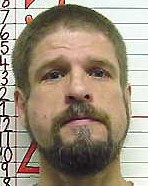 Jeffrey Tokar
Murderer · USA · 1992
March 11, 1992 — Jeffrey Tokar picked up his girlfriend, Sandra Stickley, share…
1 victim
Jeffrey Tokar
Murderer · USA · 1992
March 11, 1992 — Jeffrey Tokar picked up his girlfriend, Sandra Stickley, share…
1 victim
- Gender
- male
- Country
- USA
- Location
- Grady County, Oklahoma, USA
- Date of birth
- J uly 2, 1965
- Age at first offence
- 31
- Characteristics
- revenge, kidnapping, arson
- Victim profile
- James D. Poteet, 51, Terry Lynn Shepard, 39, and Keith Alan Smith, 24
- Method of murder
- Shooting
- Date(s) of murder
- September 28, 1996
- Years active
- 1996
- Date of arrest
- —
- Status
-
Executed
Executed by lethal injection in Oklahoma on April 18, 2006
Case details
Richard Alford Thornburg Jr. was a Grady County death row inmate who was convicted of three counts of first-degree murder, shooting with intent to kill, first-degree arson, and two counts of kidnapping. He was sentenced to death on each of the three counts of first-degree murder and received consecutive sentences of life imprisonment, thirty-five years' imprisonment, and two terms of ten years' imprisonment on the remaining counts.
Timeline
- September 28, 1996 — Richard Thornburg, along with codefendants Glenn Anderson and Roger Embrey, went to Marvin Matheson's trailer, forced Matheson to accompany them at gunpoint, and drove to James Donald Poteet's house where three men were shot and the house was set on fire.
- April 13, 1999 — Oral argument was heard in Thornburg v. State, 985 P.2d 1234 (Okla. Crim. App. 1999).
- January 19, 1999 — The case was submitted to the Court of Criminal Appeals.
- May 15, 2000 — The United States Supreme Court denied certiorari with respect to his direct appeal.
- August 12, 2005 — Thornburg was scheduled to be executed; he did not request a clemency hearing.
- August 15, 2005 — A death-penalty appeal organization published information about Thornburg and his planned execution date.
- April 18, 2006 — The Oklahoma Court of Criminal Appeals set April 18 as the execution date for Thornburg, and Thornburg was executed by lethal injection in Oklahoma.
Background
One month before the murders, Thornburg had been shot by an unknown suspect and believed Poteet or Matheson may have been responsible, according to court records.
Thornburg kidnapped Marvin Matheson at gunpoint and drove with Embrey and Anderson to Poteet's residence. Prosecutors also alleged Thornburg and Poteet argued over drug money.
Thornburg had been subject to blackouts during bouts of heavy drinking, and defense attorneys presented testimony that Thornburg had brain damage, according to trial testimony described in reporting. In mitigation, a medical expert testified that he had organic brain damage and was subject to blacking out whenever he drank in excess.
The offence
Between 3:00 and 4:00 a.m. on September 28, 1996, Thornburg, along with codefendants Glenn Anderson and Roger Embrey, went to Marvin Matheson's trailer. All three were armed. Thornburg accused Matheson of being responsible for the shooting of Thornburg the month before.
The group also suspected Jim Poteet of a role in the earlier shooting. They decided to question Matheson and Poteet together to figure out whether Matheson or Poteet had shot Thornburg. They forced Matheson out of his trailer at gunpoint and drove him to Poteet's residence. Thornburg and Embrey went inside while Anderson and Matheson remained in the car.
After hearing gun shots from the house, Anderson took Matheson inside. Matheson saw Terry Lynn Shepard sitting on a chair outside the bathroom door and Poteet sitting on the bed in the back bedroom. Poteet was being held at gunpoint by Thornburg. Poteet had been shot in the foot and his forehead was bruised and bloody. Matheson observed Thornburg shoot again at Poteet's feet as Poteet was being pressed to tell who had shot him.
Anderson instructed Thornburg to take Matheson to Poteet's rental unit near the house and get Jimmy Scott. Thornburg escorted Matheson to the rental unit with a gun to his back. Kevin Smith arrived at Scott's house to retrieve his girlfriend's purse, and Thornburg instructed Smith to knock on Scott's door. The door was answered by Donnie Scott, the brother of Jimmy, who was not home. Thornburg forced Scott, Smith, and Matheson to go back to Poteet's house.
Once inside Poteet's house, Anderson held the men at gunpoint in the kitchen while Thornburg went to the back bedroom. Matheson could hear Thornburg and Poteet arguing about drugs and money. Anderson instructed Embrey to bring everyone back to the bedroom.
The men injected Matheson and Poteet with drugs. Anderson commented that he intended to "OD" them. Anderson and Thornburg also injected themselves.
Thornburg continued arguing with Poteet about whether Poteet shot him. Thornburg told Poteet that he was going to shoot him, then said "better yet, I ain't gonna shoot you," and instructed Matheson to shoot Poteet. Embrey and Anderson pointed their guns at Matheson, threatening to shoot him if he did not shoot Poteet.
When Matheson refused, Thornburg shot Poteet in the side.
Thornburg then told Matheson that Matheson was "going to shoot somebody and that it had a lot to do with if [Matheson left] the house or not." Matheson was ordered to shoot one of the men in the bathroom. Matheson attempted to shoot Scott in the head, but the gun did not have a bullet. Anderson took the gun into the hallway, then returned insisting that Matheson shoot Scott or Anderson would kill Matheson. Matheson shot Scott in the chest.
Embrey gave his gun to Anderson, telling him that he did not want to be involved in shooting anyone, and escorted Matheson back to the car. Matheson heard three or four more shots coming from the house.
As Matheson was sitting in the car, Embrey opened the trunk and Matheson could smell gas as if Embrey was siphoning gasoline. The men removed a sack of "Longneck Budweiser" bottles from the back seat. Someone threw something through a window and Poteet's bedroom window was broken.
After setting the house on fire, the men drove away. Thornburg dropped Anderson and Embrey off by the side of the road so they could stash their guns. Thornburg then told Matheson to get out of the car, hide for a bit, and keep his mouth shut or the others would blame him for killing everyone.
Scott, still alive in the burning house, attempted to help Poteet crawl out but was unsuccessful. Scott then made it out himself and lay down in the grass.
A man and his son drove past the burning house shortly after 5 a.m., saw Scott, took him to a convenience store, and called the police. Scott survived. Smith, Poteet, and Shepard perished in the fire.
Investigation
Scott gave a statement to the police after he was able. Matheson also gave officers an account of his activities once he learned that his family was under police protection. When Matheson heard that officers wanted to arrest him in connection with the murders, he turned himself in.
Richard Goss, Deputy Inspector with the Oklahoma State Bureau of Investigation (OSBI), testified that Scott identified Thornburg in a photographic line-up on September 28, as the “one that was giving the orders.”
Fire and medical evidence was presented regarding accelerants and injuries. Elvin Barnhill, an investigator with the State Fire Marshal's office, described that Shepard was found in the northeast bedroom, Poteet in the hallway leading to the two bedrooms, and Smith on the bed in the southeast bedroom. Barnhill detected evidence of the use of accelerants in four spots in the northeast bedroom and discovered burn patterns indicating a flammable substance near Smith and between his legs. Barnhill also testified about the possibility that accelerants could "leach[ ] out" during a fire. Barnhill testified that the fire was likely set intentionally between 4:45 and 5:15 a.m. on the 28th.
Fred Jordan, Oklahoma's Chief Medical Examiner, testified that each victim had been shot and that some showed signs of burning while still alive. He testified about circumstances of death related to gunshot wounds and fire-related injuries.
Arrest
Thornburg was arrested on September 29 at a bar. Teresa Burgess testified that she overheard Thornburg say to himself, “[T]hree died last night and three more will die tomorrow.”
Two passers-by who rescued Scott were Loyd Keagans and his son. Keagans testified that they left home at 5:05 a.m. on September 28 to see a football game in College Station, Texas, noticed the burning house, saw Scott, and called the sheriff’s department.
After Thornburg was arrested, officers interviewed patrons and Burgess provided what she had heard.
Thornburg was told by OSBI Deputy Inspector Richard Goss that he was being charged with three counts of first-degree murder, and Thornburg responded:
“[G]ood. Prove it, mother fucker. You couldn't get your keys if they were-you couldn't find your keys if they were stuck up your ass.”
Trial
Charges and convictions
At trial in the District Court of Grady County, Thornburg was convicted of:
- First Degree Murder (Counts I, II and III)
- Shooting With Intent to Kill (Count IV)
- First Degree Arson (Count V)
- Kidnapping (Counts VI and VII)
The jury found the existence of four aggravating circumstances as to each count of first-degree murder:
- that Thornburg knowingly created a great risk of death to more than one person;
- that the murders were especially heinous, atrocious or cruel;
- that the murders were committed for the purpose of avoiding or preventing a lawful arrest or prosecution; and
- the existence of a probability that Thornburg would commit criminal acts of violence that would constitute a continuing threat to society.
The jury assessed punishment at death on each of the three counts of first-degree murder. The jury assessed punishment at life imprisonment for Shooting With Intent to Kill, thirty-five years' imprisonment for First Degree Arson, and ten years imprisonment for each count of Kidnapping. The trial court sentenced Thornburg accordingly and ordered consecutive service of the sentences.
Witness testimony and evidentiary issues
During defense counsel's cross-examination of State witness Marvin Matheson, defense counsel asked how long Matheson stayed in jail after he was arrested following the homicides. Matheson responded:
“Like four or five days and I gave a statement to them like when they arrested me in Alex they told me they'd give me a polygraph and if I was telling the truth that they would let me out on an OR bond. And I sat in jail five days or longer, I don't know, or less, I don't know, and I passed the polygraph and I come [sic] in front of the Judge here and got an OR bond. (TR. III.146)”
The appellate decision stated that the jury should not have heard testimony indicating that Matheson took and passed a polygraph test, and it described the question of whether the error required relief as plain error because defense counsel did not object or request an admonishment.
Other trial testimony included:
- Richard Goss’s testimony that Scott identified Thornburg in a photographic line-up.
- Eric Huber’s testimony placing Anderson, Thornburg, and Embrey at a bar until about 2 a.m. and describing further movement between houses.
- Dana Nath’s testimony that Thornburg, Anderson, and Embrey came to her house after 2 a.m. and stayed about half an hour.
- Roy Scott’s testimony that he noticed Thornburg’s gold car pulling into Poteet’s drive around 4:30 a.m.
- Jatone Kennedy’s testimony about events leading up to the morning of the murders and that Smith went to get her purse and never returned.
- Jeff Franklin’s testimony that Scott told him three or four people he did not know shot him, including a heavy-set person with long hair.
- Testimony by Julie Maxon about Thornburg attempting to borrow a police scanner and being unusually high the evening of September 27, and about a prior incident where Thornburg had been shot.
- Testimony by Terry Alexander, a deputy sheriff, about Thornburg telling him “not to worry about it, he'd take care of it.”
Defense and alibi
Thornburg’s sole defense was alibi. He testified that he had been out drinking with Roger Embrey, became extremely intoxicated, blacked out, and woke up in the back seat of his car at Embrey's house on the morning of the murders. He claimed no recollection of making the remark overheard by Burgess.
On cross-examination, he maintained he had no recollection of the early morning hours of September 28, but conceded that if witnesses said he was at the Naths' house, he probably was.
The defense called witnesses to support the alibi:
- Ruby Davis, Embrey’s girlfriend
- Roy Thornburg, Thornburg’s brother
- Terry Mainka, friend of Roy Thornburg
- Patricia Evans, friend who testified she saw two vehicles and a man walking across the highway at about 5 a.m., though she did not recognize him as Thornburg and did not see Thornburg’s car.
The state called rebuttal witnesses including OSBI Deputy Inspector Richard Goss, who impeached Ruby Davis, and Teresa Embrey.
Sentencing
The trial court sentenced Thornburg to death on each of the three counts of first-degree murder. In addition to death sentences, the jury returned life imprisonment for shooting with intent to kill, thirty-five years’ imprisonment for first-degree arson, and ten years’ imprisonment for each kidnapping count, with the trial court ordering consecutive sentences.
In mandatory sentence review, the appellate decision addressed whether the death sentences were imposed under the influence of passion, prejudice, or any other arbitrary factor and whether the evidence supported the jury's findings of aggravating circumstances. The appellate decision concluded that it could not say the death sentence was imposed under passion, prejudice, or any other arbitrary factor, and it reviewed each aggravating circumstance and mitigation.
Appeals
Direct appeal (Oklahoma Court of Criminal Appeals)
Thornburg v. State, 985 P.2d 1234 (Okla. Crim. App. 1999), resulted in affirmance.
The appellate decision held that:
- evidence of Thornburg’s intoxication did not warrant instructions on lesser included offense of first-degree manslaughter or defense of voluntary intoxication;
- removal of a juror on less than clear and convincing evidence of misconduct did not prejudice Thornburg;
- prosecutorial comments were not so egregious as to rise to plain error;
- defense counsel was not ineffective;
- the State’s inadequate notice of its intent to produce victim impact testimony was harmless error;
- avoidance of lawful arrest or prosecution aggravator was inapplicable with respect to murder for which there was no predicate crime;
- evidence was sufficient to support all other aggravators; and
- sentences of death were both appropriate and factually substantiated.
The appellate court found the evidence sufficient to support the continuing threat aggravating circumstance and other aggravating circumstances, including analysis of avoidance of lawful arrest or prosecution for certain counts.
In discussing “continuing threat,” the appellate decision described evidence including prior barroom brawls, an overheard statement: “three died last night and three more will die tomorrow,” menacing other inmates and assaulting a jailer after incarceration, and the callous nature of the crime.
The appellate decision addressed instruction errors related to “especially heinous, atrocious or cruel” and stated that an incorrect instruction was harmless because it did not lessen the standard of proof.
The appellate decision also addressed mitigation instructions, noting that defense counsel reviewed proposed instructions and did not request a specific instruction covering a history of alcoholism and intoxication at the time of the offense, and it addressed second-stage instructions including an Enmund/Tison instruction.
Federal habeas (Tenth Circuit)
Thornburg v. Mullin, 422 F.3d 1113 (10th Cir. 2005), resulted in affirmance of denial of habeas relief.
The Court of Appeals held that:
- the state appellate court’s rejection of a claim based on admission of polygraph evidence was not unreasonable;
- state rejection of a claim based on failure to sua sponte give voluntary intoxication instruction was not unreasonable;
- the state-of-mind exception to the hearsay rule applied to codefendant’s statements regarding his intent;
- codefendant statements used to show notice of intent were not hearsay;
- the state appellate court did not act contrary to or unreasonably apply federal law in admitting gruesome photographs;
- the state court’s determination that alleged prosecutorial misconduct did not render conviction or death sentence fundamentally unfair was not an unreasonable application of federal cumulative error doctrine;
- rejection of ineffective assistance of counsel claims was not contrary to or unreasonable application of federal law; and
- appellate counsel was not ineffective in failing to raise structural error claims arising from presence of eye-for-an-eye language so as to provide cause for procedural default.
The federal court described the background and trial testimony, the penalty phase aggravating factors, and the mitigation evidence, and it analyzed prosecutorial misconduct allegations, including quoted arguments during the guilt and sentencing phases.
Among the quoted prosecutorial statements cited in the federal decision, the following guilt-phase argument was included:
“Look at Donnie Scott. He's got a good job now. He's obviously off drugs. Who's to say he can't lead a very, very productive life? Who's to say Mr. Poteet, Mr. Shepard couldn't have done the exact same thing? You know, is Mr. Thornburg today in Court, there's no question about that. Our legal system says this is his day in Court. But this is also our three victims' day in Court. This is Mr. Shepard's, Mr. Poteet and Mr. Smith. ···· Folks, we have three victims here who are not here today. Mr. Shepard, Mr. Smith and Mr. Poteet, they can't get up here and tell you on the witness stand how Mr. Thornburg slaughtered them. Shot them and left them to burn alive in the house. They can't get up here to tell us that. They're never going to be here. They're never going to testify. They're never going to be with their families for holidays, Christmases. And you've got families here. This is also their day in Court, too, not just this defendant. Tr. IV at 111-12.”
The federal decision also included lengthy quoted sentencing-phase argument, including:
“And you must give independent consideration to each and every one of the murder convictions because every one of those individuals in there was a separate life, and that is they never deserved to die in the manner in which they died. And we can't change that. But I can and you can give them at least individual consideration with the understanding that the man who murdered them, the man who led, the man who created this and the man who was out seeking for revenge that night, that he receive the punishment that is just under the statutes, under the law and most important in this case, as we discussed at the very beginning. ··· And we told you what the law is. That's merely the charges we file against somebody. But that's not easy. There's nothing easy about it. You know, we all try to be moral people, we think about trying to do good for our community, our society. When we file a piece of paper, we're asking you to sentence this person to death. We're asking you to return a verdict allowing the State to execute Mr. Thornburg. So basically we're asking you the State for the authority to do that. There's nothing easy about that. We're talking about life and death. Nothing easy at all. ··· Justice, folks, cries for the death penalty in this case like no other case. Justice cries for the death penalty. There is no other reasonable verdict, nothing. Nothing can come close. Talk about the sword of mercy. It's above Judge Winchester. The sword there. You live by the sword, you die by the sword, folks. We're asking you to return a verdict now of guilty which you already have. The maximum punishment is on everything. If you really don't want Mr. Thornburg back on your streets ever again, then the only proper punishment is death. We're asking you to sentence Mr. Thornburg to that. It should not be a difficult decision. I know it is. We're talking about killing somebody. You're authorizing the State to kill somebody. But there is no other just verdict. This is justice. Tr. IV at 195-96, 201-02, 205-06.”
Petition-in-error filing and procedural dates
The appellate decision described that:
- Thornburg’s Petition-in-Error was filed on November 7, 1997.
- His Brief-in-Chief was filed on August 24, 1998.
- The State's Response Brief was filed on December 23, 1998.
- The case was submitted to the Court on January 19, 1999.
- Oral argument was heard on April 13, 1999.
Outcome
The Oklahoma Court of Criminal Appeals set April 18 as the execution date for Richard Thornburg. He was executed by lethal injection in Oklahoma on April 18, 2006.
Thornburg apologized to family members of some of his victims and said:
“I just want to say I'm sorry for all the pain I've caused,”
“I'm truly ashamed of my actions.”
“I wish I could take it back.”
Execution reporting described that a lethal cocktail began to flow at 6:16 p.m. and a doctor declared him dead at 6:20 p.m.
Aftermath
Victim-family clemency material included a letter signed by Keith Smith’s mother, Ann Smith of Chickasha, describing that she and her husband Carl Smith felt robbed by their son’s death and including the following statements:
“One week before he died, he came by and I hugged him when he left,”
“That was the last time I saw my son, the last time I could see the mischief in his eyes or the confidence that comes from being 24 (years old) and your whole life is ahead of you.”
Messages left with the victims' family members were not immediately returned.
Charlie Price, a spokesman for the attorney general's office, stated that Thornburg did not seek clemency and had no appeals pending.
The case description also noted that Glenn Anderson was sentenced to death and that his appeal was pending before the 10th Circuit Court of Appeals, and that Roger Embry received one life sentence and two sentences of life without parole.
Other details
The convictions included aggravating circumstances and sentencing-phase findings that the jury imposed death on three murder counts after finding each of four aggravating circumstances. In mandatory sentence review, the appellate decision stated that as to Count I, the murder of Jim Poteet, the court found the evidence insufficient to support the jury’s finding that Thornburg killed Poteet to avoid or prevent lawful arrest or prosecution, but it found sufficient evidence for Counts II and III and sufficient support for other aggravating circumstances as to each of the three first-degree murder counts. The appellate court concluded that it could reweigh and determine the sentences were appropriate and factually substantiated.
Thornburg’s direct appeal also addressed issues including polygraph mention and instruction issues, and the federal habeas decision addressed claims including prosecutorial misconduct, ineffective assistance of trial and appellate counsel, and denial of an evidentiary hearing.
Spotted an error, or have more information about this case?