
Gaile Owens
Murderer Bobbie Sue Terrell
Murderer · USA · 1984
Bobbie Sue Dudley Terrell was a Pinellas County nurse and worked as the night s…
12 victims
Bobbie Sue Terrell
Murderer · USA · 1984
Bobbie Sue Dudley Terrell was a Pinellas County nurse and worked as the night s…
12 victims
 Angela Johnson
Murderer · USA · 1993
Angela Jane Johnson was convicted in federal court of aiding and abetting the m…
5 victims
Angela Johnson
Murderer · USA · 1993
Angela Jane Johnson was convicted in federal court of aiding and abetting the m…
5 victims
 Catherine May Wood
Murderer · USA · 1987
Catherine May Wood was an American caregiver who worked at the Alpine Manor Nur…
5 victims
Catherine May Wood
Murderer · USA · 1987
Catherine May Wood was an American caregiver who worked at the Alpine Manor Nur…
5 victims
 Amy Bishop
Murderer · USA · 1986
Amy Bishop — biology professor and perpetrator · James Anderson — Bishop’s husb…
4 victims
Amy Bishop
Murderer · USA · 1986
Amy Bishop — biology professor and perpetrator · James Anderson — Bishop’s husb…
4 victims
 Martha Ann Johnson
Murderer · USA · 1977
Martha Ann Johnson (also known as Martha Ann Bowen) was an American serial kill…
4 victims
Martha Ann Johnson
Murderer · USA · 1977
Martha Ann Johnson (also known as Martha Ann Bowen) was an American serial kill…
4 victims
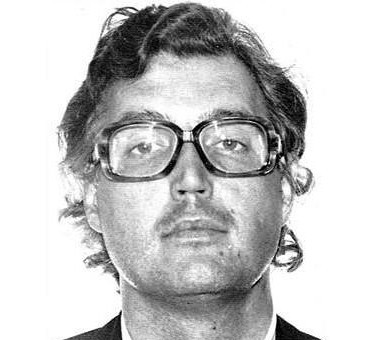 Peter Demeter
Murderer · Canada · 1973
Peter Demeter was a Canadian murderer and a real-estate developer who was born…
1 victim
Peter Demeter
Murderer · Canada · 1973
Peter Demeter was a Canadian murderer and a real-estate developer who was born…
1 victim
 Linda Jones
Murderer · USA · 1995
Linda Jones and Jack Jones had been married for nearly 30 years. They had two d…
1 victim
Linda Jones
Murderer · USA · 1995
Linda Jones and Jack Jones had been married for nearly 30 years. They had two d…
1 victim
 Joe Metheny
Serial killer · USA · 1976
Joe Roy Metheny was sentenced to death on November 13, 1998. The death sentence…
10 victims
Joe Metheny
Serial killer · USA · 1976
Joe Roy Metheny was sentenced to death on November 13, 1998. The death sentence…
10 victims
 Mulalo Sivhidzho
Murderer · South Africa · 2006
Mulalo Sivhidzho was convicted of the murder of her husband, Avhatakali Netshis…
1 victim
Mulalo Sivhidzho
Murderer · South Africa · 2006
Mulalo Sivhidzho was convicted of the murder of her husband, Avhatakali Netshis…
1 victim
 Sebastian Bridges
Murderer · USA · 1997
Sebastian Stephanus Bridges was convicted of first degree murder and kidnapping…
1 victim
Sebastian Bridges
Murderer · USA · 1997
Sebastian Stephanus Bridges was convicted of first degree murder and kidnapping…
1 victim
 Flor Contemplacion
Murderer · Singapore · 1991
Flor R. Contemplacion (January 1953 - March 17, 1995) was a Filipina domestic w…
2 victims
Flor Contemplacion
Murderer · Singapore · 1991
Flor R. Contemplacion (January 1953 - March 17, 1995) was a Filipina domestic w…
2 victims
- Gender
- female
- Country
- USA
- Location
- Shelby County, Tennessee, USA
- Date of birth
- September 22, 1952
- Age at first offence
- 33
- Characteristics
- murder for hire, parricide
- Victim profile
- Ronald Owens (her husband)
- Method of murder
- Beating with a tire iron
- Date(s) of murder
- February 17, 1985
- Years active
- 1985
- Date of arrest
- 5 days after
- Status
-
Released
Sentenced to death on January 15, 1986; commuted to life in prison on July 13, 2010; released on parole on October 7, 2011
Case overview
Gaile Kirksey Owens was convicted of accessory before the fact to wit: murder in the first degree for the killing of her husband, Ronald Owens, and was sentenced to death. A separate defendant, Sidney Porterfield, was convicted of first-degree murder and was also sentenced to death.
In sentencing proceedings, the jury found multiple aggravating circumstances for Porterfield and two aggravating circumstances for Owens, and found no mitigating circumstances for either defendant.
Timeline
- Feb. 17, 1985 — Ronald Owens was killed at his Bartlett home, where he lived with his wife and their two sons.
- Feb. 22 — Gaile Owens and Sidney Porterfield were arrested and later indicted.
- Jan. 2 — Prosecutors offered a plea bargain to both Owens and Porterfield contingent on both accepting it; Owens accepted and Porterfield rejected.
- Jan. 14 — Owens was convicted of accessory before the fact to first-degree murder; Porterfield was convicted of first-degree murder.
- Jan. 15 — Both defendants were sentenced to death.
- Jan. 19, 1988 — The Tennessee Supreme Court upheld Owens’s conviction and death sentence.
- Feb. 15, 1988 — Another death sentence noted in the consolidated post-conviction interlocutory appeal (Payne) was imposed.
- July 14, 2010 — The Tennessee Governor (Phil Bredesen) commuted Owens’s death sentence to life in prison.
- Oct. 7, 2011 — Owens was released on parole.
- March 25, 1994 — The Court of Criminal Appeals of Tennessee decision in the consolidated interlocutory appeal concerning post-conviction support services was issued.
- Jan. 15, 1986 — Sentenced to death (as stated in the post-conviction procedural history).
The offence
Ronald Owens was killed at the home he shared with his wife, Gaile Owens, and their two sons in Bartlett, a Memphis suburb.
The evidence presented at trial described a planned attack. The trial court record summarized that, over a period of months, Mrs. Owens solicited several men to kill her husband, and that Sidney Porterfield was one of those men. She met with him on at least three occasions, with the last meeting occurring at 2:30 p.m. on Sunday, February 17, 1985. At that time, she told him that her husband would either be home alone that night or would be at the church playing basketball.
That evening, Mr. and Mrs. Owens and their two sons attended evening church services. Afterwards, when Mr. Owens remained at church to play basketball, the boys asked, as they usually did, to stay with their father. Mrs. Owens refused their request and took them to a restaurant for diner and then to the home of Mrs. Owens’ sister, where they stayed until approximately 10:30 p.m. They arrived home at about 11:00 p.m.
At the time they arrived home, Mr. Owens’ automobile was in the driveway. The doors were open and the interior light was on. Mr. Owens’ coat and tie were on the seat. The back door to the house was partially open and the keys were in the lock. There were signs of a struggle in the kitchen, and blood was splattered on the wall and floor. Mr. Owens was found in the den unconscious with his head covered with blood.
Mr. Owens died some six hours later from multiple blows to his head.
The autopsy revealed that Mr. Owens had been struck at least twenty-one times with a blunt instrument described by the forensic pathologist as a long, striated cylinder such as a tire iron. The blows driven his face into the floor, crushed his skull, and drove bone fragments into his brain. Mr. Owens also sustained extensive injuries to his hands, and strands of hair between his fingers indicated that he had been covering his head with his hands when he was beaten.
After the killing, George James, one of the men solicited by Mrs. Owens to kill her husband, contacted the police and told them of Mrs. Owens’ offer. James assisted the police by permitting them to record telephone conversations with Mrs. Owens. After one of the calls, James met Mrs. Owens in the Raleigh Springs Mall in Memphis. James was wearing a hidden body microphone being monitored by police in a nearby automobile. Mrs. Owens paid James sixty dollars to keep quiet, telling him that it was all the money she had. She also stated that she had had her husband killed because of “bad marital problems.”
Mrs. Owens was placed under arrest at the conclusion of her meeting with Mr. James.
Investigation and evidence
At first, Mrs. Owens claimed that she only had hired people to follow her husband “and to rough him up.” She did admit paying out some $4,000 to $5,000 to various men for expenses. Later, she confessed to offering three men $5,000 to $10,000 to kill her husband and to talking with a man known as “little Johnny” at 2:30 p.m. on the day of the murder about killing her husband. She had promised to pay him three or four days after the murder.
When asked why, Mrs. Owens stated, “e’ve just had a bad marriage over the years, and I just felt like he had, mentally I just felt like he had been cruel to me. There was very little physical violence.”
Sidney Porterfield was identified as the man who met with Mrs. Owens on Sunday afternoon. A witness also placed Mr. Porterfield in the vicinity of the Owens’ house a week before the killing. Mr. Porterfield made a statement to the police entered into evidence.
According to Mr. Porterfield, he met with Mrs. Owens on three occasions to discuss plans for the killing, with the last meeting at 2:30 p.m. on Sunday, February 17, 1985. He stated that Mrs. Owens offered him $17,000 to kill her husband, and that he told her he would have to check out the situation. The summary further states that shortly after her husband’s funeral, Mrs. Owens had asked her father-in law for $17,000 “to pay some bills.”
Porterfield stated that he went to the Owens’ house that evening at about 9:00 p.m. On leaving his automobile, he put a tire iron in his pocket in case he encountered a dog. Porterfield stated he was walking in the back yard when Mr. Owens came home. Porterfield stated that Mr. Owens would not accept his explanation that he was looking for a house, and that he was going to hold him until police arrived. Porterfield stated that Mr. Owens grabbed him by the arm and attempted to pull him into the house; he noted that Mr. Owens had a brief case in one hand and was grasping Porterfield with the other. The narrative included that no attempt was made to explain how Mr. Owens, with his hands thus occupied, unlocked the door to the house.
Porterfield stated he tried to break away and, when unsuccessful, struck Mr. Owens with the tire iron. The men were then in the kitchen. Porterfield stated that Mr. Owens threw his hand up for protection but would not release Porterfield. Porterfield then continued to strike Mr. Owens with the tire iron, causing extensive damage to both of Mr. Owens’ hands and to his head. On leaving the Owens’ house, Porterfield threw the tire iron and the gloves he was wearing into a dumpster. They were never recovered.
Porterfield offered no evidence in his defense.
Mrs. Owens presented testimony from a neighbor who testified that Mrs. Owens was almost hysterical after her husband was found. A funeral home employee also testified. The employee stated that a large balance was owing on Mr. Owens’ funeral bill, described as presumably to show that Mrs. Owens did have large debts to pay after her husband’s death as she had represented to her father-in-law in attempting to secure a loan.
Trial
Charges and convictions
The trial court record reflected that:
- Sidney Porterfield was convicted of murder in the first degree.
- Gaile K. Owens was convicted of accessory before the fact, to wit: murder in the first degree.
Voir dire and jury selection
Defendants raised issues including denial of motions for individual, sequestered voir dire; limits on questioning prospective jurors about exposure to pre-trial publicity; refusal to grant a mistrial when prospective jurors overheard a news reporter’s story and when two jurors made prejudicial remarks during voir dire; and an allegation that the state used peremptory challenges to systematically exclude blacks from the jury. The appellate court found no merit in these contentions.
The trial court questioned prospective jurors regarding knowledge of the case from discussions in their neighborhood or from newspaper, radio, or television reports. The summary stated that most prospective jurors who had been exposed to pre-trial publicity only vaguely recalled what they had read or heard; many did not recall anything.
During the voir dire, the trial court inquired of every prospective juror exposed to pre-trial publicity whether they could set aside their recollection and decide only based on trial evidence. Five prospective jurors who could not were excused for cause.
Regarding exclusion of prospective juror Charlayne Picket (spelled “Charlayne Picket” and later “Charlayne Pickett”), the summary stated that her statements were that she would automatically vote not to impose the death penalty in this or any other case regardless of law and evidence, disqualifying her, and the trial court correctly excused her for cause, referencing Wainwright v. Witt.
In a separate incident, defendants moved for a mistrial after:
- A prospective juror, responding to defense counsel’s question about why he could not consider life as punishment for first degree murder, stated that there was only a certain amount of time that a person serving a life term would stay “in there” and that “something had to be done about existing crime.”
- Another prospective juror indicated that his wife had told him about the case and that he knew “what went down” and that “there is a case.”
The summary stated that both jurors were peremptorily challenged and excused. It also stated that the trial court admonished the second juror and any prospective jurors within hearing that anything learned prior to trial could not be used as evidence in juror deliberations. The appellate court found no prejudicial error.
The summary further stated that a news reporter called in a report of court proceedings using a pay telephone outside the courtroom, and several prospective jurors were nearby. It was developed that several prospective jurors overheard the reporter’s telephone call, and defendants moved for a mistrial or a new jury panel. The trial court denied the motion but granted individual voir dire. It was stated that none of the individually questioned jurors heard anything prejudicial or even substantial.
The appellate summary stated the jury finally selected consisted of two black males, five white males and five white females, and that the state had four unused peremptory challenges.
Admission of confessions and Bruton-related arguments
Porterfield insisted the trial court erred in admitting co-defendant Owens’ out-of-court confession. He argued that certain recitals in Owens’ statement did not “interlock” with Porterfield’s confession and that admission violated the rule from Bruton v. United States. The appellate court addressed the Bruton-related arguments, including references to Parker v. Randolph, Cruz v. New York, and Harrington v. California.
The appellate summary stated: “It was error, therefore, to admit Owens’ unredacted confession.” The court also concluded the Bruton error was harmless under the facts of the case, considering the overwhelming evidence of guilt and considering only Porterfield’s confession and other witness evidence and circumstances.
Mrs. Owens additionally insisted she was prejudiced by being forced to try her case with Porterfield rather than pleading guilty. The summary stated that the state indicated it would recommend life sentences for both defendants if both pleaded guilty, and that there was no offer to one defendant excluding the other. It concluded that even if severed, Owens would have had to stand trial and would have been subject to the death penalty if the jury found the evidence sufficient. It found denial of severance was not an abuse of discretion.
Sentencing
Testimony and evidence
In the bifurcated sentencing hearing, the forensic pathologist testified again regarding the circumstances of Mr. Owens’ death, including blood being inhaled, bone fragments driven into his brain, and that Mr. Owens lived six hours after the beating. Two photographs showing head wounds were introduced.
The state also presented proof that Porterfield had been convicted of robbery with a deadly weapon in 1968 and simple robbery twice in 1971.
In mitigation, Owens presented evidence that she had been treated by a psychiatrist on one occasion in 1978 for severe behavioral problems. She called two jail employees who testified that she was a good prisoner who caused no problems, volunteered to work, and attended Bible study classes.
Porterfield presented no evidence in mitigation.
Aggravating circumstances found by the jury
The appellate summary stated that the jury found three aggravating circumstances with respect to Porterfield and two with respect to Mrs. Owens, and that no mitigating circumstances were found.
For Porterfield, the jury found:
- He had been previously convicted of one or more felonies involving the use or threat of violence to the person.
- He committed the murder for remuneration or the promise of remuneration, or employed another to commit the murder for remuneration, or the promise of remuneration.
- The murder was especially heinous, atrocious, or cruel in that it involved torture or depravity of mind.
For Mrs. Owens, the jury found the same aggravating circumstances except for the finding of previous conviction of a felony involving the use or threat of violence to the person.
Challenges to sentencing findings
Porterfield challenged sufficiency of the evidence as to the jury’s findings. He argued that the earlier convictions shown were of “Sydney Porterfield, Jr.” and that there was no evidence showing he and Sydney Porterfield, Jr. were the same person. The summary states that a fingerpoint technician from the Shelby County Sheriff’s Department testified the defendant’s thumbprint matched the thumbprint of the person convicted under the name of Sydney Porterfield, Jr. The appellate court concluded the jury was justified in accepting this testimony.
Porterfield also argued insufficient evidence to show the murder was for remuneration or promise of remuneration and insufficient evidence that it was especially heinous, atrocious, or cruel involving torture or depravity of mind. The appellate court concluded that Porterfield’s police statement describing his meeting with Mrs. Owens and purpose of the meeting was sufficient for the remuneration finding. It also concluded evidence was sufficient to support that the murder was especially heinous, atrocious, or cruel given that Porterfield hit Mr. Owens with a tire iron at least twenty-one times, causing multiple fractures including skull and facial bones and injuries to Mr. Owens’ hands, including blows inflicted while Mr. Owens was on the floor and attempting to shield his head with his hands.
Mrs. Owens insisted the trial court erred in not allowing her to show that she filed a motion asking the court to allow her to plead guilty and accept a life sentence offered by the state. The summary stated that the state indicated it would accept such a plea conditioned upon both defendants pleading guilty, and that the state withdrew the offer when Porterfield declined.
It stated that the appellate court concluded evidence regarding Owens’ interest in accepting the plea bargaining offer was not relevant to punishment or to any mitigating factor raised by Owens and was properly excluded under the court’s cited evidentiary and constitutional principles.
Photographs and notice of aggravating circumstances
Both defendants argued the trial court erred in permitting introduction of two photographs at sentencing to show the nature and extent of the injuries, arguing lack of probative value and that prejudicial effect required reversal. The appellate court found no merit, describing photographs as relevant to proving the statutory aggravated circumstance regarding whether the murder was especially heinous, atrocious, or cruel involving torture or depravity of mind.
The appellate summary addressed the defendants’ argument that the state assured during voir dire and guilt phase it would not seek to introduce morgue photographs. The court stated it found nothing in the record to support that argument and said the state’s statement in the guilt phase was not a commitment not to offer the pictures in sentencing where they were relevant.
On notice, defendants argued the state failed to give required notice of aggravating circumstances. The record summary stated that the defendants knew the state would seek the death penalty during preparation for trial but did not receive notice of aggravating circumstances until the day trial began. Rule 12.3(b) of the Tennessee Rules of Criminal Procedure was discussed, including that if notice is filed later than thirty days, the judge shall grant a reasonable continuance upon a defendant’s motion. The appellate court noted that defendants sought no continuance, and concluded they waived the time requirement and that the record showed no surprise or prejudice from timing.
Sentencing instructions and constitutional arguments
Porterfield argued instruction error related to not allowing sympathy or prejudice to influence the jury. The appellate court found no error and cited California v. Brown describing such an instruction.
Porterfield argued error in failing to define “torture” or “depravity of mind” and in defining “heinous,” “atrocious,” and “cruel.” The appellate summary said it would have been better to use definitions approved in State v. Williams, but found the definitions adequate and found no prejudicial error in failure to define “torture” or “depravity of mind.”
Porterfield argued error in failing to instruct the jury not to consider defendant’s silence against him in sentencing. The appellate summary stated that the record showed the defendant did not request this instruction, and absent request there was no error under cited cases.
Porterfield argued failure to instruct on quantum of proof required for death penalty. The appellate summary stated the trial judge charged the Tennessee Pattern Jury Instruction T.P.I. — Crim. 20.03, containing statutory language of T.C.A. § 39-2-203(g), and found it a sufficient and correct charge.
Porterfield argued the instructions could be interpreted as mandating death. The appellate summary stated this argument lacked merit because the language questioned is the statutory language and had previously been held not to create a mandatory death penalty.
Finally, it was argued that the jury should be told to presume defendant would actually serve a life sentence if the jury returned that verdict. The appellate summary stated a similar argument had been made and found without merit in State v. Melson.
The defendants questioned the constitutionality of the Tennessee Death Penalty Act, acknowledging it was raised only to preserve for later review. The appellate summary stated the court had repeatedly upheld the constitutionality of T.C.A. § 39-2-203 and that death sentences under the statute were not arbitrary or disproportionate in this case. The appellate summary also addressed an equal protection argument about disproportionate death penalty imposed upon black citizens alleged to have killed white citizens; it stated there was nothing in the record to support evidence and that Porterfield did not show discriminatory purpose.
The appellate summary concluded that all assignments of error were overruled and that convictions and sentences were affirmed. It stated the sentences would be carried out as provided by law on April 15, 1988, unless otherwise stayed or modified by appropriate authority. Costs were taxed to appellants.
Appeals and post-conviction interlocutory proceeding
Tennessee Supreme Court appeal
The appellate opinion summary states that the case was a direct appeal from the sentences of death imposed on Sidney Porterfield and Gaile K. Owens for the killing of Ronald Owens. The opinion stated there was little controversy concerning the material facts, and it concluded no reversible error occurred in either the guilt or sentencing phase. It concluded verdicts and sentences were sustained by the evidence and that the death sentences under the circumstances were not arbitrary or disproportionate.
It affirmed the judgments of conviction and sentences, stating that the sentences would be carried out as provided by law on April 15, 1988 unless otherwise stayed or modified by appropriate authority.
Post-conviction interlocutory appeal (Rule 9 consolidated cases)
In 1994, the Court of Criminal Appeals of Tennessee addressed an interlocutory appeal granted pursuant to Rule 9 of the Tennessee Rules of Appellate Procedure and consolidated for appeal two death-row post-conviction cases, including Gaile K. Owens.
The consolidated proceeding involved an issue of whether the trial court properly denied motions for ex parte hearings on motions to provide funds for investigative assistance and expert services in post-conviction proceedings.
For Owens, the post-conviction procedural history stated:
- Owens was sentenced to death on January 15, 1986.
- Her conviction and death sentence were upheld by the Tennessee Supreme Court on January 19, 1988 (State v. Porterfield & Owens, 746 S.W.2d 441 (Tenn. 1988)).
- A request for rehearing was denied.
- Certiorari to the United States Supreme Court was denied.
- On June 27, 1988, Owens filed a petition for writ of habeas corpus in the United States District Court for the Western District of Tennessee, which was initially held in abeyance to allow pursuit of state Post-Conviction Procedures Act remedies, and ultimately dismissed without prejudice.
- A lengthy petition for post-conviction relief was filed in February 1991.
- In September 1991, Owens filed an “Ex Parte Motion of Petitioner to Maintain Documents and Pleadings Under Seal and to Maintain Related Proceedings Confidential” requesting that the court maintain under seal an “Ex Parte Motion for Authorization of payment for Support Services” and supporting affidavits.
- The court denied the motion on the basis of Teague v. State, 772 S.W.2d 915 (Tenn. Crim. App. 1988), with a reference to a denial of permission to appeal.
- After the denial, Owens petitioned for an interlocutory appeal pursuant to Rule 9, and the trial court granted it, explaining that if compelled to present the request in open court, the state would gain access to highly confidential information because Owens was indigent; the trial court concluded irreparable severe injury would occur and could not be corrected by later appeal.
The Court of Criminal Appeals concluded with respect to the consolidated issue that, because of the absence of authorization, it denied appellants the right to present their requests for support services in an ex parte hearing, affirmed denial of ex parte proceedings, and remanded for a hearing at which the court would determine whether petitioners could establish that support services were necessary to ensure protection of constitutional rights.
Aftermath and release
The legal outcome recorded was that Owens’s death sentence was commuted to life in prison on July 13, 2010, and she was released on parole on October 7, 2011.


Spotted an error, or have more information about this case?