Gerald Tigner
Murderer Brian Kevin Rosenfeld
Murderer · USA · 1985
Brian Kevin Rosenfeld Brian Kevin Rosenfeld was sentenced to three concurrent l…
23 victims
Brian Kevin Rosenfeld
Murderer · USA · 1985
Brian Kevin Rosenfeld Brian Kevin Rosenfeld was sentenced to three concurrent l…
23 victims
 Russell Ellwood
Murderer · USA · 1991
Russell Ellwood was a former taxi driver. Authorities suspected him of killing…
20 victims
Russell Ellwood
Murderer · USA · 1991
Russell Ellwood was a former taxi driver. Authorities suspected him of killing…
20 victims
 Robert Martines Perez
Murderer · USA · 1994
Name: Robert Martines Perez · Other name used in proceedings: Robert Martinez P…
15 victims
Robert Martines Perez
Murderer · USA · 1994
Name: Robert Martines Perez · Other name used in proceedings: Robert Martinez P…
15 victims
 Billy Frank Vickers
Murderer · USA · 1993
Billy Frank Vickers Vickers was executed by lethal injection in Texas on Januar…
14 victims
Billy Frank Vickers
Murderer · USA · 1993
Billy Frank Vickers Vickers was executed by lethal injection in Texas on Januar…
14 victims
 John Avalos Alba
Murderer · USA · 1991
John Avalos Alba was convicted of capital murder and was sentenced to death in…
1 victim
John Avalos Alba
Murderer · USA · 1991
John Avalos Alba was convicted of capital murder and was sentenced to death in…
1 victim
 Michael Worthington
Murderer · USA · 1995
Michael Worthington was convicted after pleading guilty to first-degree murder,…
1 victim
Michael Worthington
Murderer · USA · 1995
Michael Worthington was convicted after pleading guilty to first-degree murder,…
1 victim
 John Ingle
Murderer · USA · 1996
Name: John Ingle Sex/Race: White male Date of birth: 10-29-49 Age: not stated D…
1 victim
John Ingle
Murderer · USA · 1996
Name: John Ingle Sex/Race: White male Date of birth: 10-29-49 Age: not stated D…
1 victim
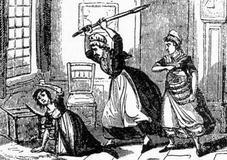 Elizabeth & Mary Branch
Murderers · United Kingdom · 1740
Elizabeth Branch (1673–1740) and her daughter Mary Branch (1716–1740) were Engl…
1 victim
Elizabeth & Mary Branch
Murderers · United Kingdom · 1740
Elizabeth Branch (1673–1740) and her daughter Mary Branch (1716–1740) were Engl…
1 victim
 Dano Sonnex
Murderer · United Kingdom · 2008
Dano Sonnex was convicted of murder and sentenced to life in prison with a mini…
2 victims
Dano Sonnex
Murderer · United Kingdom · 2008
Dano Sonnex was convicted of murder and sentenced to life in prison with a mini…
2 victims
- Gender
- male
- Country
- USA
- Location
- McLennan County, Texas, USA
- Date of birth
- December 27, 1972
- Age at first offence
- 20
- Characteristics
- drugs
- Victim profile
- Bobby Ray Harris ( former boyfriend of Tigner's mother) / Michael Watkins, 32, and James Williams, 22
- Method of murder
- Shooting
- Date(s) of murder
- 1992 / 1993
- Years active
- 1992–1993
- Date of arrest
- September 1, 1993
- Status
-
Executed
Executed by lethal injection in Texas on March 7, 2002
Case overview
Gerald Wayne Tigner was convicted of the capital murders of Michael Watkins and James Williams, and he was sentenced to death. He was executed by lethal injection in Texas on March 7, 2002.
The offence
On Aug. 31, 1993, while out on bail for a separate murder indictment, Tigner shot and killed Michael Watkins and James Williams on a suburban street in Waco, Texas. Tigner was driving with his friend Guan Scott and Guan's brother, Timothy Scott. They came upon a car being driven by Watkins and James Williams. Tigner signaled for Watkins and Williams to make a loop around the block, and they did. Tigner and Guan got out of the vehicle and approached Watkins and Williams.
When the conversation turned for the worse, Tigner started yelling at Williams and began firing a gun into the car. As the car rolled away, Tigner walked alongside it and continued to fire his gun at Watkins and Williams. When Tigner ran out of ammunition, he went back to the truck, retrieved another gun, and returned to the car. On the way back, Tigner passed by Watkins, who had fallen out of the car and was attempting to crawl away. Tigner straddled him and shot him in the head.
Both Watkins and Williams died from gunshot wounds. Watkins suffered 10 gunshot wounds, including two to the head. Williams received seven gunshot wounds, including four to the head.
After the shooting, Tigner returned to the truck and drove away. Police found cocaine in the car. Tigner was arrested the next day.
Investigation
Two days after his arrest, Sept. 3, 1993, Tigner signed a five-page written statement regarding the double murder. On Sept. 8, 1993, while still in custody, Tigner gave a tape recorded statement. Tigner confessed to the shootings and described the weapons he used as three pistols of different calibers—9 mm, .38, and .22. These calibers were later confirmed by ballistics investigation.
At trial, in addition to Tigner's confessions, the prosecution presented two eyewitnesses. Roy Darden and Timothy Scott identified Tigner as the person who shot Watkins and Williams.
At the punishment phase, the state presented numerous witnesses. A Special Crimes Unit officer testified that Tigner had a “dangerous and violent” reputation. A municipal court judge said that Tigner had threatened to “get even with him later.” A state witness, Dr. James Grigson, a psychiatrist, testified that Tigner had an anti-social personality disorder and represented a continuing danger in the future.
Tigner introduced his own witnesses, offering statements from his mother and grandmother.
Arrest
Tigner was arrested the next day after the Aug. 31, 1993 shootings.
Trial
Tigner was tried for the murders of Michael Watkins and James Williams. He was twice convicted and sentenced to death.
First trial and conviction
Tigner's 1994 trial resulted in a conviction for capital murder and a sentence of death. The conviction and sentence were overturned on direct appeal due to a procedural violation: the State failed to provide the defense a copy of Tigner's audio-taped confession at least 20 days before trial.
Retrial
On retrial in 1997, Tigner was again found guilty of capital murder and sentenced to death.
Sentencing
Tigner was sentenced to death at the punishment phase of the trial. The jury found that he posed a future threat to society.
Appeals
Tigner's conviction and sentence were automatically appealed to the Texas Court of Criminal Appeals, which upheld the judgment and sentence in an unpublished opinion dated April 28, 1999.
Tigner did not file a petition for writ of certiorari in the United States Supreme Court.
Tigner filed an application for state writ of habeas corpus on Aug. 24, 1999. The state habeas court issued findings of fact and conclusions of law recommending that relief be denied. The Texas Court of Criminal Appeals denied habeas relief on Sept. 29, 1999.
Tigner initiated habeas corpus proceedings in federal district court on Feb. 9, 2000. The district court entered final judgment denying habeas relief on Feb. 28, 2001. An appeal to the United States Court of Appeals for the Fifth Circuit followed. On Aug. 28, 2001, the Fifth Circuit upheld the district court's judgment denying Tigner habeas relief. Tigner's subsequent motion for rehearing was denied on Sept. 28, 2001. On Dec. 20, 2001, Tigner filed a petition for certiorari review in the Supreme Court challenging the Fifth Circuit's denial of relief, which was denied on Feb. 25, 2002.
In the Fifth Circuit proceedings, Tigner sought a certificate of appealability (“COA”) to challenge the district court's denial of his 28 U.S.C. § 2254 habeas corpus petition. The Fifth Circuit denied the COA.
Claims addressed on the Fifth Circuit appeal
Tigner argued that the state trial court violated his Eighth and Fourteenth Amendment rights by refusing to tell the jury that he would have been ineligible for parole for 35 years if given a life sentence. He also argued that Dr. Grigson's testimony that he would pose a future threat to society deprived him of due process.
The Fifth Circuit denied Tigner's application for a certificate of appealability.
Outcome
The Texas Court of Criminal Appeals upheld the conviction and sentence in April 1999. Federal habeas relief was denied, and the Supreme Court denied certiorari on Feb. 25, 2002. Tigner remained under a death sentence.
Tigner's final statement included the following words:
"I got convicted on a false confession because I never admitted to it, but my lawyer did not put this out to the jury. I did not kill those drug dealers."
Tigner was executed by lethal injection in Texas on March 7, 2002. The lethal injection was administered, and Tigner was pronounced dead at 6:21 p.m.
Timeline
- Aug. 31, 1993 — Tigner shot and killed Michael Watkins and James Williams in Waco, Texas.
- Sept. 3, 1993 — Tigner signed a five-page written statement regarding the double murder.
- Sept. 8, 1993 — While still in custody, Tigner gave a tape recorded statement.
- Sept. 29, 1993 — Tigner was indicted for the offense of capital murder.
- April 28, 1999 — The Texas Court of Criminal Appeals upheld the judgment and sentence in an unpublished opinion.
- Aug. 24, 1999 — Tigner filed an application for state writ of habeas corpus.
- Sept. 29, 1999 — The Texas Court of Criminal Appeals denied habeas relief.
- Feb. 9, 2000 — Tigner initiated habeas corpus proceedings in federal district court.
- Feb. 28, 2001 — The district court entered final judgment denying habeas relief.
- Aug. 28, 2001 — The Fifth Circuit upheld the district court’s judgment denying Tigner habeas relief.
- Sept. 28, 2001 — Tigner’s motion for rehearing was denied.
- Dec. 20, 2001 — Tigner filed a petition for certiorari review in the Supreme Court.
- Feb. 25, 2002 — The Supreme Court denied certiorari.
- March 7, 2002 — Tigner was executed by lethal injection in Texas and pronounced dead at 6:21 p.m.
Other details
People involved in the killings
- Michael Watkins (age 32) — died from gunshot wounds.
- James Williams (age 22) — died from gunshot wounds.
- Guan Scott — Tigner’s friend; he was present during the driving and approached the victims with Tigner.
- Timothy Scott — Guan’s brother; he was driving when the events started and testified that Tigner was the shooter.
- Roy Darden — eyewitness who identified Tigner as the shooter.
Weapons and evidence
Tigner described using three pistols of different calibers: 9 mm, .38, and .22. Ballistics confirmed these calibers.
Prior criminal history and other killing
Tigner had a documented criminal history with crimes of increasing severity ranging from a 1989 burglary when he was 16 years of age to convictions for criminal mischief, terroristic threats and evading the police at age 18, to committing murder at age 19, and ultimately committing capital murder at age 20.
In January 1990, Tigner was granted probation in a juvenile hearing for a burglary offense that occurred in August 1989. In January 1992, Tigner was convicted on a charge of criminal mischief and given a suspended sentence plus probation. That same month, he was convicted for making a terroristic threat and received a suspended sentence and probation, and another January 1992 conviction for evading detention resulted in a suspended sentence and probation.
On Dec. 5, 1992, Tigner confessed to the murder of Bobby Harris. Tigner shot Harris three times on the front lawn of Tigner's house. Bobby Ray Harris was described as Tigner's mother’s boyfriend and as a former boyfriend of Tigner's mother. Tigner said he shot Harris in self-defense after Harris burst into Tigner’s house and said he was looking for Tigner. Tigner was indicted for Harris’s murder and was free on bond when the Watkins and Williams killings occurred.
Tigner used the aliases Gerald Tigmon, Jerry Lewis, and Tony Simmons.
Identity and defenses raised
Tigner claimed he killed Watkins and Williams in self-defense. He also later claimed his confessions were false and that he was not even at the crime scene when the murders happened. He said he was at home with his family. He said Guan Scott was the killer. He said his defense was mistaken identity and alibi, and he stated that his grandmother testified in his favor that he was with her at her residence during the time of the killings. He also stated that his grandmother’s neighbor, Gloria, testified in his favor and that a man at the crime scene testified in his favor that he saw another man, “not Gerald Wayne Tigner,” do the shooting.
Food and final remarks
Tigner’s final meal was: Fried chicken, French fries with ketchup, two cheeseburgers (all the way), bag of potato chips, apple cobbler, white cake with white icing, pitcher of lemonade, pitcher of Sprite.
Tigner’s final words were:
Spotted an error, or have more information about this case?