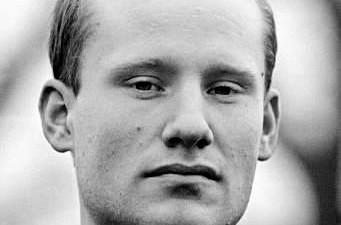
Volkert Van der Graaf
Murderer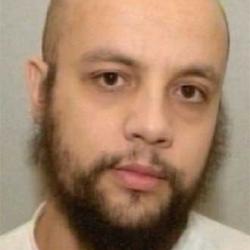 Mohammed Bouyeri
Murderer · Netherlands · 2004
Mohammed Bouyeri (Arabic: محمد بويري ) was born on March 8, 1978 in Amsterdam.…
1 victim
Mohammed Bouyeri
Murderer · Netherlands · 2004
Mohammed Bouyeri (Arabic: محمد بويري ) was born on March 8, 1978 in Amsterdam.…
1 victim
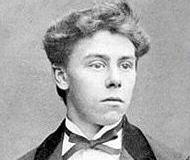 Hendrik Jut
Murderer · Netherlands · 1872
Hendrik Jut (July 19, 1851 – June 12, 1878) was a murderer from The Hague. He k…
2 victims
Hendrik Jut
Murderer · Netherlands · 1872
Hendrik Jut (July 19, 1851 – June 12, 1878) was a murderer from The Hague. He k…
2 victims
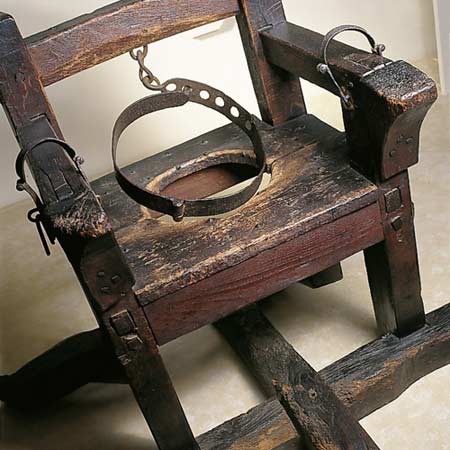 Klaas Annink
Murderer · Netherlands · 1774
Klaas Annink (June 18, 1710 – September 13, 1775), better known as Huttenkloas,…
Klaas Annink
Murderer · Netherlands · 1774
Klaas Annink (June 18, 1710 – September 13, 1775), better known as Huttenkloas,…
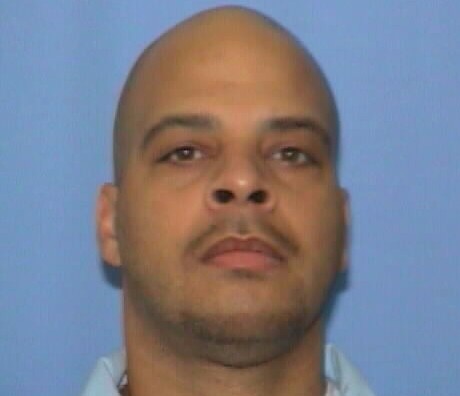 Ralph Harris
Serial killer · USA · 1992
Ralph Harris was found guilty by a jury on March 3, 1999, for the August 17, 19…
6 victims
Ralph Harris
Serial killer · USA · 1992
Ralph Harris was found guilty by a jury on March 3, 1999, for the August 17, 19…
6 victims
 Scott William Cox
Serial killer? · Several States USA / Canada · 1980
Name: Scott William Cox Tia Hicks vanished in 1990 after Scott William Cox was…
20 victims
Scott William Cox
Serial killer? · Several States USA / Canada · 1980
Name: Scott William Cox Tia Hicks vanished in 1990 after Scott William Cox was…
20 victims
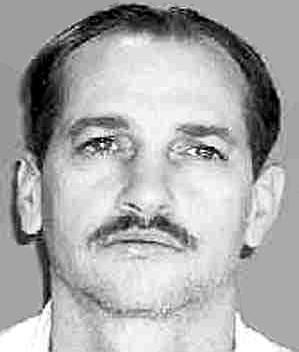 Michael Braae
Murderer · USA · 1997
Michael Braae was also known as “Cowboy Mike” and was described as a former cou…
4 victims
Michael Braae
Murderer · USA · 1997
Michael Braae was also known as “Cowboy Mike” and was described as a former cou…
4 victims
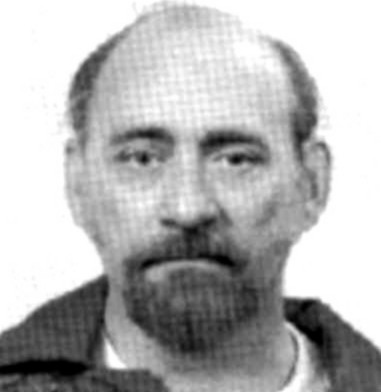 Perry Steven Miller
Murderer · USA · 1990
Perry Steven Miller admitted to being guilty of the 1990 murder of Christel Hel…
1 victim
Perry Steven Miller
Murderer · USA · 1990
Perry Steven Miller admitted to being guilty of the 1990 murder of Christel Hel…
1 victim
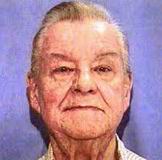 James Von Brunn
Murderer · USA · 2009
James Wenneker von Brunn (July 11, 1920 – January 6, 2010) was an American man…
1 victim
James Von Brunn
Murderer · USA · 2009
James Wenneker von Brunn (July 11, 1920 – January 6, 2010) was an American man…
1 victim
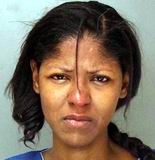 Na Cola Franklin
Murderer · USA · 2012
Na Cola Franklin was convicted of killing her fiancé on their wedding day. The…
1 victim
Na Cola Franklin
Murderer · USA · 2012
Na Cola Franklin was convicted of killing her fiancé on their wedding day. The…
1 victim
- Gender
- male
- Country
- Netherlands
- Location
- Hilversum, Netherlands
- Date of birth
- J uly 9, 1969
- Age at first offence
- 33
- Characteristics
- motive unknown
- Victim profile
- Dutch politician Pim Fortuyn
- Method of murder
- Shooting (a semi-automatic Star Firestar M-43 pistol)
- Date(s) of murder
- May 6, 2002
- Years active
- 2002
- Date of arrest
- Same day
- Status
-
Imprisoned
Sentenced to 18 years' imprisonment on April 15, 2003
Background
Volkert van der Graaf (born July 9, 1969) was a confessed murderer of Dutch politician Pim Fortuyn. Van der Graaf was often described as a supporter of animal rights. He confessed in court to murdering Fortuyn to stop him from targeting "the weak parts of society to score points" in seeking political power.
Van der Graaf was born in Middelburg. By the time he attended university in Wageningen, he was vegan and an idealistic supporter of animal welfare. He was described as a highly intelligent perfectionist who was emotionally uncommunicative and intolerant of those with different values to his own.
A psychiatrists' report presented in his trial concluded that Van der Graaf was sane.
Volkert van der Graaf was employed by the environmental organisation Vereniging Milieu Offensief in Wageningen, which he had co-founded in 1992. His job involved conducting judicial proceedings against violators of environmental regulations. He concentrated particularly on contesting intensive animal farming and fur farming. He was described as highly motivated in his work, working more than the four days per week of his contract and winning about three out of every four cases.
He lived with his girlfriend and their daughter in Harderwijk, where they had moved in 2001. He was said to have appeared over-stressed since the birth of their child on December 6, 2001.
The offence
On May 6, 2002, Pim Fortuyn was murdered outside a radio studio in Hilversum at 6:00 p.m., just after he finished an interview. Ruud de Wild was the interviewer and a witness of the murder.
Van der Graaf was arrested near the scene of the crime after a pursuit by witnesses. Details of the suspect had been officially reported as "Volkert van der G." in accordance with unwritten Dutch privacy practice. His full name was later available on the net and addresses were soon circulating on web sites used by Fortuyn's supporters.
After the murder, several people related to Van der Graaf went into hiding. His girlfriend and their daughter left their house on the evening of the murder.
Planning and preparation
Investigators stated that Van der Graaf had planned the attack using information obtained from the Internet. Printouts of a map of the scene of the crime and schedules of Fortuyn's appearances were found in his car.
Investigators stated that, in two boxes of cartridges found at his home, 7 cartridges were missing, the exact number loaded in his gun.
Van der Graaf purchased his weapons illegally. He bought a semi-automatic Star Firestar M-43 pistol in a café in Ede and 9mm cartridges in The Hague.
After the murder of Fortuyn, the gun was linked to a suspect in the robbery of a jeweller in Emmen through DNA material found on the weapon.
On the day of the murder, he attended work in the morning, taking with him a backpack containing the gun, a pair of latex gloves, a baseball cap and a pair of dark glasses. At the end of the morning, he said he was taking the afternoon off on account of the beautiful weather.
During the trip he stopped several times, including to purchase a shaver to remove his stubble. The shaver, together with the cap and glasses, was intended to disguise his appearance, while the gloves were intended to avoid leaving fingerprints. However the shaver did not work.
He had never visited the Mediapark, relying on a map and a couple of photos to find his way into the park on foot and to the building where Fortuyn's interview was held.
Attack and immediate aftermath
Investigators stated that, recognising Fortuyn's Daimler in the carpark, Van der Graaf hid in nearby bushes, burying the gun which was in a plastic bag in a shallow trough in case he was discovered. He could hear fragments of Fortuyn's interview from a speaker on the outside of the building. He waited there for about two hours.
Fortuyn emerged from the building in the company of several others. Van der Graaf walked in the direction of Fortuyn, passed by him, then turned and opened fire.
Van der Graaf said he aimed for his back to avoid the chance that Fortuyn would duck away, or that a bullet would hit somebody else by mistake. He held the gun in both hands, still with the plastic bag around it, less than 1.5 metres from Fortuyn. Investigators stated that he hit Fortuyn in the back and head five times, then fired a sixth shot that missed.
Van der Graaf ran off, but Fortuyn's chauffeur, Hans Smolders, took up the chase. Two employees from a different building of the Mediapark later joined in.
During the chase, Van der Graaf threatened them by raising the gun in his jacket pocket towards them. They left the grounds of the Mediapark onto a public road. During the chase, Van der Graaf pointed the pistol at arms length at Smolders, who had been reporting the position to the police by mobile phone.
Upon reaching a Texaco petrol station, Van der Graaf gave up when police emerging from their car pointed their pistols at him.
Investigations and Trial
Investigation
Initial investigations and conspiracy theories
For several months after the murder, Van der Graaf refused to make any statement about the murder, stating that this was based on the advice of his lawyers.
Many conspiracy theories were put forth by supporters of Fortuyn and others. Mat Herben of the Lijst Pim Fortuyn (LPF) said that the perpetrator was part of a group of five dangerous people. Fred Teeven of Leefbaar Nederland said that it was practically impossible that Van der Graaf had acted alone. Janssen van Raay of the LPF said that Van der Graaf was hired to commit the murder, suggesting a link to al-Qaida, and he said he expected al-Qaida to free him from prison within a year.
Officials investigating the murder dismissed these popular rumours, declaring that no evidence had been found for the involvement of others.
Suggestions that Van der Graaf had committed an earlier murder of an environmental official, Van der Werken from Nunspeet (1996), and that he had attended other appearances by Fortuyn, were also not corroborated.
De Telegraaf and the Chris van der Werken accusations
A national daily newspaper, the “Telegraaf”, printed on 7 July 2006 an article again insinuating involvement of Van der Graaf with the murder of Chris Van der Werken.
In addition to the article, the Telegraaf printed extracts of a secret police report on the murder of Van der Werken on its website. Mr. Quirijn Meijnen, a Dutch based media lawyer who represented Van der Graaf, stated:
- "the accusations are grave and unfounded."
- "The publication of extracts of the secret police report infringes Van der Graaf’s privacy rights."
- "Furthermore, The Telegraaf failed to mention that Van der Graaf was never a suspect in the murder case of Van der Werken."
- "In addition, the Telegraaf only printed extracts of the report incriminating Van der Graaf and not extracts that clear him of the murder and other popular rumors."
- "The Telegraaf did not ask for Van der Graaf’s comment on the article before printing it."
- "In case the Board of Journalism honours the complaints of Van der Graaf the Telegraaf will be asked to publish the verdict."
- "The Board of Journalism cannot impose a lawful punishment."
Custody conditions and hunger strike
After Van der Graaf's arrest, he was held in strict isolation until June 1. He was refused access to newspapers and television and could not receive visitors or use the telephone. He could only speak to his lawyers and police and justice officials.
He was kept under constant observation by video camera with the light on 24 hours per day.
For a couple of months he maintained a hunger strike in protest of these conditions. This prompted a discussion about whether he could be force-fed if he was in danger of death. After his conditions were altered, he abandoned the hunger strike.
Second search and chemical mixture
A second search of Van der Graaf's home on June 24 found a chemical mixture, calcium-chlorate and sugar, hidden in 35 condoms in his garage. Nearby were flasks of sulphuric acid. Experts said the substances could be combined to make a fire bomb or explosive material.
Van der Graaf later said that he had fabricated the materials around 1990-1992 for experimentation purposes and had since forgotten about them. The article also included the view that an experts’ view about a fire bomb was overstated, while it said Van der Graafs experimentation explanation was rather unconvincing. It added that a mixture of sugar and calcium-chlorate had been a popular recipe in Dutch activist circles for decades to produce smoke-bombs they let go off during rallies.
Trial
Representation and “pro forma” hearings
After the murder, Van der Graaf was represented by Böhler, Koppe and Franken, with Franken leading.
First hearing (pro forma)
The first "pro forma" hearing in his trial started on August 9. Van der Graaf watched on TV from his cell in the Bijlmerbajes prison.
The prosecution outlined its evidence, including the finding of DNA matching Fortuyn on Van der Graaf's clothes and gun; matching of the bullets used in the attack with the gun; and eye-witnesses who pursued him continuously from the murder scene to the point of arrest.
The defence complained about the lack of discretion in reporting by the press and statements by public officials, saying this made it difficult to obtain a fair trial. The defence asked to call on several politicians who had made public comments about the murder as witnesses, including Wim Kok and Jan Peter Balkenende, as well as members of Lijst Pim Fortuyn including Herben and Janssen van Raay.
On the morning of September 3, Van der Graaf's girlfriend was arrested at her workplace in connection with the chemicals found at their former home. Her lawyer and the lawyers of Van der Graaf denounced this as an attempt to pressure Van der Graaf into making a statement. She was released two days later and eventually cleared of any suspicion after Van der Graaf made a statement on her behalf.
Second hearing (pro forma)
During a second "pro forma" hearing on November 4, it was decided that the trial would be delayed while Van der Graaf was sent for seven weeks of psychiatric observation at the Pieter Baan Center, starting in the first week of January 2003.
In a press statement of November 23, the prosecution (Public Ministry) announced that Van der Graaf had confessed to the murder. Van der Graaf said he planned it for some time beforehand, that nobody else was involved in the plans, and that nobody else knew about them.
Van der Graaf said that he saw Fortuyn as a steadily increasing danger for vulnerable groups in society. He said this was a combination of Fortuyn's stigmatising views, the polarising way that he presented them, and the great political power that Fortuyn was threatening to obtain. He said he saw no other possibility for himself than to end the danger by killing Fortuyn.
Mat Herben said he was still not convinced that Van der Graaf had acted alone.
Fortuyn's brother Marten Fortuyn said he was not surprised by the confession but feared that Van der Graaf was setting himself up as "saviour of the fatherland".
The confession had not been made publicly available, but it was later reported that Van der Graaf said he was "not proud" of the deed and that if he would consider the decision again he wouldn't do it. He was also said to have stated that he didn't see himself as "the saviour of the Netherlands" or as a martyr.
On January 6, 2003, Van der Graaf was moved to the Pieter Baan Centrum (PBC) to begin the seven week behavioural investigation.
The investigation was delayed because of disagreements between the Ministry of Justice and the management of the PBC over the conditions of his supervision. The Ministry wanted him under video surveillance 24 hours per day and isolated from other patients for his own safety. The PBC said the cameras would prevent building up a confidence relationship needed for the multi-disciplinary behavioural investigation and said it would be responsible to let him take part in a small group so that the investigation could proceed optimally.
On January 20, Van der Graaf said he was suspending his cooperation for the investigation. The Minister of Justice, Piet Hein Donner, resolved the dispute by dropping the demands for video surveillance and isolation.
Third hearing (pro forma)
On January 29, 2003, a third "pro forma" hearing was held in which the dates for the trial were set.
After the completion of the investigation on March 14, he was returned to his prison cell in the Bijlmerbajes. The report from the PBC was complete by about March 21.
The report stated that Van der Graaf could be held completely accountable for the killing. It stated that Van der Graaf had an obsessive-compulsive personality disorder, explaining his rigid moral judgements. Menno Oosterhoff, a child psychiatrist from Groningen, publicly suggested that the Pieter Baan Centrum may have overlooked the possibility that Van der Graaf has Asperger's syndrome. Oosterhoff later withdrew his theory.
The PBC report stated that nothing could be said about the chance of another similar crime occurring, since the disorder had nothing to do with the murder. Van der Graaf agreed that he was accountable and that he had compulsive urges.
The outcome of the investigation ensured that he would receive a prison sentence and not "TBS treatment".
Trial in high-security court
The trial was held in a high-security court in Amsterdam-Osdorp over three days: March 27, March 31 and April 1.
About 15 supporters of Fortuyn demonstrated outside the building. Banners included "for less than 20 years we will smash the place up", "better fortuynist than socialist" and "the leftist church is criminal".
The proceedings were followed by about 80 people, including a woman who disturbed the occasion by screaming at Van der Graaf, accusing him of such things as "destroying the whole of the Netherlands".
Van der Graaf was counselled by Britta Böhler.
Charges
Van der Graaf was charged with:
- the premeditated murder of Fortuyn,
- two counts of possession of illegal weapons, namely the gun and the explosive mixture at his house,
- threatening the life of Fortuyn's chauffeur by pointing his gun at him during the chase following the murder.
Prosecution request and arguments
The prosecutor asked for life imprisonment for the killing, saying that an example must be set for anybody else attempting to frustrate the democratic process through criminal means. The prosecutor argued that the seriousness of the crime was determined by its subject and the consequences, and that to a certain degree it was a "political murder". The prosecutor stated that Van der Graaf had irrevocably damaged the democratic political progress of Fortuyn and had done it intentionally. For an exceptional crime, the prosecutor said he deserved an exceptional punishment.
Statements and final arguments
During the trial, Van der Graaf described again his reasons for killing Fortuyn. He said he had hoped that the leaders of other political parties would deliver substantial critique on Fortuyn, but that it never happened. He said instead Fortuyn had the talent to channel criticism so that it never touched him.
He said again that he had never spoken to anybody else about his plan to act against Fortuyn, and only made a definitive plan to act on the day before the murder.
He said he was wrestling with feelings of regret for the killing, finding the killing of somebody morally reprehensible, but that on May 6 he had felt himself justified, wanting to fight the danger of Fortuyn, not his person.
He explained his lack of outward emotion as due to his being somebody who didn't find it easy to talk about feelings.
Asked about the danger of accidentally injuring somebody other than Fortuyn in the attack, he said that he had been confident that that wouldn't happen.
The 3FM DJ Ruud de Wild said in his account of the attack that he barely escaped with his life, having received a bullet in the bag that he shielded himself with.
Responding to the argument that Fortuyn would have been chosen through democratic means, Van der Graaf said that that was also the case for Hitler.
In his final argument, Van der Graaf said that he had acted from his conscience, but that didn't justify it, and that it was absolutely not normal to shoot somebody to death.
He also said he would not have committed the murder, at least not on that evening, if Fortuyn had been accompanied by security guards. This was presented as relevant for accusations that the government should have provided security.
Verdict and sentencing
On Tuesday, April 15, 2003, Van der Graaf was convicted and sentenced to 18 years' imprisonment.
Appeals
The prosecution and the defence both made appeals against this sentence.
Prior to the appeal, suggestions in the media that Van der Graaf may have been suffering from Asperger's syndrome were rejected by workers at the PBC, who said they had considered and rejected the possibility.
The prosecution argued that the court had not taken account of the political nature of the murder and asked again for life imprisonment.
The defence argued that the sentence didn't take account of the harsh conditions under which Van der Graaf had been held, nor the damage that had been done by unsubstantiated allegations that had appeared in the media, such as the connection with Van der Werken. The defence requested a reduction in sentence to 16 years.
On July 18, 2003, the appeals court accepted some arguments from both parties and sentenced him again to 18 years imprisonment.
Under Dutch law he must serve at least two thirds of the sentence, counted from the time of his arrest, making his earliest possible release in 2014.
Other details
The girlfriend left their house on the evening of the murder and later was released and cleared of any suspicion after Van der Graaf made a statement on her behalf.
Investigators described the attack as the work of a single person, an amateur shooter who used a relatively simple plan and didn't prepare a good escape route.
Van der Graaf had planned the attack using information obtained from the Internet, and printouts of a map of the scene of the crime and schedules of Fortuyn's appearances were found in his car.
During the initial arrest sequence, the details of the suspect were officially reported as "Volkert van der G." in accordance with unwritten Dutch privacy practice.
The report said the chance of another similar crime could not be determined based on the disorder because the disorder had nothing to do with the murder.
Demonstrations and crowds occurred during the trial, and a woman screamed accusations at Van der Graaf, including "destroying the whole of the Netherlands".
The case included competing statements about whether Van der Graaf acted alone, with Mat Herben not convinced and conspiracy theories proposing a group, hiring, or al-Qaida involvement.
The Board of Journalism decision referenced in relation to the Telegraaf article was made on March 9, 2007.

Spotted an error, or have more information about this case?