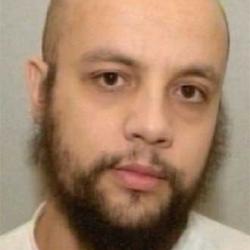
Mohammed Bouyeri
Murderer Volkert Van der Graaf
Murderer · Netherlands · 2002
Volkert van der Graaf (born July 9, 1969) was a confessed murderer of Dutch pol…
1 victim
Volkert Van der Graaf
Murderer · Netherlands · 2002
Volkert van der Graaf (born July 9, 1969) was a confessed murderer of Dutch pol…
1 victim
 Hendrik Jut
Murderer · Netherlands · 1872
Hendrik Jut (July 19, 1851 – June 12, 1878) was a murderer from The Hague. He k…
2 victims
Hendrik Jut
Murderer · Netherlands · 1872
Hendrik Jut (July 19, 1851 – June 12, 1878) was a murderer from The Hague. He k…
2 victims
 Klaas Annink
Murderer · Netherlands · 1774
Klaas Annink (June 18, 1710 – September 13, 1775), better known as Huttenkloas,…
Klaas Annink
Murderer · Netherlands · 1774
Klaas Annink (June 18, 1710 – September 13, 1775), better known as Huttenkloas,…
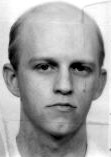 Richard Dinkins
Murderer · USA · 1990
Richard Dinkins was executed in Texas on January 29, 2003. He was convicted of…
2 victims
Richard Dinkins
Murderer · USA · 1990
Richard Dinkins was executed in Texas on January 29, 2003. He was convicted of…
2 victims
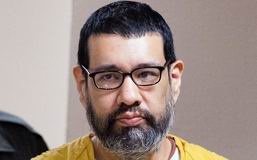 Anthony Garcia
Murderer · USA · 2008
Anthony Garcia was a former doctor who was found guilty on all counts including…
4 victims
Anthony Garcia
Murderer · USA · 2008
Anthony Garcia was a former doctor who was found guilty on all counts including…
4 victims
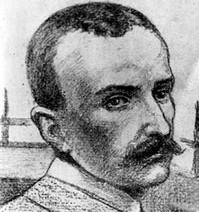 John Alexander Dickman
Murderer · United Kingdom · 1910
John Alexander Dickman was convicted of the murder of John Innes Nisbet. John I…
1 victim
John Alexander Dickman
Murderer · United Kingdom · 1910
John Alexander Dickman was convicted of the murder of John Innes Nisbet. John I…
1 victim
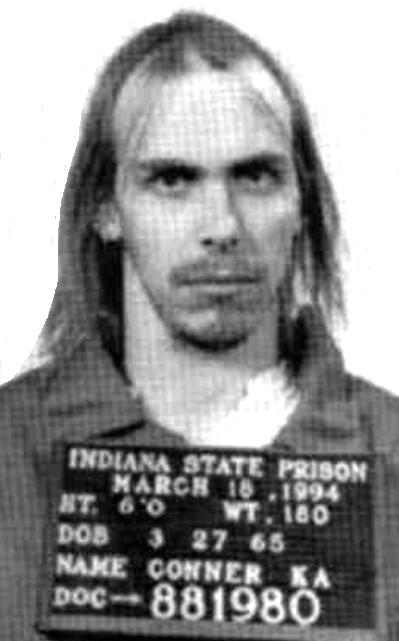 Kevin Aaron Conner
Murderer · USA · 1988
Kevin Aaron Conner was convicted by jury in the Marion Superior Court, Criminal…
4 victims
Kevin Aaron Conner
Murderer · USA · 1988
Kevin Aaron Conner was convicted by jury in the Marion Superior Court, Criminal…
4 victims
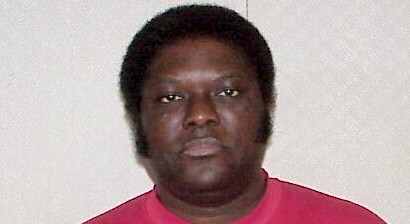 Beoria Simmons
Serial killer · USA · 1981
Beoria Simmons (DOB 5-17-54) was convicted of three counts of murder and rape a…
3 victims
Beoria Simmons
Serial killer · USA · 1981
Beoria Simmons (DOB 5-17-54) was convicted of three counts of murder and rape a…
3 victims
- Gender
- male
- Country
- Netherlands
- Location
- Amsterdam, Netherlands
- Date of birth
- March 8, 1978
- Age at first offence
- 26
- Characteristics
- hate crime, mentally ill, rape
- Victim profile
- Dutch film director Theo van Gogh, 47
- Method of murder
- Shooting / St abbing with knife
- Date(s) of murder
- November 2, 2004
- Years active
- 2004
- Date of arrest
- Same day (wounded by police)
- Status
-
Life imprisonment
Sentenced to life in prison without parole on July 26, 2005
Case overview
Mohammed Bouyeri (Arabic: محمد بويري ) was born on March 8, 1978 in Amsterdam. He held both Dutch and Moroccan citizenship. He was described as a Dutch–Moroccan Islamist and was serving a life sentence without parole for the murder of Dutch film director Theo van Gogh.
Bouyeri used the pen name "Abu Zubair" for writing and translating. On the internet, he often posted letters and sent e-mail under this name. At an early age, he was known to the police as a member of a group of Moroccan "problem-youth". He previously worked as a volunteer at Eigenwijks, a neighbourhood organization in the Slotervaart suburb of Amsterdam.
Background
In 1995, Mohammed Bouyeri finished his secondary education and subsequently went on to the "Nyenrode College INHOLLAND" in Diemen. He changed his major several times and left after five years without obtaining a degree.
Bouyeri was described as a second generation migrant from Morocco. He started to radicalize shortly after his mother died and his father re-married in the fall of 2003. The September 11 attacks and the war in Iraq contributed to his radicalization. He started to live according to strict Islamic rules, which resulted in fewer tasks at Eigenwijks. He refused to serve alcohol and did not want to be present at activities attended by both women and men. Eventually, he ended his activities at Eigenwijks altogether. He grew a beard and began to wear a djellaba.
He frequently visited the El Tawheed mosque, where he met other radical Muslims, including suspected terrorist Samir Azzouz. With them, he was said to have formed the Hofstad Network, a Dutch terrorist cell.
Bouyeri claimed to have murdered van Gogh to fulfil his duty as a Muslim. In May 2007, he served as a witness in another court case involving the Hofstad group, where he expressed further thoughts regarding Islam. He said that armed Jihad was the only option of Muslims in the Netherlands and that democracy was always a violation of Islam because laws cannot be produced by humans but only by Allah.
Bouyeri was also described as the only son of four siblings born to his Moroccan immigrant parents. As a youth, Bouyeri studied hard and made good grades in school.
According to a November 28, 2004 Washington Post article by Glen Frankel, Bouyeri’s primary interest was accounting, which he studied for five years at Mondriaan Lyceum. Thereafter, he entered a higher-education technical institute south of Amsterdam in the town of Diemen, where he studied business and IT. However, after several years he dropped out of school, failing to complete his degree.
According to Frankel, Bouyeri spent a lot of time hanging out on the streets of Amsterdam. Frankel also reported that Bouyeri was arrested and imprisoned for seven months for a violent crime, and that during his incarceration he immersed himself in the teachings of Islam. After his release, Bouyeri began volunteer work at the Stichting Eigenwijks neighborhood center in Amsterdam. Wikipedia.com reported that he worked on setting up group activities for area youths and assisting the "editorial team of the neighborhood newspaper Over 't Veld". He was described as well liked by his colleagues and considered by many to be a pleasant and clever young man.
Toby Sterling suggested in a November 2004 Associated Press article that Bouyeri’s abrupt change was likely prompted by his interest in politics and the attacks against the United States on September 11, 2001. Sterling stated that Bouyeri grew radical after the death of his mother from cancer in fall 2002. Sterling also stated that Bouyeri began wearing traditional Muslim dress and attending services at the Al-Tawhid mosque, where key Sept. 11 hijackers and plotters had reportedly met, including Mohamed Atta.
Bouyeri steadily distanced himself from his work and colleagues. Eventually, he completely stopped his volunteer work at the Stichting Eigenwijks. It was reported that it was unclear whether he took on a new job, but that he devoted a large portion of his daily life to religious activities after he left the organization. During that time, Bouyeri formed friendships with other men sharing extremist views, including Samir Azzouz, 18. Samir Azzouz was arrested in the Netherlands for plotting bomb attacks on Amsterdam’s Schiphol Airport and the Dutch Parliament. Bouyeri was believed to have formed friendships with other dangerous Islamic extremists under watch by the government.
Sterling claimed that Bouyeri managed to avoid being added to the "terror watch list" despite his connections with Islamic militants alleged to be under heavy surveillance.
During this time, Bouyeri joined a militant Islamic group known as the Hofstad Network. Redouan al-Issar, 43, who used the alias "Abu Kaled," headed the group. Even though Bouyeri’s first known act of terrorism in association with the Hofstad Network was the murder of Theo Van Gogh, it was believed that he and the group were in the process of plotting even more assassinations. The group’s suspected targets included Ayaan Hirsi Ali and right-wing conservative MP Geert Wilders, described as "unashamedly anti-Islam".
The offence
Murder of Theo van Gogh
Theo Van Gogh was described as a Dutch film director, author, journalist, actor, producer, and an advocate of free speech. He led an outspoken and prominent life and used the media as an open forum to broadcast controversial views on religion, politics and social mores and values.
His critical views and brusque approach made him unpopular among many people. He had harshly criticized Christianity and Judaism, and it was stated that the Muslim community bore the brunt of his irritation, including when he likened Dutch Muslim immigrants to "goat f--kers." Anger against Van Gogh peaked with the airing of the television film Submission on Dutch television on August 29, 2004. The film was described as created by Van Gogh and controversial Dutch politician Ayaan Hirsi Ali. It depicted four partially nude women in long, dark transparent veils, with texts from the Koran written in calligraphy on their bare skin. It was stated that some women appeared to have reddened whip marks on their backs and legs, on which the texts described the physical punishments sanctioned by the Koran for disobedient women. The film sparked outrage from the Muslim community and Van Gogh began receiving death threats.
According to the account of the attack, at approximately 8:45 a.m. on November 2, 2004, an unknown assailant dressed in a traditional Moroccan "djelleba" attacked Theo outside of a city council building as he bicycled to work in central Amsterdam. The attacker shot Theo Van Gogh and stabbed him repeatedly in the chest. It was stated that Theo’s life-threatening injuries did not stop him from stumbling to the other side of the street, but that by the time he made his way across, the attacker shot and stabbed him again. The attacker then slit Theo’s throat with a butcher knife. In the final assault, the attacker lodged his knife, with a letter attached to it, into Theo’s chest.
The attacker ran off through the neighbourhood and into the nearby Oosterpark, where he and police exchanged gunfire. During the shootout, a motorcycle police officer and an eyewitness were seriously wounded. As the murderer exited the other side of the park, police caught up and shot him in the leg. He was immediately arrested and taken to a nearby hospital for treatment of his wounds. It was stated that the attacker was identified as 26-year-old Mohammed Bouyeri.
Violence and associated injuries
Bouyeri was accused and found guilty in connection with the attempted murder of several police officers and two civilians wounded in the shootout. He was also found guilty of the illegal possession of firearms.
Investigation and arrest
On November 2, 2004, shortly after the murder of Theo van Gogh, Mohammed Bouyeri was arrested close to the scene of the crime following an exchange of gunfire with police in which he was shot in the leg.
In his interrogations, Bouyeri exercised his right to remain silent.
When arrested, Bouyeri had on him a farewell poem titled "In bloed gedoopt," from which it appeared that he intended to die a martyr. Pinned to the body of Van Gogh with a smaller knife, Bouyeri was said to have left a second letter consisting of five pages. The letter warned Ayaan Hirsi Ali, the People's Party for Freedom and Democracy (VVD), and politicians in general. It contained repeated references to alleged Jewish influences in politics and referred to the fundamentalist ideology of the Takfir wal-Hijra. It was signed Saifu Deen alMuwahhied. The letter was described as probably not written by Mohammed Bouyeri himself, but by his group's ideologist.
Charges and prosecution request
On November 11, public prosecutor Leo de Wit accused Bouyeri of six criminal acts: murder; attempted murder (of a police officer); attempted manslaughter (of by-standers and police officers); violation of the law on gun-control; suspicion of participation in a criminal organisation with terrorist aims; and conspiracy to murder with a terrorist purpose.
During the trial proceedings, a prosecutor demanded that Bouyeri be forcibly transported to the courthouse; the request was accepted by the court.
Trial
Trial dates and courtroom handling
The trial against Bouyeri took place over two days, July 11 and 12, 2005, in a high-security building in Amsterdam-Osdorp.
In a letter on July 8, he announced that he would not attend the trial voluntarily. The prosecutor sought forcibly to transport him to the courthouse, and the court accepted the request.
Bouyeri’s lawyers attended the trial but did not ask questions or make closing statements.
Bouyeri appeared before the court carrying a Qur'an under his arm.
Statements at trial
During the trial, Bouyeri expressed no remorse for the murder he admitted to having done. He said to the victim's mother:
"I don’t feel your pain. I don’t have any sympathy for you. I can’t feel for you because I think you’re a non-believer."
It was stated that Bouyeri also said he would have done it again.
Bouyeri argued that " in the fight of the believers against the infidels violence is approved by the prophet Muhammad ".
On Tuesday, July 12, the second day of the trial, Bouyeri, 27, told the court:
"I take complete responsibility for my actions. I acted purely in the name of my religion."
Prosecutors asked for him to go to prison for life. Bouyeri’s response was:
""I can assure you that one day, should I be set free, I would do exactly the same, exactly the same."
In his final statement to the court, Bouyeri said that he felt he owed Van Gogh's mother Anneke some explanation:
"I have to admit I do not feel for you, I do not feel your pain, I cannot. I don't know what it is like to lose a child," he said. "I cannot feel for you ... because I believe you are a nonbeliever," he added. "I acted out of conviction not because I hated your son."
Requisitoir and judge sentencing remarks
Presenting the requisitoir took 4 hours. At the end, the demand was presented. It read (unabridged):
The defendant rejects our democracy. He even wants to bring down our democracy. With violence. He is insistent. To this day. He sticks to his views with perseverance. This calls for a strong response. By literally placing him outside our democracy. This means that he will not be allowed to vote. This means deprivation of active and passive suffrage. Taking everything into consideration, the severity of the facts, the underlying circumstances, and the personality of the defendant, I find only one punishment suitable and that is life imprisonment.
During sentencing, presiding judge Udo Willem Bentinck said:
"The terrorist attack on Theo van Gogh has unleashed feelings of great fear and insecurity in society" and that: "there is only one fitting punishment in this case and that is a life sentence,"
It was stated that Bouyeri showed no emotion as the verdict was read, while relief was expressed by some of Van Gogh's family and relatives.
Sentencing
On July 26, 2005, a three judge panel in an Amsterdam court found Mohammed Bouyeri guilty and sentenced him to life in prison for the murder of filmmaker Theo van Gogh. He was also found guilty of the attempted murder of several police officers and two civilians wounded in the shootout and the illegal possession of firearms.
Bouyeri was also found guilty of encumbering MP Ayaan Hirsi Ali’s work in the Dutch parliament because of threats made to her life, which led to her temporary absence from work and seclusion from the public for security reasons.
It was stated that life imprisonment is the most severe punishment in the Netherlands and is always without parole. It was also stated that Bouyeri was the 28th person to receive this punishment since 1945, excluding war criminals.
A life sentence was described as ordinarily seen only with multiple-homicide cases, but a new law introduced in 2004 made it applicable for leaders of terrorist organisations. The Wet terroristische misdrijven ("terrorist crimes law," in effect since August 10, 2004) was described as stating that, if there was a terrorist motive for a crime, the term could be increased by half. Imprisonments ordinarily in excess of 15 years could be upgraded to life imprisonment, as was described as the case with Bouyeri.
Outcome and later developments
After sentencing, Dutch prosecutors said Bouyeri was a key member of the Hofstad group that was planning attacks against Dutch politicians. It was stated that he would be tried along with other alleged Hofstad members and that twelve other cases of suspected members of the Hofstad Network were under review and expected to go to trial.
A large majority of Dutch parliament was described as trying to make sure that, while in jail, Bouyeri was kept in isolation to prevent him from becoming a 'prison prophet,' by recruiting other prisoners as jihad fighters.
During imprisonment while awaiting trial, evidence including radical Islamic texts came to light, which Bouyeri allegedly used to try to indoctrinate two other prisoners. Contact with prison inmates was described as being significantly reduced after this.
Bouyeri was prohibited from using the internet or his mobile (cell) phone while incarcerated. It was stated that it was unclear whether such restrictions would be enforced throughout the duration of his sentence.
The NIS reported that convicted criminals have the right to "write, publish and distribute articles" but that if the "texts infringe criminal law, for example when they incite hatred or sedition, the author can be prosecuted." It was also stated that it was unclear whether the indoctrination of the two prisoners would be taken into account since it occurred prior to sentencing, and that he could start his prison sentence with a 'clean slate' and spread messages inciting hate until he was caught. It was also stated that, even if he was caught, no further sentence could be imposed on him for any future criminal offence according to Dutch law, and that steps were being taken to change laws to prevent Islamic extremists from recruiting while in prison.
Other details
Bouyeri did not attend the trial voluntarily and turned his back to the judges because he did not recognize the court's authority. It was stated that he walked out holding a Quran above his head at the start of trial, and that he quoted Arabic prayers at the judges as his trial began. It was further stated that judges said Bouyeri laughed and told his younger brother Hassan: "I knew what I was doing, and I succeeded."
Rudolph Peters, Professor of Islamic Culture at University of Amsterdam, told reporters:
"My conclusion is that Mr. Bouyeri saw himself as an instrument of God.''
In addition to the sentencing and trial account, it was stated that investigators had revealed Bouyeri’s motivation to kill was likely sparked by the movie Submission and further aggravated by his hate of the western world and those who refused to accept Islamic values.
Spotted an error, or have more information about this case?