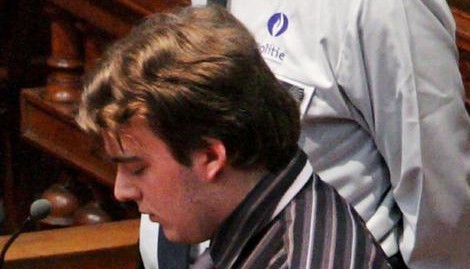
Hans Van Themsche
Murderer Kim de Gelder
Murderer · Belgium · 2009
Kim de Gelder was a Belgian aged 20 from Sinaai. He was described as a silent b…
4 victims
Kim de Gelder
Murderer · Belgium · 2009
Kim de Gelder was a Belgian aged 20 from Sinaai. He was described as a silent b…
4 victims
 Michel Bellen
Murderer · Belgium · 1964
Michel Bellen was a serial offender described as a rape-strangler of nurses who…
4 victims
Michel Bellen
Murderer · Belgium · 1964
Michel Bellen was a serial offender described as a rape-strangler of nurses who…
4 victims
 Madani Bouhouche
Murderer · Belgium · 1982
Madani “Dany” Bouhouche (June 14, 1952 - November 22, 2005) was a former Belgia…
2 victims
Madani Bouhouche
Murderer · Belgium · 1982
Madani “Dany” Bouhouche (June 14, 1952 - November 22, 2005) was a former Belgia…
2 victims
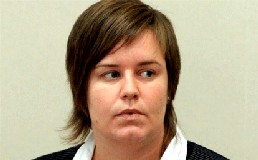 Els Clottemans
Murderer · Belgium · 2006
Els “Babs” Clottemans was a Belgian elementary school teacher and amateur skydi…
1 victim
Els Clottemans
Murderer · Belgium · 2006
Els “Babs” Clottemans was a Belgian elementary school teacher and amateur skydi…
1 victim
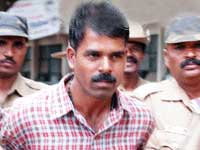 Umesh Reddy
Murderer · India · 1998
Umesh Reddy was sentenced to death on October 27, 2006. The Karnataka High Cour…
18 victims
Umesh Reddy
Murderer · India · 1998
Umesh Reddy was sentenced to death on October 27, 2006. The Karnataka High Cour…
18 victims
 Christine Paolilla
Homicide · USA · 2003
Christine Marie Paolilla was an American woman born on Long Island, New York on…
4 victims
Christine Paolilla
Homicide · USA · 2003
Christine Marie Paolilla was an American woman born on Long Island, New York on…
4 victims
 Leonard Keith Lawson
Murderer · Australia · 1961
Leonard Keith Lawson (b. 16 August 1927) was a commercial artist and photograph…
2 victims
Leonard Keith Lawson
Murderer · Australia · 1961
Leonard Keith Lawson (b. 16 August 1927) was a commercial artist and photograph…
2 victims
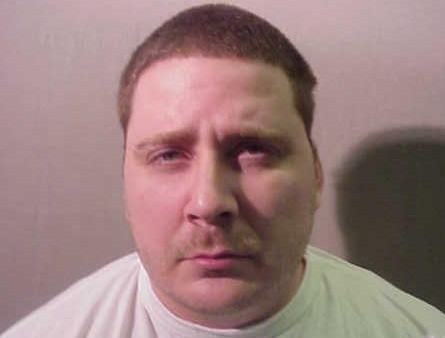 Sean Kenney
Murderer · USA · 1993
Sean Kenney was formerly known as Richard Feaster and later changed his name to…
2 victims
Sean Kenney
Murderer · USA · 1993
Sean Kenney was formerly known as Richard Feaster and later changed his name to…
2 victims
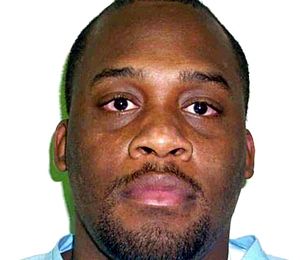 Darick Walker
Homicide · USA · 1996
Darick Demorris Walker was convicted of capital murder for the killings of two…
2 victims
Darick Walker
Homicide · USA · 1996
Darick Demorris Walker was convicted of capital murder for the killings of two…
2 victims
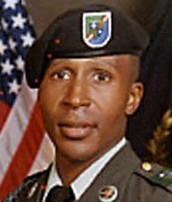 Louis Jones
Murderer · USA · 1995
Louis Jones Jr. — defendant; a decorated Army veteran and airborne ranger Louis…
1 victim
Louis Jones
Murderer · USA · 1995
Louis Jones Jr. — defendant; a decorated Army veteran and airborne ranger Louis…
1 victim
- Gender
- male
- Country
- Belgium
- Location
- Antwerp , Belgium
- Date of birth
- February 7, 1988
- Age at first offence
- 18
- Characteristics
- hate crime, rape
- Victim profile
- Oulemata Niangadou, 24 (a pregnant Malian nanny) and her two-year-old charge Luna Drowart
- Method of murder
- Shooting (hunting rifle)
- Date(s) of murder
- May 11, 2006
- Years active
- 2006
- Date of arrest
- Same day (wounded by police)
- Status
-
Life imprisonment
Sentenced to life in prison on October 11, 2007
Case record: Hans Van Themsche
Background
Hans Van Themsche (born 7 February 1988 in Wilrijk, Flemish Region of Belgium) was a student at age 18. He had been caught smoking at his boarding school on 9 May 2006 and was facing likely expulsion. In the period leading up to the shootings, he travelled from Roeselare to Antwerp.
Van Themsche described himself as a skinhead while being treated in hospital. During police questioning, he admitted to targeting non-whites.
The public debate around the murders included allegations about the (far) right Vlaams Belang political party. The family was described as well-behaved and as having an impeccable Flemish-nationalist pedigree. Antwerp public prosecutors said that “on first investigation of his environment and family he (Hans) seems not to be brought up in a racialist or violent setting”.
During World War II his grandfather Karel Van Themsche voluntarily fought on the side of his country’s occupier Nazi Germany in Waffen SS (Military SS) uniform against the Soviets on the Eastern Front.
Hans Van Themsche’s gunman’s aunt, Frieda Van Themsche, was described as a member of parliament for Vlaams Belang, which boosted association with the party.
The offence
Hans Van Themsche shot three people in Antwerp. He life-threateningly injured one person and killed two.
About ten minutes before noon, dressed in a Gothic fashion, he began his rampage in the city centre with a shot in the breast of a woman of Turkish descent who was seated six metres away on a bench reading a book: Songul Koç. Songul Koç was severely wounded.
He chambered another round and passed a pregnant Malian nanny, Oulemata Niangadou, and her two-year-old European charge, Luna Drowart. He turned and shot each of them in the back at close range, killing both instantly.
The jury also found that the murders were motivated by racism, under a 2003 hate-crimes law that could add two years in theory.
A jury of 12 citizens found Van Themsche guilty on all charges pressed against him, including the murder of Oulemata Niangadou and Luna Drowart. They also judged that the murders were motivated by racism.
Van Themsche’s planned or expressed motives were also described in his statements and a farewell letter. A farewell letter found in his room (as he may not have expected to survive) did not declare the premeditated murderous intent to which he confessed, but did reveal that he wanted to take action against chaos in society.
In police questioning, Van Themsche said that the presence near a black was sufficient reason to kill the toddler. Regarding his reason for targeting coloured people, he said that youths of foreign descent used to bully him at school, which he said would have been at least three years earlier.
Concerning Luna Drowart, Van Themsche said that “in the wrong place at the wrong time”. Her death, however, was described as not being incidental, since he had to chamber a new round before each shot.
Van Themsche was also said to have attempted to murder a third woman. The third woman was identified as Songul Kos, who was shot and seriously injured while sitting on a bench nearby.
Investigation
After Van Themsche moved on during his rampage, he was intercepted by a passing police officer who held him at gunpoint and ordered him to surrender the rifle. After Van Themsche refused to put his weapon down and upon a suspicious movement, the officer fired once, neutralizing him with a shot to the stomach.
The father of the killer commented: “In my eyes, the policeman who shot down my son is a hero. I'm glad the man had so much courage, or else even more victims would have fallen.”
Later, Van Themsche described himself as a skinhead and admitted to police— as he had before the murders to boarding school friends— to specifically targeting non-whites.
Arrest
Van Themsche was stopped when a policeman shot and wounded him.
Trial
The jury also judged that the murders were motivated by racism.
During the trial, Van Themsche’s lawyers argued that he should be confined to a mental institution because he suffered from a form of autism that made him unable to control his actions.
The jury found that he was aware of what he was doing. The court decided to follow prosecutor Franky De Keyzer’s recommendation for a life sentence on the grounds that there were no attenuating circumstances.
At sentence reading, Van Themsche showed no reaction with his head bowed.
Before the jury retired to deliberate, Van Themsche said he “would accept the sentence” and that he “would try to serve it in a dignified way”.
The presiding judge was Michel Jordens, who said:
“You acted with blind violence, without any respect for the lives and integrity of others,” presiding judge Michel Jordens said. “You reduced the value of life to nothing in order to affirm yourself,” he added, stressing that the sentence was “severe but not blind”.
Sentencing
On the next day after the jury verdict, the jury and the three professional judges of the Court of Assize sentenced him to “life-long incarceration”.
His conviction of life-long incarceration was described as an effective imprisonment exceeding one third of the conviction, with longest defined duration (30 years) before an early release and its conditions can be considered.
The sentence was read on October 11, 2007. The presiding judge was Michel Jordens.
Appeals
The Court of Cassation rejected Van Themsche’s appeal in February 2008.
Aftermath
By June 2009, civil lawsuits at Antwerp had recognized a total of nearly 325,000 euro for damages to victims’ families and Songul Koç, whom he had caused a permanent professional disability of 55 percent. Further treatment costs would add to the dues.
Reactions included condemnation from King Albert II and prime minister Guy Verhofstadt within hours. The prime minister was quoted as saying:
“[t]hese horrific, cowardly murders are a form of extreme racism. It should be clear to everyone now where extreme right can lead to .”
Dyab Abou Jahjah, founder of the Arab European League and Muslim Democratic Party, called the planned demonstration against violence useless. He was quoted as saying:
“[t]he Flemings are themselves responsible for the racism. The media in Flanders are hopelessly racist, the police are hopelessly racist, the intellectuals are hopelessly racist, the self-declared anti-racists are hopelessly racist! The victims of racism in Flanders are hopelessly racist against their own kind.”
The family of Luna Drowart denounced the letter of sympathy they received from Vlaams Belang and asked to be left in peace until after the funeral.
After Luna’s funeral, her parents’ advocate asked Vlaams Belang to withdraw a campaign banner displaying a strikingly resembling blond little girl, reminding them too much of their daughter:
additionally because the child's killer comes precisely from that environment A spokesman for Vlaams Belang responded that its Monday management meeting had already decided to remove the banner.
On May 19 on Canvas TV, foreign minister Karel De Gucht held also the voters of Vlaams Belang morally responsible for the climate in which the murders took place.
In the wake of the murders, the government tried to take action against Flemish entries at certain websites where hate and racism were allegedly spread, such as Stormfront. It was described as difficult because the sites were American and “unlike in Belgium, there exists a total freedom of expression in the United States”.
Poll results were reported:
- Four days after the murder, Flemish main commercial television station VTM conducted a poll among 700 Flemings on political consequences. The poll asked: “Is Vlaams Belang morally responsible for the murders?” with responses 24% yes, 46% no, 30% unsure. It also asked: “Will Vlaams Belang suffer in the next election?” with responses 37% yes, 34% no, 28% unsure. It also asked: “Should government funding to Vlaams Belang be cut?” with responses 30% yes, 50% no, 30% unsure.
- A week after the killings, the respected polling site De Stemmenkampioen asked its panel whether Vlaams Belang is partially responsible.
- The next week, the question focused on whether the panel members support the filing of a complaint against Vlaams Belang: “Is there a connection between the murders committed by Hans Van Themsche and Vlaams Belang?” with responses 36% yes, 59% no, 5% unsure. It also asked: “Do you support the procedure, initiated by some parties, that would cut fundings for Vlaams Belang?” with responses 30% yes, 63% no, 7% unsure.
Attacks and confrontations were described following the murders:
- The evening after the murders, there were some confrontations between Belgian and immigrant youths in Mol, and the situation remained contained with no major riots.
- On May 14, conflict occurred during a protest march organised by Africans, and some 40 people were arrested.
- On May 15, an impromptu protest organized in front of the headquarters of Vlaams Belang went without incident.
- In the night between May 16 and May 17, a Molotov cocktail was thrown into the office of a Flemish nationalist organisation in Berchem; the fire was quickly extinguished by a Turkish courier because the apartment above the office was inhabited.
- On May 18, fire was set to a Blokker store in Lokeren, and the targeted building and four other shops were completely destroyed.
- It was described that, according to Dutch newspapers, there had been multiple attacks against Blokker stores in the Netherlands carried out by anti racists, said to be a result of the chairman declaring that many of the holdups and thefts in his stores were committed by foreigners.
On June 24, 2006, six immigrant youths caused a stir in a De Lijn bus in Antwerp by beating and hitting a 54-year old passenger who tried to intervene, and the passenger died of a heart attack shortly thereafter. The youths escaped but could later be arrested; four of them were released.
Luna Drowart’s parents’ lawyer, Jef Vermassen, said that she had become a “symbol that we cannot be racist (and) that's very important”.
The African nanny was buried in Mali, with repatriation at the expense of the city of Antwerp.
Other details
On 9 May 2006, Van Themsche was caught smoking at his boarding school.
He travelled from Roeselare to Antwerp. On the morning of the eleventh, he had his long hair cut and shaven off (apart from a ponytail) before legally purchasing a Marlin hunting rifle in .30-30 Winchester and ammunition from a local weapons merchant.
At the time of his arrest and treatment, his clothing and appearance included being described as Gothic fashion, with shaved head, long black coat, and military boots.
A quote by commentator Paul Beliën was included in the public debate:
“The predators have teeth and claws. The predators have knives. Starting when they're small, they learn at their yearly offerings how to cut the throats of warm-blooded livestock. We get sick at the sight of blood, but they don't. They're trained and they're armed. We can't even carry pepperspray in our pockets. They have switchblades and butchers knives and they know how to use them.”
The trial and sentencing drew major public and political attention related to responsibilities about political presentation of immigrant and racial issues and possible effects on individuals.
A description of planned demonstration timing and participation after the shooting was included: after the shooting, legislators tightened rules on selling arms and about 20,000 people participated in a march against racism in Antwerp two months later.
Timeline
- 9 May 2006 — Hans Van Themsche was caught smoking at his boarding school.
- 11 October 2007 — A jury of 12 citizens found Van Themsche guilty on all charges and judged the murders were motivated by racism.
- 12 October 2007 — The Court of Assize sentenced him to “life-long incarceration”.
- February 2008 — The Court of Cassation rejected Van Themsche’s appeal.
- June 2009 — Antwerp civil lawsuits recognized nearly 325,000 euro for damages to victims’ families and Songul Koç, including a permanent professional disability of 55 percent.
Spotted an error, or have more information about this case?