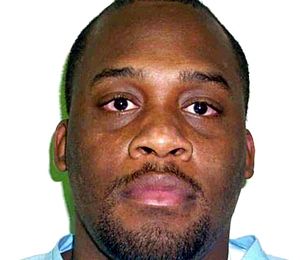
Darick Walker
Homicide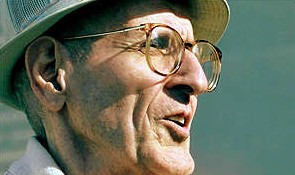 Jack Kevorkian
Homicide · USA · 1990
Jack Kevorkian (born May 26, 1928) was a controversial American pathologist. He…
130 victims
Jack Kevorkian
Homicide · USA · 1990
Jack Kevorkian (born May 26, 1928) was a controversial American pathologist. He…
130 victims
 David Koresh
Homicide · USA · 1993
David Koresh (born Vernon Wayne Howell; August 17, 1959 – April 19, 1993) led t…
79 victims
David Koresh
Homicide · USA · 1993
David Koresh (born Vernon Wayne Howell; August 17, 1959 – April 19, 1993) led t…
79 victims
 Todd Hall
Homicide · USA · 1996
Todd Hall was described by neighbors as "mentally slow" and was said to have su…
9 victims
Todd Hall
Homicide · USA · 1996
Todd Hall was described by neighbors as "mentally slow" and was said to have su…
9 victims
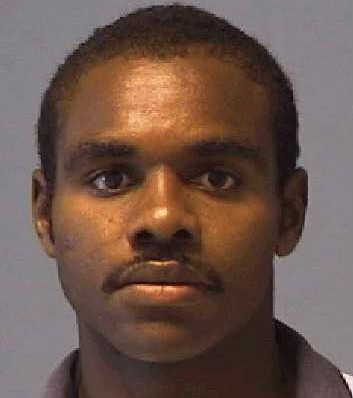 Clinton Bankston
Homicide · USA · 1987
15 August 1987 — Ann Morris (63), her sister Sally Nicholson (59), and Sally’s…
5 victims
Clinton Bankston
Homicide · USA · 1987
15 August 1987 — Ann Morris (63), her sister Sally Nicholson (59), and Sally’s…
5 victims
 Joshua Jenkins
Homicide · USA · 1996
Joshua Jenkins was a 15-year-old American killer who killed five members of his…
5 victims
Joshua Jenkins
Homicide · USA · 1996
Joshua Jenkins was a 15-year-old American killer who killed five members of his…
5 victims
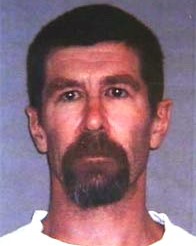 Richard Lee McNair
Murderer · USA · 1987
Richard Lee McNair was born December 9, 1958, in Duncan, Oklahoma. He was servi…
1 victim
Richard Lee McNair
Murderer · USA · 1987
Richard Lee McNair was born December 9, 1958, in Duncan, Oklahoma. He was servi…
1 victim
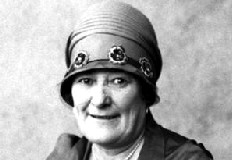 Eva Dugan
Murderer · USA · 1927
Eva Dugan (1878 – February 21, 1930) was convicted of murdering Andrew J. Mathi…
1 victim
Eva Dugan
Murderer · USA · 1927
Eva Dugan (1878 – February 21, 1930) was convicted of murdering Andrew J. Mathi…
1 victim
 Gig Young
Murderer · USA · 1978
On 19 October 1978, three weeks after his marriage, Gig Young and his wife were…
1 victim
Gig Young
Murderer · USA · 1978
On 19 October 1978, three weeks after his marriage, Gig Young and his wife were…
1 victim
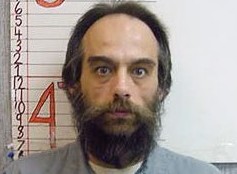 Charles Lee Mathenia
Murderer · USA · 1984
Charles Lee Mathenia · September 1983 — Louanna Bailey reported that Mathenia a…
2 victims
Charles Lee Mathenia
Murderer · USA · 1984
Charles Lee Mathenia · September 1983 — Louanna Bailey reported that Mathenia a…
2 victims
 Monique Robinson
Murderer · USA · 2011
Monique Robinson was a Phoenixville teenager and former Phoenixville Area High…
1 victim
Monique Robinson
Murderer · USA · 2011
Monique Robinson was a Phoenixville teenager and former Phoenixville Area High…
1 victim
 Amanda Kaur
Murderer · USA · 2010
Amanda Kaur was 28 at sentencing and was a mother of two. Her husband, 26-year-…
1 victim
Amanda Kaur
Murderer · USA · 2010
Amanda Kaur was 28 at sentencing and was a mother of two. Her husband, 26-year-…
1 victim
- Gender
- male
- Country
- USA
- Location
- Henrico County, Virginia, USA
- Date of birth
- J uly 8, 1972
- Age at first offence
- 24
- Characteristics
- history of mental illness, mentally retarded
- Victim profile
- Stanley Beale, 34 / Clarence Elwood Threat, 36
- Method of murder
- Shooting (handgun)
- Date(s) of murder
- November 22, 1996 / June 18, 1997
- Years active
- 1996–1997
- Date of arrest
- —
- Status
-
Executed
Executed by lethal injection in Virginia on May 20, 2010
Case record: Darick Walker
Background
Darick Demorris Walker was convicted of capital murder for the killings of two men within a three-year period and was sentenced to death. He was executed by lethal injection in Virginia on May 20, 2010.
Walker argued that he was mentally retarded and therefore ineligible for the death penalty, relying on Atkins v. Virginia. A federal habeas appeal affirmed a determination that Walker had failed to prove he was “mentally retarded” under Virginia law.
The offence
Stanley Beale murder
Catherine Taylor and her children—Monique, Bianca, and Sidney—lived in the University Terrace Apartments with Stanley Beale, the children’s father.
On the evening of November 22, 1996, Taylor heard “a boom like noise” in the living room. Taylor left the bedroom where she had been with Sidney, an infant. As she entered the living room, she saw a man kick in the locked front door. Taylor later identified the man as Walker. Walker was holding a gun and yelling, “Where is he?” Walker continued yelling, asking Beale “what you keep coming up to my door, what you looking for me for?” Beale, standing in the doorway to the kitchen, answered that he did not know Walker and did not know where Walker lived.
Bianca, who was 13 years old at the time, shouted at Walker that her father did not know him. Walker began shooting at Beale as Taylor ushered Bianca and Monique into the bathroom to hide in the bathtub. Walker shot Beale three times, killing him.
Bianca testified that she knew Walker as “Todd” and subsequently identified Walker in a photo line-up as the person who killed her father.
Tameria Patterson, a fourteen-year-old girl visiting a friend who lived in the University Terrace Apartments, testified that on the night of the murder she saw a man she knew as “Todd” enter her friend’s apartment and say “I shot him.” When shown a photo spread, Tameria identified Walker as the person who had entered the apartment.
Clarence Threat murder
On the night of June 18, 1997, Andrea Noble and Clarence Threat were sleeping in their bedroom when they were awakened by a “pop” coming from the screen door, followed by a knock at the door.
Noble went to the door and looked outside through a small window in the door, but did not see anyone. On two subsequent occasions she again heard a knock and went to the door, but did not see anyone.
Sometime after the third knock, the door was “kicked open.” Noble went to the living room and saw a person she knew as “Paul” standing with a gun. “Paul” pointed the gun at Noble as she backed into the bedroom.
When they reached the bedroom, “Paul” hit Noble with the back of the gun and then shot Threat in the leg. In the bedroom, “Paul” and Threat exchanged words and “Paul” shot Threat again. Threat sustained a total of seven gunshot wounds. He died as a result of a gunshot wound to the chest.
The shooter told Noble that if she told anyone “he would come back and kill [her] and [her] kids.” At trial, Noble identified Walker as the person she knew as “Paul.”
Investigation
Detective Curtis R. Mullins testified that he received a cartridge from Steve Martin, the property manager of the University Terrace Apartments where the Beale murder occurred. The record stated that Walker lived in an apartment there with Karen Beech until some time after Beale’s death. Martin found the cartridge in the apartment following Walker and Beech’s departure and prior to the arrival of a new tenant.
A certificate of analysis introduced at trial indicated that the cartridge came from the same firearm as seven cartridge cases recovered at the scene of the Beale murder.
Trial
Walker was indicted for the capital murder of Stanley Roger Beale and Clarence Threat within a three-year period under Code § 18.2-31(8), for four counts of the use of a firearm in the commission of a felony under Code § 18.2-53.1, and for two counts of burglary under Code § 18.2-90.
Walker was convicted of all offenses by a jury.
After hearing evidence on punishment, the jury fixed the punishment for the capital offense at death based upon the vileness and future dangerousness predicates. The jury fixed life imprisonment on each of the burglaries and a total of 18 years imprisonment for the firearms offenses.
The trial court, after considering the sentencing report of a probation officer, sentenced Walker in accord with the jury verdicts.
Constitutionality of Virginia’s death penalty statutes
Walker asserted that Virginia’s death penalty statutes, Code §§ 19.2-264.2 to -264.5, and 17.1-313, were unconstitutional, arguing that aggravating factors were unconstitutionally vague and that instructions regarding those terms and mitigation evidence violated the Eighth and Fourteenth Amendments and Sections 9 and 11 of Article I of the Virginia Constitution. The court stated it had previously considered and rejected these contentions.
Walker also asserted that the statutes were unconstitutional because they did not require the trial court to set aside a death sentence upon a showing of good cause, allowed the trial court to consider hearsay evidence in the post-hearing sentence report, and involved review inconsistent with Eighth Amendment requirements. The court stated it had previously rejected these assertions.
Request for a bill of particulars
Walker assigned error to the trial court’s denial of his request for a bill of particulars. He contended it was needed to ensure his Sixth Amendment right to effective assistance of counsel and argued that the lack of such information undermined due process reliability in death penalty cases.
The request sought identification of the grounds for the capital murder charge and the evidence on which the Commonwealth would rely. Walker also requested the Commonwealth identify and provide a “narrowing construction” of the aggravating factors it intended to rely on seeking the death penalty and the evidence it intended to use in support of those aggravating factors.
The Commonwealth responded by reciting the grounds Walker believed he was guilty of capital murder and stated it would seek death based on aggravating factors of “vileness” and “future dangerousness.” For “vileness,” the Commonwealth stated it would rely on the depravity of mind and aggravated battery components provided in Code § 19.2-264(C). For “future dangerousness,” it stated it would rely on Walker’s adult and juvenile criminal record, the circumstances of the commission of the current offenses, Walker’s lack of remorse, and evidence of other crimes whether adjudicated or unadjudicated.
The court held the trial court did not err in denying Walker’s request for a bill of particulars.
Motion for discovery and inspection
Walker assigned error to the trial court’s denial of his motion for discovery and inspection. He admitted the Commonwealth provided him with all discovery and inspection to which he was entitled under state statutes and court rules and did not assert that the Commonwealth improperly withheld exculpatory information.
Walker argued the trial court should have extended the Commonwealth’s duty to disclose exculpatory evidence imposed by Brady v. Maryland and required disclosure of “all evidence, information and all other materials which the Commonwealth intended to offer to establish the guilt of the appellant....” Walker argued such extension was required for effective assistance of counsel and due process reliability in the determination of death as punishment.
The court disagreed and held there was no error in denying the motion for discovery and inspection.
Additional peremptory challenges
Walker asserted he was entitled to additional peremptory challenges and argued the trial court erred in denying his request for additional strikes. The court held that a criminal defendant had no constitutional right to peremptory challenges and that there was no provision in Virginia law for additional peremptory strikes.
Evidence of unadjudicated criminal behavior at sentencing
The Commonwealth filed notices of intent to present evidence of unadjudicated criminal conduct of the defendant at the sentencing phase on August 10, 17, and 18, 1998, under Code § 19.2-265.3:2.
Walker argued admission was error based on: (1) lack of connection to Walker and lack of relevancy without a standard of proof; (2) due process requiring proof beyond a reasonable doubt when unadjudicated conduct is relied upon to expose a defendant to greater punishment; and (3) denial of due process notice and meaningful opportunity to be heard, resulting in denial of Sixth Amendment effective assistance of counsel.
The court rejected each argument.
The court reasoned that the Commonwealth was required to prove beyond a reasonable doubt either future dangerousness or vileness before death could be imposed, and it held unadjudicated criminal conduct evidence was relevant to future dangerousness. It also held that due process did not impose a requirement that each piece of unadjudicated criminal conduct evidence be subject to the reasonable doubt standard. The court further held the admission did not violate due process or Sixth Amendment rights to effective assistance of counsel and a meaningful opportunity to defend himself.
Admission of evidence of cartridge (Beale case)
During the guilt phase, Detective Curtis R. Mullins testified about a cartridge from Steve Martin. Walker sought to exclude evidence of the cartridge because it was found three to four months after the murder.
Walker argued on appeal that the trial court erred in admitting Martin’s testimony and the certificate of analysis because they were “neither relevant nor material, and its prejudicial effect far outweighed any possible probative value it may have had.”
The court held the trial court did not abuse its discretion and concluded the cartridge evidence was relevant.
Admission of photographs
During both guilt and sentencing phases, the Commonwealth introduced photographs of the crime scenes and autopsy photographs of Threat. Walker argued the photographs were “a calculated attempt to arouse the jurors's sympathies” and that because they were not “substantially necessary” the trial court erred in admitting them.
The court rejected the argument and held that admission of crime scene photographs and autopsy photographs was not an abuse of discretion.
Refusal to admit toxicologist evidence
Walker sought admission of testimony and reports of a toxicologist who found the presence of drugs in the systems of both victims. Walker argued it would be circumstantial evidence of “a possible alternative motive for the killing by someone else.”
The court rejected the theory and held the trial court did not abuse its discretion in refusing to admit the toxicologist evidence.
Testimony of prison conditions
During the penalty phase, Walker sought to introduce testimony of Gary Bass, Chief of Operations for the Virginia Department of Corrections, about prison life and specifically life without parole in a maximum security prison.
The court held testimony about prison conditions was not proper mitigating evidence and did not error in refusing to admit it.
Sufficiency of the evidence
Walker asserted the trial court should have granted his motion to strike because the evidence was insufficient as a matter of law, arguing eyewitness testimony was “inherently incredible.”
For the Beale murder, Walker argued that Bianca and Tameria’s testimony was suspect because of their ages. Walker also argued credibility undermined by testimony of Christopher Miller that a person he saw with a gun was not bald, contrary to Taylor describing the shooter as bald.
For the Threat murder, Walker argued Noble’s testimony should be discounted because she told an investigating officer she did not know the shooters and that one shooter was named “Paul,” and Walker argued this inconsistency made Noble’s testimony inherently incredible.
The court held credibility issues were for the jury unless testimony was inherently incredible as a matter of law, and it declined to disturb the denial of the motion to strike.
Walker also asserted the Commonwealth failed to prove aggravating factors beyond a reasonable doubt for continuing threat to society and outrageous vileness. The court rejected this argument and held evidence supported future dangerousness and vileness.
Sentencing
After trial and evidence on punishment, the jury fixed punishment for the capital offense at death. The jury also fixed life imprisonment for each burglary count and a total of 18 years imprisonment for firearm counts.
The trial court sentenced Walker in accordance with the jury verdicts.
During the punishment phase, prosecutors introduced Walker’s prior convictions for carnal knowledge, forgery, assault, and unauthorized use of a motor vehicle. The court record described evidence that Walker regularly stole from friends and acquaintances and, in a rage, had punched a pregnant woman in the stomach.
As noted by the trial court in imposing sentence in accordance with the jury’s recommendation, the commission of two brutal, unprovoked murders within a six month period was a “strong indication . . . that he is prone towards violence.”
Walker visited with immediate family members before his execution.
Appeals
Supreme Court of Virginia (direct appeal)
Walker appealed his capital murder conviction. The Supreme Court of Virginia affirmed the judgment.
The Supreme Court of Virginia held:
- death penalty statutes were constitutional;
- request for a bill of particulars was properly denied;
- evidence of unadjudicated criminal acts was properly admitted to demonstrate future dangerousness;
- photographs of crime scene and autopsy were admissible;
- evidence supported findings of three aggravating circumstances; and
- death penalty was neither excessive nor disproportionate.
The court described Walker’s indictment and convictions, the jury’s punishment findings, and its statutory review.
Federal habeas proceedings (Walker v. Kelly)
After affirmance of his conviction and denial of postconviction relief, Walker sought writ of habeas corpus.
The record described proceedings involving:
- denial of the petition by the United States District Court for the Eastern District of Virginia;
- granting by the Court of Appeals an application to file a successive habeas corpus petition;
- dismissal on remand by the district court;
- vacatur and remand by the Court of Appeals; and
- denial again by the district court on remand, followed by an appeal.
The Court of Appeals held that the district court did not clearly err in determining Walker did not establish he was “mentally retarded” under Virginia law, and it affirmed.
The Court of Appeals referenced Atkins v. Virginia and the Virginia statutory scheme for determining claims of mental retardation, including the requirement that the capital defendant prove mental retardation by a preponderance of the evidence and the statutory definition of “mentally retarded.”
The court described that Walker’s Atkins claim required satisfaction of both an intellectual functioning component and an adaptive behavior component and held the district court did not clearly err in rejecting the adaptive behavior prong.
The district court’s factual findings included that Walker had below average mental intelligence and some limitations in adaptive behavior but did not show significant limitations in adaptive behavior by a preponderance of the evidence.
The Court of Appeals affirmed that conclusion.
A separate opinion by Gregory, Circuit Judge, concurred in part and dissented in part.
In his dissent, Gregory discussed alleged deficiencies in the district court’s consideration of adaptive behavior, and also described arguments about procedural due process violations related to excluded IQ measures and application of different lists of standardized measures, and further arguments about consideration of the Flynn effect and standard error of measurement.
The dissent did not alter the majority holding.
Outcome
Darick Demorris Walker was executed by lethal injection in Virginia on May 20, 2010.
Walker’s last statement was:
“Last words being: I don't think y'all done this right, took y'all too long to hook it up. You can print that. That's it.”
State law permitted the death penalty for someone who commits two premeditated murders within three years. Walker’s execution followed the U.S. Supreme Court refusing to block his execution.
Protesters stood outside the Greensville Correctional Center, holding candles, and declined to comment.
Other details
Victims, relationships, and witnesses
- Stanley Beale was killed on the night of November 22, 1996.
- Clarence Elwood Threat died after being shot seven times; the shooting occurred in the early morning period described as occurring on June 18, 1997.
- Bianca was 13 years old at the time of the Beale murder.
- Tameria Patterson was fourteen years old at the time of the Beale murder.
- Andrea Noble and Clarence Threat were sleeping in their bedroom when they were awakened by a “pop” and knock at the door.
- Noble and Beale’s family identified Walker under different names used by the shooter: “Todd” for Beale’s case and “Paul” for Threat’s case.
Prison execution process details
The record described that Walker was escorted into the death chamber and appeared calm. A curtain was pulled to block the view while intravenous lines were attached. The curtain was opened again at 9:15 p.m. Walker spoke in response to being asked for a last statement.
The IV line delay was acknowledged by Larry Traylor, spokesman for the Virginia Department of Corrections. Walker took deep breaths after the first chemicals began flowing and then his breathing grew shallow before being pronounced dead at 9:24 p.m.
Mental retardation and documented history
Walker’s lawyers had argued that he was mentally retarded and therefore ineligible for the death penalty. A social history prepared in 2003, when Walker was 30, said he functioned at the level of an 11-year-old, that he may have suffered from fetal alcohol syndrome, and that he had a family history of mental illness and mental retardation.
A claim of mental retardation was described as pending in federal court.
In the federal habeas decision, Walker’s claim under Virginia law was addressed under a statutory framework defining “mentally retarded,” including:
- significantly subaverage intellectual functioning as demonstrated by performance on standardized measures;
- significant limitations in adaptive behavior as expressed in conceptual, social, and practical adaptive skills.
The Court of Appeals affirmed that Walker had failed to establish the adaptive behavior prong by a preponderance of the evidence.
Additional named individuals in trial and appeal materials
- Danielle Spinelli was identified as one of Walker’s attorneys present at the execution viewing area.
- Larry Traylor was identified as Virginia Department of Corrections spokesman.
- Patricia Estrada was identified as a U.S. Supreme Court spokeswoman.
- Alice Threat-Skipper was identified as Threat’s mother.
- Gov. Bob McDonnell was identified as Governor of Virginia in connection with refusal to intervene and appeals.
- Steve Martin was identified as property manager who found the cartridge.
- Karen Beech was identified as Walker’s apartment mate after which Walker and Beech departed the apartment where the cartridge was found.
- Christopher Miller was identified in Walker’s sufficiency argument about whether a person with a gun was bald.
- Detective Curtis R. Mullins was identified as the witness regarding the cartridge.
- Gary Bass was identified as Chief of Operations for the Virginia Department of Corrections in connection with prison condition testimony sought as mitigation.
Spotted an error, or have more information about this case?