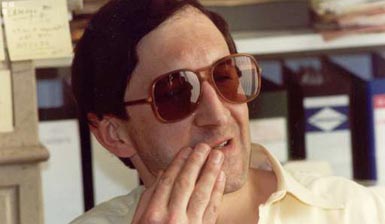
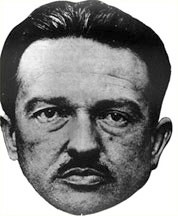
Madani Bouhouche
Murderer Kim de Gelder
Murderer · Belgium · 2009
Kim de Gelder was a Belgian aged 20 from Sinaai. He was described as a silent b…
4 victims
Kim de Gelder
Murderer · Belgium · 2009
Kim de Gelder was a Belgian aged 20 from Sinaai. He was described as a silent b…
4 victims
 Michel Bellen
Murderer · Belgium · 1964
Michel Bellen was a serial offender described as a rape-strangler of nurses who…
4 victims
Michel Bellen
Murderer · Belgium · 1964
Michel Bellen was a serial offender described as a rape-strangler of nurses who…
4 victims
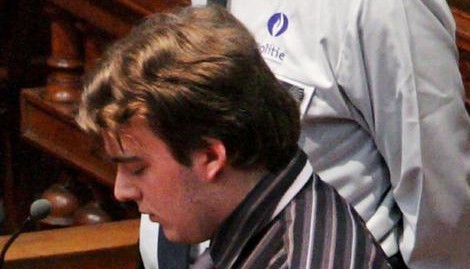 Hans Van Themsche
Murderer · Belgium · 2006
Hans Van Themsche (born 7 February 1988 in Wilrijk, Flemish Region of Belgium)…
2 victims
Hans Van Themsche
Murderer · Belgium · 2006
Hans Van Themsche (born 7 February 1988 in Wilrijk, Flemish Region of Belgium)…
2 victims
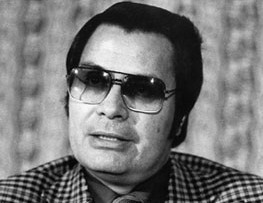 Jim Jones
Murderer · Guyana · 1978
James Warren "Jim" Jones (May 13, 1931 – November 18, 1978) was the American fo…
900 victims
Jim Jones
Murderer · Guyana · 1978
James Warren "Jim" Jones (May 13, 1931 – November 18, 1978) was the American fo…
900 victims
 Dr. Wouter Basson
Murderer · 1992
Wouter Basson (born July 6, 1950) was a South African cardiologist and the form…
230 victims
Dr. Wouter Basson
Murderer · 1992
Wouter Basson (born July 6, 1950) was a South African cardiologist and the form…
230 victims
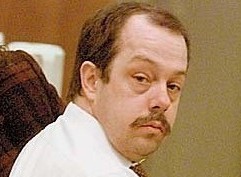 David Mark Hill
Murderer · USA · 1996
Name: David Mark Hill · Pronounced dead: 6:17 p.m. in the state’s death chamber…
3 victims
David Mark Hill
Murderer · USA · 1996
Name: David Mark Hill · Pronounced dead: 6:17 p.m. in the state’s death chamber…
3 victims
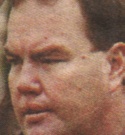 Matthew Grant Webster
Murderer · Australia · 1989
Matthew Grant Webster was described as the man who raped and murdered Newcastle…
1 victim
Matthew Grant Webster
Murderer · Australia · 1989
Matthew Grant Webster was described as the man who raped and murdered Newcastle…
1 victim
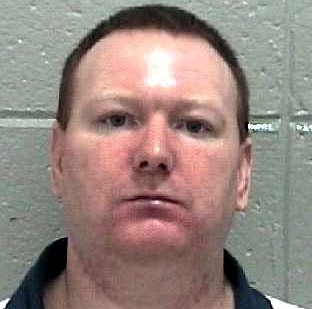 Billy Daniel Raulerson
Murderer · USA · 1993
Defendant: Billy Daniel Raulerson Jr. Age: 27 Court/case references: Raulerson…
3 victims
Billy Daniel Raulerson
Murderer · USA · 1993
Defendant: Billy Daniel Raulerson Jr. Age: 27 Court/case references: Raulerson…
3 victims
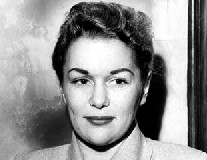 Barbara Graham
Murderer · USA · 1953
Barbara Graham (June 26, 1923 – June 3, 1955) was an American criminal and conv…
1 victim
Barbara Graham
Murderer · USA · 1953
Barbara Graham (June 26, 1923 – June 3, 1955) was an American criminal and conv…
1 victim
 Megan Hogg
Murderer · USA · 1998
Megan Hogg was sentenced to 25 years to life on September 24, 1999, for the 199…
3 victims
Megan Hogg
Murderer · USA · 1998
Megan Hogg was sentenced to 25 years to life on September 24, 1999, for the 199…
3 victims
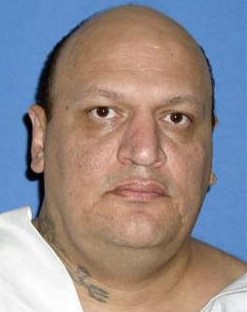 Ricardo Samaniego Ortiz
Murderer · USA · 1997
Ricardo Samaniego Ortiz was convicted of capital murder and sentenced to death…
1 victim
Ricardo Samaniego Ortiz
Murderer · USA · 1997
Ricardo Samaniego Ortiz was convicted of capital murder and sentenced to death…
1 victim
- Gender
- male
- Country
- Belgium
- Location
- Belgium
- Date of birth
- J une 14, 1952
- Age at first offence
- 30
- Characteristics
- beheading, police officer
- Victim profile
- A security guard / A diamond dealer
- Method of murder
- Shooting
- Date(s) of murder
- 1982 / 1989
- Years active
- 1982–1989
- Date of arrest
- —
- Status
-
Released
Beheaded in an accidental death on November 22, 2005; sentenced to 20 years in prison in 1995; released on parole on September 15, 2000
Case record
Overview
Madani “Dany” Bouhouche (June 14, 1952 - November 22, 2005) was a former Belgian gendarme with the Belgian Gendarmerie. He was sentenced in 1995 to 20 years in prison and was released on parole on September 15, 2000. He died on November 22, 2005 after being beheaded when a large clump of wood flew off a tree he was cutting with a chainsaw. His death was not considered suspicious.
People
- Madani “Dany” Bouhouche — former Belgian gendarme; defendant/convicted person; later died beheaded
- Robert “Bob” Beijer — former state police officer; Bouhouche’s companion; convicted in the same trial
- Juan Mendez — FN weapons engineer and sales manager for Latin America; murder victim (Bouhouche maintained he was not guilty of this)
- Ali Suleiman — Libyan diamond dealer; killed in Antwerp during an argument with Bouhouche and Beijer
- Francis Zwarts — security officer of Belgian airline Sabena; disappeared in 1982 with a shipment of gold and bonds; his body was never found
- Herman Vernaillen — state police major; Bouhouche and Beijer were acquitted of an attack against him
- Eddy Vos — Jumet judiciary spokesman
Background
Madani “Dany” Bouhouche was born in Brussels, the son of an Algerian father and a Belgian mother. He started his police career with the Bijzondere Opsporings Brigade (BOB), a special investigative branch of the Gendarmerie, the former military police of Belgium. Soon after joining the BOB, Bouhouche developed illegal activities with other gendarmes of the BOB.
One of Bouhouche’s associates, Robert Beijer, later set up a private detective bureau with Bouhouche in 1983, named the Agence de Recherches et d'Informations.
In the 1980s and 1990s, rumours linked Bouhouche and Beijer to the Gang of Nijvel. Both men denied being part of the gang. They also “passed” a lie detector test, and a DNA comparison yielded nothing.
Timeline
- January 1986 — Bouhouche was first arrested and became a suspect of the murder of Juan Mendez.
- October 1981 — An attack against state police major Herman Vernaillen occurred; Bouhouche was acquitted of an attack against him in the related proceedings.
- 1982 — The weapons were stolen from the Special Intervention Squadron; Bouhouche and Beijer were convicted for handling stolen weapons connected to these stolen weapons.
- 1983 — Robert Beijer and Bouhouche set up the Agence de Recherches et d'Informations private detective bureau.
- 1986 — Bouhouche was arrested and later released in relation to the Juan Mendez murder investigation.
- November 1988 — Bouhouche was released.
- 1989 — After a diamond dealer in Antwerp was murdered, Bouhouche was again arrested.
- 2 September 1989 — Libyan diamond dealer Ali Suleiman died during an argument with Bouhouche and Beijer in his Antwerp office.
- 1994 — Bouhouche and Beijer faced trial in 1994 for crimes committed between 1981 and 1989; they maintained their silence and were found guilty of handling stolen weapons.
- January 1995 — Brussels Court sentenced Bouhouche to 20 years in jail; Beijer received 14 years.
- September 15, 2000 — Bouhouche was freed on parole after spending fourteen years in prison; he had served 11 years of his 20-year term including six years in pre-trial remand detention.
- 1 January — Jumet judiciary officials travelled to France to search the farm for clues linked to inquiries into the Gang of Nijvel.
- June 2006 — Weapon experts concluded that the Remington riot gun was not used in the Nijvel gang attacks.
- November 22, 2005 — Bouhouche was beheaded in an accidental chainsaw incident; his death was not considered suspicious.
The offence
Murder and other crimes discussed in connection with prosecutions
Bouhouche was convicted in 1995 for various crimes, including two murders. The record also states that he was never found guilty of the murder of Juan Mendez.
Handling stolen weapons (conviction)
Bouhouche and Beijer were found guilty of handling stolen weapons. The weapons were stolen from the Special Intervention Squadron in 1982.
Murder of Ali Suleiman (conviction)
Bouhouche was convicted of the manslaughter of Libyan diamond dealer Ali Suleiman in Antwerp on 2 September 1989. Suleiman died during an argument with Bouhouche and Beijer in Suleiman’s Antwerp office. Both men kept silent about the matter.
Murder of a security guard (conviction, 1982)
In the same trial proceedings, they were also convicted for murdering a security guard in 1982.
Investigation
Bouhouche and Beijer were linked to the Gang of Nijvel through rumours in the 1980s and 1990s. The record states that no proof was ever found. It also states that Bouhouche “passed” a lie detector test and that a DNA comparison yielded nothing.
After Bouhouche’s death became known in Belgium, an investigative team looked through the home where Bouhouche lived and found a Remington riot gun. Because the Nijvel gang also used riot guns, a ballistic test was performed. Weapon experts concluded in June 2006 that the Remington riot gun was not used in the Nijvel gang attacks.
Arrest and trials
Bouhouche was first arrested in January 1986, as a suspect of the murder of Juan Mendez, a FN weapons engineer and sales manager for Latin America. Bouhouche was released in November 1988 though.
After a diamond dealer in Antwerp was murdered in 1989, Bouhouche was arrested again. He was convicted of this murder in 1995, receiving a 20-year sentence. Robert Beijer received fourteen years.
The trial took more than five months and was one of the longest in Belgian history. The record states that in that trial they were also convicted for murdering a security guard in 1982.
In 1994, Bouhouche and Beijer faced trial for a series of crimes committed between 1981 and 1989. Bouhouche maintained his silence but was found guilty of handling stolen weapons.
The record states that Bouhouche was never found guilty of the murder of Juan Mendez, an engineer with weapons maker FN in Herstal on 7 January 1986. It also states that he was acquitted of an attack against state police major Herman Vernaillen in October 1981.
The record also states that some people claimed that Bouhouche and Beijer were part of the Nijvel gang, but both men denied this.
Sentencing
Brussels Court sentenced Bouhouche in January 1995 to 20 years jail. Beijer received fourteen years.
Appeals
No appeals information appears in the provided material.
Aftermath
On September 15, 2000, Bouhouche was freed on parole after spending fourteen years in prison, including the six years Bouhouche spent in pre-trial remand detention. After his release, Bouhouche moved to the French Pyrenees, living isolated in the small city of Fougax-et-Barrineuf. He was responsible for a rental accommodation of an old friend, Alain Weykamp.
The record states that he died there in November 2005 when a tree fell on him while he was doing brush work. His death only became known in Belgium shortly before Christmas when investigative checks were made in connection with people previously suspected. The discovery was made by a search of the population register.
The record states that in response to Bouhouche’s death, Jumet judiciary officials travelled to France on 1 January to search the farm for clues linked to inquiries into the Gang of Nijvel. Judiciary spokesman Eddy Vos said investigators were looking for weapons or documents and were prepared to conduct a very thorough investigation.
The record further states that Bouhouche’s death was accidental: he was beheaded after a large clump of wood flew off a tree he was cutting with a chainsaw. The accident took place near the French city of Foix. Bouhouche’s body was found by a female neighbour. His body was cremated in the presence of a few family members. The record states that the French police knew nothing of his criminal past and would allow his body to be cremated.
Other details
- Bouhouche and Beijer were described as amateur private detectives in Suleiman’s Antwerp office.
- Francis Zwarts, a security officer of Belgian airline Sabena, disappeared in 1982 with a shipment of gold and bonds he was transporting. The body was never found.
- The record states that Bouhouche lived on a remote, simple farm near the city of Foix, farmed goats, bred dogs, and made cheese.
- The record states that Bouhouche had a girlfriend who moved with him to the French Pyrenees after his release; in the past year he lived there alone.
- The record includes “Wikipedia.org Secrets untold Expatica.com 06/01/2006” as part of navigation/scrape artefacts and contains the text “Madani Bouhouche home last updates contact” as artefacts, which are not case facts.

Spotted an error, or have more information about this case?