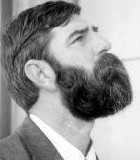
Louis Van Schoor
Serial killer Moses Sithole
Serial killer · South Africa · 1994
Moses Sithole (November 17, 1964) was a serial rapist and serial killer in Sout…
38 victims
Moses Sithole
Serial killer · South Africa · 1994
Moses Sithole (November 17, 1964) was a serial rapist and serial killer in Sout…
38 victims
 Norman Afzal Simons
Serial killer · South Africa · 1986
Norman Afzal Simons was a former teacher. He later converted to Islam in 1993,…
22 victims
Norman Afzal Simons
Serial killer · South Africa · 1986
Norman Afzal Simons was a former teacher. He later converted to Islam in 1993,…
22 victims
 Sipho Thwala
Serial killer · South Africa · 1996
Sipho Mandla Agmatir Thwala (born 1968) was a South African rapist and serial k…
16 victims
Sipho Thwala
Serial killer · South Africa · 1996
Sipho Mandla Agmatir Thwala (born 1968) was a South African rapist and serial k…
16 victims
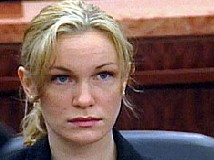 Susan Wright
Murderer · USA · 2003
Susan Lucille Wright (also described as Susan Lucille Wyche; born April 24, 197…
1 victim
Susan Wright
Murderer · USA · 2003
Susan Lucille Wright (also described as Susan Lucille Wyche; born April 24, 197…
1 victim
 Ellizabeth Rainey
Murderer · USA · 2013
Ellyzabeth Rainey Ellyzabeth Rainey pleaded guilty and was sentenced to 41 year…
1 victim
Ellizabeth Rainey
Murderer · USA · 2013
Ellyzabeth Rainey Ellyzabeth Rainey pleaded guilty and was sentenced to 41 year…
1 victim
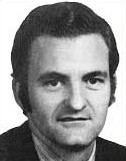 William Bradford Bishop
Mass murderer · USA · 1976
William Bradford Bishop was a fugitive from justice after 1976. William Bradfor…
5 victims
William Bradford Bishop
Mass murderer · USA · 1976
William Bradford Bishop was a fugitive from justice after 1976. William Bradfor…
5 victims
- Gender
- male
- Country
- South Africa
- Location
- South Africa
- Date of birth
- 1951
- Age at first offence
- 35
- Characteristics
- fugitive, serial rapist
- Victim profile
- Black men ( alleged burglars )
- Method of murder
- Shooting ( 9mm Parabellum pistol)
- Date(s) of murder
- 1986 - 1989
- Years active
- 1986–1989
- Date of arrest
- —
- Status
-
Released
Sentenced to 20 years in prison on April 1992; released October 2004
Case summary
Louis van Schoor was a security guard and an ex-policeman who was convicted and sentenced to 20 years in prison on April 1992. He was released in October 2004.
Background
Louis van Schoor was a former member of the police dog unit. After working in policing, he worked as a security guard and also ran a security company that was described as policing seven out of 10 businesses in East London.
He was described as a notorious case involving shootings after silent alarms at business premises, where he shot suspects with a 9mm Parabellum or 9mm pistol and then contacted police. The court testimony described him as firing as many as eight or 10 times. If a victim survived, he was arrested; if the victim died, the killing led to an inquest hearing. He referred to the shootings as “incidents.”
His alleged killings were described as taking place between 1986 and 1989 while he was active as a security guard. He was alleged to have shot more than 100 people and to have killed 39. He stated that he did not keep count.
Van Schoor was also described as having a media relationship that included confiding details of his shooting toll to journalists, and he was later described as doing his best to avoid media attention.
He was described as having been trained in the police and as having had stints on the then border. He later described himself as having been a “changed man” in prison and as finding God after his release.
The offence
Van Schoor’s alleged spree involved killings that were attributed to multiple incidents following silent alarms at business premises. His modus operandi was described as responding to silent alarms and shooting suspects who were then alleged to be intruders.
He was described as having killed 39 people and being associated with suspicion of killing as many as 39+ alleged burglars over a few years. He was alleged to have been responsible for 101 people being shot and for killing 39.
He was charged with 19 cases of murder and 21 of attempted murder, and he was convicted of seven murders and two attempted murders.
He stated:
“I apologise if any of my actions caused any hurt and discomfort.”
Investigation
A journalist, Patrick Goodenough, was described as investigating rumours about Van Schoor. A colleague, Dominic Jones, was also described as gathering information. Goodenough was described as battling to get the story into print in the face of disbelieving editors. The story was described as reaching the front page of the Sunday Tribune. The publicity was described as leading to more people coming forward and mainly to the Black Sash, an anti-apartheid human rights advocacy organisation.
It was claimed that Van Schoor dragged victims into deserted premises and then shot them. Van Schoor denied:
“I never did that. Never,”
Arrest
Van Schoor was arrested if the victim survived after he shot them. If the victim died, the killing led to an inquest hearing.
Trial
Van Schoor was tried in the Supreme Court. He was convicted in April 1992 and sentenced to 20 years in prison.
The record described that magistrates found he had acted within the law after each incident, and that he had not been cautioned by the police or the courts. The law was described as being changed to prevent similar shootings by security personnel.
At sentencing, he was described as being incarcerated at East London Prison. He was also described as being convicted for seven murders and two attempted murders.
Sentencing
Van Schoor was sentenced to 20 years in prison on April 1992.
He served 12 years of his 20-year sentence and was released on parole in October 2004.
Appeals
No appeals were described.
Outcome
Van Schoor was released on parole in October 2004 after serving part of his 20-year prison term.
After his release, he gave statements and held a media briefing. He expressed happiness about rejoining society and said he should not be judged by his past but by his future.
He was also described as planning to write a book about his life and stated:
“set the record straight”
He also stated:
“I was purely protecting people's property,”
He said he was not allowed to discuss trial or experiences in East London’s Fort Galmorgan prison, where he was described as being apparently a model prisoner.
He said:
“That is very far from the truth. I was a crime fighter,”
He stated:
“To the families and friends of my victims, I apologise if my action caused any hurt and discomfort.”
He also stated:
“It was nothing to do with race. I was purely protecting people's property,”
He said:
“I can't say it is easy, but I suppose the time I spent in the police made me used to shooting and killing,”
He said:
“I've done my time. I ask people not to judge me on the past, but the future,”
He said:
“I'm not a serial killer. I called the police after each encounter.”
He also said:
“I never apologised for what I did. I apologised for any hurt or pain that I caused through my actions during the course of my work.”
He also said:
“I apologised for the pain, suffering my actions caused them. I meant this sincerely. There was huge public response, but to this day I've had no contact with them (families/victims).”
Aftermath
After release, Van Schoor was described as having lunch with his elderly mother and relatives, and he described himself as lying low partly because of public attention.
A journalist described that he and his fiancée visited and corresponded over a period of time. Van Schoor’s fiancée was Eunice de Kock (38), described as a lawyer from Cape Town. Van Schoor and Eunice de Kock were described as engaged, with Eunice de Kock calling him “bokkie” and “engel.”
Van Schoor was described as planning a fifth marriage and a farm. He was also described as working as a cattle farm foreman outside East London after release.
The record also described that Van Schoor stated that he had no idea of the whereabouts of, and no desire to meet, a young journalist who had investigated rumours.
People connected to the case
- Louis van Schoor — security guard; former member of the police dog unit.
- Eunice de Kock (38) — lawyer from Cape Town; fiancée of Louis van Schoor.
- Patrick Goodenough — journalist who investigated rumours about Louis van Schoor.
- Dominic Jones — colleague of Patrick Goodenough who gathered information.
- Sabrina van Schoor (23) — daughter of Louis van Schoor; serving a 25-year sentence for hiring a hitman to slit her mother’s throat in 2002. The mother was Beverly (also written as Beverley in parts of the record).
- Liefie Peters (13) — described as a victim killed while hiding in the toilet of a Wimpy restaurant after breaking in to steal cash.
- Jacques Durandt (33) — described as a white former member of the security forces who defended the killer in later discussion.
- Wannitta Kindness (36) — described as a white taxi driver.
- Archbishop Desmond Tutu — described as making statements in later discussion about responsibility for the past.
- Nkosinathi Biko — described as making statements during commemorations referenced in the record.
- Steve Biko — described as the murdered anti-apartheid activist whose son was Nkosinathi Biko.
- André Brink — described as having been a victim of a gun attack referenced in later discussion.
- Max du Preez — described as making statements referenced in later discussion.
- Heidi Holland — described as author of a book titled The Colour of Murder published in connection with later discussion.
- Nelson Mandela — referenced in connection with sentence reductions for all convicts issued by him when he was president.
- Chris Hani — referenced in connection with the timing around when Van Schoor went to jail.
Other details
The record described racial and political context, including intense racial polarisation in the late 1980s, states of emergency, mass revolt, white repression and fear.
It described that Van Schoor had been linked to the “I Love Louis” stickers with three bullet holes through a bleeding heart.
It also described debates about whether Van Schoor should be classified as a mass murderer or a serial killer, and that he rejected both labels, stating he was a “crime fighter.”
The record described that Van Schoor said he planned to apply for amnesty from the Truth and Reconciliation Commission at one point, and that he denied the killings were racially motivated.
He stated:
The record described that Van Schoor’s victims were black or coloured, and that he said he did not remember faces. He said:
“I don't remember. I don't really know”
He also said:
“None,”
He stated:
“I don't remember faces. I remember some events, sequences of things,”
It described that in 2000 he made efforts to contact victims’ families but was unable to do so, and he then went to the media and made a public apology.
It described a dispute where it was claimed that Van Schoor dragged victims into deserted premises, which he denied.
It also described that a law was changed to prevent similar shootings by security personnel.
The record included references to additional later discussion and commentary. It included a passage stating:
“I can't argue with that,” says Louis van Schoor. “I never kept count.”
It described a statement attributed to Jacques Durandt:
“I won't say he's a murderer. For him it was a job.”
It included a statement attributed to Wannitta Kindness:
“But you don't find white people breaking into places.”
It included a statement attributed to Ms Kindness:
“The blacks don't want equality,”
It included a statement attributed to Ms Holland:
“The story is of a family but it is also the story of a divided country and of the people of that country trying to find new ways to live with each other,”
Timeline
- April 1992 — Louis van Schoor was convicted in the Supreme Court and sentenced to 20 years in prison; he was said to be incarcerated at East London Prison.
- October 2004 — Louis van Schoor was released on parole after serving 12 years out of the 20-year sentence.

Spotted an error, or have more information about this case?