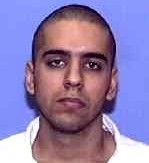
Kenneth Vodochodsky
Murderer Russell Ellwood
Murderer · USA · 1991
Russell Ellwood was a former taxi driver. Authorities suspected him of killing…
20 victims
Russell Ellwood
Murderer · USA · 1991
Russell Ellwood was a former taxi driver. Authorities suspected him of killing…
20 victims
 Robert Martines Perez
Murderer · USA · 1994
Name: Robert Martines Perez · Other name used in proceedings: Robert Martinez P…
15 victims
Robert Martines Perez
Murderer · USA · 1994
Name: Robert Martines Perez · Other name used in proceedings: Robert Martinez P…
15 victims
 Billy Frank Vickers
Murderer · USA · 1993
Billy Frank Vickers Vickers was executed by lethal injection in Texas on Januar…
14 victims
Billy Frank Vickers
Murderer · USA · 1993
Billy Frank Vickers Vickers was executed by lethal injection in Texas on Januar…
14 victims
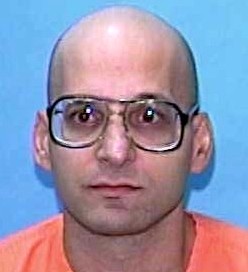 Anthony John Ponticelli
Murderer · USA · 1987
Name: Anthony John Ponticelli Date of birth: 04/19/67 Fifth Judicial Circuit: M…
2 victims
Anthony John Ponticelli
Murderer · USA · 1987
Name: Anthony John Ponticelli Date of birth: 04/19/67 Fifth Judicial Circuit: M…
2 victims
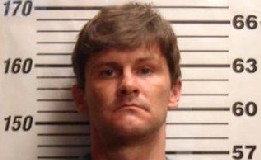 Dennis Edgecomb
Murderer · USA · 2010
Dennis Edgecomb pleaded guilty to murder at the beginning of the sentencing hea…
1 victim
Dennis Edgecomb
Murderer · USA · 2010
Dennis Edgecomb pleaded guilty to murder at the beginning of the sentencing hea…
1 victim
 Valmae Beck
Murderer · Australia · 1987
Valmae Beck Valmae Beck was sentenced to life imprisonment with a non parole pe…
1 victim
Valmae Beck
Murderer · Australia · 1987
Valmae Beck Valmae Beck was sentenced to life imprisonment with a non parole pe…
1 victim
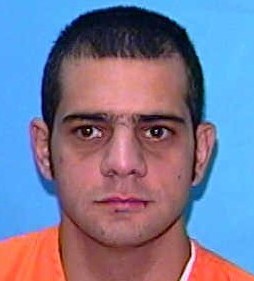 Anthony Farina
Murderer · USA · 1992
Anthony Farina (born 11/20/73) was tried in the Seventh Judicial Circuit, Volus…
1 victim
Anthony Farina
Murderer · USA · 1992
Anthony Farina (born 11/20/73) was tried in the Seventh Judicial Circuit, Volus…
1 victim
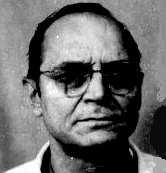 Robert Excell White
Spree killer · USA · 1974
Robert Excell White was executed by lethal injection in Texas on March 30, 1999…
4 victims
Robert Excell White
Spree killer · USA · 1974
Robert Excell White was executed by lethal injection in Texas on March 30, 1999…
4 victims
 Teruhiko Matsue
Murderer? · Japan · 1987
Teruhiko Matsue was a 39-year-old man from Saga Prefecture who was serving a tw…
3 victims
Teruhiko Matsue
Murderer? · Japan · 1987
Teruhiko Matsue was a 39-year-old man from Saga Prefecture who was serving a tw…
3 victims
- Gender
- male
- Country
- USA
- Location
- Atascosa County, Texas, USA
- Date of birth
- August 16, 1980
- Age at first offence
- 19
- Characteristics
- convicted rapist
- Victim profile
- Atascosa County sheriff's Deputies Thomas Monse Jr. and Mark Stephenson and Texas State Trooper Terry Miller
- Method of murder
- Shooting
- Date(s) of murder
- October 12, 1999
- Years active
- 1999
- Date of arrest
- 3 days after
- Status
-
Sentenced to death
Sentenced to death March 2, 2001; conviction and sentence reversed April 21, 2004; State’s motion for rehearing denied March 15, 2005; disposition followed after April 22, 2005 transfer to a county jail; later entered a plea agreement calling for a 30-year sentence with an option for parole after 15 years
Case record: Kenneth Vodochodsky
Background
Kenneth Vodochodsky was born on 08/16/1980. His TDCJ number was 999377. He was white and male. His hair color was black and his eye color was brown. His height was 5 ft 7 in and his weight was 146. His education level was 8, and his race and gender were recorded as White Male. His prior occupation was listed as a pipe fitter, painter, and laborer in Bexar, Texas. His prior prison record was none.
The conviction and death sentence were associated with “Law of Parties” responsibility. He was characterized as the friend and roommate of Jeremiah Engleton.
Vodochodsky’s girlfriend was Sara Lopez. Jeremiah Engleton lived with his wife, Violet Engelton. Violet’s sister was Sara Lopez, and children also lived in the home.
Kenneth (Kenny) Vodochodsky wrote personal statements in a letter. He said: “My full name is Kenneth Conrad Vodochodsky, but all my family and friends call me ‘Kenny’.” He stated that he was “born and raised in San Antonio, Texas,” that his nationality was “half White, half Hispanic,” and that he was “currently single (never been married).” He said he “believe[d] in God,” but did “not practice any particular religion.” He said he was a “non-smoker,” but “enjoy[ed] a casual drink on special occasions.” He said he had “a son whom I love and miss more than anything.” He stated: “Physically I am 5’ 8’’ in height; I weight 160 lbs. I have black hair and brown eyes.” He said he “have some tattoos!” and listed interests and hobbies including “Reading (all types of books), Writing (letters, poems etc.), Drawing (various types of drawings), Music (all types), Movies (mostly action).” He also wrote: “My interests include all types of automobiles; flying machines, electronics/technology, outdoor adventures… and some sports… smile” He said: “If you would like more information about me and/or my case / current situation, please feel free to contact me via snail-mail. I would love to hear from you - be it good or bad. smile” He ended: “Sincerely yours, Kenny.”
The letter included a mailing address: “Pack I Unit 2400 Wallace Pack Rd. Navasota, TX 77868 USA.” The document included “# 1362329 Pack I Unit 2400 Wallace Pack Rd. Navasota, TX 77868 USA.”
Timeline
- 10/12/1999 — Atascosa County deputies Thomas Monse and Mark Stephenson and Texas Department of Public Safety Trooper Terry Miller were ambushed and killed; Jeremiah Engleton died from a self-inflicted gunshot wound to the head.
- 03/02/2001 — A jury convicted Kenneth Vodochodsky and the trial judge sentenced him to death.
- 04/21/2004 — The Texas Court of Criminal Appeals reversed Vodochodsky’s conviction and sentence; evidence was found factually insufficient.
- 05/06/2004 — The State filed a motion for rehearing to the Texas Court of Criminal Appeals.
- 03/15/2005 — The Texas Court of Criminal Appeals denied the State’s motion for rehearing.
- 04/11/2005 — The court decision/opinion became final.
- 04/22/2005 — Vodochodsky was transferred to a county jail, awaiting further disposition by the State.
- 03/29/2006 — Associated Press reported that an Atascosa County man said he would plead guilty to murder for his role in an ambush that killed three law officers and wounded two; the plea agreement called for a 30-year sentence with an option for parole after 15 years.
The offence
In the early evening hours of 10/12/1999, Atascosa County Sheriff’s Deputies Thomas Monse and Mark Stephenson and Texas Department of Public Safety Trooper Terry Miller were ambushed and killed by multiple gunshots. Monse died from eighteen gunshot wounds caused by rifle, shotgun, and handgun fire, including two wounds caused by close range handgun fire to his face. Stephenson died from eleven gunshot wounds caused by rifle and handgun fire, including close-range handgun fire to his face. Miller received two wounds from rifle fire, and a shot through his head killed him. Several other officers involved in the conflict were injured.
At the end of the incident, the shooter, Jeremiah Engleton, killed himself with a gunshot wound to his head. Police found an SKS Norenco 7.62 x 39mm semiautomatic rifle, a Mossberg 12-gauge pump-action shotgun, a Ruger 9mm semiautomatic handgun, and a Glock .40-caliber semiautomatic handgun near his body. Police also found a Lorcin .380-caliber semiautomatic handgun in Engleton’s pants’ pocket and a suicide note in his right shoe.
Vodochodsky was indicted for intentionally or knowingly causing Monse’s death by shooting him with a firearm. The indictment charged that Thomas Monse was “a peace officer … who was acting in the lawful discharge of an official duty,” and that Vodochodsky knew Monse was a peace officer.
At trial, the jury was instructed on the law of parties and could find Vodochodsky guilty if it found he acted “with intent to promote or assist Jeremiah Engleton to commit the offense of capital murder, and did then and there solicit, encourage, direct, aid or attempt to aid Jeremiah Engleton to commit the offense … .”
Investigation
The sequence of events included multiple witnesses and dispatch steps. A neighbor, Edward Essary, saw Vodochodsky loading “stuff” into his vehicle. Police received a “911” call to the Atascosa County Sheriff’s Office from Engleton’s home. Monse and Stephenson were dispatched and arrived in sequence.
Monse arrived at the residence and was apparently immediately shot and killed. Stephenson arrived and very faintly radioed that he had been hit. Miller was dispatched to check on Monse and Stephenson because they could not be reached by radio, arrived at 8:51, radioed in “officer down” at 8:52, and was shot and killed while still in his vehicle as he backed away.
Other recorded events during the incident included:
- A neighbor, Robert Hutton, heard several gunshots and saw headlights on two patrol cars on Vodochodsky’s property; he observed the security light in the back of the residence was off and saw a flashlight moving on top of the residence, concluding that a person was walking around on the roof.
- Around 8:58, Tudyk and Fisher were shot and wounded after Fisher pulled up alongside Tudyk.
- As officers pursued Engleton, he shot himself in the head and died before they reached him.
Jail personnel later found in Vodochodsky’s possession a note containing numbers and simple mathematical calculations. Beside one number was the word “bond” and beside another number was the word “bullets.”
Two suicide notes were referenced in the broader case summary: one “suicide note” read: “I have written this for one reason so that all will know why I have done what I’ve done, because of life’s unfairness and uncertainties.” Another suicide note surfaced that Jeremiah had written to Violet, expressing sorrow over their failed marriage and asking Violet to tell their daughter the truth of his death.
Arrest
On 10/15/1999, Kenneth Vodochodsky was arrested on suspicion of participating in the ambush. He was charged that same day with three counts of Capital Murder and two counts of Attempted Capital Murder. While in custody, he was indicted for Capital Murder of a police officer—Deputy Monse. The indictment charged that he “knowingly” caused Monse’s death by shooting him with a firearm and that Monse was a peace officer acting in the lawful discharge of an official duty, and that Vodochodsky knew Monse was a peace officer.
In the broader timeline description, Jeremiah Engleton had been arrested earlier at the home he shared with his wife, Violet Engelton. The arrest was described as occurring around late P.M. hours of 10/11/99 and early A.M. hours of 10/12/99, following Jeremiah’s hitting Violet and threatening her life.
Trial
A jury convicted Kenneth Vodochodsky in February 2001. Under jury findings answering special issues under Texas Code of Criminal Procedure Article 37.071, the trial judge sentenced Vodochodsky to death. The record on direct appeal summarized the case as the conviction of “killing a peace officer who was acting in the lawful discharge of an official duty.”
The opinion on direct appeal identified Vodochodsky’s four points of error and the court’s disposition of at least the second point. The appellate opinion stated the court sustained the second point of error alleging evidence was factually insufficient, and it reversed the conviction and sentence.
The direct appeal opinion quoted the law of parties and the jury authorization language, including that the jury could find guilt if it found Vodochodsky acted “with intent to promote or assist Jeremiah Engleton to commit the offense of capital murder, and did then and there solicit, encourage, direct, aid or attempt to aid Jeremiah Engleton to commit the offense … .”
Victims and crime scene details used at trial
Monse, Stephenson, and Miller were described as ambushed and killed near vehicles and as Miller was shot as he backed away from the residence.
The crime scene description included:
- Jeremiah Engleton, his wife Violet, their infant daughter, Violet’s sister Sara Lopez, her two children, and boyfriend Kenneth Vodochodsky lived in a three-bedroom home in rural Atascosa County just east of Pleasanton.
- A thickly overgrown field surrounded by a barbed-wire fence sat to the north of the residence.
- Two driveways entered the property.
- The barbed wire fence had been cut across from one entrance to facilitate the shooter’s movement between the field and the residence.
- The field was littered with over a hundred spent rifle and shotgun casings, and police found shooting positions in the field.
- Monse and Stephenson were gunned down near their vehicles at the north end of the residence, and Miller was shot as he backed his vehicle away.
Sequence of events and communications
The direct appeal opinion provided a detailed sequence:
- On 10/11/1999, Engleton came home late and got into an argument with Violet. He struck her and pointed a gun at her head.
- Around midnight, Violet called the Atascosa Sheriff’s Office, and Deputy Monse was dispatched.
- When Monse arrested Engleton, Monse allowed him to leave with his wallet and $1,000 to bail him out the next day.
- Engleton was booked into jail at 1:10 a.m. on 10/12/1999.
- Later that morning, Engleton told his cellmate Orlando Garcia that “[t]hese motherfuckers don’t know what they got coming,” and that “[i]t was going to make the front page.”
- Engleton placed a telephone call to Vodochodsky, telling Vodochodsky to ensure Violet did not take his “SK” and his “nine.”
- Cellmate Phillip Darrah overheard a conversation between Engleton and Vodochodsky in which Engleton asked Vodochodsky to take care of his belongings and specifically mentioned the “SK,” and Engleton asked Vodochodsky to bring the $1,000 left for bail.
- While Engleton sat in jail, Sara and Violet moved Violet’s property into a storage facility and obtained a restraining order requiring Engleton to vacate the residence by 5:00 p.m. that evening.
- Violet and others moved property and drove to Vodochodsky’s parents’ house in nearby Floresville, and Vodochodsky posted Engleton’s bail at 2:12 p.m.
- Between 3:30 and 4:30 p.m., the two men went to a Pleasanton gun shop where Engleton purchased several boxes of ammunition.
- Around 5:30 p.m., Sara called and Vodochodsky told her that Engleton had left and told her not to come home, and said he would meet her at Anthony’s house later.
- Sara and Anthony left Violet with a friend and drove to Anthony’s house.
- A neighbor, Edward Essary, drove past Vodochodsky’s residence on the way to Wal-Mart and saw Vodochodsky loading “stuff.”
- 8:07 p.m. — a “911” call from Engleton’s home; Vodochodsky was still at the residence.
- 8:13 p.m. — Monse and Stephenson were dispatched.
- 8:28 p.m. — Monse arrived and was apparently immediately shot and killed.
- 8:30 p.m. — Stephenson arrived.
- 8:31 p.m. — Stephenson very faintly radioed he had been hit.
- A neighbor, Robert Hutton, heard gunshots and observed a flashlight moving on top of the residence.
- 8:37 p.m. — Miller dispatched because Monse and Stephenson could not be reached by radio.
- Around this time, before Miller arrived, Essary returned from Wal-Mart, became concerned, and drove toward the house.
- 8:51 p.m. — Miller arrived.
- 8:52 p.m. — Miller radioed “officer down” and requested assistance; he was shot and killed while backing away.
- 8:56 p.m. — Pleasanton Police Department Officer Louis Tudyk arrived at the intersection adjacent to the house.
- 8:57 p.m. — Retired United States Border Patrol Special Agent Carl Fisher pulled his truck up alongside Tudyk’s vehicle; Tudyk and Fisher were shot and wounded.
- 9:00 p.m. — Vodochodsky arrived at Anthony’s house (21.7 miles from his own) and told Anthony he drove straight there.
- Vodochodsky told Sara Engleton was going to kill himself and he wanted to watch the news; Sara told him Engleton’s suicide would not be on television.
- Over Vodochodsky’s objection, Sara called Violet to tell her Engleton planned to kill himself.
- Vodochodsky eventually agreed to go to the residence.
- 10:47 p.m. — Vodochodsky and Sara arrived at roadblocks and were not allowed through; they picked up Violet and returned to Anthony’s house; Vodochodsky gave Violet a farewell letter from Engleton.
- Officers pursued Engleton; before they reached him, Engleton shot himself and died.
The direct appeal opinion also described that either the night of the killings or the next day October 13, Vodochodsky admitted to Sara he was at the residence when the bogus 911 call was made, but denied making it himself. On October 13 around 2:00 p.m., Vodochodsky spoke with Texas Ranger Tony Leal. Vodochodsky told Leal he left at 8:00 p.m. the prior evening and drove to his brother’s house in Poteet. Vodochodsky later told a reporter he left at 7:45 p.m. Vodochodsky told Leal he did not know about Engleton’s plans regarding the night of the murders.
On October 14 around 1:00 p.m., Vodochodsky talked to Essary about the killings and Essary showed him where he had seen the flashlight. Vodochodsky stated: “Yeah, that's where one of the pigs - that's probably where one of the pigs got shot at.” Vodochodsky also told Essary he bailed Engleton out of jail “[t]o do this.” Essary unequivocally told the jury Vodochodsky made the statement in a tone indicating pride. Vodochodsky told Essary that Engleton wanted to kill the officer who came to arrest him for assaulting Violet, and Vodochodsky told Engleton: “No, . . . we ain't got nothing planned yet.” Vodochodsky told Essary Engleton was going to kill himself and “take some pigs with him.” Vodochodsky also stated: “that would be less pigs in the world.” He told Essary that after returning home Engleton kept four guns and Vodochodsky loaded the rest in his car and loaded some other items “because the police were coming and he took the stuff that they would confiscate.” Vodochodsky also said he took tools, “the papers” to the house, and the “papers” to Engleton’s boat. When Essary commented about the fence being cut, Vodochodsky responded: “No, that's where [Engleton] cut it up” and “that's where he was shooting at.” He also stated he knew Engleton had gone “over the edge” when Engleton took the deputy’s gun.
Sentencing
After the jury convicted Kenneth Vodochodsky in February 2001, the trial judge sentenced him to death pursuant to the jury’s answers to special issues under Texas Code of Criminal Procedure Article 37.071, sections 2(b) and 2(e). The record included the dated sentencing reference: “Sentenced to death March 2, 2001.”
The status also indicated that the death sentence was later commuted to life in prison at some point associated with a “photo gallery,” but the legal outcome preserved in this case record remained the reversal of the conviction and sentence April 21, 2004 and subsequent later plea.
Appeals
Vodochodsky filed an automatic direct appeal to the Texas Court of Criminal Appeals, and the court delivered an opinion reversing the judgment.
The opinion described that Vodochodsky raised four points of error. The court sustained the second point of error alleging factual insufficiency. It stated it set aside the verdict when “proof of guilt is so obviously weak as to undermine confidence in the jury’s determination…,” and it also addressed the neutral-light factual sufficiency standard.
The appellate court concluded that:
- Under factual sufficiency review, “overwhelming weight of the evidence” mitigated against intent to solicit, encourage, direct, aid, or attempt to aid Engleton in committing the offense.
- Evidence that could legally support a rational jury’s conclusion was described as “so weak” that confidence in the verdict was undermined.
- The opinion stated none of the evidence necessarily suggested Vodochodsky acted with intent to promote or assist Engleton.
- The opinion found there was no other information in the trial record suggesting Vodochodsky was planning the crime with Engleton.
- The opinion stated: “There is no evidence that Vodochodsky actually did any affirmative act to assist Engleton with the plan. Instead, Vodochodsky had the bad luck of being the friend and roommate of a man determined to kill police officers and himself.”
- The opinion concluded: “Proof of Vodochodsky’s guilt was so weak as to undermine confidence in the jury’s determination. This evidence was factually insufficient to convict.” It therefore reversed the judgment of the trial court and remanded the case.
The opinion included procedural details: it was delivered by Judge Keasler with Judges Price, Womack, Johnson, Holcomb, and Cochran joining. Judges Keller (P.J.) filed a dissenting opinion, Judge Meyers dissented, and Judge Hervey did not participate. The opinion’s date delivered was April 21, 2004.
After the reversal, the State filed a Motion for Rehearing on or about May 6, 2004. On March 15, 2005, the Texas Court of Criminal Appeals denied the motion for rehearing. On April 11, 2005, the decision/opinion became final. On April 22, 2005, Vodochodsky was transferred to a county jail awaiting further disposition.
Outcome
After the reversal and finality steps, Associated Press reported that on March 29, 2006, an Atascosa County man, Kenneth Vodochodsky, said he would plead guilty to murder for his role in an ambush that killed three law officers and wounded two. The report stated that the Texas Court of Criminal Appeals in 2004 had overturned an earlier murder conviction and death sentence. It said prosecutors had been preparing to bring him to trial again when a plea deal was reached, and the plea would not seek the death penalty.
The reported plea agreement called for a 30-year sentence and included an option for parole after 15 years. With credit for time served, Vodochodsky could be halfway to parole eligibility.
The Associated Press report included Vodochodsky’s quoted statements:
- “I sure don't want to spend the rest of my life in prison,”
- “At least this way, I wouldn't.”
The Associated Press report described the appellate reversal and a planned retrial, and it stated Vodochodsky said stories told investigators were “untrue.” It also included a quote from Vodochodsky’s lawyer, Alan Futrell: “It's a good agreement because neither side is happy,” and “Neither side can say, 'We won.'.” The prosecutor in the case did not return phone calls.
Other details
Co-defendants, relationships, and home description in the broader case narrative
Jeremiah Engleton had been arrested for assault-family violence prior to the ambush and died by suicide after the shootings. Jeremiah and Kenneth were friends since boyhood. Violet and Sara were sisters. Jeremiah and Violet had a strained marriage after Violet admitted to a brief affair with another man a few months earlier. Jeremiah’s behavior included argument and assault toward Violet, including threats.
Deputy Thomas Monse responded to a family violence call at the trailer in early hours of 10/12/99. Trial testimony indicated Deputy Monse allowed Jeremiah to give $1,000 to Kenneth for bond. Jeremiah was in jail for one day (10/12/99) before posting bail and returning.
The narrative described Vodochodsky as leaving and then rejoining activity around the 911 call, roadblocks, and attempts to reach the residence. It also described a “farewell letter” from Engleton given to Violet, and that Sara and Kenneth tried to return via car during a standoff but were turned away at a roadblock involving a “gunman.”
Mention of transfer and death row period
The case summary included that Kenneth Vodochodsky was incarcerated since October 15, 1999, and that he was on death row in 2001–2006, along with reference to “Deathpenalty-usa.de.” The status field also included “Commuted to life in prison” after March 2, 2001, but the legal outcome preserved elsewhere in this record remained the reversal and subsequent later plea.
Legal phrasing on responsibility
The direct appeal opinion and other parts of the case narrative used the “Law of Parties” concept: a person could be criminally responsible as a party if acting with intent to promote or assist a crime solicited, encouraged, directed, aided, or attempted to aid the other person to commit the offense.
Spotted an error, or have more information about this case?