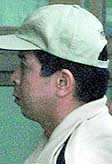
Teruhiko Matsue
Murderer? Mark Brandon Read
Murderer? · Australia · 1979
Mark Brandon “Chopper” Read (born 17 November 1954) was an Australian ex-convic…
19 victims
Mark Brandon Read
Murderer? · Australia · 1979
Mark Brandon “Chopper” Read (born 17 November 1954) was an Australian ex-convic…
19 victims
 Richard Allen Williams
Murderer? · USA · 1992
Boone County Prosecutor Kevin Crane dismissed the charges in August 2003 after…
10 victims
Richard Allen Williams
Murderer? · USA · 1992
Boone County Prosecutor Kevin Crane dismissed the charges in August 2003 after…
10 victims
 Dr. Teet Härm
Murderer? · S weden · 1984
The District Court jury returned a guilty verdict, but the High Court overturne…
9 victims
Dr. Teet Härm
Murderer? · S weden · 1984
The District Court jury returned a guilty verdict, but the High Court overturne…
9 victims
 Andre Minnitt
Murderer? · USA · 1992
Andre Minnitt was convicted of crimes connected to the El Grande Market slaying…
3 victims
Andre Minnitt
Murderer? · USA · 1992
Andre Minnitt was convicted of crimes connected to the El Grande Market slaying…
3 victims
 Floyd Tapson
Murderer? · USA · 1987
Floyd Tapson was convicted by a jury in the Thirteenth Judicial District Court,…
3 victims
Floyd Tapson
Murderer? · USA · 1987
Floyd Tapson was convicted by a jury in the Thirteenth Judicial District Court,…
3 victims
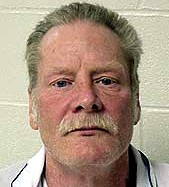 Robert Driscoll
Homicide · USA · 1983
July 3, 1983 — Robert Driscoll and his cellmate, James Jenkins, drank homemade…
1 victim
Robert Driscoll
Homicide · USA · 1983
July 3, 1983 — Robert Driscoll and his cellmate, James Jenkins, drank homemade…
1 victim
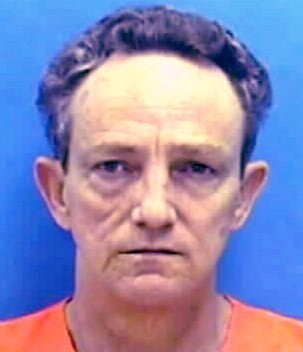 Charles Kenneth Foster
Murderer · USA · 1975
Charles Kenneth Foster was indicted in the Fourteenth Judicial Circuit, Bay Cou…
1 victim
Charles Kenneth Foster
Murderer · USA · 1975
Charles Kenneth Foster was indicted in the Fourteenth Judicial Circuit, Bay Cou…
1 victim
 Erin Caffey
Homicide · USA · 2008
Erin Caffey (juvenile daughter of Terry Caffey and Penny Caffey; charged in con…
3 victims
Erin Caffey
Homicide · USA · 2008
Erin Caffey (juvenile daughter of Terry Caffey and Penny Caffey; charged in con…
3 victims
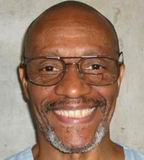 Anthony Banks
Murderer · USA · 1978
Anthony Banks was sentenced to death and later executed by lethal injection in…
2 victims
Anthony Banks
Murderer · USA · 1978
Anthony Banks was sentenced to death and later executed by lethal injection in…
2 victims
 Alain Lamare
Homicide · France · 1978
Alain Lamare (born 1956) was a French gendarme known to the public under the ni…
1 victim
Alain Lamare
Homicide · France · 1978
Alain Lamare (born 1956) was a French gendarme known to the public under the ni…
1 victim
- Gender
- male
- Country
- Japan
- Location
- Saga Prefecture, Japan
- Date of birth
- 1963
- Age at first offence
- 24
- Characteristics
- rape
- Victim profile
- Sumiko Fujise, 48 (restaurant employee) / Kiyomi Nakashima, 50 (housewife) / Tatsuyo Yoshino, 37 (seamstress)
- Method of murder
- Strangulation
- Date(s) of murder
- 1987 - 1989
- Years active
- 1987–1989
- Date of arrest
- June 11, 2002
- Status
-
Acquitted / overturned
Acquittal upheld by the Fukuoka High Court in 2007; district court acquitted Teruhiko Matsue in May 2005 and found the prosecution evidence was "not sufficient enough to judge that the defendant was the true culprit beyond reasonable doubt".
Case record
Teruhiko Matsue was a 39-year-old man from Saga Prefecture who was serving a two-year prison term after being sentenced for breaking into houses. He was later tried for strangling three women in the town of Kitagata, Saga Prefecture, between 1987 and 1989, and for burying their bodies in nearby woods.
Timeline
- January 1989 — The bodies of three women, including Tatsuyo Yoshino, Kiyomi Nakajima and Sumiko Fujise, were found together near each other in a mountainous part of the town of Kitagata.
- July 1987 — Sumiko Fujise disappeared; police later alleged Matsue strangled her.
- December 1988 — Kiyomi Nakajima disappeared; police later alleged Matsue strangled her.
- January 25, 1989 — Matsue allegedly invited Tatsuyo Yoshino out after telephoning her.
- November 1989 — While being arrested and held for an unrelated drug charge, Matsue submitted a written confession during questioning by Saga Prefectural Police, which he later retracted.
- November (year not stated) — Matsue was arrested in Ebino, Miyazaki Prefecture, after being put on a wanted list for allegedly breaking into houses in neighboring Kagoshima Prefecture.
- March (year not stated) — Matsue was sentenced to two years in prison for breaking into houses.
- October 1989 — Matsue was arrested on a drug-related charge, admitted murdering the three women, and immediately retracted his confession, saying police had forced him to make it.
- June 11, 2002 — Police arrested Matsue and charged him with the murder of Yoshino.
- March 2002 — Matsue had been sentenced to a two-year prison term, and at the time of the June 2002 arrest he was in prison.
- June 12, 2002 — An arrest warrant was in connection with the January 1989 slaying of Tatsuyo Yoshino, and Matsue was serving his two-year prison term.
- July 2, 2002 — Police served Matsue with a fresh warrant charging him with the murder of Fujise.
- July 9, 2002 — Police served Matsue with an arrest warrant for the murder of Nakajima.
- May 2005 — The Saga District Court acquitted Matsue.
- Oct. 23, 2002 — Matsue pleaded not guilty in the Saga District Court to strangling three women in Kitagata between 1987 and 1989.
- Monday (year not stated, following the 2007 report) — The Fukuoka High Court upheld the acquittal.
- March 20, 2007 — The acquittal was upheld by the Fukuoka High Court.
Background
Teruhiko Matsue was from Kitagata and later from Saga Prefecture, and he was serving a two-year prison term for breaking into houses. The three victims were found together in the mountainous part of Kitagata in January 1989.
Immediately after the victims’ bodies were found 13 years earlier, police briefly interrogated Matsue because of his links to Yoshino. Police lacked material evidence or testimony that clearly linked him to the murders at that time. Matsue submitted a deposition indicating he may have had something to do with the deaths, later reversed his position, and denied involvement in the slayings.
In an interview with Kyodo News in 1989, Matsue said he was with friends on the night when Yoshino was believed to have been killed. He said he knew her but denied that they were intimate, and added that he did not know the other two women.
The offence
Matsue was accused of murdering three women by strangling them and burying their bodies in nearby woods.
The prosecutors alleged the following:
- Matsue allegedly strangled Sumiko Fujise, a 48-year-old restaurant employee, in July 1987. The indictment described the slaying as occurring after Fujise threatened to go to the police.
- Matsue was accused of strangling Kiyomi Nakashima, a 50-year-old housewife, in December 1988.
- Matsue allegedly strangled Tatsuyo Yoshino, 37, a local seamstress, on the night of Jan. 25, 1989, after he had telephoned her and invited her out. Prosecutors said Yoshino was dating Matsue, and he believed she was seeing another man.
The bodies of the three women were found together in January 1989 near each other in the town of Kitagata, Saga Prefecture, in a mountainous part of the area.
Investigation
Because the bodies of all three victims were found in the same location, police theorized that the same perpetrator was involved.
Matsue’s written confession submitted in November 1989 during questioning was later retracted, leading investigators at that time to give up their efforts to establish a case against him as a murder suspect, due to insufficient evidence. In the later investigation, police resumed efforts and said Matsue’s DNA matched saliva found on one of the victims’ bodies. A new test using more sophisticated methods linked Matsue to the corpse.
Defense counsel later contested the forensic basis, arguing that mitochondrial DNA was not sufficient for identification and saying prosecutors concealed forensic evidence indicating someone else may have perpetrated the slayings. The defense cited the discovery of urine residue on a seat in Matsue’s car that did not match the urine of any of the victims, and the defense did not elaborate further.
Arrest
Matsue was arrested in Ebino, Miyazaki Prefecture, in November after being put on a wanted list for allegedly breaking into houses in neighboring Kagoshima Prefecture. He was then sentenced to two years in prison in March for breaking into houses.
In June 2002, Matsue was already in prison when police acted on the murder allegations:
- Police arrested Matsue on June 11, 2002 and charged him with the murder of Yoshino.
- Police served a fresh warrant on July 2, 2002 charging him with the murder of Fujise.
- Police served an arrest warrant on July 9, 2002 charging him with the murder of Nakajima.
The arrest warrant was served while Matsue was in his prison cell.
Trial
Matsue pleaded not guilty on Oct. 23, 2002 when he appeared in the Saga District Court.
Matsue told the Saga District Court:
"I am innocent of the three murders,"
Matsue refused to confess to the charges against him. The trial was expected to be drawn out as he had refused to confess, and his arrest came as the statute of limitations on the earliest case was about to expire.
Prosecutors asked the court to adopt Matsue’s confession as evidence. They argued that he was presumed to have killed the three women whose bodies were found in nearly the same spot, based on his relationship with Yoshino (whom he was dating) and on detection of his bodily fluid on her body.
At the Saga District Court, prosecutors demanded the death penalty. The court rejected Matsue’s written confession submitted earlier, holding that it had been subject to "illegally long hours of questioning that went beyond a voluntary nature" and that "there is a possibility that investigators had forced and led him to confess." The court also found that when he wrote the confession, Matsue was being held for an unrelated case.
The Saga District Court acquitted Matsue because the evidence submitted by prosecutors was "not sufficient enough to judge that the defendant was the true culprit beyond reasonable doubt."
Sentencing
Matsue was sentenced to two years in prison in March for breaking into houses. After being arrested on the murder charges in June and July 2002, he was held for trial on the murder allegations. The Saga District Court acquitted him, and prosecutors had demanded the death penalty.
Appeals
The Fukuoka High Court upheld Matsue’s acquittal in 2007.
The presiding judge, Katsuhiko Masaki, stated:
"There were no errors or misidentification of facts in the trial of first instance, where his confession was not adopted as evidence because it was illegally obtained,"
At the high court, prosecutors again demanded that Matsue’s confession be adopted as evidence. They argued for the relevance of his supposed relationship with Yoshino and the detection of his bodily fluid on her body, and they characterized as "new evidence" the discovery of mitochondrial DNA in a substance found on a picture that was in his car, claiming it matched the DNA of one of the victims, without specifying.
Defense counsel discounted the mitochondrial DNA discovery and contended that prosecutors had concealed forensic evidence including urine residue on a seat in Matsue’s car that did not match the urine of any of the victims.
Outcome
The Fukuoka High Court upheld the acquittal of Teruhiko Matsue. The acquittal was based on the district court’s finding that the prosecution evidence was not sufficient to judge him as the true culprit beyond reasonable doubt, and on the determination that Matsue’s confession had been illegally obtained and should not have been adopted as evidence.
Other details
When the victims’ bodies were found in January 1989, police briefly interrogated Matsue because of his links to Yoshino. Matsue later submitted a deposition indicating he may have had something to do with the deaths, then reversed his position and denied involvement.
In the indictment references described during the 2002 trial reporting:
- Prosecutors said Matsue raped Fujise in his car then killed her when she threatened to go to the police. The woman was an acquaintance of his, they added.
- Prosecutors said Matsue killed Nakashima because he believed she had wrongly blamed him for bumping her with his car. They said Matsue was drunk at the time and worried she would go to police.
- Prosecutors alleged that Matsue killed Yoshino because he believed she was seeing another man.
The third body found at the base of the cliff was identified as that of Kiyomi Nakajima, 50, from Kitagata, who disappeared in December 1988. The body of Sumiko Fujise, 48, from Takeo, disappeared in July 1987. The body of Tatsuyo Yoshino, 37, was found along with the other two dead women at the base of the cliff in the mountains around Kitagata.
If Fujise’s body had been slain right after her disappearance, police suspected the 15-year statute of limitations for her murder would have expired next month at the time the case was discussed in June 2002. Matsue’s arrest was tied to the statute of limitations on the earliest case being about to expire.
Matsue maintained his innocence from the time of his arrest to the end of his trial.
Spotted an error, or have more information about this case?