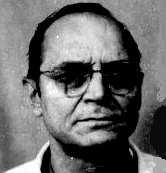
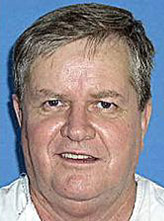
Robert Excell White
Spree killer Paul John Knowles
Spree killer · USA · 1974
Paul John Knowles (April 17, 1946 – November 18, 1974) was an American spree ki…
35 victims
Paul John Knowles
Spree killer · USA · 1974
Paul John Knowles (April 17, 1946 – November 18, 1974) was an American spree ki…
35 victims
 Bobby Joe Maxwell
Spree killer · USA · 1978
Name: Bobby Joe Maxwell Sex: M Race: B Type: T Motive: PC-nonspecific Method of…
11 victims
Bobby Joe Maxwell
Spree killer · USA · 1978
Name: Bobby Joe Maxwell Sex: M Race: B Type: T Motive: PC-nonspecific Method of…
11 victims
 Mark Essex
Spree killer · USA · 1973
Mark James Robert Essex was a Navy veteran who engaged in a shooting and arson…
9 victims
Mark Essex
Spree killer · USA · 1973
Mark James Robert Essex was a Navy veteran who engaged in a shooting and arson…
9 victims
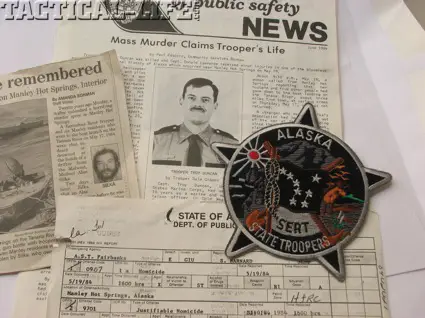 Michael Alan Silka
Spree killer · USA · 1984
Michael Alan Silka was killed during a shoot-out with the police on May 19, 198…
9 victims
Michael Alan Silka
Spree killer · USA · 1984
Michael Alan Silka was killed during a shoot-out with the police on May 19, 198…
9 victims
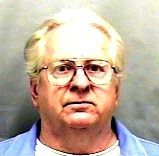 Allen Leroy Anderson
Spree killer · USA · 1976
Allen Leroy Anderson was a 34-year-old vagrant with a long record of felony arr…
8 victims
Allen Leroy Anderson
Spree killer · USA · 1976
Allen Leroy Anderson was a 34-year-old vagrant with a long record of felony arr…
8 victims
 Russell Ellwood
Murderer · USA · 1991
Russell Ellwood was a former taxi driver. Authorities suspected him of killing…
20 victims
Russell Ellwood
Murderer · USA · 1991
Russell Ellwood was a former taxi driver. Authorities suspected him of killing…
20 victims
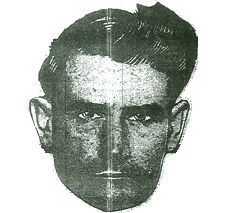 Henry Lee Moore
Serial killer · USA · 1911
Henry Lee Moore was sentenced to life in prison in Missouri in 1913. He was rel…
26 victims
Henry Lee Moore
Serial killer · USA · 1911
Henry Lee Moore was sentenced to life in prison in Missouri in 1913. He was rel…
26 victims
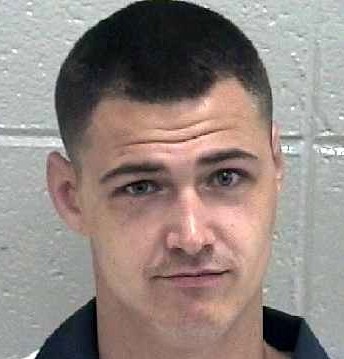 James Allyson Lee
Murderer · USA · 1994
James Allyson Lee was 22 years old at the time he was sentenced to death on Jun…
1 victim
James Allyson Lee
Murderer · USA · 1994
James Allyson Lee was 22 years old at the time he was sentenced to death on Jun…
1 victim
 Charles Jason Baldwin
Homicide · USA · 1993
Charles Jason Baldwin was born April 11, 1977. At the time of his arrests, Jaso…
3 victims
Charles Jason Baldwin
Homicide · USA · 1993
Charles Jason Baldwin was born April 11, 1977. At the time of his arrests, Jaso…
3 victims
- Gender
- male
- Country
- USA
- Location
- McLennan/Collin Counties, Texas, USA
- Date of birth
- March 14, 1938
- Age at first offence
- 36
- Characteristics
- robbery, rape
- Victim profile
- Robert Perryman, 53 (gun collector) / Preston Broyles, 73 (store owner), and Gary Coker, 18, and Billy St. John, 18 (store customers)
- Method of murder
- St abbing with knife / Shooting ( .30-caliber machine gun )
- Date(s) of murder
- May 10-11, 1974
- Years active
- 1974
- Date of arrest
- May 14, 1974 ( surrenders )
- Status
-
Executed
Executed by lethal injection in Texas on March 30, 1999
Case details
Robert Excell White was executed by lethal injection in Texas on March 30, 1999.
White was convicted of capital murder and sentenced to death for killing Preston Broyles, a 73-year-old store owner, and two eighteen-year-old customers, Gary Coker and Billy St. John, at a gas station and convenience store named Hill Top Grocery on Highway 380 near McKinney.
Timeline
- May 10, 1974 — White began drinking alcohol around noon at a local tavern, continued until 1:00 a.m., then proceeded to the home of Roy Perryman where he continued to drink; he stabbed Perryman to death with a knife Perryman had sharpened for him and stole firearms belonging to Perryman.
- May 11, 1974 — White and the Livingston brothers entered Hill Top Grocery; the station owner Preston Broyles began pumping gas, and Gary Coker and Billy St. John stopped to put oil in their truck; White ordered Broyles, Coker, and St. John into the station office and shot them, killing all three.
- May 14, 1974 — White arrived at his cousin Johnny White’s home in Cleveland, Mississippi; he told Johnny White about what had happened at Hill Top Grocery and stated that he intended to kill a Mississippi judge known as Judge Micky.
- May 24, 1974 — A Collin County grand jury indicted White and the Livingston brothers for the capital murder of Broyles, Coker, and St. John.
- June 8, 1987 — The trial began on retrial; the jury returned a guilty verdict and sentenced White to death after the punishment phase.
- August 26, 1998 — The United States Court of Appeals for the Fifth Circuit panel issued its decision in No. 97-41438 in the appeal of White’s petition for a writ of habeas corpus, affirming the district court’s denial.
- March 30, 1999 — Robert Excell White was executed by lethal injection in Texas.
- March 31, 1999 — A report described White’s execution as occurring on March 30, 1999, with prison officials reporting lethal injection at 6:10 p.m. and pronouncement dead seven minutes later.
Background
White lived in Waco, Texas at the time he began drinking on May 10, 1974. During that day and evening, he drank alcohol and later went to the home of Roy Perryman.
The killings at Hill Top Grocery occurred after White and the Livingston brothers discussed robbing a store and decided they would be unable to leave any witnesses alive. The station owner was Preston Broyles. Two eighteen-year-old customers, Gary Coker and Billy St. John, were present.
White was also described as having beaten a pregnant wife and sliced a friend’s throat with a hunting knife, and police had called him “Excell the Executioner.” A woman identified as Mrs. Lawson, 73, was quoted describing the death of her father Preston Broyle and the experience of not being able to see him after his death.
The offence
Perryman killing and weapons theft (May 10, 1974)
After drinking and talking with Perryman, White pulled a knife that Perryman had sharpened for him and stabbed Perryman to death. White stated: “Roy, I hate for it to end like this, but its [sic] your time to go.”
White stole several firearms belonging to Perryman and left his home.
Hill Top Grocery robbery and killings (approx. May 11, 1974; trial described events as occurring after arrival around 6:30 a.m.)
White left Waco with Gary Dale Livingston, and met up with Gary Livingston’s brother, James Livingston, at a motel on Interstate 35. The three proceeded to McKinney, Texas. They traveled approximately three miles east on Highway 380 to Hill Top Grocery, arriving at approximately 6:30 a.m.
Preston Broyles began pumping gas into White’s car. Gary Coker and Billy St. John were present and had stopped to put oil in their truck. White exited the car with a .30 caliber Plainfield carbine machine gun and ordered Broyles, Coker, and St. John into the station office.
White ordered Broyles to open the cash register and ordered Broyles, Coker, and St. John to hand over their wallets.
After a comment by one of the victims apparently angered White, White responded: “I wished you hadn't said nothing, I'm going to kill you.”
James Livingston aimed a .22 caliber pistol at the victim who had made the comment. White shoved James Livingston out of the way, stating: “He's mine.”
White repeatedly shot Broyles, Coker, and St. John, killing all three. Just prior to shooting the last of the victims, who was begging for his life, White stated: “Goddammit, you've got to go too, I'm not going to leave any witnesses.”
After returning to Waco, the proceeds were divided with each of them receiving $65.
Investigation
White threw the machine gun used in the Hill Top Grocery murders into the Brazos River while in Waco and then went toward Mississippi with clothing.
White got angry at Gary Livingston and threatened to shoot him. Gary Livingston asked to get out of the car, and White left him in Tyler, Texas.
White arrived at his cousin Johnny White’s home in Cleveland, Mississippi on May 14, 1974. White told Johnny White about what had happened at Hill Top Grocery and also stated that he intended to kill a Mississippi judge known as Judge Micky. Johnny White convinced White to surrender to law enforcement authorities at the Boliver County Sheriff's Department.
White gave statements to Mississippi and Texas law enforcement officers implicating himself in the Hill Top Grocery murders, both at the Mississippi jail and during the trip back to Texas.
People
Defendant
- Robert Excell White — capital murder defendant; convicted of the capital murder of Preston Broyles, Gary Coker, and Billy St. John.
Victims
- Preston Broyles — 73-year-old store owner; was shot repeatedly and died.
- Gary Coker — 18-year-old customer; was shot and died.
- Billy St. John — 18-year-old customer; was shot and died.
Accomplices
- James Livingston — accompanied White inside Hill Top Grocery but did not shoot; was convicted and condemned; his sentence was commuted to life in 1983; he was described as remaining in administrative segregation and not having parole imminent.
- Gary Livingston — remained outside the store as a lookout; was convicted of murder and sentenced to 20 years; he was freed in 1984 and committed suicide two years later.
Other named individuals
- Roy Perryman — gun collector; 53 in one account; was stabbed to death on May 10, 1974; firearms were stolen from him.
- Johnny White — cousin of Robert Excell White; convinced White to surrender to law enforcement authorities.
- Judge Micky — Mississippi judge White stated he intended to kill.
- Gerald Kunkle — former deputy sheriff of Collin County; testified at trial that White expressed no remorse and said the Hill Top Grocery murders were “Just like stepping on a fly.”
- Glenda McFadden — testified at the punishment phase; said White beat her and threatened to kill her, and she testified that she witnessed White beating another former wife who was in her third trimester of pregnancy.
- Ira Lee Bragg — testified that White invited him for a beer and then cut his throat with a hunting knife.
- Howard Alford — Texas Ranger; one of the law enforcement officers who transported White from Mississippi back to Texas after surrender; testified about White’s confession to Perryman’s murder.
- Michael LaRue — former Waco police officer; testified about White’s reputation.
- Dawn Apolito — detention officer responsible for custody during trial; testified White threatened Johnny White during a recess and stated: “I guess you could see what I wanted to do back there.” and “That's all right, I'll get that son-of-a-bitch.”
- Dr. Ronald Markman — psychiatrist who testified for the state at the punishment phase regarding future dangerousness.
- Dr. George Woods — affidavit presented by White that stated White suffered from a “toxic delirium” and that it was “highly probable that [] White suffered from an organic brain disorder at the time of the offense.”
- David Haynes — one of White’s appeal lawyers, quoted describing it as unusual for condemned persons not to fight since “people cling to life.”
- Larry Brown — White’s attorney.
- Heather Browne — spokeswoman for the Texas attorney general’s office.
- Tom O'Connell — Collin County district attorney.
- Dianne Clements — president of Justice For All, a Houston-based advocacy group for crime victims.
Trial
Indictment and initial conviction
On May 24, 1974, a Collin County grand jury indicted White and the Livingston brothers for the capital murder of Broyles, Coker, and St. John.
White was found guilty of the capital murder of Broyles and sentenced to death following a jury trial. The Texas Court of Criminal Appeals affirmed White’s conviction and sentence on July 14, 1976, and the Supreme Court denied certiorari.
Vacatur and retrial
White later challenged his conviction collaterally through two state applications for a writ of habeas corpus. The Texas Court of Criminal Appeals granted the second motion on the ground that White had been impermissibly compelled to undergo a government psychiatric examination, the results of which were used against him at trial, in violation of Estelle v. Smith and vacated his conviction.
The trial began on June 8, 1987. The jury returned a guilty verdict. After the punishment phase, the jury answered the special issues under article 37.071 of the Texas Code of Criminal Procedure in the affirmative, and the trial court sentenced White to death.
Special issues
At the time of White’s trial, the special issues mandated by article 37.071 were:
- whether the conduct of the defendant that caused the death of the deceased was committed deliberately and with the reasonable expectation that the death of the deceased or another would result; and
- whether there is a probability that the defendant would commit criminal acts of violence that would constitute a continuing threat to society.
Sentencing
After the punishment phase at the June 8, 1987 trial, the jury answered the special issues affirmatively and the trial court sentenced White to death.
Appeals and habeas
White filed a first federal habeas petition in 1993; the district court dismissed it without prejudice on May 11, 1994, to allow White to exhaust state remedies on the claims presented. White then filed a state application for habeas relief, which the Texas Court of Criminal Appeals denied on July 12, 1994. On July 14, 1994, White filed another federal habeas petition, asserting the same claims and a motion to stay execution. On July 15, 1994, the district court granted the stay. On November 7, 1997, the district court adopted the magistrate judge’s report and recommendation to deny the petition.
White filed a notice of appeal and an application for a certificate of probable cause on November 24, 1997, and the district court granted the certificate of probable cause on December 12, 1997. The appeal to the United States Court of Appeals for the Fifth Circuit was decided by a panel of KING, DAVIS, and WIENER, Circuit Judges, with the decision issued August 26, 1998. The Fifth Circuit affirmed the district court’s denial, concluding that any Ake error was harmless.
Ake v. Oklahoma / psychiatric assistance issue
White contended that the trial court violated the mandate of Ake v. Oklahoma by denying his motion for the appointment of a psychiatrist to aid him during sentencing, thereby denying due process and rendering assistance provided by trial counsel unconstitutionally ineffective. The Fifth Circuit concluded that, even assuming arguendo that any Ake error occurred, it was harmless.
Dr. Ronald Markman testified during the punishment phase based on a hypothetical scenario predicated on evidence adduced during both guilt and punishment phases. The Fifth Circuit quoted portions of his testimony as follows:
Q:Okay if you were going to use a one to ten scale of sociopaths, because you indicated there are some people that actually meet the diagnostic criteria that are actually functioning in our society without being criminals, and one being the mildest form of antisocial personality disorder, mildest towards society, and ten being the extremest [sic] form of antisocial personality where would you place the individual in our hypothetical question?
A:In the 9 or 10 area.
Q:Extreme end [of] the spectrum?
A:That's right.
Q:Is such a person dangerous?
A:In the presence of past dangerous activity, the answer is yes.
Q:Okay, at least if you were to cut off your inquiry in 1974, let's just go back 13 years in time and you are sitting here and we are all sitting here, was that person dangerous in 1974?
A:Clearly, yes.
Q:How dangerous?
A:Dangerous to the point that he would have to be segregated in order to make the society safe.
Q:Something would have to be done to protect society from him?
Q:Now you have indicated that there is no cure; is that correct?
A:Nothing that could alter the behavioral pattern, no. Not at this time. . . .
Q:. . . I am going to ask you whether or not you have an opinion, based upon reasonable medical certainty, as to whether or not there is a probability that the defendant would commit criminal acts of violence that would constitute a continuing threat to society right now? . . .
A:In my [o]pinion, with the information at hand, it suggests a high possibility of recidivistic activity, and, therefore, would qualify as being dangerous to society at large.
Q:You consider it probabl[e] that that person would commit criminal acts of violence in the future? . . .
A:Yes.
The Fifth Circuit also stated that the jury had heard significant non-psychiatric evidence regarding White’s propensity for violence, including White’s alleged lack of remorse, the testimony of multiple witnesses, and a letter White wrote to his wife in December 1986.
The Fifth Circuit described the letter as stating in part:
Margaret you have told me several times that you don't want to be married anymore.
For a good long while I thought you really wanted to be free from me, but now I don't think that's what you want at all. I think you still love me and want us to remain married; but you also want to be able to live with that other dude out there or write to someone else in here without me knowing it, or just don't think I'll do anything about it one.
You better think again Margaret, because I'm not about to share you with anyone, and if you keep fucking around, you gonna end up getting someone hurt real bad woman. And that include here or when I get out and come to Montana . Because if you are still married to me when I get out of here, I'm coming to Montana and taking what is mine, and you are mine as long as you are married to me. And if you are fucking around with someone here behind my back, someone is just before getting hurt because no man in prison will let another prisoner come between him and his wife and get by with it. . . .
P.S. Margaret its very dangerous to play around with someone's wife and love life and future, and its equal as dangerous to deprive a man of what is his concerning financial help when that man is in prison depending wholy [sic] on his wife for the help he gets and needs.
You might should pass that message on to the son of a bitch that split us up, because he's playing a dangerous fucking game, and it could very easy cost him dearly. More than he wants to pay too.
I do know one thing he took everything away from me, even my love and joy when he came between us, and I'm not going to forget that very easy.
So tell him I said walk slow and watch out for shadows in the dark, because shadows can creep up when he's least expecting them!!!!!!!! Do you catch my drift Margaret?
Your Husband Love Excell
Ineffective assistance of counsel claim
White also claimed that the denial of psychiatric assistance rendered his counsel’s performance unconstitutionally ineffective. The Fifth Circuit affirmed the district court’s denial, citing Strickland v. Washington requirements for deficient performance and prejudice, and concluding that any alleged Ake error being harmless foreclosed prejudice.
Outcome
White was executed by lethal injection in Texas on March 30, 1999.
White was described as having declined to make a last statement. He was also quoted as saying: “Send me to my maker, warden.”
Prison officials were said to have reported that White received a lethal injection at 6:10 p.m. and was pronounced dead seven minutes later. A witness described as his sister was said to have watched the execution from an adjoining room, and White was described as winking right before lapsing into unconsciousness.
A report stated that White was 61 years old at execution.
Aftermath
The accounts described the lengths and later events for White’s accomplices:
- James Livingston’s sentence was commuted to life in 1983; he was described as having violated rules and remaining in administrative segregation; no parole was said to be imminent.
- Gary Livingston received a 20-year term and was freed in 1984; he committed suicide two years later.
A relative identified as Robert St. John, the brother of one of White’s victims, was quoted after the execution: “a load has been taken off my shoulders.”
Spotted an error, or have more information about this case?