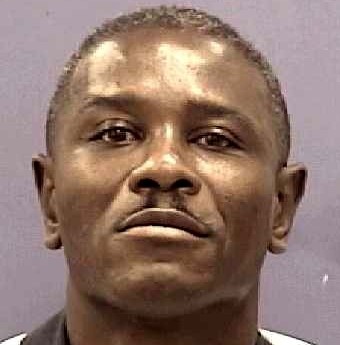
Marcus Wellons
Murderer Brian Kevin Rosenfeld
Murderer · USA · 1985
Brian Kevin Rosenfeld Brian Kevin Rosenfeld was sentenced to three concurrent l…
23 victims
Brian Kevin Rosenfeld
Murderer · USA · 1985
Brian Kevin Rosenfeld Brian Kevin Rosenfeld was sentenced to three concurrent l…
23 victims
 Yahweh ben Yahweh
Murderer · USA · 1980
Yahweh ben Yahweh was born and legally named Hulon Mitchell Jr. (October 27, 19…
23 victims
Yahweh ben Yahweh
Murderer · USA · 1980
Yahweh ben Yahweh was born and legally named Hulon Mitchell Jr. (October 27, 19…
23 victims
 Russell Ellwood
Murderer · USA · 1991
Russell Ellwood was a former taxi driver. Authorities suspected him of killing…
20 victims
Russell Ellwood
Murderer · USA · 1991
Russell Ellwood was a former taxi driver. Authorities suspected him of killing…
20 victims
 Robert Martines Perez
Murderer · USA · 1994
Name: Robert Martines Perez · Other name used in proceedings: Robert Martinez P…
15 victims
Robert Martines Perez
Murderer · USA · 1994
Name: Robert Martines Perez · Other name used in proceedings: Robert Martinez P…
15 victims
 David Berkowitz
Serial killer · USA · 1976
David Berkowitz (born June 1, 1953) was known by the nicknames “Son of Sam” and…
6 victims
David Berkowitz
Serial killer · USA · 1976
David Berkowitz (born June 1, 1953) was known by the nicknames “Son of Sam” and…
6 victims
 Michael Griffith
Murderer · USA · 1994
Name: Michael Griffith · Status: Executed by lethal injection in Texas on June…
1 victim
Michael Griffith
Murderer · USA · 1994
Name: Michael Griffith · Status: Executed by lethal injection in Texas on June…
1 victim
 Jack Harry Smith
Murderer · USA · 1978
Jack Harry Smith was sentenced to death on October 9, 1978. Jack Harry Smith ar…
1 victim
Jack Harry Smith
Murderer · USA · 1978
Jack Harry Smith was sentenced to death on October 9, 1978. Jack Harry Smith ar…
1 victim
 Jessica McCord
Murderer · USA · 2002
Jessica McCord and her ex-husband Alan Bates had a bitter divorce and an even m…
2 victims
Jessica McCord
Murderer · USA · 2002
Jessica McCord and her ex-husband Alan Bates had a bitter divorce and an even m…
2 victims
 Stephen Lewis Farrar
Murderer · USA · 1986
Stephen Lewis Farrar was sentenced to death on March 1987. His sentence was com…
1 victim
Stephen Lewis Farrar
Murderer · USA · 1986
Stephen Lewis Farrar was sentenced to death on March 1987. His sentence was com…
1 victim
 Stuart Hazell
Murderer · United Kingdom · 2012
Stuart Hazell was the partner of Christine Sharp. · Stuart Hazell was the forme…
1 victim
Stuart Hazell
Murderer · United Kingdom · 2012
Stuart Hazell was the partner of Christine Sharp. · Stuart Hazell was the forme…
1 victim
- Gender
- male
- Country
- USA
- Location
- Atlanta, Cobb County, Georgia, USA
- Date of birth
- 1955
- Age at first offence
- 34
- Characteristics
- rape
- Victim profile
- India Roberts, 15
- Method of murder
- Strangulation
- Date(s) of murder
- August 31, 1989
- Years active
- 1989
- Date of arrest
- Same day
- Status
-
Executed
Sentenced to death on June 9, 1993; executed by lethal injection on June 17, 2014
Case overview
Marcus A. Wellons was convicted of the malice murder and rape of 15-year-old India Roberts. The jury found as statutory aggravating circumstances that the murder was committed in the course of two other capital felonies—rape and kidnapping with bodily injury—and that the murder was wantonly vile and horrible in that it involved torture to the victim before death and depravity of mind. The jury sentenced Wellons to death for the murder, and he received a life sentence for the rape.
Timeline
- August 31, 1989 — India Roberts was raped and murdered.
- April 5, 1990 — Wellons was indicted.
- December 3, 1991 — Wellons was reindicted.
- April 20, 1990 — The state filed its notice of intent to seek the death penalty.
- May 19, 1993 — Voir dire commenced.
- June 1, 1993 — The trial of the case began.
- June 8, 1993 — The jury returned its sentencing phase verdict.
- June 8, 1993 — The trial court sentenced Wellons.
- July 2, 1993 — Wellons filed a motion for new trial.
- June 23, 1994 — Wellons amended the motion.
- October 5, 1994 — The trial court denied the motion.
- November 3, 1994 — Wellons filed his notice of appeal.
- January 20, 1995 — The case was docketed.
- June 19, 1995 — The case was orally argued.
- November 20, 1995 — The decision was rendered.
- December 15, 1995 — Reconsideration was denied.
- June 9, 1993 — Wellons was sentenced to death.
- December 1997 — Wellons came within three hours of execution because an attorney who had just volunteered to file an appeal petition was denied time to study the case; a U.S. District judge stayed the execution.
- June 17, 2014 — Wellons was executed by lethal injection.
The offence
Wellons lived in Gail Saunders’ townhouse apartment in Cobb County during the summer of 1989. Saunders’ 14-year-old son Tony also lived in the apartment, and Tony and the victim, who lived in a neighboring apartment with her mother, were friends. The victim occasionally visited Saunders’ apartment, where the two youths would watch television or play Nintendo. Wellons encouraged Tony to date the victim and made remarks several times that she was a good-looking girl.
Over the summer, Tony moved to Chattanooga to live with his grandparents. The victim continued to spend time with Saunders occasionally. Saunders described herself as the victim’s “play mommy,” with whom the victim shared confidences. Wellons and Saunders had become acquainted at the hospital where both worked, with Wellons as a counselor in the psychiatric ward.
Wellons moved in with Saunders under the pretense that he owned a home but was unable to occupy it because an ex-girlfriend had moved into it with her two young daughters. Over the summer, Wellons proposed marriage to Saunders. Saunders became wary of Wellons, who was increasingly hostile and abusive. Saunders verbally accepted the proposal out of fear while seeking an escape from her predicament.
On the evening of August 30, 1989, Saunders told Wellons that their relationship was over and that he must move out of her apartment. Wellons had recently been fired from his job and purchased a one-way ticket to Miami for a flight departing on the evening of August 31. Fearing to be alone with Wellons the night before his departure, Saunders told Wellons she was going to Chattanooga to spend the night with her parents and enroll Tony in school. Instead, Saunders went to the home of a female friend.
That evening, Wellons began making desperate attempts to reach Saunders by telephone, repeatedly calling her mother in Chattanooga and then calling Saunders’ friends. He called his mother and told her he suspected that Saunders was with another man. Wellons became increasingly angry and began drinking. He ransacked Saunders’ apartment by overturning potted plants and furniture, throwing flour onto the floor, and pouring bleach over all of Saunders’ clothes while carefully sparing his and Tony’s belongings. After the apartment was demolished, Wellons attempted to cover up his deed by breaking a window from the inside out, cutting his hand in the process, and smearing blood around the apartment. He stacked electronic equipment by the door.
Wellons called 911 at approximately 3:00 a.m. on August 31 to report a burglary. When a police officer arrived, Wellons told the officer he had come home to find the apartment ransacked although no items were missing. Wellons explained he cut his hand while struggling to uncover a stash of money to determine whether it had been taken. Sometime after the officer left, Wellons wrote a racial slur across the wall in Saunders’ bedroom.
At approximately 8:00 a.m., the victim said goodbye to her mother and walked from her apartment past Saunders’ door toward the school bus stop. Shortly thereafter, Saunders’ next door neighbor heard muffled screams from inside Saunders’ apartment. The apartment building was close to a wooded area beyond which was a grocery store.
At approximately 2:00 p.m., Wellons approached an acquaintance employed at the grocery store and asked to borrow a car. The acquaintance refused. Wellons told the acquaintance that when he returned home the previous night he encountered two white men burglarizing the apartment. Wellons said he fought off the intruders and sustained injuries to his hand during the process.
About half an hour later, Theodore Cole, a retired military police officer, was driving near the wooded area behind the apartment complex. He spotted in the distance a person carrying what appeared to be a body wrapped in a sheet and saw feet dangling from the bottom of the sheet. Cole drove on, returned for a second look, drove around in the parking lot, and then saw a man in his rear view mirror walk along the road and throw a sheet into the woods. Cole drove directly to the grocery store and called 911.
Police officers arrived quickly and began a search of the woods. They first discovered sheets, clothing, and notebooks bearing Tony’s name. On close inspection of a pile of tree branches, Cole spotted the body of India Roberts. When the branches were removed, the officers discovered the victim completely unclothed, with cuts on one side of her face and ear and bruises on her neck.
During the search, Cole spotted a black man with a bundle under his arm near the apartment building and identified him as the man Cole had seen carrying the sheet. Cole and an officer chased the man. As they approached the building, the man turned the corner and Cole and the officer heard a door shut. The officer learned from a passerby which apartment was occupied by a man fitting Cole’s description. He knocked on Saunders’ door and announced his presence, but there was no answer. He rejoined other officers investigating the scene with helicopters overhead.
Wellons was trapped inside Saunders’ apartment with residual evidence of his crime. He gave up his attempt to dispose of evidence in the woods and first tried to clean the apartment and his clothes. He then abandoned that project, changed into swimwear, grabbed an old, yellowed newspaper and a cup of wine, partially barricaded and locked the door, and headed for the pool.
On his way, Wellons caught sight of a police officer and stopped abruptly. The officer questioned him. Initially evasive, Wellons ultimately told officers that injuries to his hand and new scratches to his face were sustained during a scuffle with two men whom he had caught burglarizing Saunders’ apartment. While investigating, officers had asked Cole whether either of two black males was the man Cole had seen carrying the sheet; Cole immediately ruled out each of the men. Then, while officers questioned Wellons, an officer asked Cole whether Wellons was the man he had seen. Cole said although Wellons was wearing different clothing from the man Cole had seen carrying the sheet and had again seen near the complex, Cole was 75 to 80 percent certain Wellons was the same man.
Later that day, officers searched Saunders’ apartment. Inside, they found numerous items of evidence including the victim’s notebooks and earrings. In Tony’s room, they discovered the victim’s panties. They also found blood on Tony’s mattress and box springs. The mattress had been flipped so that the bloody portion faced downward, and the bed had been remade.
The autopsy revealed the victim died from manual strangulation, which would have taken several minutes. The autopsy also showed Wellons attempted to strangle the victim with a ligature, possibly a telephone cord, and that he bruised her and cut her face and ear with a sharp object. The evidence suggested Wellons dragged or otherwise forcibly moved the victim from the kitchen up the stairs to Tony’s bedroom. The autopsy further revealed a vaginal tear and copious amounts of what appeared to be seminal fluid within the victim’s vagina. She had defensive wounds to her hands, and her blouse was stained with her own blood.
Although a not guilty plea was entered for Wellons, he did not dispute his participation in the crimes. Instead, he urged the jury to return a verdict of not guilty by reason of insanity or guilty but mentally ill.
Investigation and identification
The police search began after Theodore Cole reported seeing a person carrying a body wrapped in a sheet and throwing a sheet into the woods. Police officers discovered sheets, clothing, and notebooks bearing Tony’s name and then located the body of India Roberts. Cole identified Wellons to officers as 75 to 80 percent certain that Wellons was the man Cole had seen carrying the sheet, while noting the clothing differed from what Cole had seen at the time.
Wellons argued on appeal that Cole’s eyewitness identification was unreliable and the product of unduly suggestive procedures, and that the district attorney was involved in the suggestive procedure, creating a conflict of interest as prosecutor and witness. The appellate court rejected these contentions, finding the identification procedures sufficiently reliable and noting that the district attorney stated at a hearing he was not involved in the identification procedure and Cole’s testimony supported that recollection.
Arrest and search
After the body was located and officers identified the apartment matching Cole’s description, officers knocked on Saunders’ door and announced their presence. Wellons was found inside Saunders’ apartment, and officers later searched the apartment, discovering evidence including the victim’s notebooks and earrings, the victim’s panties in Tony’s room, and blood on Tony’s mattress and box springs. The mattress and bed were found arranged so the bloody portion faced downward and the bed had been remade.
Wellons also appealed the denial of a motion to suppress evidence seized from his residence, and the appellate court rejected the claim, finding probable cause existed for the warrant to search Saunders’ apartment and that Saunders, the sole lessee who shared a room with Wellons, consented to the search orally and in writing.
Trial
Charges and outcomes
The jury found statutory aggravating circumstances including:
- the murder occurred in the course of two other capital felonies, rape and kidnapping with bodily injury; and
- the murder was wantonly vile and horrible in that it involved torture to the victim before death and depravity of mind.
The jury sentenced Wellons to death for the murder. He also received a life sentence for the rape.
Evidence presented at trial
The appellate decision set out the evidence supporting guilt beyond a reasonable doubt, including:
- Wellons’ living arrangements with Saunders and his relationship with the victim;
- Saunders’ account of Wellons’ increasing hostility and abuse;
- Wellons’ ransacking of Saunders’ apartment after she ended the relationship;
- the 911 call reporting a burglary;
- the later discovery of the victim’s body in the woods;
- the physical evidence from the search of the apartment;
- and the autopsy findings including manual strangulation, use of a ligature possibly a telephone cord, cuts, bruising, a vaginal tear, and semen-like fluid in the victim’s vagina.
Defence position and mitigation evidence
The appellate court noted that Wellons did not dispute participation in the crimes and instead urged insanity or mental illness. It also discussed the mitigation evidence presented at trial, including testimony from 17 witnesses in mitigation, lay testimony about abuse suffered by Wellons’ family, and most notably by Wellons himself at the hands of Wellons’ father. The court also described evidence of substance use or abuse by Wellons. An expert sociologist testified about typical effects of an abusive childhood and compiled Wellons’ family history through interviews with testifying witnesses and other neighbors and relatives. Wellons’ expert psychologist testified that he was directed by defense counsel not to reduce his report to writing and offered conclusions based on testing and conversations with Wellons and on the sociologist’s written report. The psychologist testified Wellons suffered from post-traumatic stress, a mixed personality disorder, and substance abuse, and that Wellons did not suffer from organic brain damage and was not psychotic. The psychologist acknowledged evaluation by a court-appointed psychiatrist concluding Wellons was intelligent and well-educated with a significant personality disorder but had no brain damage and no psychosis.
Jury-related and evidentiary rulings addressed on appeal
The appellate court addressed numerous enumerated errors raised by Wellons on appeal, including rulings about expert discovery requirements, peremptory strikes under Batson v. Kentucky, denial of challenges for cause to jurors, admission of identification evidence, and alleged prosecutorial misconduct, as well as jury instruction claims and issues concerning recusal.
Sentencing
In June 1993, a Cobb County jury sentenced Wellons to death for the murder. The jury made specific statutory aggravating circumstance findings tied to the rape, kidnapping with bodily injury, torture before death, and depravity of mind. The appellate court stated that the evidence amply supported the aggravating circumstances and that the jury could find rape as an aggravating circumstance for the murder even though the jury convicted Wellons of rape in the guilt-innocence phase. The court also stated that the state’s decision not to indict Wellons for kidnapping did not prevent use of kidnapping as a statutory aggravating circumstance.
The appellate decision also addressed challenges to the death penalty scheme and related procedural and constitutional arguments, and it rejected claims that the death sentence was imposed under passion, prejudice, or other arbitrary factor and rejected claims that the sentence was excessive or disproportionate to penalties imposed in similar cases.
Appeals
Georgia Supreme Court decision
Wellons appealed the judgments entered by the trial court. The appellate court decision identified the case as “WELLONS v. THE STATE” with citations “( 266 Ga. 77 ) ( 463 SE2d 868 ) (1995)”. It stated:
- “THOMPSON, Justice. Murder. Cobb Superior Court. Before Judge Staley.”
- It concluded the evidence authorized the jury’s guilt findings and rejected each of Wellons’ enumerated errors.
- It stated the decision date as “DECIDED NOVEMBER 20, 1995 — RECONSIDERATION DENIED DECEMBER 15, 1995.”
Expert discovery dispute
Wellons contended that requiring him to disclose the identities and reports of experts consulted pretrial, whether or not they would testify, chilled his ability to present an insanity defense and evidence in mitigation. The appellate court agreed that the trial court ruling was error under later precedent but found the error harmless after concluding the defenses of insanity and mental illness were not viable given the evidence and that evidence of guilt was overwhelming.
Other appeal issues
The appellate court also addressed:
- peremptory strikes and alleged race discrimination under Batson v. Kentucky;
- challenges for cause involving jurors who stated death was appropriate or who had reservations about the death penalty;
- the admissibility and reliability of Theodore Cole’s identification and alleged prosecutorial conflict as prosecutor and witness;
- challenges to prosecutorial argument and evidentiary issues including evidence of torture, victim impact comments, and references made during closing argument;
- challenges to jury instructions on reasonable doubt and statutory aggravating circumstances;
- claims about recusal based on alleged communications with jurors and alleged emotional display;
- claims concerning suppression of evidence and admissibility of a videotape of the crime scene;
- juror selection and constitutional claims concerning jury list creation and petit jury pool selection;
- and constitutional challenges to the death penalty scheme, including claims about district attorney discretion and the Unified Appeal Procedure.
Outcome
The appellate court affirmed Wellons’ convictions and death sentence, rejecting all enumerated errors and concluding the death sentence was not imposed under passion, prejudice, or other arbitrary factor and was not excessive or disproportionate in similar cases.
Aftermath
Near execution in 1997
In December 1997, Wellons came within three hours of execution because an attorney who had just volunteered to file an appeal petition was denied time to study the case. A U.S.
Execution in 2014
Wellons was executed by lethal injection on June 17, 2014. He was pronounced dead at 11:56 p.m. after last-minute appeals to the U.S. Supreme Court were denied. A prison guard fainted shortly before Wellons was pronounced dead.
Prior to execution, Wellons apologized for the 1989 rape and murder of 15-year-old India Roberts and reportedly asked that the family find peace with his death. His final words were: “I’m going home to be with Jesus.”

Spotted an error, or have more information about this case?